努力小農
本文尚無譯文。
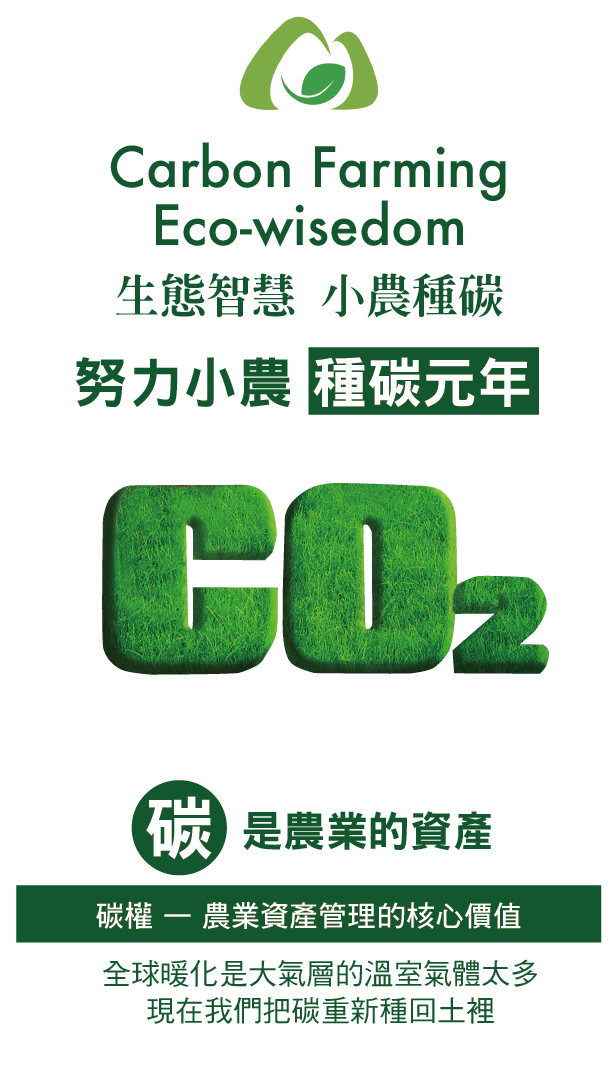
Ecological wisdom: smallholder carbon farming
All living things on Earth are carbon-based organisms
350 million years of photosynthesis
absorbed CO₂ from the air and stored it in the soil,
shaping an Earth where life flourishes endlessly
and the opportunities and civilisation of 100,000 years of human history.
Nearly 300 years of the Industrial Revolution
and massive use of fossil fuels
broke the carbon cycle,
releasing CO₂ back into the atmosphere
and causing the greenhouse effect.
The Earth's climate is changing drastically:
sudden cold and heat, melting icebergs,
rising sea levels, ocean acidification,
desertification, forest fires,
rampant pests and diseases, spreading epidemics.
The only remedy is to reduce greenhouse gas emissions
and put CO₂ back into the soil and water.
------------------------
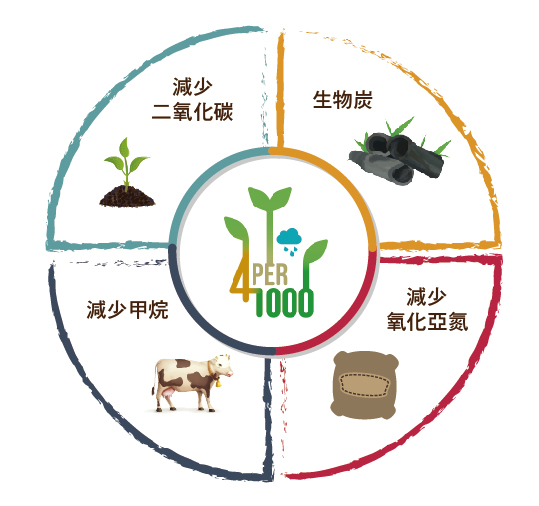
The 4 per 1000 Initiative
In December 2015, at the Paris meeting of the UN Framework Convention on Climate Change, more than a hundred countries put forward the "4 per 1000 Initiative", proposing that increasing soil carbon by four per thousand each year could fundamentally solve the climate crisis.
A trend for "carbon farming" began to emerge internationally.
Simply put, plants use sunlight for photosynthesis, absorbing CO₂ from the air and water through their roots, turning them into glucose in the chlorophyll and converting it into sugars, proteins, lipids and other nutrients. Through the plant's metabolism, these nutrients are carried to the roots, where together with soil bacteria they form organic matter, which in turn becomes plant nutrients.
But since 1960, heavy use of pesticides and chemical fertilisers and tillage with large machinery have made soil bacteria and organic matter disappear, changing the once-healthy environment. Plants become unhealthy, pests increase, and more pesticides and fertilisers are needed — a vicious circle in which the soil loses its bacteria and organic matter.
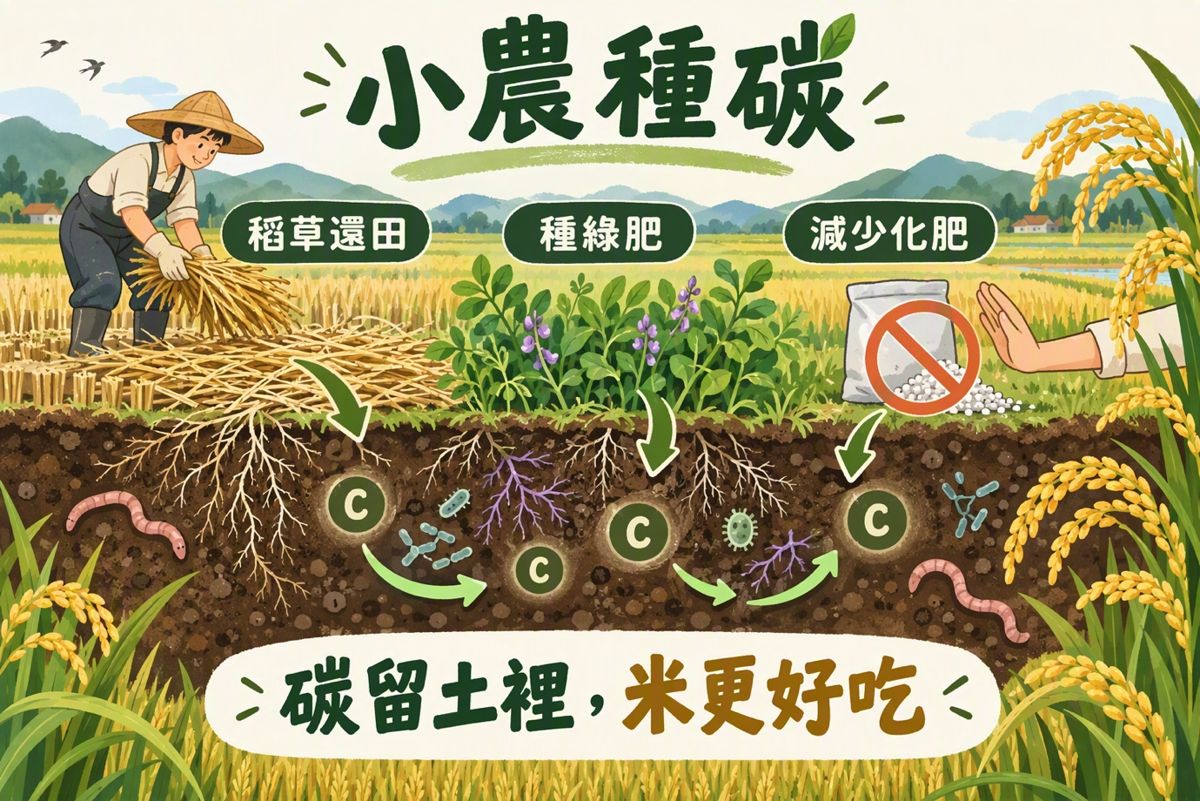
To restore the soil's ability to store carbon, we advocate organic farming: protecting soil bacteria and enriching soil organic matter, so plants are naturally healthy and more nutritious.
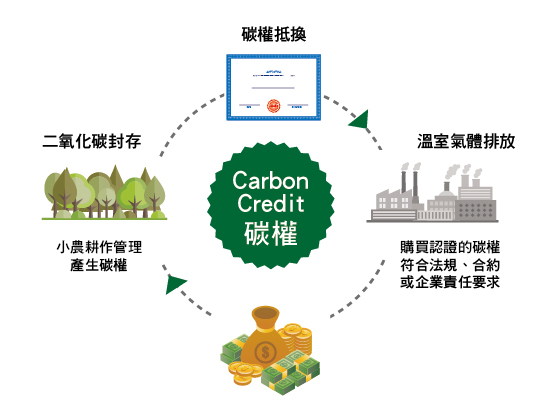
Since 2021 the Green Consumers' Foundation has been a member of the international 4 per 1000 Initiative, promoting carbon farming and agricultural carbon reduction in Taiwan and helping smallholders obtain international carbon credit certification.
To restore the soil's ability to store carbon, we advocate organic farming: protecting soil bacteria and enriching soil organic matter, so plants are naturally healthy and more nutritious.
Since 2021 the Green Consumers' Foundation has been a member of the international 4 per 1000 Initiative, promoting carbon farming and agricultural carbon reduction in Taiwan and helping smallholders obtain international carbon credit certification.
Ways to cut carbon in agriculture include:
- Reducing CO₂ – changing farming practices, using fewer pesticides and chemical fertilisers, and increasing organic matter in the soil.
- Reducing methane – reducing or capturing methane from rotting plant and animal matter and manure, and converting it into bioenergy.
- Reducing nitrous oxide – using less synthetic nitrogen fertiliser and switching to organic fertiliser.
- Biochar – pyrolysing agricultural waste without oxygen to make biochar and bioenergy, and returning the carbon to the fields to increase organic matter.
We start with rice and livestock, gradually extending to other kinds of farming.
Smallholders welcome
We use the MiHuMiSang app to help smallholders plan, carry out, monitor and report carbon farming activities, obtain international certification* and trade carbon credits.
Carbon farming won't reduce yields. Any eligible smallholder can take part free of charge, but must receive training, use the MiHuMiSang app and follow the plan. Once certified, they receive returns from carbon trading every year. In future, products can be labelled.
*Under the rules of international carbon reduction standards bodies, carbon is reduced using internationally recognised methodologies, with information on the process made public and the public participating. After validation by an approved international verification body, qualifying reductions can be sold on the international carbon market.
Consumers welcome
Consumers can also attend future public workshops to learn about carbon farming methodologies, help spread the word, take part in certification and monitoring, and buy produce from carbon-farming smallholders.
The first step for consumers: reduce food waste
It is estimated that the biggest source of greenhouse gases from human food is food waste, about a third. Food waste not only wastes food but also adds to the energy used in growing, manufacturing, storing and transporting it, and rotting food produces methane, an even more potent greenhouse gas.
-----------------------------------------------------
----------------------------------------------------

Green Consumers' Foundation
For any questions, please contact us
- Customer service: 0906-892-567
- Email: [email protected]
- Website: mihumisang.org
- Facebook: facebook.com/mihumisang
- LINE community: MiHuMiSang Market
- Instagram: mihu.misang
Facebook group

LINE community