努力小農
本文尚無譯文。
Fresh goji berries shipped to Shanghai, thousands of kilometres away: another option for smallholder organic certification
Smallholders may be able to farm organically, but their economic scale can't cover organic certification fees and management costs — a problem internationally too.
In 2017–2018 I took part in poverty alleviation work in Guyuan, Ningxia Hui Autonomous Region, China, choosing to help poor farmers in Hejiagou Village, Huangduobu Town, market the fresh goji berries they grew to FamilyMart convenience stores in Shanghai. I applied the product development and quality tools I had honed over many years in industry and lived in the village for three months. We met all the food safety requirements, passed FamilyMart's third-party audit in June, overcame the difficulties of logistics, storage and transport, and shipped a batch of fresh goji berries to market — breaking a thousand-year tradition of eating them dried, so that Shanghai, 2,000 km away, could eat fresh goji the next day.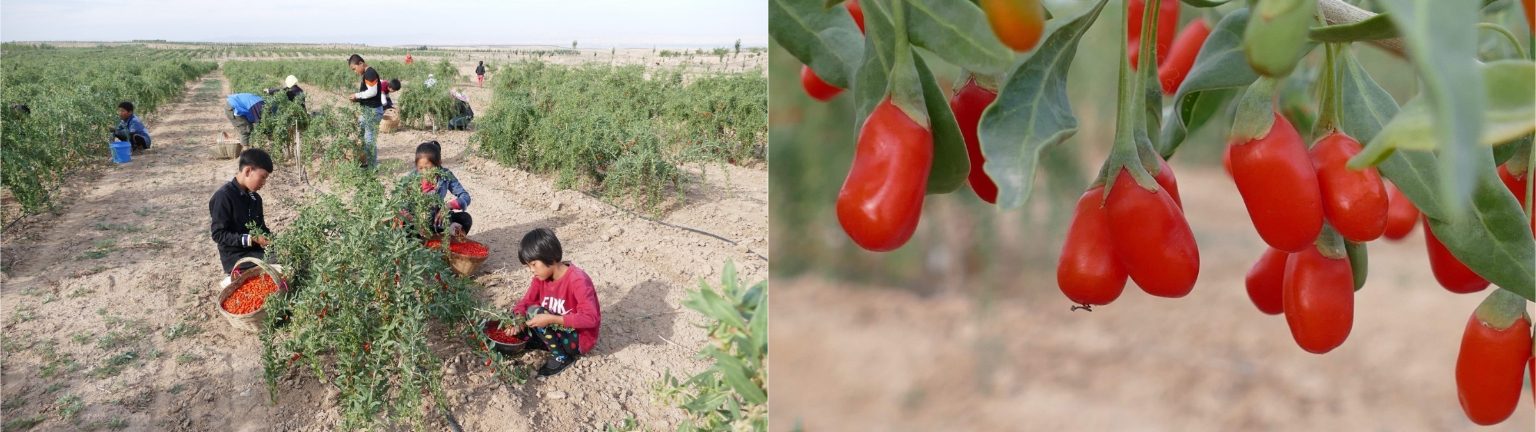
Fresh goji berries from the northwestern Gobi are lovely — tasty, nutritious and appealing. If they could be shipped smoothly to big cities, farmers' profits would rise tenfold — a great poverty alleviation story.
Lessons from fresh goji poverty alleviation
But in July Ningxia had a once-in-a-century rainy season. Summers there usually bring a day or two of rain at most, but in July 2018 it rained heavily for 13 days, even causing mudslides on the Gobi. The fresh goji berries either split or got wormy and couldn't be supplied at all. It was the biggest setback of my working life, reminding me to revere heaven and earth: even the Monkey King with his 72 transformations can't escape the Buddha's palm.
This lesson also made me re-examine the opportunities and challenges of my life's work.
In the past I was able to help many automotive suppliers in developing countries enter global supply chains and meet customers' industrial standards and specifications. I knew these rules of the game well and could use all kinds of tools and methods to control supplier quality and reduce process and product variation all the way to final assembly at the car plant, with mature, complete systems to follow at every step.
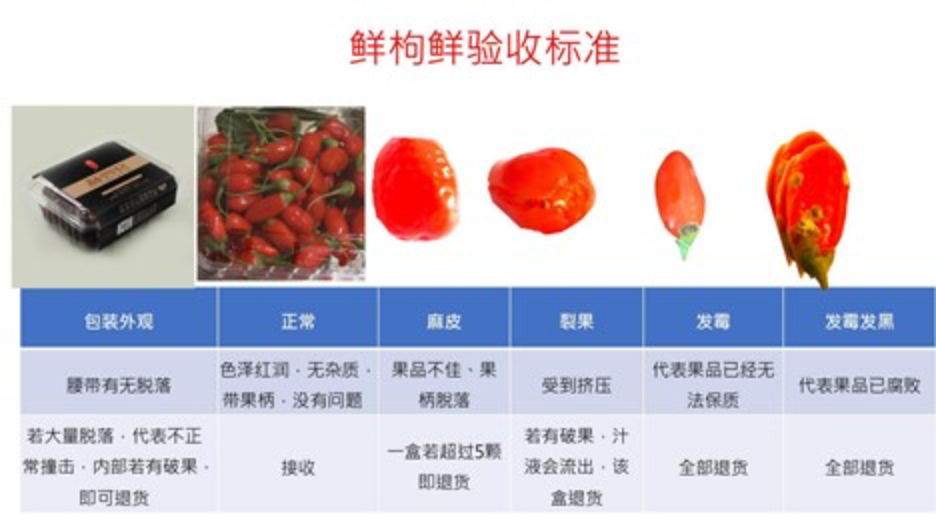
To get into Shanghai's convenience store channel, strict acceptance standards had to be met.
Industrial product realisation, quality control and certification mostly serve industrialised mass production, which values consistency and stability. But when it comes to agriculture, they hardly work. Agriculture is a biological industry highly dependent on the environment, interacting closely with environment, variety, climate, pests and diseases and soil, creating countless uncontrollable factors, and each region has different environments and product characteristics. This is beyond what traditional management system certification can cover.
The conflict between organic farming and traditional certification
In 2004 the International Federation of Organic Agriculture Movements (IFOAM) proposed the "Participatory Guarantee System (PGS)" as a new option and complement to third-party organic certification, requiring broad participation by consumers, communities and stakeholders in reviewing and certifying organic farming. It is more flexible and practical than traditional third-party certification.
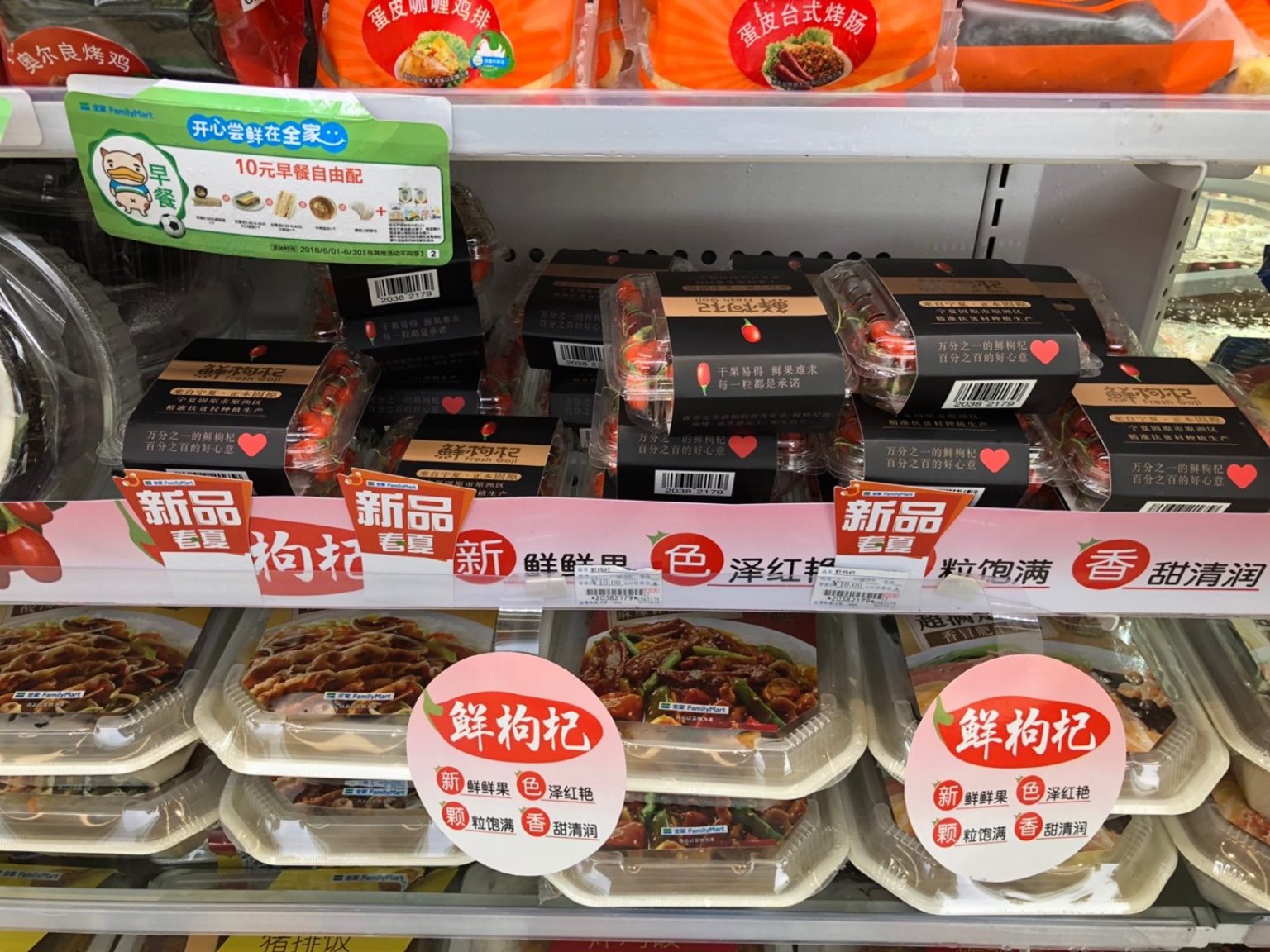
In June 2018, the first batch of fresh goji berries reached FamilyMart stores in Shanghai. Unfortunately, in July Ningxia was hit by once-in-a-century rains, and the ambition went unfulfilled.
The idea of auditing and certification arose 400 years ago among European seafaring nations such as Britain, Norway and France. Ships sailing the seas had to meet many standardised requirements to travel between oceans and continents, so "classification societies" came into being — Lloyd's in Britain, Bureau Veritas (BV) in France and Det Norske Veritas (DNV) in Norway have histories and traditions of a century to several centuries. Certification later spread to all kinds of industries and products. When the ISO 9000 quality management system standards appeared in 1987, they were the first standards for "management systems", leading to many more management system certifications and opening up the market for third-party supply chain certification.
Carrying out organic farming under industrial-style certification is in fact contradictory. Eco-friendly organic farming must maintain ecological diversity to avoid pesticides and chemical fertilisers, so output is small and product variability large — how can it meet certification requirements for consistent mass production? And if it is large-scale monoculture, it violates the principle of diversity — so how can it be organic?
So I've found that mass-produced farm produce, even if "certified", is often selling dog meat under a sheep's head, unless the owner is committed to organic and prepared to lose money and possibly harvest nothing at any time.
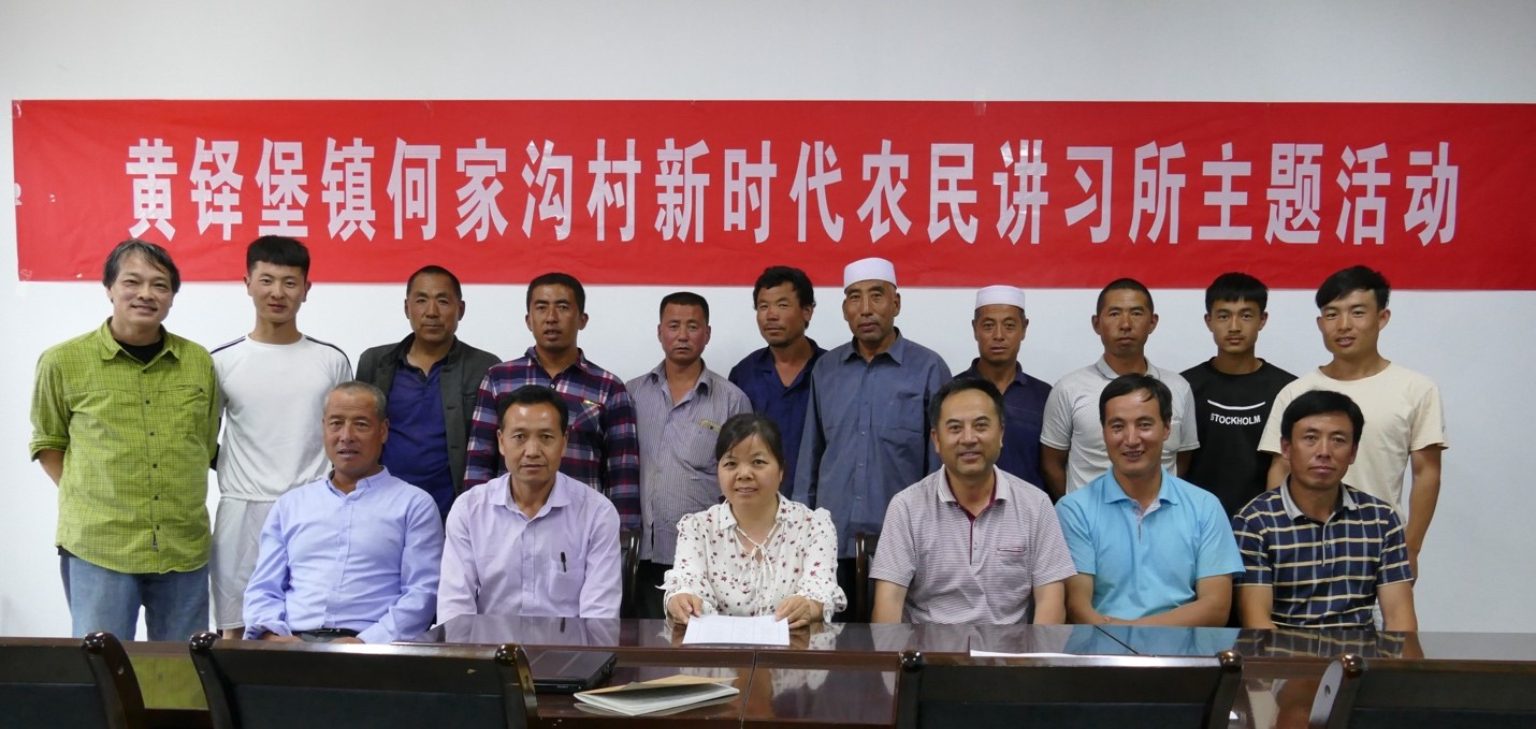
I helped the Hui villagers of Hejiagou pass the audit by BVQI, the certification body commissioned by FamilyMart, and qualify as suppliers.
PGS joins forces with MiHuMiSang
By contrast, smallholders with less than 2 hectares of land may be able to maintain biodiversity and farm organically, but their economic scale can't cover organic certification fees and management costs, and they find it hard to meet certification's many rules — a problem internationally too.
Tzu Chi University in Hualien and Feng Chia University in Taichung have jointly championed PGS, hoping to use participatory democracy to involve communities, schools, consumers, civic groups and online communities in smallholder production. Following IFOAM's organic standards, they witness and audit organic requirements adapted to place, time, people and product. They use the MiHuMiSang app as the tool for PGS certification, helping smallholders communicate with consumers and the wider stakeholders, who can follow smallholders' production and processing as it happens, ensuring it meets organic certification requirements.
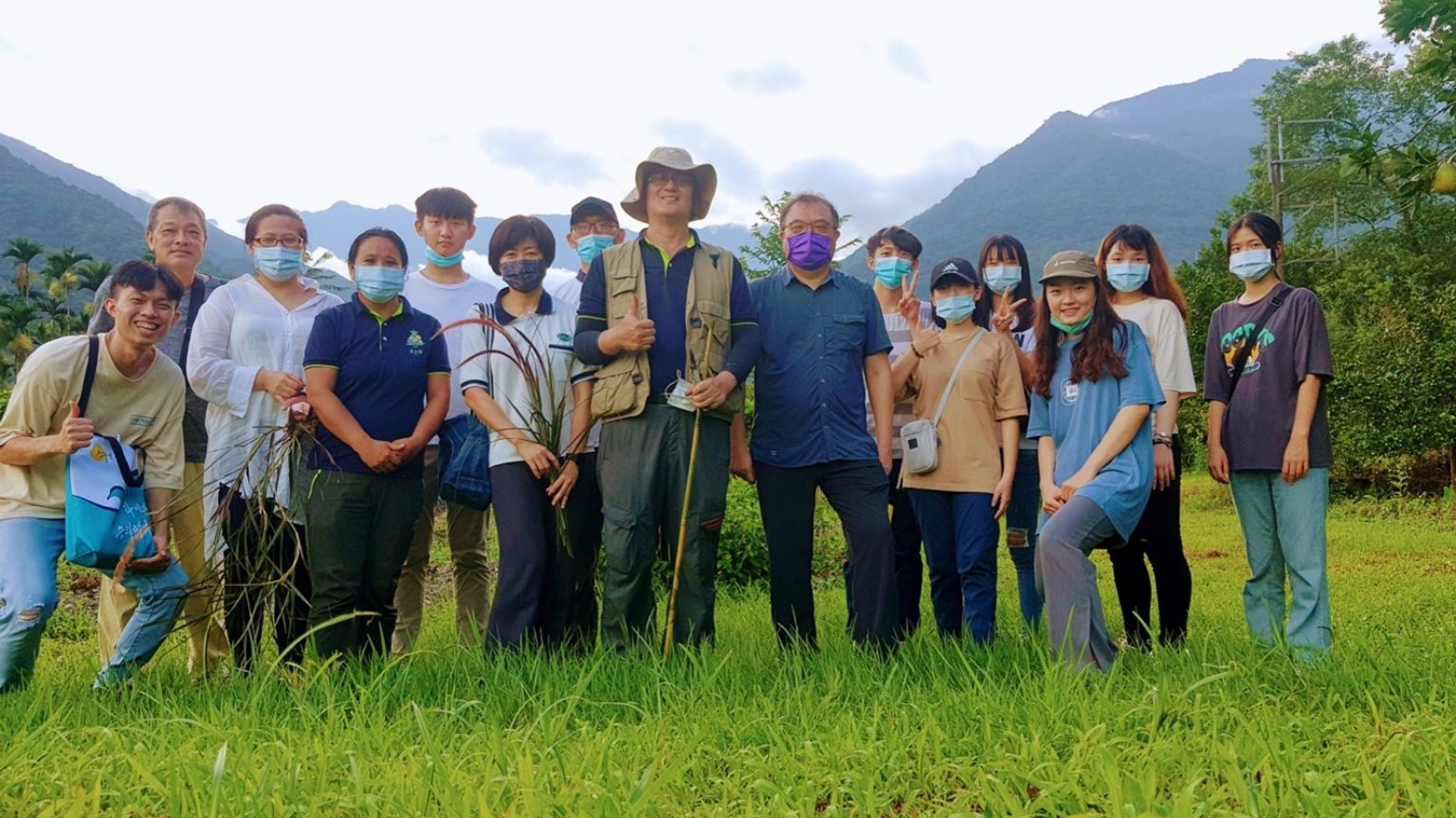
Faculty, students and research assistants at Tzu Chi and Feng Chia universities are jointly championing IFOAM's Participatory Guarantee System certification, hoping to help smallholders break through the certification impasse, respond directly to consumers' and stakeholders' requirements, and offer an alternative to international organic certification.
Whether PGS can take root in Taiwan depends on more smallholders and consumers taking part, helping local smallholders put organic production into practice, protect the environment and food safety, reduce food miles and carbon footprints, and uphold consumer rights.
Source: CM Media ( https://www.cmmedia.com.tw/home/articles/32238 )