 努力小農
本文尚無譯文。
The Antarctic ozone layer is slowly healing: smallholders worldwide will be key figures in solving climate change
Increasing the carbon in farmland by four per thousand a year could help solve the huge problem of global warming.
Thirty years ago, at the 1992 Earth Summit in Brazil, the global and regional problems under discussion focused on acid rain and the hole in the ozone layer.
In recent years the acid rain problem has given way to global warming, and the 1997 Kyoto Protocol became the highest guiding principle for fighting warming. So what happened to the ozone layer and the 1987 Montreal Protocol on Substances that Deplete the Ozone Layer?
The good news is that, thanks to 30 years of joint human effort, the Antarctic ozone hole really has eased, because all sectors used different strategies and methods to reduce the ozone killers, chlorofluorocarbons (CFCs).
These included halon, once the most common fire suppressant, the refrigerants in fridge and air conditioner compressors, and the cleaning agents used in electronics and semiconductors — none of which use CFCs any more. The Earth's "self-healing" took effect, and the ozone layer has recovered year by year; some optimistically believe it could return to its former state by 2030.
Climate change can be solved if everyone makes an effort
Global climate change has become the most serious shared problem facing humanity, because it touches on politics, the economy, society, security, poverty, famine and more. It is also a cross-generational problem: it was caused by two or three hundred years of industrialisation and may take a hundred years to solve.
Under the Paris Agreement, countries and industries have set targets to reduce greenhouse gas emissions; Taiwan and many countries have set "net-zero emissions by 2050" targets. But concrete, proactive measures are often passed from one to another, everyone kicking the ball around, as long as nothing big goes wrong on their watch.
Global warming is like boiling a frog slowly; when sudden change comes one day, it may be the end of humanity. From the way the ozone hole was tackled, we seem to find clues to a solution.
We can sum up three practical characteristics: Personal, Practical and Perceptible. Everyone could understand the ozone hole problem, everyone might get skin cancer from it, and everyone could choose products that don't damage the ozone layer — and so the problem could be solved.
Solving the problem takes smallholders as well as big business
Countries have begun using mandatory and voluntary measures such as carbon taxes, border tariffs and carbon trading and offsetting to curb greenhouse gases, and have developed different technologies, products and processes. Many international companies see this cross-generational change as a new business opportunity and market order that will eliminate outdated goods and industries — this is now the consensus.
Global shipping and civil aviation have also resolved, with ambitious intent, to take 2020 emissions as a baseline and cut them by 30% by 2030 and 50% by 2050, with companies that miss the targets paying those that meet them. It's like Tesla in the US, which could "sell" emission credits to petrol and diesel carmakers for well over a billion dollars a year; but this has shrunk year by year, to US$354 million last year, as other carmakers began producing EVs, so that EVs will ultimately become mainstream by 2030.
Business competition is harsh and real, and this still doesn't seem to solve the big problem, because it only involves people who drive. Since the 2015 Paris climate conference, attention has turned to agriculture, especially the carbon contributions of smallholders and Indigenous peoples.
In fact smallholders contribute far more than you think
Smallholders and Indigenous peoples are on the front line of guarding the land, and they are important suppliers of humanity's food. There are now 500–600 million smallholders worldwide with less than 2 hectares of land, supplying a third of humanity's food; the FAO even believes 84% of food comes from smallholders. According to Taiwan's 2019 statistics, 718,000 households were engaged in farming and livestock, with over 2.69 million people in farming households, 11.5% of the population, and an average of 0.72 hectares of farmland — the vast majority are smallholders.
Smallholders are better able to maintain biodiversity, and the root of solving global change is to use photosynthesis to absorb CO₂ from the air into plants and soil organic matter. 1.5 trillion tonnes of carbon are stored in the world's soils; increasing organic matter by just four per thousand a year would store about 6 billion tonnes of carbon in agricultural soils. So agricultural "carbon farming" has become a hot field.
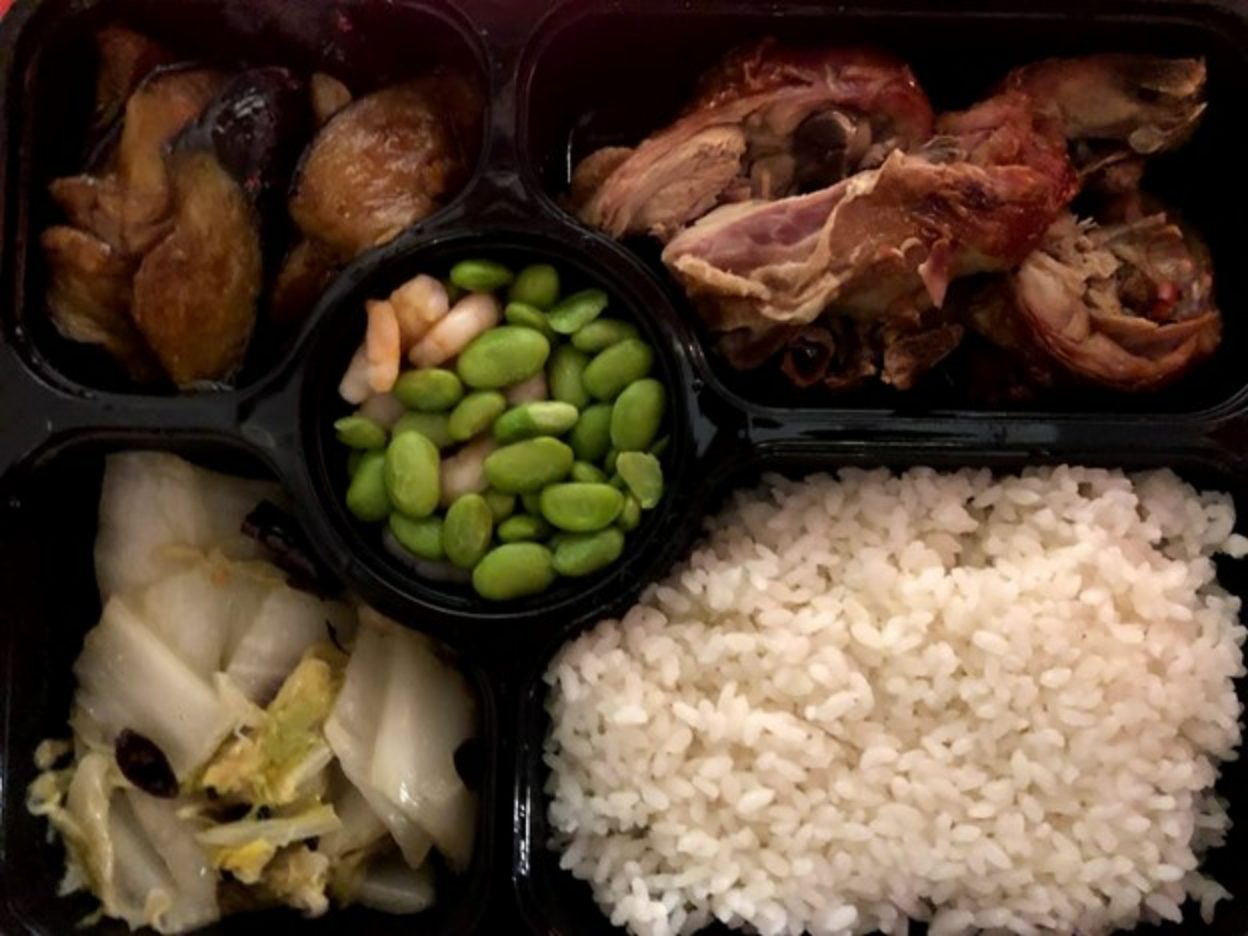
Every meal we eat could be a chance to cut carbon.
However, in promoting, implementing, auditing, certifying and trading agricultural carbon reductions today, although the technical methods aren't difficult, smallholders are so scattered and each project so tiny that operating costs are too high to make it work.
The MiHuMiSang app, a platform helping smallholders keep genuine, traceable production and marketing records, happens to provide a simple, easy-to-use logging platform, so that every kilogram of carbon smallholders plant in their fields (carbon reduction) can be seen, producing complete, real-time, highly transparent carbon reduction reports.
The Green Consumers' Foundation has designated 2022 "Year One of smallholder carbon farming" and is starting to promote it. On Earth Day, 22 April this year, it will hold the first smallholder carbon farming workshop in Wanrong Township, Hualien. We hope every smallholder can take part, and that consumers will join too, starting carbon farming together from ourselves.
Source: CM Media ( https://www.cmmedia.com.tw/home/articles/32489 )


