努力小農
本文尚無譯文。
Healthy soil, healthy people: the redemption of smallholder carbon farming
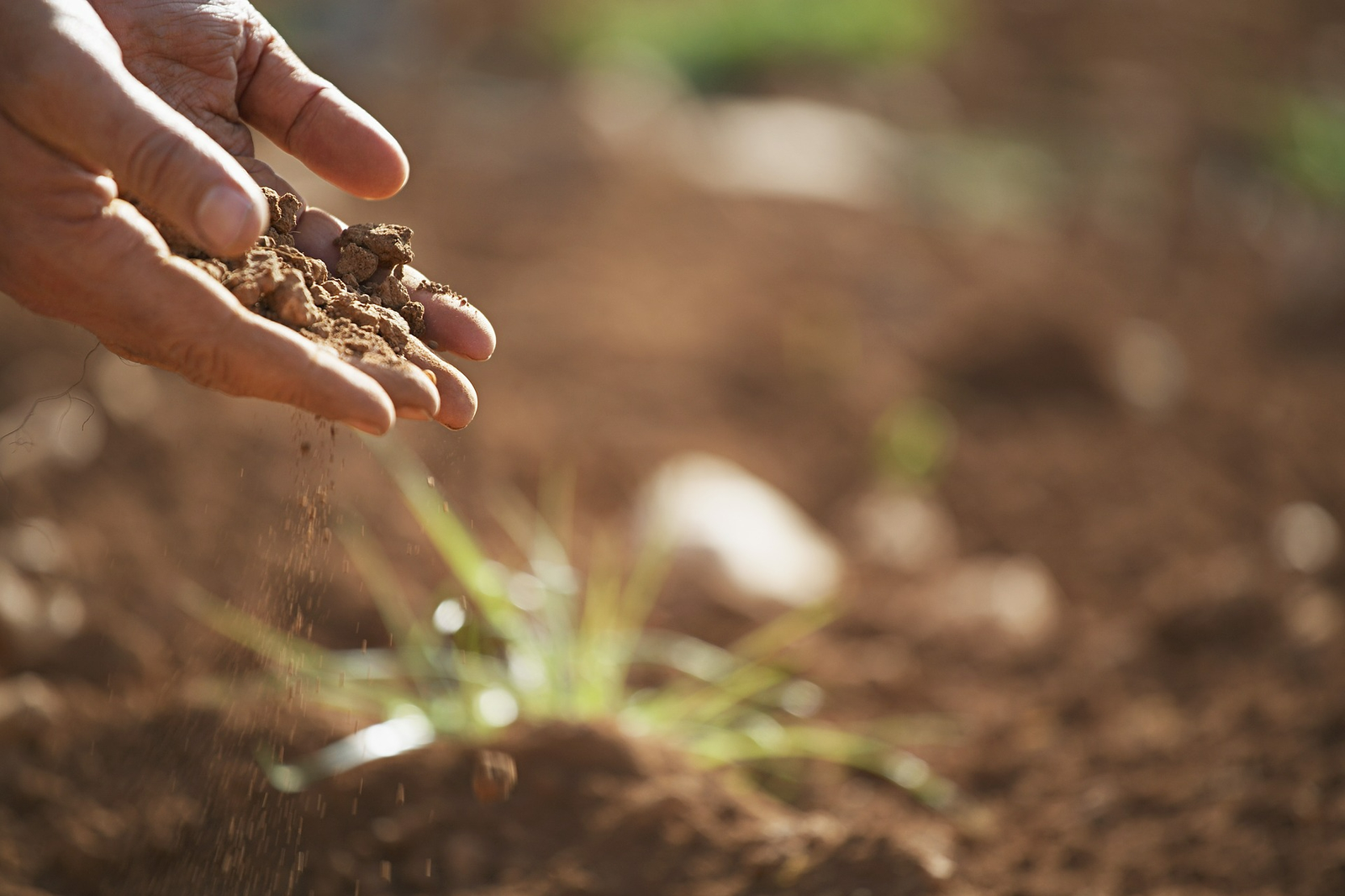
Only healthy soil gives healthy microbes; only then healthy plants and crops; and only then can there be healthy people. (Photo: Pixabay)
On climate change and global warming there are still sceptics and deniers, such as former US President Donald Trump, but the vast majority of people believe it.
But on what to do, opinions vary and there is no consensus. Many grasp at any cure in desperation, and quack doctors misdiagnose and prescribe wrongly, creating bigger problems.
To solve the problem, we believe in internationally established standards and methodologies; we must find the root of the problem and start from the root. For agricultural carbon reduction we must re-examine what is really going on. In moving from gathering to farming, humans changed the face of the land, wiping out many species and making farmers slaves to crops such as wheat. Rather than humans domesticating wheat, you could say wheat domesticated humans.
But none of this compares with what came after industrialisation: mass extraction of fossil fuels, releasing back into the world the CO₂ absorbed by plants, fungi and algae through photosynthesis over more than two billion years.
Spring is farmland's big carbon-emitting season
Of course forests on land can draw CO₂ back in, but agriculture inevitably emits large amounts of CO₂. NASA's video (NASA | A Year in the Life of Earth's CO2) clearly shows spring ploughing producing large amounts of CO₂, which returns to normal by summer. This shows that spring farming in the Northern Hemisphere in March, April and May is a major source of atmospheric CO₂.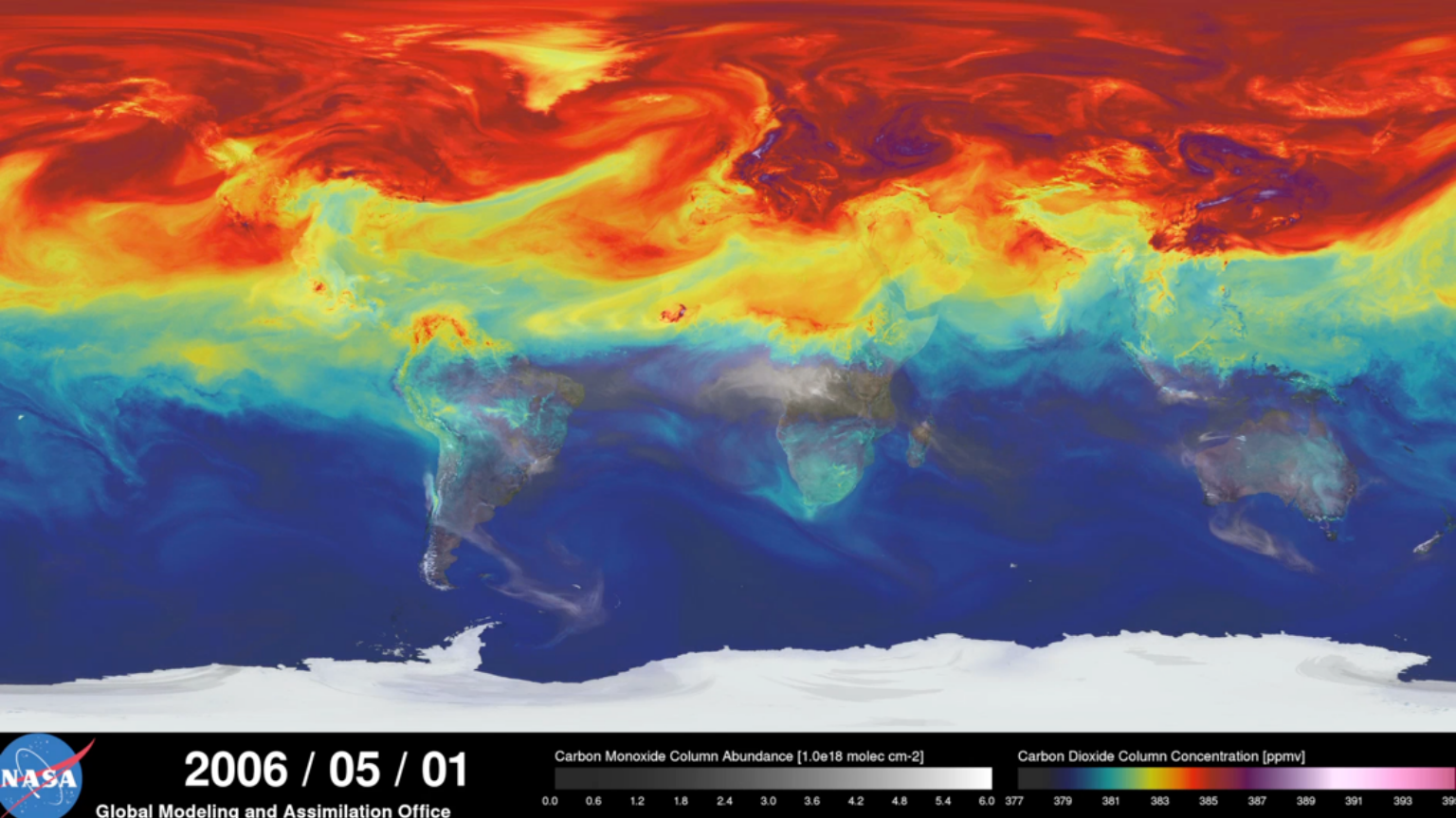
Ploughing in April and May is the largest source of atmospheric CO₂. (Image: NASA public information)
On the other hand, climate change in turn harms agriculture: high temperatures, sudden abnormal temperature swings, rising sea levels, salinisation of fresh water, and forest fires and wildfires, forming a vicious cycle.
Organically farmed land isn't necessarily organic
According to the FAO, emissions from agriculture and food account for a third of human emissions. Besides beef consumption, an important source, other farming activities also emit a great deal of carbon without our noticing, because ploughing damages the soil and organic matter that could have been stored there is all released into the atmosphere.
In Taiwan I've visited many organic smallholders whose land, after years of farming, still has less than 1% organic matter. The reason is frequent tillage, which destroys the soil's ability to retain organic matter.
Experience at home and abroad and scientific evidence show that of the CO₂ plants absorb through photosynthesis, 30% becomes above-ground stems, leaves and fruit, 30% is in the soil, and 40% enters the soil through plant metabolism, where together with bacteria, fungi and other microbes, insects, earthworms and small animals it forms long-lasting humus retained in the soil.
Ploughing may be a soil killer
Ploughing breaks up the symbiotic system formed by plants and microbes. Tillage seems to improve soil aeration, but it's quite the opposite: it destroys the existing symbiotic structure, microbes die, most of the CO₂ is released, and the carbon cycle is obstructed.
If you don't believe it, consider that the soils richest in organic matter are in mixed woodland and forest left uncultivated for years, where large amounts of organic matter and humus have accumulated, full of nutrients. Once humans clear the land, this organic matter is steadily lost.
This video (PHC video: Soil is a living organism, with Chinese subtitles) explains the story of soil organic matter very clearly. If you take 11 minutes to watch it properly, you'll understand how much harm modern farming's tillage, pesticides and chemical fertilisers do to the soil.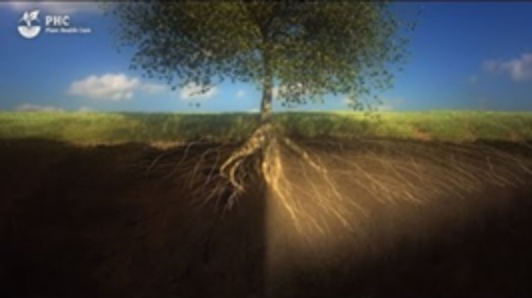
Ploughing, pesticides and chemical fertilisers in conventional farming are the soil's biggest killers. When soil microbes die and biodiversity is lost, plants can't live healthily. (Image: screenshot from YouTube @Plant Health Cure BV)
We deeply feel and believe that only healthy soil gives healthy microbes; only then healthy plants and crops; and only then can there be healthy people.
Smallholder carbon farming is not only a redemption for human industrial civilisation but also for agriculture itself, because if nothing changes, agriculture will destroy agriculture before industry destroys humanity on Earth.
Everyone is welcome to join "smallholder carbon farming"!
Since 2020 the Green Consumers' Foundation has been developing the MiHuMiSang app. "Smallholder carbon farming" is its first project, combining international carbon reduction certification and carbon trading systems to help smallholders carry out carbon reduction and carbon farming, with consumer participation, and it can also serve companies' environmental, social and governance responsibilities. Smallholders need pay nothing, and once certified, purchase of their emission reductions is guaranteed (depending on actual reduction results).
The initial phase focuses on rice and other grains, while also covering bioenergy and biochar use of agricultural residues such as rice husks. We will begin holding public briefings around Taiwan in April; please watch for news on our website, mihumisang.org.
Anyone interested — smallholders, large farmers, consumers or companies — is welcome to contact us (Email: [email protected]). "Smallholder carbon farming" is an activity anyone can take part in; no one is an outsider.
Source: CM Media ( https://www.cmmedia.com.tw/home/articles/32569 )