 努力小農
本文尚無譯文。
Cutting carbon needs the right remedy: establishing a baseline is the basic skill of carbon reduction
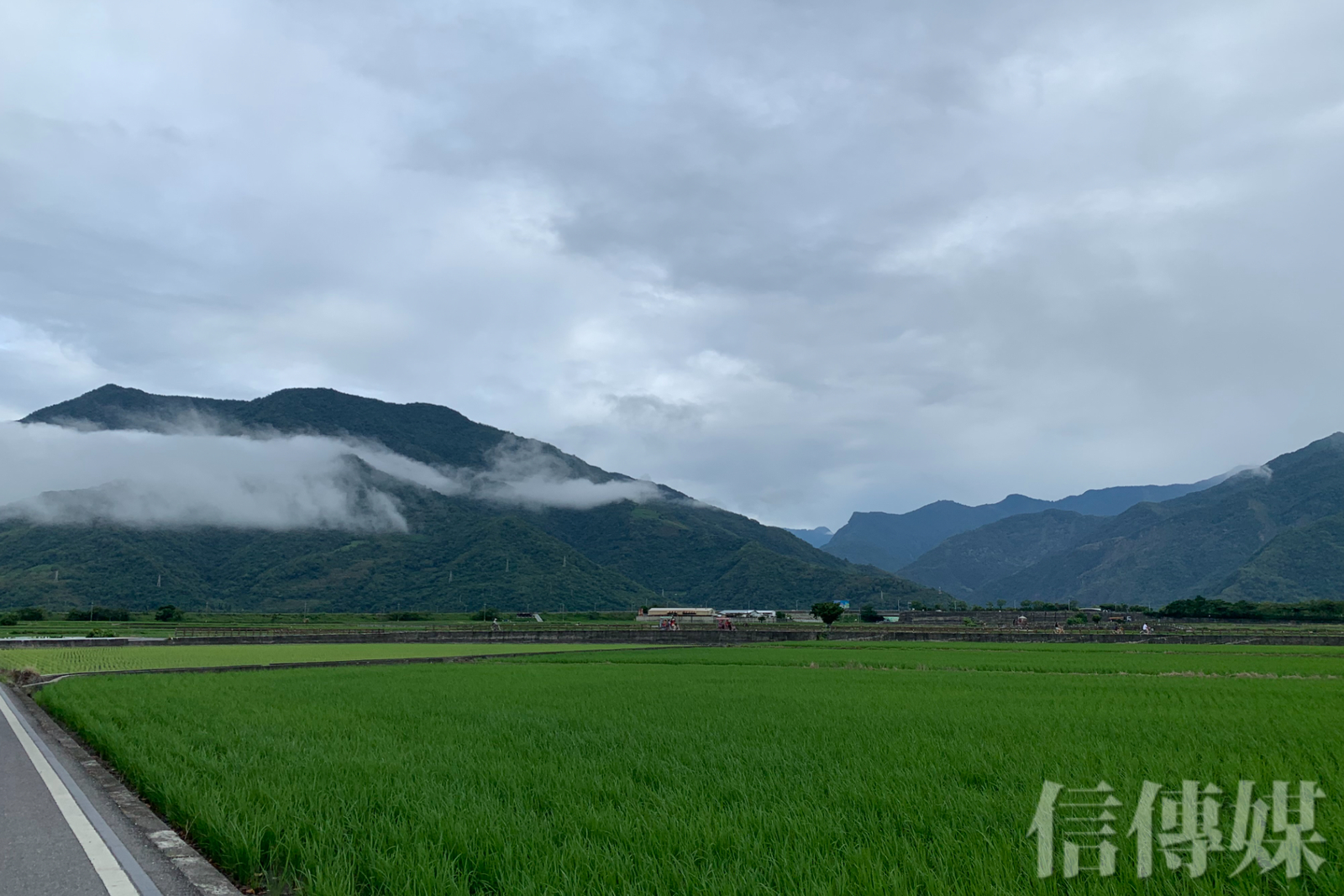
Do these fields absorb CO₂ or emit it? Only by first establishing a baseline can we know, and only then can we make a plan to cut carbon. (Photo: Chang Ching-wen)
"If I want to cut carbon, can I buy such-and-such equipment, or invest in such-and-such?"
Perhaps because of Earth Day, I've recently met a lot of environmentally minded farmers who want to join the carbon reduction effort and act immediately. Indeed, in Taiwan we see many "carbon reduction moves", from installing solar panels to carrying reusable cups, all the way to the net-zero pathway the government has published. But I rarely hear one key word: "baseline".
"Carbon reduction" and "net zero" are international actions. Whether or not you seek certification, trade carbon or price carbon, you must first identify applicability and boundaries, and consider the "baseline" at the planning stage.
The baseline is the foundation of all carbon reduction
A baseline is like the foundation of a house: you must first establish the horizontal and vertical coordinates before digging the foundation and building on it; otherwise it's hard to build the house well, or it may become unsafe. And from establishing and confirming the baseline information, you can find the sources and amounts of greenhouse gases, and only then prescribe the right remedy.
For the smallholder "carbon farming" now under way, we must first identify the three greenhouse gases agriculture may produce: 1. carbon dioxide, 2. methane, 3. nitrous oxide.
These three gases have different sources, which must be clarified one by one: find the sources, establish the baseline, then find corresponding reduction methods, assess how much can be reduced, and set up a plan of carbon reduction project activities to implement.
The main source of CO₂ is that soil microbes can't lock in the organic matter that plants put into the soil, so it escapes into the atmosphere, increasing greenhouse gases. Five or six hundred million years ago, before green plants existed, CO₂ concentrations were very high. Through photosynthesis in green plants, chlorophyll converts CO₂ into glucose, which goes through a series of physiological reactions to become plant tissue. Although plants breathe out CO₂ at night, overall far more goes in than comes out, so plants are the most natural, largest-scale and most efficient way on Earth to use solar energy to cut carbon.
Carbon reduction needs the right remedy, but first see what's being emitted
Generally, of 100 kg a plant absorbs, 30 kg goes into above-ground stems, leaves, branches, flowers and fruit, 30 kg into the roots, and 40 kg is organic matter the plant releases into the soil. In the natural environment, without human interference, this organic matter and soil microbes engage in complex biochemical processes that turn it into humus. These processes are hard to reproduce in the lab and hard to control in the field; only long-term symbiosis and co-evolution between plants and microbes can produce humus effectively.
Humus is not only a plant nutrient but also the best material for sequestering carbon, staying in the soil much longer than the organic matter plants secrete. Natural forests are vaults of humus. In gardening, "Yangmingshan soil" can sell for NT$30 a kilo and contains over 20% organic matter and humus, while ordinary farm soil has probably less than 1% organic matter, and even less humus — almost none.
Why such a huge difference? Because long-term use of chemical fertilisers and agricultural tillage has killed huge numbers of soil bacteria, so humus can't form and carbon can't be stored long term. In addition, "tillage", thought to benefit crops, is also very damaging to the symbiotic ecology of soil microbes and plants: tillage not only disturbs and breaks up the aggregate structure of microbes and roots, but also exposes them to sunlight, effectively killing bacteria (quite the opposite of the common idea that bacteria make plants sick).
You don't need high tech to establish a good baseline
Measuring soil organic matter is simple. Take a soil sample, mix it well and weigh it, then put it in an oven at 80°C overnight to remove moisture; the weight is the dry soil weight. Then put the dried soil in an oven at over 400°C overnight and weigh it again; the weight lost is the oxidised organic matter (including humus), so you can calculate the percentage of organic matter in the soil.
Taiwanese farmers don't have to do this themselves. Just collect soil samples and send them to the local District Agricultural Research and Extension Station, which can test the soil composition, including organic matter.
Methane emissions come mainly from rice during flooding (technically "standing water"), because flooding makes paddy soil anoxic, and organic matter in the soil ferments anaerobically to produce methane, which accounts for 1.5% of total greenhouse gases. But because rice efficiently provides humanity with a great many calories and reduces hunger, rice deserves credit, so using various measures to cut methane can achieve the best of both worlds.
The simplest is to shorten the time paddies are flooded. When paddy fields are dry they produce almost no methane, so extending dry periods reduces methane. Some studies even suggest that moderately reducing flooding can increase yields. Some farmers think flooding is for controlling weeds; if the weed problem is solved, the flooding period can be shortened.
You can refer to data from research institutes
Measuring methane is more complicated: an acrylic box is placed over the paddy to collect gas and measure methane production per hour or per minute, from which possible emissions and the emission curve can be calculated.
Ordinary farmers probably can't do such experiments and tests themselves; they can simply use local test data from the Taiwan Agricultural Research Institute or the District Agricultural Research and Extension Stations as a reference.
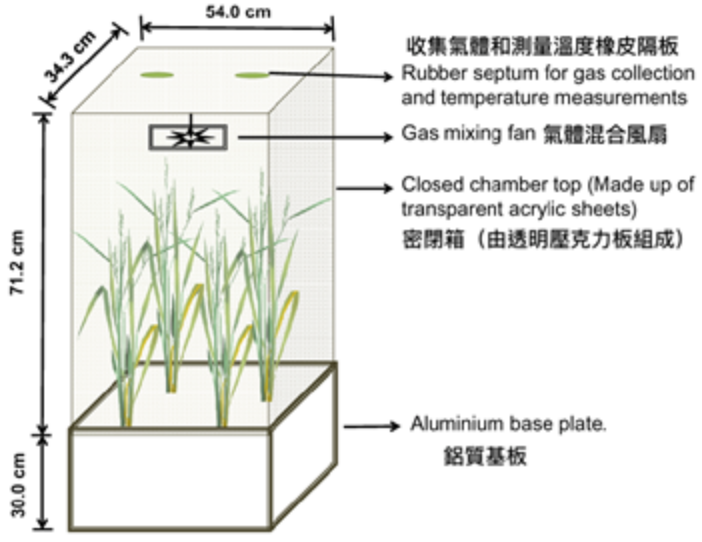
A typical chamber for collecting methane emissions from rice.
Methane's greenhouse warming factor is about 25, meaning each tonne of methane emitted is equivalent to 25 tonnes of CO₂.
Nitrous oxide, also known as "laughing gas" because inhaling it makes people laugh, has been a toxic chemical substance regulated by the Environmental Protection Administration since 1 May last year. Its greenhouse effect is nearly 300 times that of CO₂, and human activity has driven it up substantially over the past 40 years. It is an overlooked greenhouse gas.
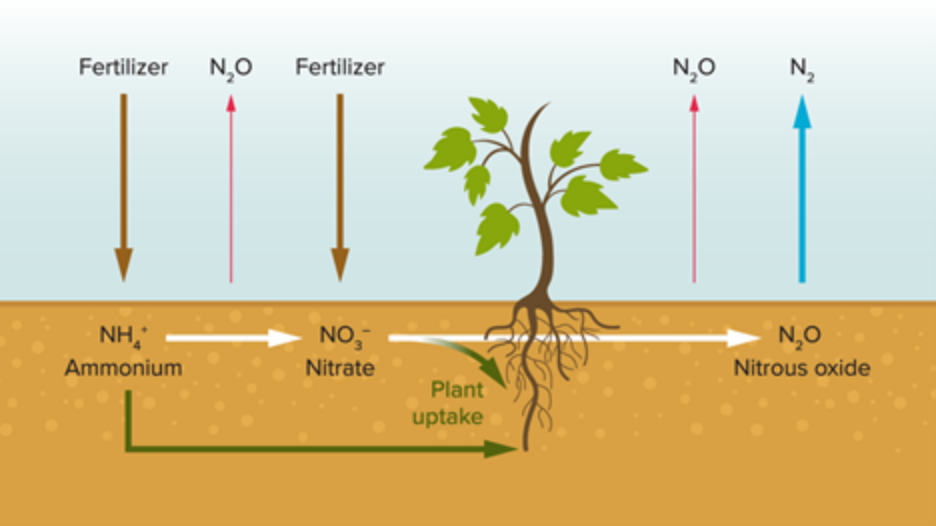
Synthetic nitrogen fertiliser in the soil is converted step by step, via nitrate, into nitrous oxide (laughing gas), the greenhouse gas with the highest emission factor among agricultural emissions.
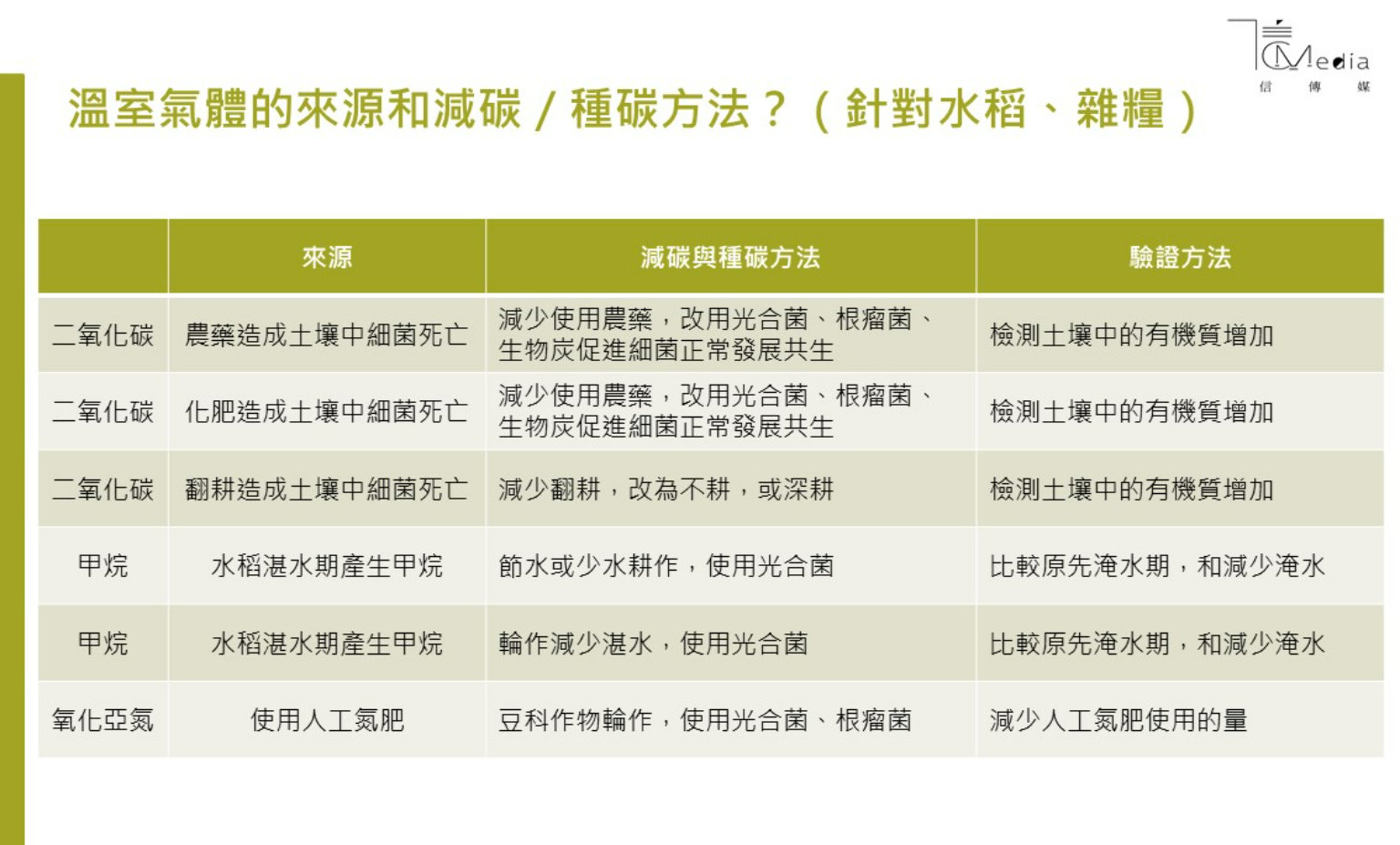
Carbon reduction is subtraction: just use less
In agriculture there are many kinds of nitrogen fertiliser, including ammonium and nitrate fertilisers and the most widely used, urea (amide nitrogen). Many farmers are used to giving their rice a "tonic": as soon as they see their seedlings look smaller than others', they pour on nitrogen. Taiwan uses a lot of chemical fertiliser; in future a "real-name system" for fertiliser may improve things somewhat.
Farmers need only record their nitrogen use over the past 5 years to calculate the baseline for laughing gas emissions. Then, for each kilogram less nitrogen used, the reduction in laughing gas produced multiplied by the greenhouse gas emission factor gives the amount reduced.
There is also the energy used by farm machinery and processing — water, electricity, gas, petrol and diesel — which are also sources of greenhouse gas emissions.
Farmers can build their own baseline by taking stock of past farming practices: how land was prepared, when and for how long fields were flooded, how much nitrogen was used, and how much water, electricity, gas and fuel was used. Then they can consider how, without reducing yield or output value, to change farming practices — less tillage, paddy–dryland rotation, shorter flooding, less or no synthetic nitrogen, and less energy use or a switch to renewables — to reduce the corresponding greenhouse gases.
Source: CM Media ( https://www.cmmedia.com.tw/home/articles/33575 )


