 努力小農
本文尚無譯文。
Doing their bit for carbon reduction: a microcosm of Taiwan's diverse peoples — the stories of 6 carbon-farming smallholders
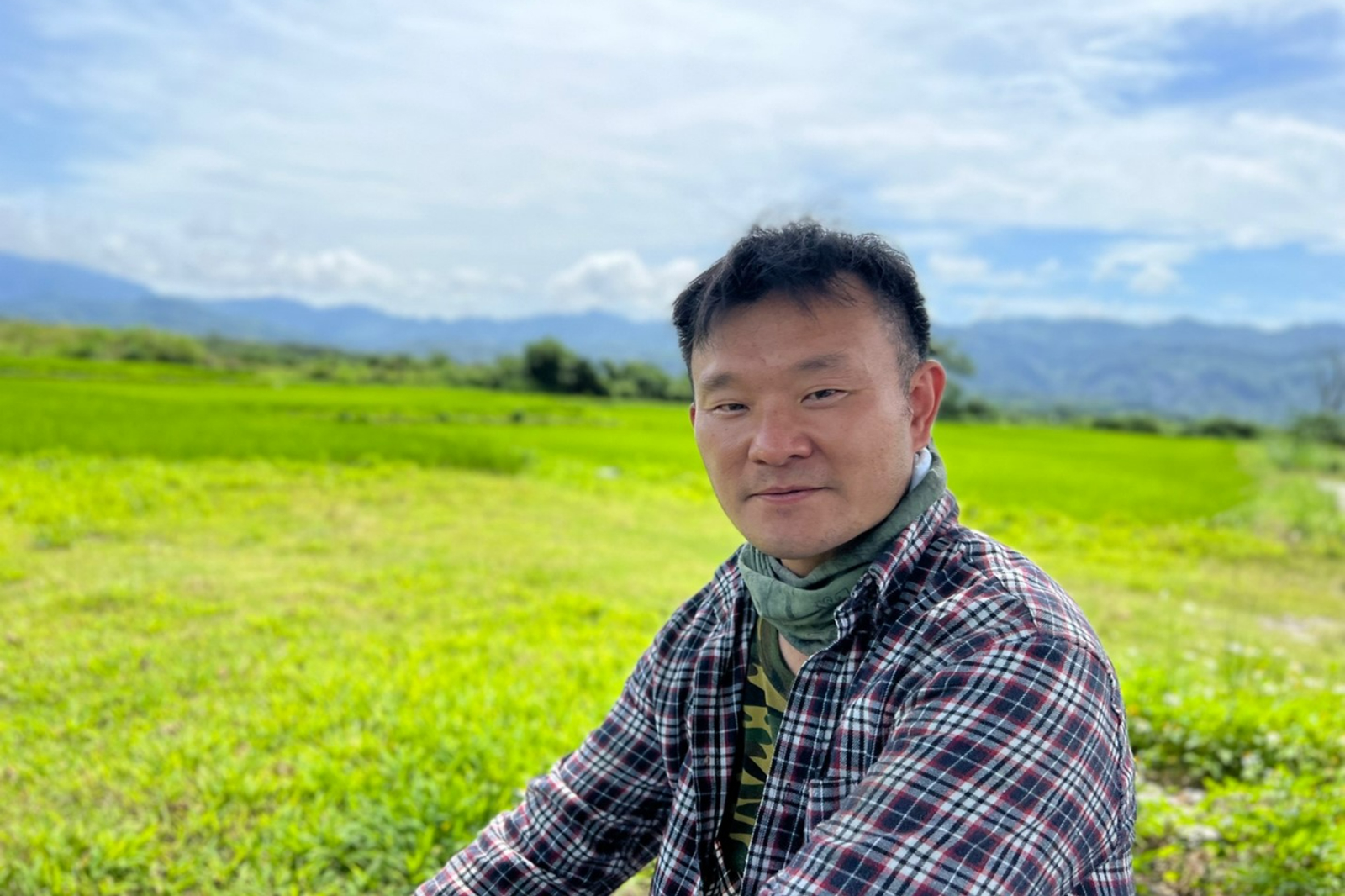
After leaving the army, Luye smallholder Chen Hsiao-wei put down roots in eco-friendly farming in Taitung and has joined the carbon-farming smallholders.
After nine months of planning and communication, the "smallholder carbon farming" plan has begun signing contracts with smallholders — the first step for Taiwan's smallholders to take part in international voluntary carbon reduction certification and trading.
To many people, "certification" seems mysterious, complex and difficult: product certification, management system certification (such as ISO 9000 and ISO 14000), organic certification, HACCP certification and so on and on, with processes and settings kept secret and shrouded in mystique. Applying today's most complex international carbon reduction standards and methodologies to certify climate action that is complex, highly uncertain, small, scattered and of very low unit value would seem extremely unlikely to happen in Taiwan.
Yet six smallholders have already decided to be the first to "eat the crab" and take part in agricultural carbon reduction. They have signed agency contracts with the carbon credit project developer Eco-affinity Inc., authorising it to handle their carbon reduction planning, implementation, verification and trading. Not only do they pay nothing; each year after the carbon credits are recognised by the international certification body, they receive US$10 per tonne of reductions and a 50% share of profits when the credits are later sold. This is only a very small income, but it can create great added value for their products and reputation, because besides carbon credit certification, the smallholders can also obtain impact assessment certification for at least 3 of the 17 UN Sustainable Development Goals (SDGs).
Carbon farming: a small path, but with something worth seeing
Smallholder carbon farming is a mechanism designed for smallholders to take part in international climate action and certification. The project was developed in line with the UN Clean Development Mechanism and the agriculture-related standards and requirements of the Gold Standard, an international non-governmental carbon reduction standard and certification body. In the initial phase we are targeting rice and other grains, based on four methodologies: ① tillage methods — increasing soil organic carbon; ② water management — reducing methane emissions from paddies; ③ inoculating rhizobia in grain–legume rotations — reducing nitrous oxide; and ④ bioenergy use. Using the MiHuMiSang app for records on the phone and public witnessing, the carbon farming process is disclosed transparently, with ample evidence to obtain international certification.
Smallholders farm small areas with diverse products, which inherently gives them advantages over industrialised, large-scale farms; but their small economic scale and limited funds also make it hard for them to compete in the market.
Of all the ways to reach net zero and cut carbon, agriculture is one of the hardest, especially for smallholders. Farmers are mostly a disadvantaged group, facing natural and biological variables — land, natural disasters, climate change, pests and diseases, market demand — plus fertilisers, pesticides and government regulations. Farming can't produce or keep schedules according to plan, which makes it a certification nightmare.
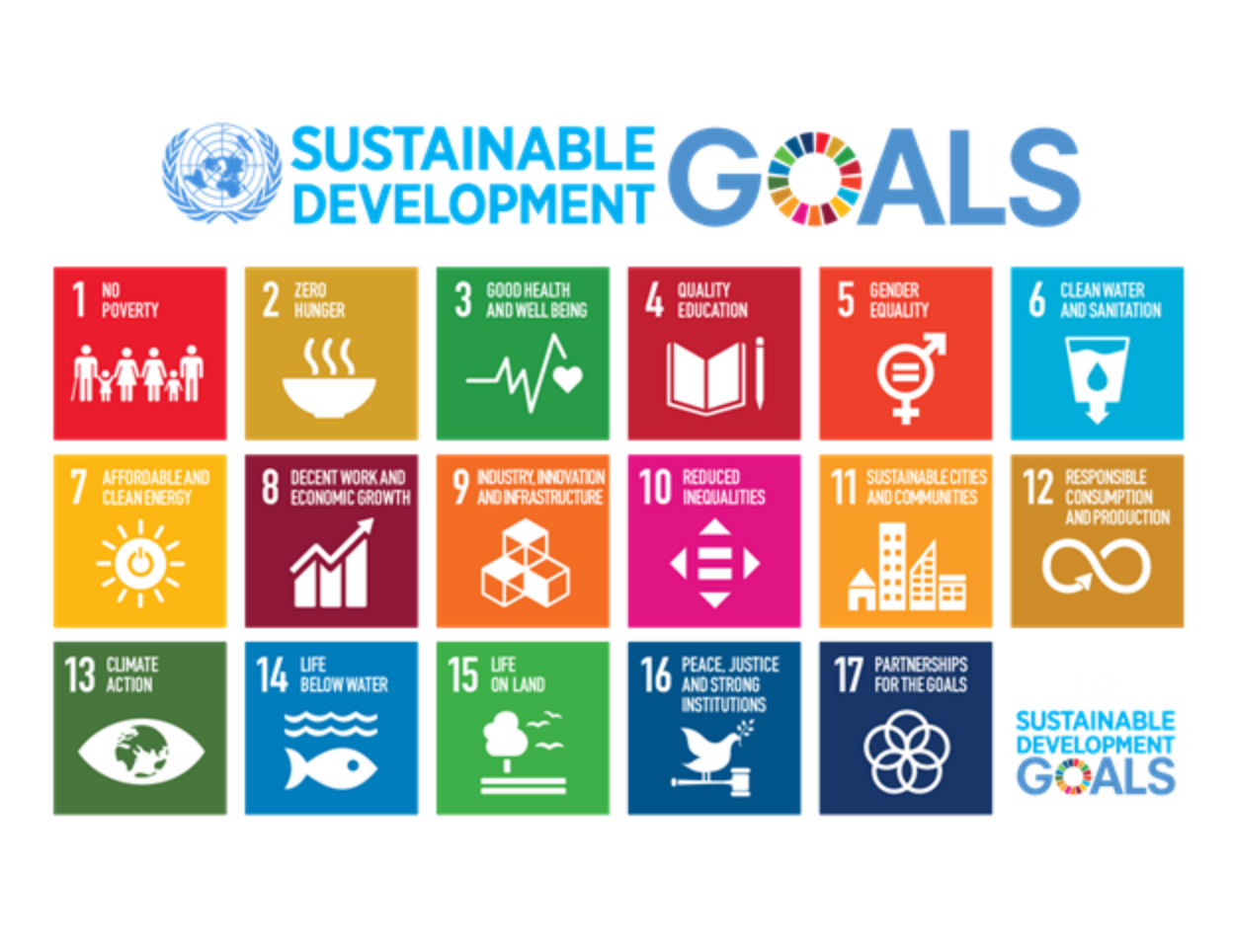
Smallholder carbon farming is also aligned with the UN's 17 Sustainable Development Goals.
The MiHuMiSang app makes use of the smartphone in everyone's hand. Smallholders just take photos of their work, check in with a description of the work and the inputs used, and upload to the cloud; big data and cloud computing then compile a genuine, tamper-proof work record for them. Smallholders simply follow their usual production rhythm while changing practices or inputs to cut carbon, and we can calculate the "additionality" of their reductions and meet international certification requirements.
Diverse smallholders
Tang Yen-han (Ya-man) has practised permaculture for 18 years at Yeman Garden on Shamao Mountain in Beitou, Taipei. He has two small paddy fields in rotation, only 300 ping in total, and joined the carbon farming ranks in a spirit of giving it a try. Even after years of natural farming, there is still room for improvement; for example, the time his fields are flooded could be shortened further to reduce methane emissions.
In an oxygen-free environment, bacteria ferment organic matter and produce methane, which is released into the atmosphere. Rice cultivation involves long periods of flooding, leaving the bacteria in the fields without oxygen, so they produce methane. Among all farm products, rice produces a considerable amount of methane, and methane's greenhouse effect is about 30 times that of CO₂: one tonne of methane equals 30 tonnes of CO₂. Yet rice provides more of humanity's food calories than other crops and is an important food source, so reducing methane from paddies has become a hot topic for agricultural carbon reduction projects.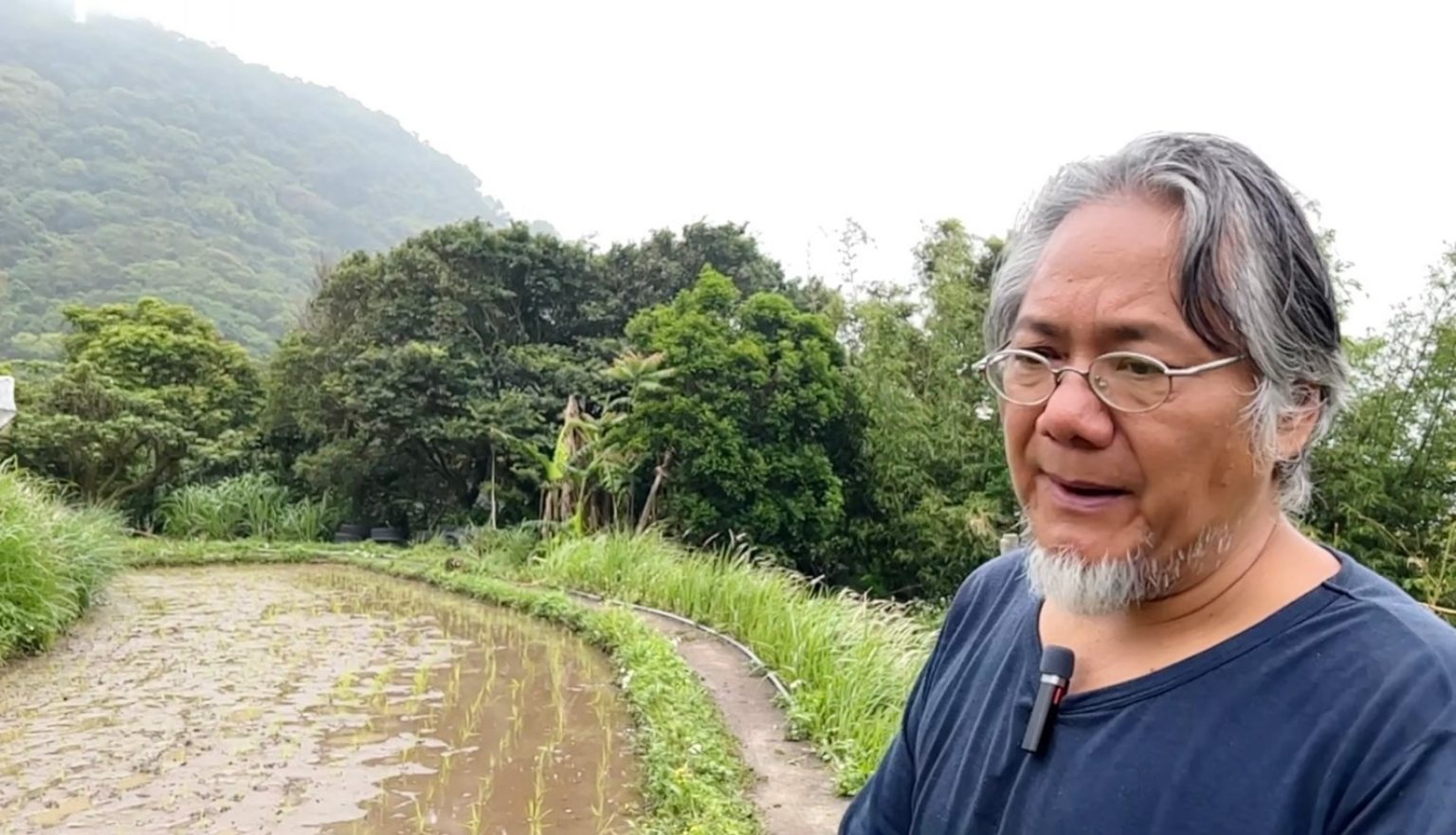
Tang Yen-han (Ya-man), who follows a permaculture lifestyle, was among the first to respond to smallholder carbon farming.
The border of Yuli in Hualien and Fuli in Taitung is the heart of the Hualien–Taitung Rift Valley's rice bowl. Chiu Chui-chuan of Yuli and young farmer Su Chun-lung of Fuli, members of the Hualien–Taitung photosynthetic bacteria group, met me at a roadside café in Yuli to discuss how they would take part in smallholder carbon farming. They also felt that managing paddy flooding well is a feasible way to cut carbon. But on closer discussion, we found something more interesting.
Chiu Chui-chuan wants to join the carbon reduction effort to build a good production environment so his son, who is learning farming in Yilan, can take over. Young farmer Su Chun-lung wants to prove that he can change his father's traditional farming methods and move towards organic farming with less impact on the environment.
Chiu Chui-chuan's fields are sandy, with lower organic matter and poor water retention, so they need to be flooded for a long time, while Su Chun-lung's fields are clay with more organic matter and good water retention, so they need only short flooding. Taiwan is not big and Yuli and Fuli are not far apart, yet there is such a difference — something we hadn't expected. In future they will adopt different water-reduction and water management strategies to cut flooding and methane.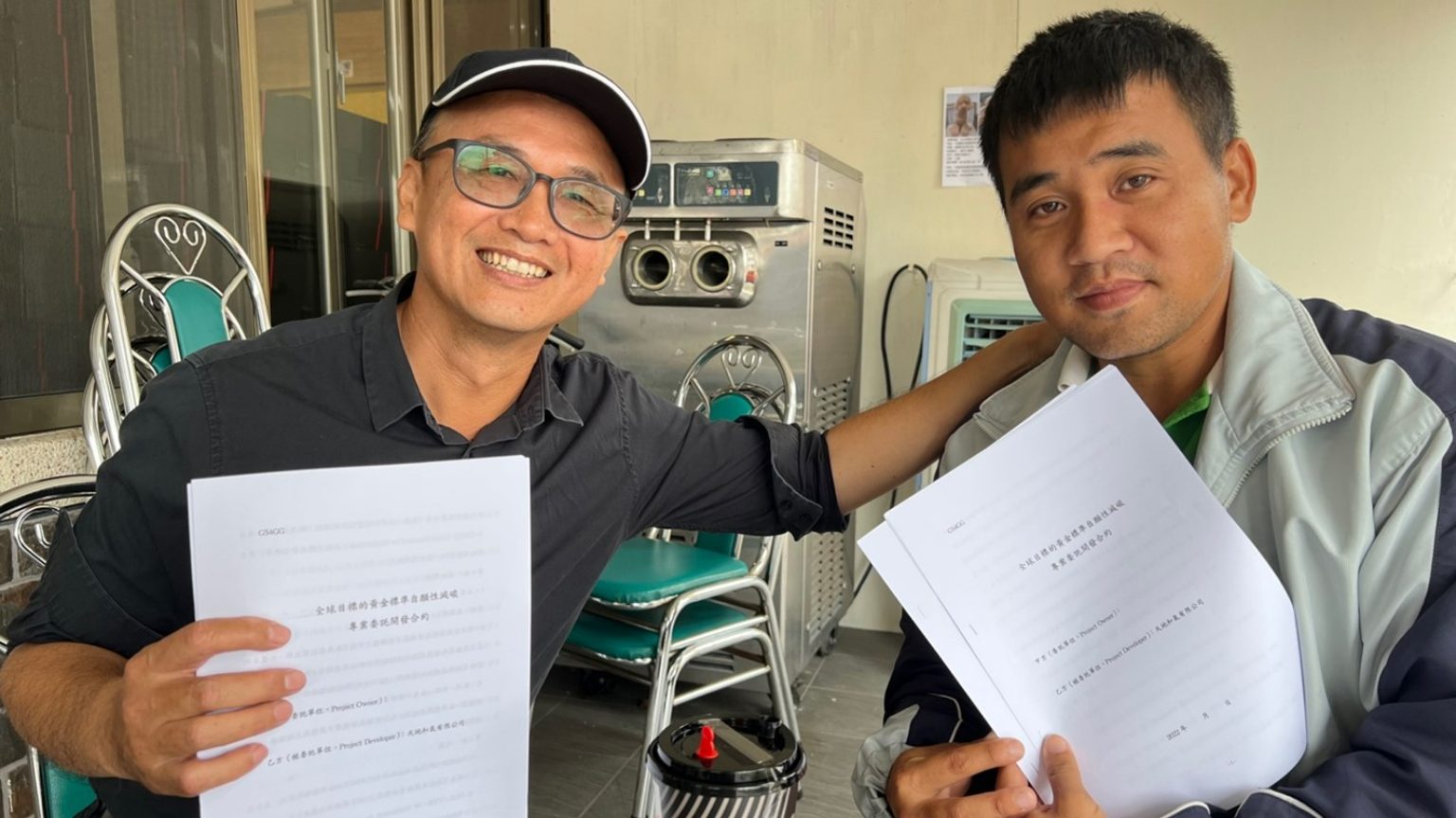
Chiu Chui-chuan of Yuli, Hualien and Su Chun-lung of Fuli, Taitung were the very first to sign up as carbon-farming smallholders.
Flooding, weeds and golden apple snails
From Yuli we took the Yuchang Highway to Changbin, then followed the beautiful Coastal Highway 11 south to Pawongwong Village in Chenggong, Taitung, to visit Kao Shih-yi of Ichiro Rice. From his hillside fields you can gaze out over the Pacific — a delightful view. He too is a smallholder who returned home and has grown rice for ten years. In Hualien–Taitung rice fetches good prices and most farmers grow two crops, but Kao grows only one, not wanting his fields to get "too tired". He too struggles with the water in his fields, because whether to flood them is a real dilemma: flooding helps the seedlings and suppresses weeds, but it also brings golden apple snails, and he spends most of his time picking snails and pulling weeds.
This is another interesting contradiction. If you use herbicides, you don't need long flooding, and without water there are fewer snails; but herbicides harm soil microbes and reduce the soil's ability to store carbon. It's a hard equation to solve.
To kill golden apple snails, organic farmers use the organic input tea seed meal, whose natural saponins break down the snails' mucus and kill them. But it harms earthworms too, so Kao Shih-yi doesn't want to use tea seed meal either.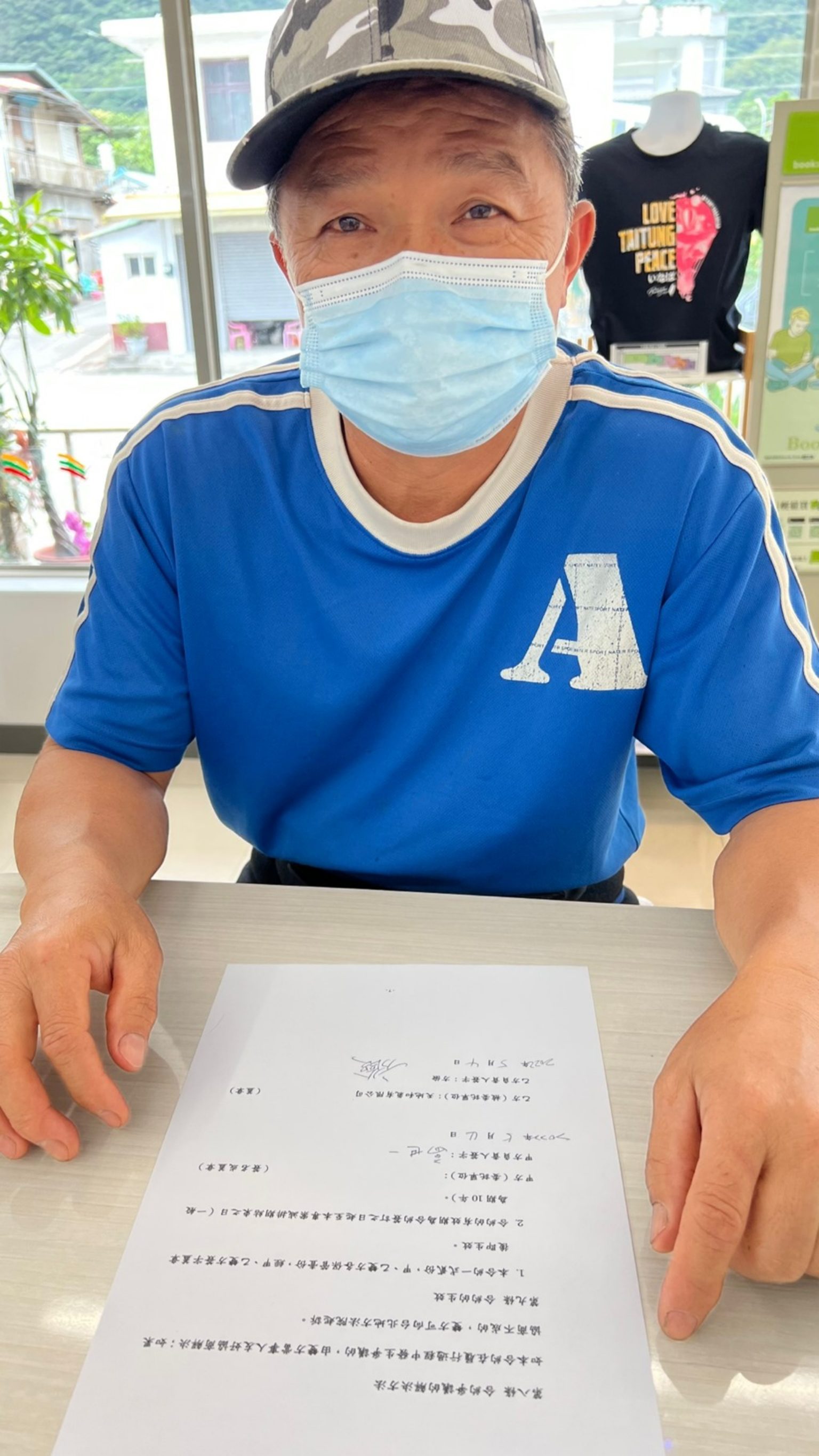
Kao Shih-yi, a farmer by the sea in Pawongwong, Chenggong, Taitung, returned home 10 years ago and has stuck with eco-friendly farming; he too has joined smallholder carbon farming.
Still, Kao Shih-yi is confident he can cut flooding time further, so he too has joined the carbon reduction ranks.
Chen Hsiao-wei of Luye Township, originally from Taichung, was a career soldier. After leaving the army he married a Bunun wife from Luye and settled there to farm. He mainly grows organic vegetables to supply Taitung's primary and junior high schools, and also grows some rice. The 5 jia of fields he farms and manages himself have also joined the "smallholder carbon farming" team to try out this new plan.
Lin Yung-hui, retired principal of Chulai Elementary School in Haiduan Township, Taitung, also readily joined "smallholder carbon farming". His field is less than one jia. He feels that although the amount of carbon he can cut is small, taking part lets him learn new things and do his bit for carbon reduction, which is very meaningful.
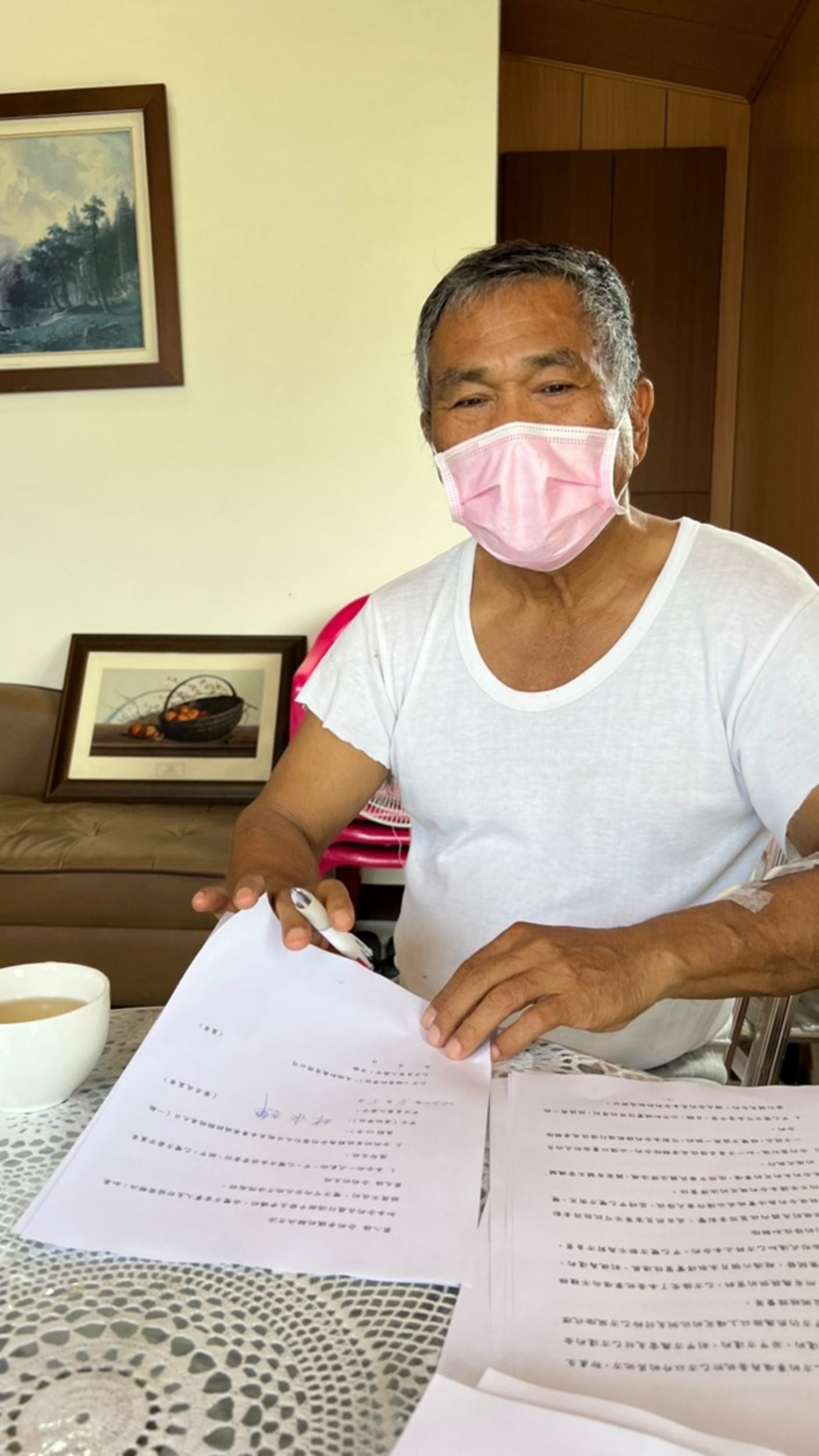
Chishang, Taitung smallholder Lin Yung-hui, a retired primary school principal, hopes to take part in smallholder carbon farming in person and deepen environmental education.
Taiwan's multi-ethnic smallholders strike back
Six smallholders with different backgrounds, different land, different experiences and stories — Indigenous, Hakka, Hoklo and Mainlander — are like a microcosm of Taiwan's ethnic diversity. In early May 2022 they all launched smallholder carbon farming. If these smallholders, with anywhere from a few fen to a few jia of land, can all do their best to reduce carbon emissions within their own work (farming), it will be the best model for carbon reduction in practice.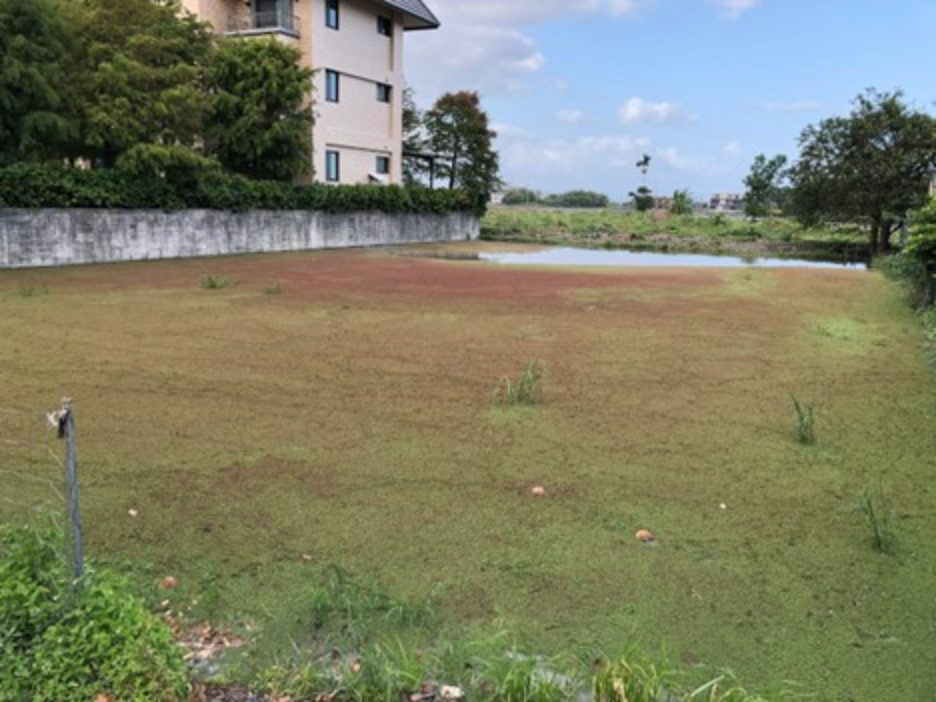
The Hualien District Agricultural Research and Extension Station uses the water fern Azolla to fix nitrogen and carbon, which could become a distinctive Taiwanese tool for carbon reduction.
There are many other ways to cut methane from paddies, including aquaponics. The Hualien District Agricultural Research and Extension Station is also promoting the traditional green manure Azolla as a plant that fixes nitrogen and carbon — another good approach. Unfortunately it is not yet among the internationally certified methodologies. In future Taiwan will surely develop many agricultural carbon reduction methods for the world to use.
Source: CM Media ( https://www.cmmedia.com.tw/home/articles/33699 )


