 努力小農
本文尚無譯文。
Companies wanting to do well on ESG: taking part in "smallholder carbon farming" is a good way
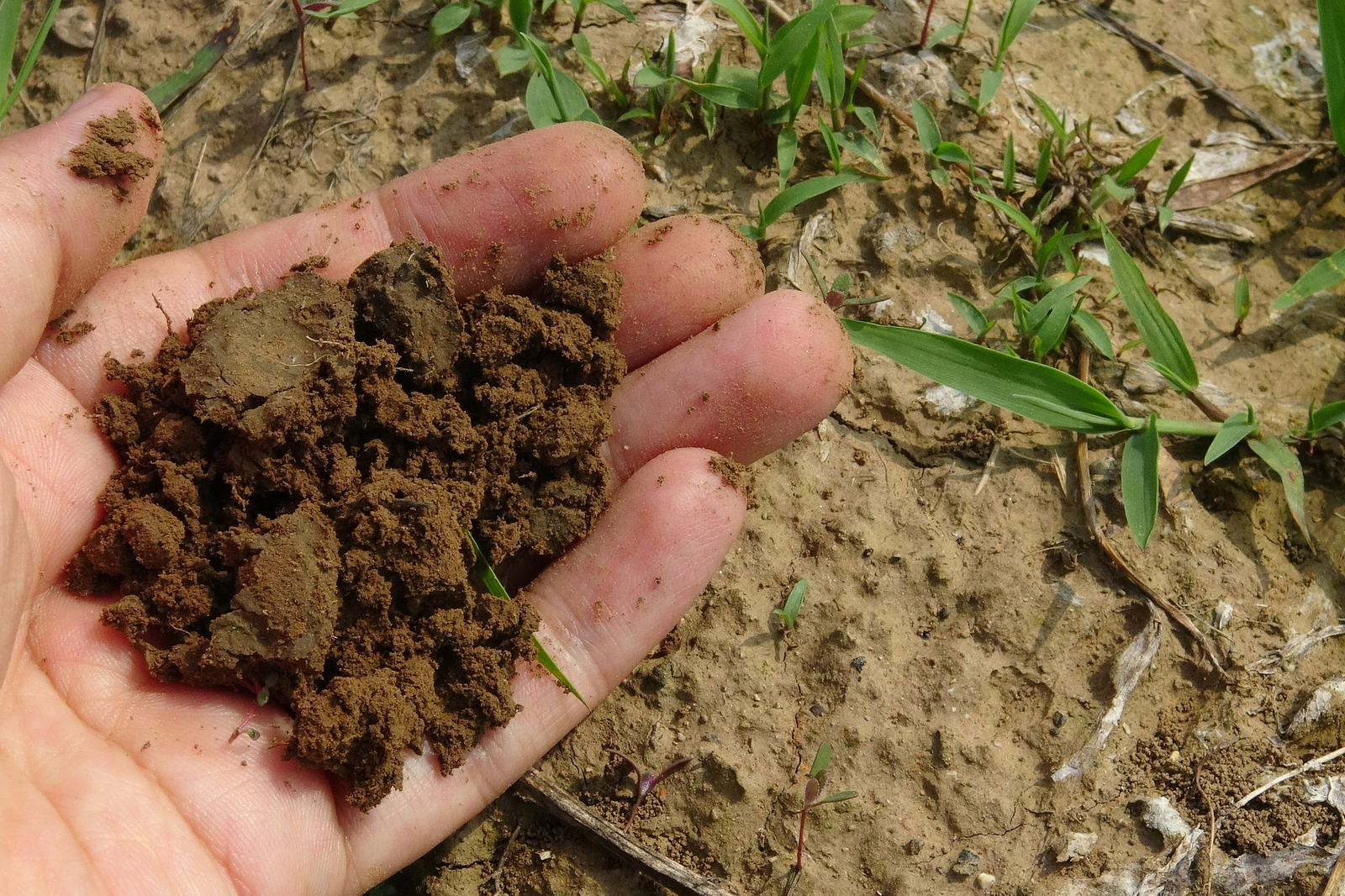
Given Taiwan's land and social conditions, extensive large-scale farming is hard to establish. We must take seriously the value and future development of smallholders, because Taiwan's mainstream productive capacity comes from smallholders. (Photo: Pixabay)
One of the first conditions of happiness is that the link between Man and Nature shall not be broken. – Leo Tolstoy
One of the first conditions of happiness is that the link between man and nature shall not be broken. — Leo Tolstoy
If companies want to perform well on ESG, taking part in "smallholder carbon farming" may be one of the best ways. Agriculture connects people and nature, and people must coexist with nature: using photosynthesis and plant physiology together with soil microbes, carbon is stored in the soil. "Carbon farming" means planting excess carbon from the atmosphere back into the ground, benefiting plants, the environment and human health — in other words, "restoring the Earth's carbon cycle".
This year marks the 50th anniversary of World Environment Day, with the theme "Only One Earth". The COVID pandemic is gradually receding worldwide and the world is entering a new post-pandemic life. In the French and Australian elections in May, global climate change and the environment became the main battleground, because countries have come to deeply recognise that in an interconnected world a new order must be built.
World Environment Day on 5 June originated with the 1972 Stockholm Conference in the Swedish capital, which established the UN Environment Programme. In 1987, Our Common Future, the report led by Norwegian Prime Minister Gro Harlem Brundtland, defined "sustainable development" as development that meets the needs of the present without compromising the ability of future generations to meet their own needs. (The Traditional Chinese edition of Our Common Future was published by Taiwan Earth Day Publishing, the predecessor of the Green Consumers' Foundation.)
In 2015 the UN set out the 17 Sustainable Development Goals (SDGs), with targets for 2020 and 2030.
In the 2021 Sustainable Development Goals Report, the UN Secretary-General wrote, in essence, that as the pandemic continued, the report outlined major impacts already visible in many areas: the global extreme poverty rate rose for the first time in over 20 years, with 119–124 million people pushed back into extreme poverty in 2020; and schooling faced a generational catastrophe, with an additional 101 million children falling below minimum reading proficiency, potentially wiping out 20 years of education gains.
The global food crisis has arrived
The pandemic that began in 2020, together with Russia's invasion of Ukraine in 2022, has burst the illusion of globalised prosperity built on greed and plunder, and it all comes back to food. In May the UN warned that the war in Ukraine would trigger a food crisis. Singapore recently faced a food crisis simply because grain-producing countries banned or restricted food exports — yet Singapore's Food Agency said in 2018 and 2019 that Singapore ranked as the most food-secure country in the world. Singapore imports 90% of its food.
According to the Council of Agriculture, Taiwan's calorie-based food self-sufficiency rate in 2020 was 31.75%, down 0.4% on the previous year, and it keeps falling. Probably everyone has noticed lately that everything except wages is going up, just like our daily rising case numbers, and food is what we feel most. International freight costs have soared — EVA Marine can pay a 40-month year-end bonus, and we've paid for it mouthful by mouthful — and after the ports of Ukraine, the world's breadbasket, were blockaded, global grain grabbing and price rises have accelerated.
Taiwan's agriculture has been a neglected issue amid the pandemic and global climate change. We are reconnecting agriculture with the issue of climate change, and this calls not for relief-style subsidies but for a thorough rebuild. Given Taiwan's land and social conditions, extensive large-scale farming is hard to establish. We must take seriously the value and future development of smallholders, because Taiwan's mainstream productive capacity comes from smallholders; even so-called "large farmers" are really aggregations of smallholders.
How to connect smallholders' productive capacity, create collaboration and ensure Taiwan's food security is the responsibility of the agricultural authorities, but consumers and private companies must also play their part. Based on the Sustainable Development Goals, we are linking "smallholder carbon farming" with sustainable development.
Cutting carbon is not just cutting carbon: at least 3 SDGs must be quantified and certified
Smallholder carbon farming is a grassroots action by the Green Consumers' Foundation in line with the international 4 per 1000 Initiative. It helps smallholders change their farming practices according to the UN Clean Development Mechanism and international carbon reduction certification standards, turning soil into a long-term sink for organic carbon, reducing methane and nitrous oxide emissions, and farming ecologically and organically to achieve environmental, agricultural and food safety. Carbon farming is effectively "contract farming" of carbon reduction credits with farmers.
Under the requirements that the international carbon reduction certification body Gold Standard for the Global Goals (GS4GG) introduced from mid-March this year, every carbon reduction project must register its quantified SDG impacts: besides Goal 13 Climate Action, it must show quantified results for at least two more goals to obtain certification.
In developing the smallholder carbon farming project, we read carefully and considered the relationship between the carbon farming project and the SDGs. The results are as follows:
1. No Poverty. Farmers are relatively low-income; carbon farming can increase the value of their products and give them a better market position.
2. Zero Hunger. Carbon farming activities do not reduce food output or output value, and make farmers pay more attention to environmental risks and climate change and adapt their production.
3. Good Health and Well-being. The methodologies used in carbon farming also shift practices towards eco-friendly farming with less or no pesticides and fertilisers, making farmers healthier and food safer and more nutritious.
4. Quality Education for all. Carbon farming is excellent knowledge and teaching material on environmental, agricultural and food safety. From farmers' practice and their produce to the market and into consumers' hands, it is all an opportunity for teachable moments, life education and social education.
5. Gender Equality. Under international standards, carbon farming activities must not involve any gender discrimination; women are protected, and gay, transgender and people of all sexual orientations are respected.
6. Clean Water. Carbon farming means cutting the "fat" — using less fertiliser and also fewer pesticides and herbicides, giving soil bacteria a better chance to thrive and thus reducing water pollution.
7. Affordable and Clean Energy. Carbon farming projects use surplus agricultural materials such as pruned branches and leaves, straw, rice husks and livestock manure for compost and biogas, or to make biochar and syngas, recovered as energy or for electricity.
8. Decent Work and Economic Growth. Smallholder carbon farming gives farmers a chance to advance, take part in international carbon reduction action, and raise the value and market competitiveness of their products.
9. Industry, Innovation and Infrastructure. International carbon farming action changes farming practices and uses new inputs and the circular economy, driving innovation in agriculture, rural communities and farm products and building a green industry chain.
10. Reduced Inequalities. Smallholders are often at the bottom of the supply chain, at an unfair disadvantage in the market with no pricing or bargaining power. International carbon farming action raises their market position and international standing.
11. Sustainable Cities and Communities. Carbon farming is a multi-layered environmental movement, from caring for the land and preventing natural disasters to community mutual aid and a stable food supply — the foundation of stable cities and communities.
12. Responsible Consumption and Production. Carbon farming projects hold ongoing stakeholder consultation meetings to prevent harm to other vulnerable people, and even help them, and disclose the production process through the MiHuMiSang app, with consumer participation (a participatory guarantee system) presenting it truthfully.
13. Climate Action. Carbon farming is a circular, sustainable action spanning production, consumption and regeneration. Through international standards and certification it quantifies reduction performance at every stage, and smallholders, consumers and sponsoring companies and individuals are all part of climate action.
14. Life Below Water. Reducing toxic substances and environmental hormones in carbon farming are actions that protect water bodies; in future, fisheries carbon farming will develop "blue carbon" to protect biodiversity in rivers and oceans.
15. Life on Land. One requirement of carbon farming is protecting biodiversity. For example, flooding rice paddies can provide winter habitat for migratory birds, and using less or no herbicide and insecticide protects soil organisms and microbes, which are important decomposers in the ecosystem.
16. Peace, Justice and Strong Institutions. Smallholder carbon farming is bottom-up change. Through genuine, traceable farming it creates a harmonious ecological environment at peace with nature, and through genuine carbon credit trading under international carbon conventions lets participants share the fruits of peace and justice.
17. Partnerships. Transparency and inclusion are the two basic principles of carbon farming. We use the MiHuMiSang app to show smallholders' daily work on site, in real time and truthfully, with satellite-positioned times and locations — pictures as proof. Consumers and sponsors can take part at any time, forming sustainable partnerships between production and consumption.
Companies, organisations and government agencies are welcome to contact us. We are glad to offer the "smallholder carbon farming project" to smallholders everywhere, and welcome participation, support and sponsorship from all sectors. Official sponsors and funders can also link with the carbon farming project's publicity to showcase their efforts and contributions to the Sustainable Development Goals.
For more information on smallholder carbon farming, see the MiHuMiSang Facebook page.
Source: CM Media ( https://www.cmmedia.com.tw/home/articles/34116 )


