 努力小農
本文尚無譯文。
COVID's global impact is just an appetiser compared with climate change: smallholder carbon farming as advance deployment
Our experience with the hole in the ozone layer tells us that solving climate change is not only the responsibility of big business; you and I must also do our part.
Most people probably think cutting carbon is the responsibility of big companies and of the state. The media focus on what TSMC is doing and how Apple requires its supply chain to reach net zero. But the real force for change forms quietly in our everyday spending, in what we take out of our pockets. Smallholder carbon farming aims to build a force for change in climate action that runs from smallholders to consumers. This is also the advance deployment most likely to succeed in facing global climate change.
COVID's global impact is just an appetiser compared with climate change
Apart from a few countries that insist on not living with the virus, the whole world has moved towards coexisting with COVID: masks off, borders reopened, normal life resumed. This 30-month global pandemic is a mere appetiser in the bigger picture of climate change; the real main course is still to come. Our past experience of solving the global crisis of the ozone hole shows that this requires systemic, bottom-up change: only when every person and every organisation truly builds consensus and recognises the crisis can we solve it together.
Since Typhoon Nepartak in 2016, Taiwan has had fairly kind weather in recent years with no major typhoons. But last spring's drought and this spring's continuous heavy rain still caused huge agricultural losses. Smallholders on the front line feel helpless and powerless; depending on the heavens for a living, they are at the mercy of the weather. This summer electricity use has hit another peak and may break the 40 GW record, though that is still some way from the installed capacity of 60 GW. All this extra demand will be met by thermal power, which will also affect every industry and people's livelihoods.
China is facing climate extremes this year. According to a People's Daily report on 22 June, provinces across the country face severe drought and flooding: the north is in drought while the south floods. Shandong's recent peak electricity load reached 92.94 GW, above the 2020 peak of 90.22 GW. On the 21st Chinese Premier Li Keqiang, inspecting a thermal power plant, ordered coal output to be raised to prevent power rationing. Meanwhile heavy rain in the south affected 479,600 people in Guangdong, damaged 300,000 hectares of crops and destroyed more than 1,700 homes.
Systemic disasters need systemic solutions
The New York Times reported on 24 June that over the past few decades China has turned farmland into cities, lifting hundreds of millions of rural people out of poverty. But in pursuing economic growth it also became the world's largest polluter, with greenhouse gas emissions exceeding those of all developed countries combined. Since then Xi Jinping has become the first Chinese leader to commit to tackling climate change as a national priority. China launched a carbon market last July to control emissions, and over the past two decades the green space in Chinese cities has increased almost fivefold.
This shows that systemic problems need systemic solutions. Policy declarations, a superficial carbon market, more green space and economic stimulus alone cannot achieve carbon reduction; they will only repeat the vicious circle of worse climate change and more emissions, ending in "passive carbon reduction" — a hard landing for industry, hardship for livelihoods, and suffering for all.
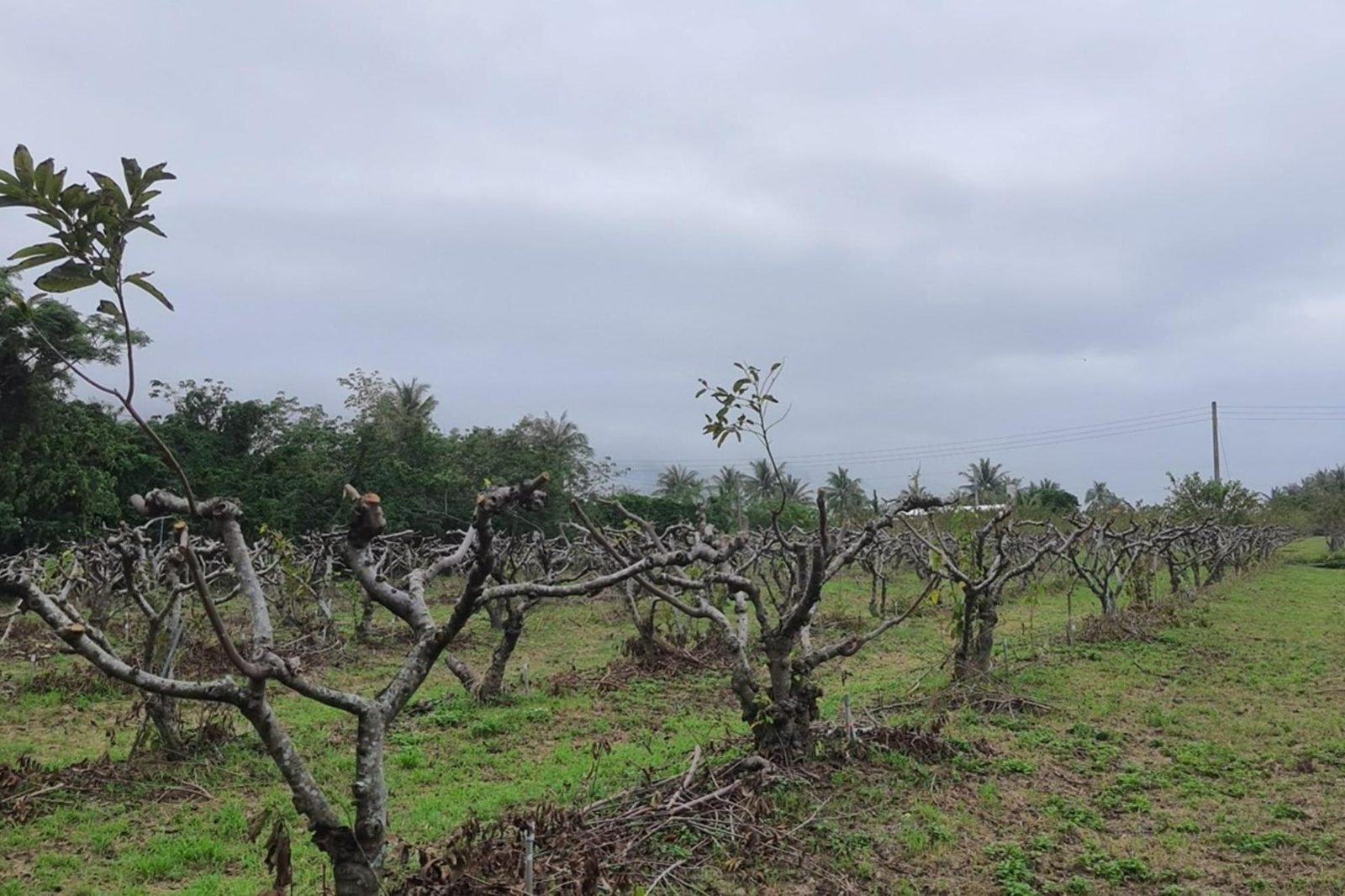
We responded to the international "4 per 1000 Initiative" with the "smallholder carbon farming" international voluntary carbon reduction certification plan. Many people think it's a drop in the ocean: Taiwan has only 800,000 hectares of farmland (and much of it is fallow or abandoned and cannot be used for carbon certification). At most, cutting 1 tonne per hectare gives only 800,000 tonnes; at US$10 a tonne that's only US$8 million, about NT$240 million — just two hours of TSMC's output. Even if all of Taiwan's farmers were mobilised, it would cost more than the carbon trading income, so it seems pointless.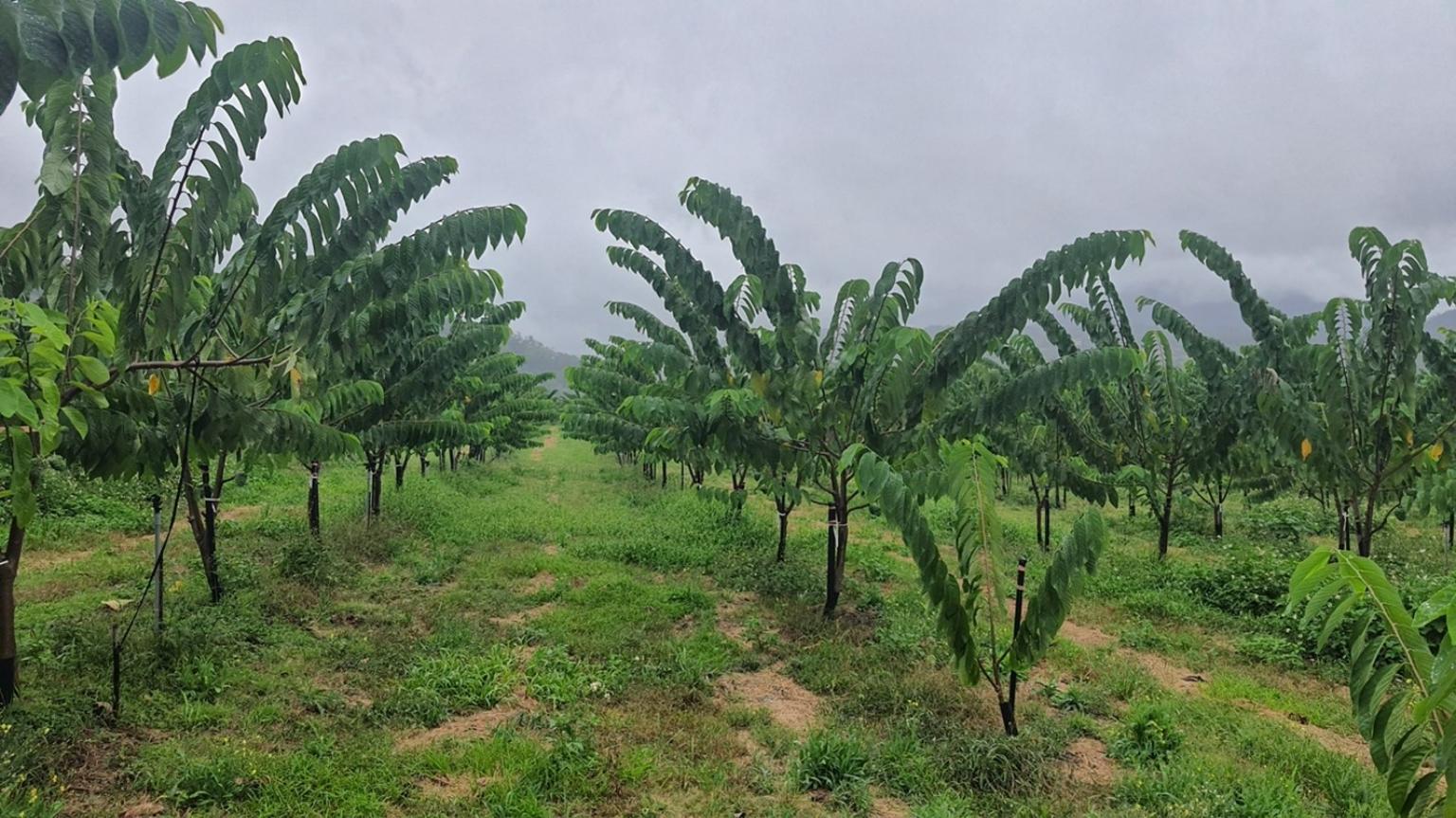
Applying carbon farming methodologies turns the growth and decline of crops into a tool for carbon sequestration and reduction, safeguarding environmental, agricultural and food safety.
Bottom-up mobilisation solved the hole in the ozone layer
As Confucius put it, you care about the sheep, I care about the rite. In terms of economic output, Taiwan's agricultural carbon reduction — never mind TSMC — brings in NT$20 million a month, less than opening a supermarket. Isn't that a loss-making business where the gain doesn't cover the cost? But when ordinary companies cut carbon, the public can't see what's happening or how it's done; they only see press releases or technical reports, and ordinary people feel nothing.
When we faced the ozone hole in the past, people buying air conditioners, fridges and cars at first saw labels saying "CFC-free, non-ozone-depleting refrigerant". They could recognise them and take part in the global action to cut CFCs, and it really worked, reducing them from source to consumer without affecting price or quality. A few years later CFCs were banned outright, effectively cutting off ozone-depleting substances.
When farm produce is carbon-reduced and internationally certified, consumers can know precisely how much carbon was cut for each kilogram they buy. And in the process of cutting carbon, soil organic matter also increases because farm inputs are used sensibly, making soil healthier. It also contributes to reducing environmental pollution, to consumers' health, to responsible consumption and production, to reducing hunger, to increasing social equity, and to bio-based green energy uses — a quantified understanding of each indicator of the Sustainable Development Goals.
This has a subtle influence on the consuming public, just like the "ozone-safe" products launched 30 years ago that consumers could recognise and choose. The ultimate impact of changing consumer behaviour is enormous and effective: just a 1% effect on the market can set off a domino effect of followers and imitators.
Voluntary carbon reduction is a global trend and the best fit for Taiwan
Socially, everyone recognises and supports smallholders. If smallholders with just a few fen of land can meet international standards for carbon reduction action, not only will big companies be put to shame, but SMEs, convenience stores and supermarkets will be embarrassed too. Consumers will then have even more power to demand that every level of government and every company cut carbon as much as possible.
The World Wide Fund for Nature (WWF) estimates that the volume and value of international voluntary carbon reductions are small, but their social influence is hundreds of times their direct economic benefit. A McKinsey report also notes that the voluntary carbon market has grown year on year since 2019.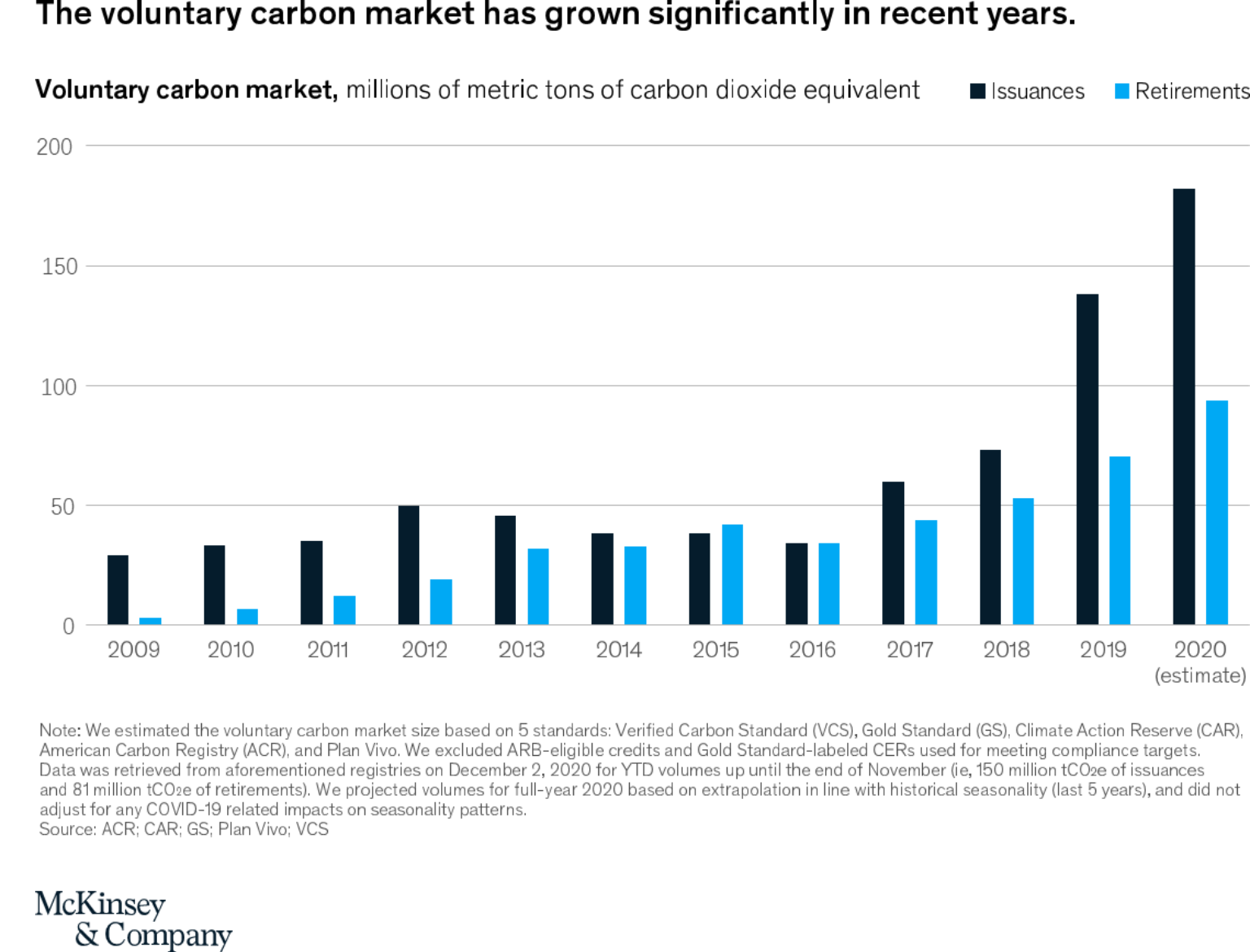
In 2020 McKinsey & Company found that the voluntary carbon market had been growing rapidly since 2009.
Taiwan's international situation is unusual, and it is hard for it to enter the intergovernmental compliance carbon markets. The voluntary carbon market is Taiwan's best option, and also a stage for Taiwan to show its international carbon reduction.
The MiHuMiSang app and "Smallholder Carbon Farming: International Voluntary Carbon Reduction Certification", initiated by the Green Consumers' Foundation and produced by Eco-affinity Inc., is a free mobile app for smallholders and consumers, designed to give smallholders a convenient, easy way to record their production process and to set their own prices, list and sell their products. Consumers can also easily find smallholders, see their work records, and buy directly from them or become friends. Every smallholder on the platform has been visited in person by Green Consumers' Foundation staff or volunteers to confirm their authenticity, ruling out anything false.
[MiHuMiSang: COVID's global impact is just an appetiser compared with climate change — smallholder carbon farming as advance deployment]
Source: CM Media ( https://www.cmmedia.com.tw/home/articles/34683 )


