 努力小農
本文尚無譯文。
Carbon trading or carbon betrayal? Smallholder carbon farming aims to open a skylight for carbon trading
Cutting carbon is a complex and difficult road; only by switching on the light in everyone's heart can we find the way. (Photo: Pxhere)
The challenge facing the smallholder carbon farming plan is not just environmental protection, or how humanity can rescue itself from the crisis of today's and tomorrow's extreme climate change, but human greed. Smallholder carbon farming aims to open a bright skylight for carbon trading, letting sunlight in and bringing light to the darkness of carbon trading. Only through transparency and openness, letting the public understand and participate, is there a chance to change the world.
Smallholder carbon farming aims to open a bright skylight for carbon trading
Last November I happened to watch an environmental documentary on Netflix that almost made me give up the plan to take part in international carbon reduction and carbon trading, because it was so outrageous, so sordid and so dark. If even the global action to save humanity's future can so easily fall into the pockets of lowly fraudsters, what is there left in this world to believe in?
Before deciding to launch a project for smallholders to take part in international voluntary carbon reduction and carbon trading, I made a point of gathering as much as I could about wrongdoing in carbon reduction and carbon trading. Only by knowing where the worst lies can we build error-proofing mechanisms and reduce mistakes and even crime.
During the nine months from business plan to project launch, I went around explaining "smallholder carbon farming" to all kinds of people. However hard I tried, carbon reduction and carbon trading were still like ducks listening to thunder for everyone — they quacked loudly but didn't know what it was really about. Only then did I realise that what I took for granted was, for most people, an incomprehensible book of riddles.
Because of long training in standardisation and quality management systems, every sentence I say at a briefing must be backed by sufficient documentary evidence: one is one, not 1.1 and not 0.9. Precisely because international standards and specifications are written in dry, obscure language, it's hard to strike an emotional chord with listeners. On top of that, the income from "smallholder carbon farming" is very limited — just a few hundred NT dollars a year per hectare, dwarfed by the government's various subsidies. Yet I must tell the truth, even if it drives away a group of potential smallholder participants.
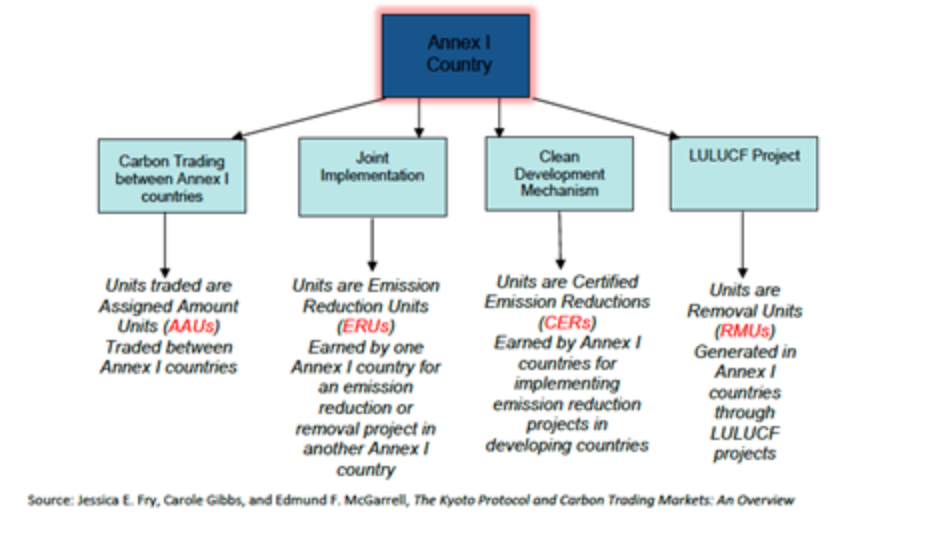
Under the UNFCCC Kyoto Protocol, developed countries (Annex I countries) buy emission reductions from developing countries (non-Annex I countries). The system is complex, opaque and hard to verify, and with huge sums of money involved it naturally became a breeding ground for all kinds of crime.
Don't assume carbon reduction is sacred, pure and good
In 2006, while doing some peripheral work on the CDM (the UN Clean Development Mechanism, the foundation of carbon trading systems), I found that these systems were very new and immature with loopholes, yet the market was red-hot, with a tonne of reductions often fetching over a hundred euros. Sure enough, the CDM ran into the 2008 financial crisis and by 2012 had virtually lost all credibility. Only with the 2015 Paris Agreement did the CDM turn a corner.
As one senior colleague analysed it, government officials are the people least concerned with performance, and the CDM was dreamed up by a group of government officials from various countries without much of a future, each with their own agenda — how could it possibly save the world? Put that way, I understood why the system's design was so odd and inefficient.
Last November Netflix released the French documentary series Lords of Scam. A conman, Marco Mouly, discovers the "perks" of the EU carbon trading scheme just after leaving prison. He uses fake trades to help companies evade VAT, makes millions of euros himself, flaunts and squanders the money, and keeps on cheating people. The story is long and dull, and while watching I thought: everyone assumes Europe is civilised and refined, and it's even introducing the Carbon Border Adjustment Mechanism (CBAM) — who knows what big loopholes it will create in future.
Because carbon reduction and carbon trading differ from ordinary tangible goods and services: they are a reduction, and a reduction is an absence. Proving an absence is harder than proving a presence. The CDM is a very cumbersome, long-winded mechanism, and it is hard to use testing methods to measure how much less carbon was emitted.
Dieting = I can't lose weight, so you slim down for me
Take dieting as an analogy: if all we do is measure how much less we excrete, that's pointless and ineffective, because all management must start at the source; end-of-pipe management is doomed to effort without reward.
So carbon reduction certification is a big pile of documents proving that a "UNFCCC non-Annex I country" has reduced its emissions, so that the reduction credits can be sold to "Annex I countries". Annex I countries are those that emitted the most carbon over the past 200 years — of course the "advanced, wealthy countries" such as Europe, the US and Japan. Non-Annex I countries are the Third World, the poor countries that didn't get the chance to emit over the past 200 years. The only clever trick is shifting the rich's responsibility for cutting carbon onto the poor. It's like a man who has eaten his way to 200 kg carrying on eating while asking a 50 kg slim person to diet; if their combined weight falls, he counts himself as having lost weight.
The heavy man is under pressure to lose weight, and every kilo lost earns back some VAT, so he would rather believe the slim person far away will surely diet for him. As soon as he hears there are cheap carbon credits to buy, he buys them, and gets tax cuts and refunds too. So "lords of scam" in the name of environmental protection emerged on cue, like a Ponzi scheme, listing something that doesn't exist and making a killing.
And carbon reduction is something that doesn't exist. As long as someone certifies it, some people are emotionally and morally willing to believe it. Just look at how every food claims to have passed some test and be safe to eat, and the same day the news may report the health bureau finding problems at that shop, yet consumers still choose to believe.
Riding the wave of climate change, a hypocritical environmental awareness is on the rise. People blindly follow along in a "worship and you'll be blessed" mindset, so scams and crimes by environmental charlatans keep appearing.
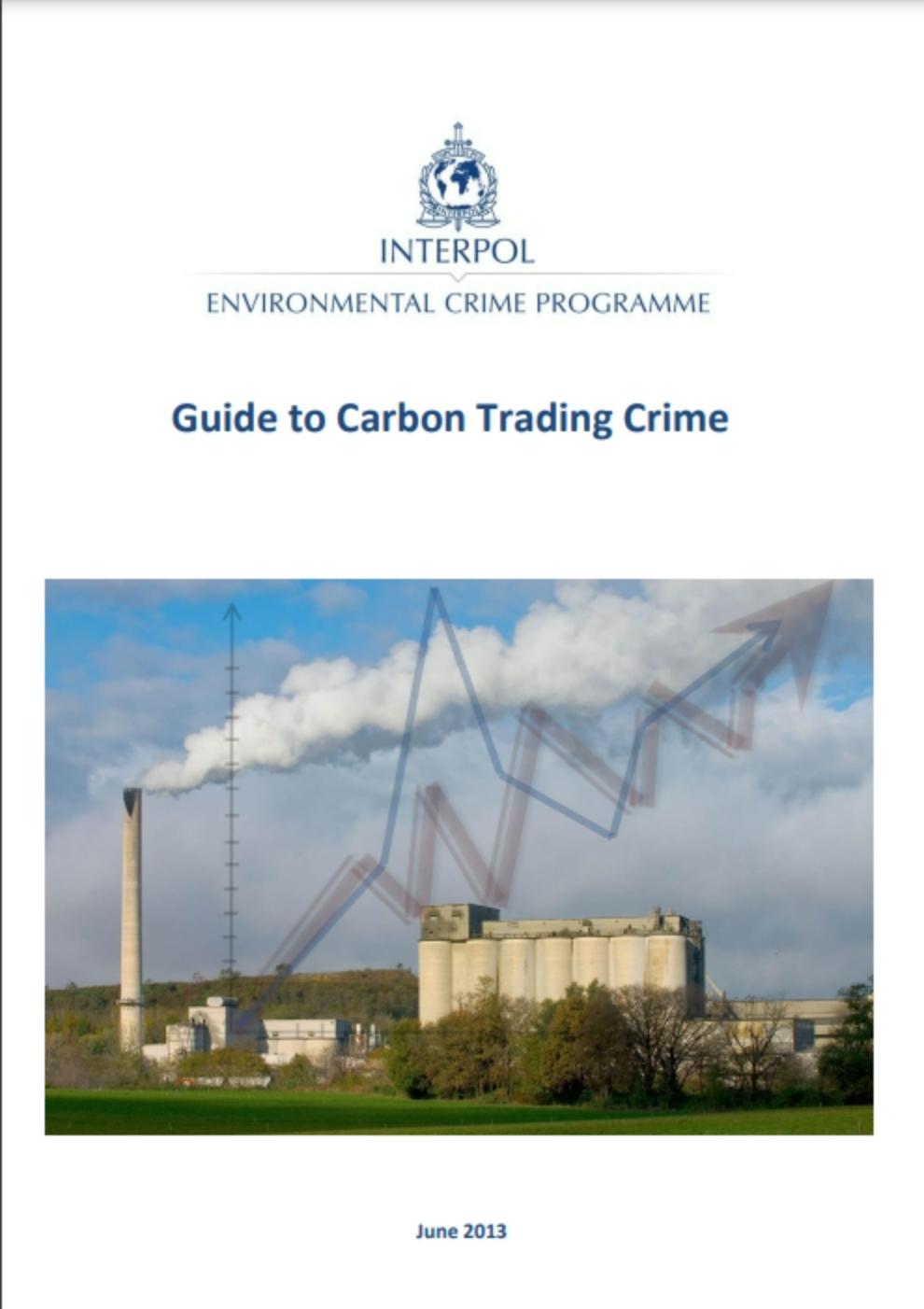
INTERPOL's Environmental Crime Programme published a Guide to Carbon Trading Crime listing ten methods commonly used by criminal groups. These crimes succeed because carbon trading systems lack sufficient transparency and public participation.
Carbon trading crime has become an INTERPOL textbook
In 2013 INTERPOL compiled carbon trading crimes from various countries and published the "Guide to Carbon Trading Crime", listing 10 methods: 1) manipulating measurements to falsify reduction quantities; 2) selling non-existent carbon credits or impersonation; 3) fraud or misleading claims of environmental or financial benefits in carbon investment markets; 4) financial crime exploiting regulatory weaknesses; 5) tax fraud; 6) securities fraud; 7) fake carbon trades in tax havens; 8) money laundering; 9) cybercrime or hacking to steal carbon credits; 10) phishing or theft of personal data.
Look closely at these "10 crimes" and none requires high technology or expertise; they exploit human ignorance and greed to create a new criminal paradise.
Every market has fraud and crime, let alone the carbon market, worth billions of dollars and said to reach a trillion dollars in annual trading — it is virgin territory for crime. It has happened before and will certainly happen again.
Lack of transparency and public participation is where every scandal begins
During my two years as a member of the Taipei City Integrity and Transparency Committee, we investigated the "five major scandals". Their roots all lay in a lack of transparency and openness and in excluding the public from participation and oversight, causing citizens heavy losses and costing the government its credibility. This was also my original motivation two and a half years ago for developing MiHuMiSang. Facing the past mistakes of the carbon trading market, I believe transparency, openness and public participation are the cure.
Because of all its uncertainties, agricultural carbon reduction is a high-risk area of carbon reduction. I chose to start with this hardest market precisely to test whether MiHuMiSang can make it easy for smallholders to disclose their "carbon farming" results, searchable online at any time and verifiable on site.
We are also working with the PGS (Participatory Guarantee System) of Tzu Chi University and Feng Chia University. In future, a verification mechanism centred on communities, consumers and farmers will also work like a "real-life happy farm": with the MiHuMiSang app you can follow the map to find quality carbon-farming smallholders.
In mid-July the MiHuMiSang app will add carbon farming features. Besides carbon farming, they can also be used to design, implement, audit and improve organic, eco-friendly, production-traceability and other farming methods. The first phase of the smallholder carbon farming plan, "soil organic carbon" and "methane reduction in rice paddies", will soon be submitted to the certification body for review. Interested smallholders, consumers, communities and schools are welcome to join.
Source: CM Media ( https://www.cmmedia.com.tw/home/articles/34800 )


