 努力小農
本文尚無譯文。
To till or not to till: how should you plough when carbon farming?
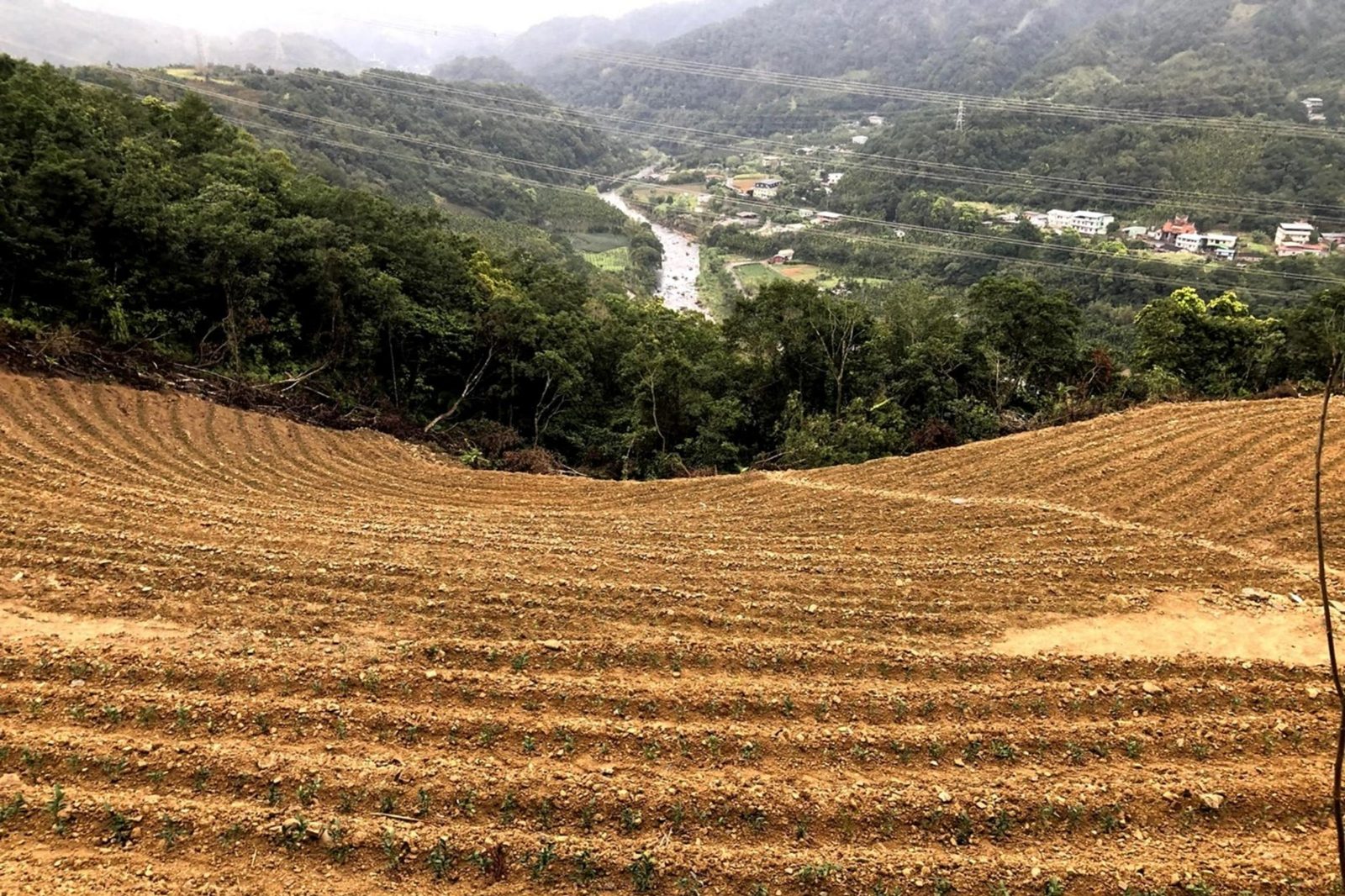
Clearing steep hillsides for farming is hard work, and the resulting soil and water loss means the gain isn't worth the cost.
We are past Minor Heat (Xiaoshu) and into the hottest days of the year. A famous Tang poem on hoeing describes farmers hoeing at noon under the blazing sun, sweat dripping onto the soil beneath the crops — a scene that lets us all feel the hardship of turning soil with a hoe in the scorching heat.
How we till is the fundamental question of soil carbon sequestration
Soil is the largest carbon capture and storage on the Earth's surface, and the power for that capture and storage comes from the sun through plant photosynthesis. It is not only free but also provides food and timber. Fields, ecosystems and forests are far more effective and valuable than any other carbon storage method, and need no maintenance. But the fundamental question of soil carbon sequestration lies in how the land is ploughed.
Hoeing loosens the soil for seedlings and removes weeds so crops grow better. In ancient times, weeding by hand had limited effect on the land, but modern large-scale mechanised tillage creates enormous carbon emissions. In NASA's time-lapse of changes in global atmospheric CO₂ concentration from 1 June 2020 to 31 July 2021, you can clearly see that when spring tillage begins, atmospheric CO₂ concentration surges, more than 10 ppm higher than in winter when fossil fuels are burned for heating. This means that reducing large-scale tillage could reduce seasonal human CO₂ emissions.
Reducing unnecessary tillage is one of the key proposals of the international 4 per 1000 Initiative. In "smallholder carbon farming", which takes part in international voluntary carbon certification, we discussed the possibility of reducing tillage with many farmers, and the answer was a lot of head-shaking.
"If you don't turn the soil, how do you fertilise?"
"How do you control weeds?"
"How do you sow and transplant rice?"
"Without turning the soil, nothing will grow!"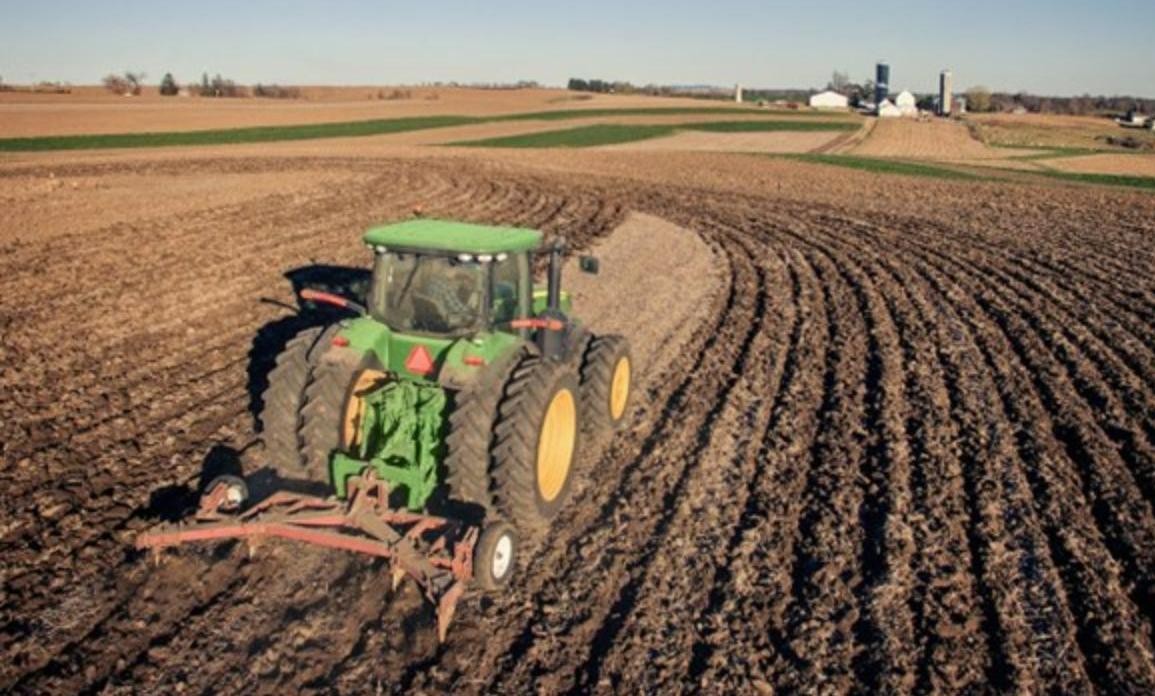
Deep tillage and strip tillage are carbon-reducing methods currently used in large-scale farming abroad.
These questions stem from a misunderstanding of "no-till". Farming inevitably involves tillage in the production process; this is not an absolute "ban on tillage" but moderate tillage. The main aim is to keep the soil healthy, so that soil microbes can form a symbiotic ecosystem with crops and turn the organic matter plants release into the soil through their roots into humus.
Abroad, "Conservation Tillage" and "Humus Tillage" are promoted, using deep tillage ploughs with shanks over 80 cm long and strip-till, all mechanised for large-scale crop production. Generally, earthworms in the soil are the best biological indicator: earthworms are the best producers of humus, and their castings are a treasure for forming aerated, water-retaining, organic and fertile soil. Look more closely and the granular and crumb structure of the soil and fungal hyphae are also indicators of healthy soil.
Soil is a very complex ecosystem, closely tied to soil texture, soil-forming factors, structure, hydrology, climate, microbes, animals and plants. It is hard to find two identical soil areas, so no single formula can be applied. Farmers must first understand their own soil conditions, the state of crop growth (root development), nearby irrigation systems, rainfall distribution and other factors before deciding which way of ploughing suits them best.
Experienced experts may see this at a glance, but how to respond over the long term still depends on farmers' own observation, study and trials to become clear. If you just hear how someone else does it and copy it, you may succeed or fail, because you know what to do but not why.
Trial and error is a necessary path for learning to farm. However experienced or learned a farmer is, with the climate different every year now, they can only "cross the river by feeling for the stones".
Soil organic carbon and humus should be inseparable from organic farming
Taiwan has promoted organic farming for many years. Wu Chien-wang of Ladybug Organic Farm, a pioneer of Taiwan's organic farming more than 30 years ago, believes organic farming today should go deeper into environmental ecology, not just whether pesticides and chemical fertilisers are used, but having greater ecological value.
Although the soil organic carbon methodology does not particularly emphasise organic farming or ecological protection, an increase in soil organic matter is a combined expression of organic, environmental and ecological practice. If you use excessive pesticides and fertilisers, don't practise good soil and water conservation and don't protect the ecosystem (from animals and insects to microbes), you won't get good soil organic matter results. Of the organic carbon, the most valuable part for crop nutrition is humus, which requires transformation by bacteria, fungi and earthworms to turn ordinary short-lived organic matter into long-lasting humus.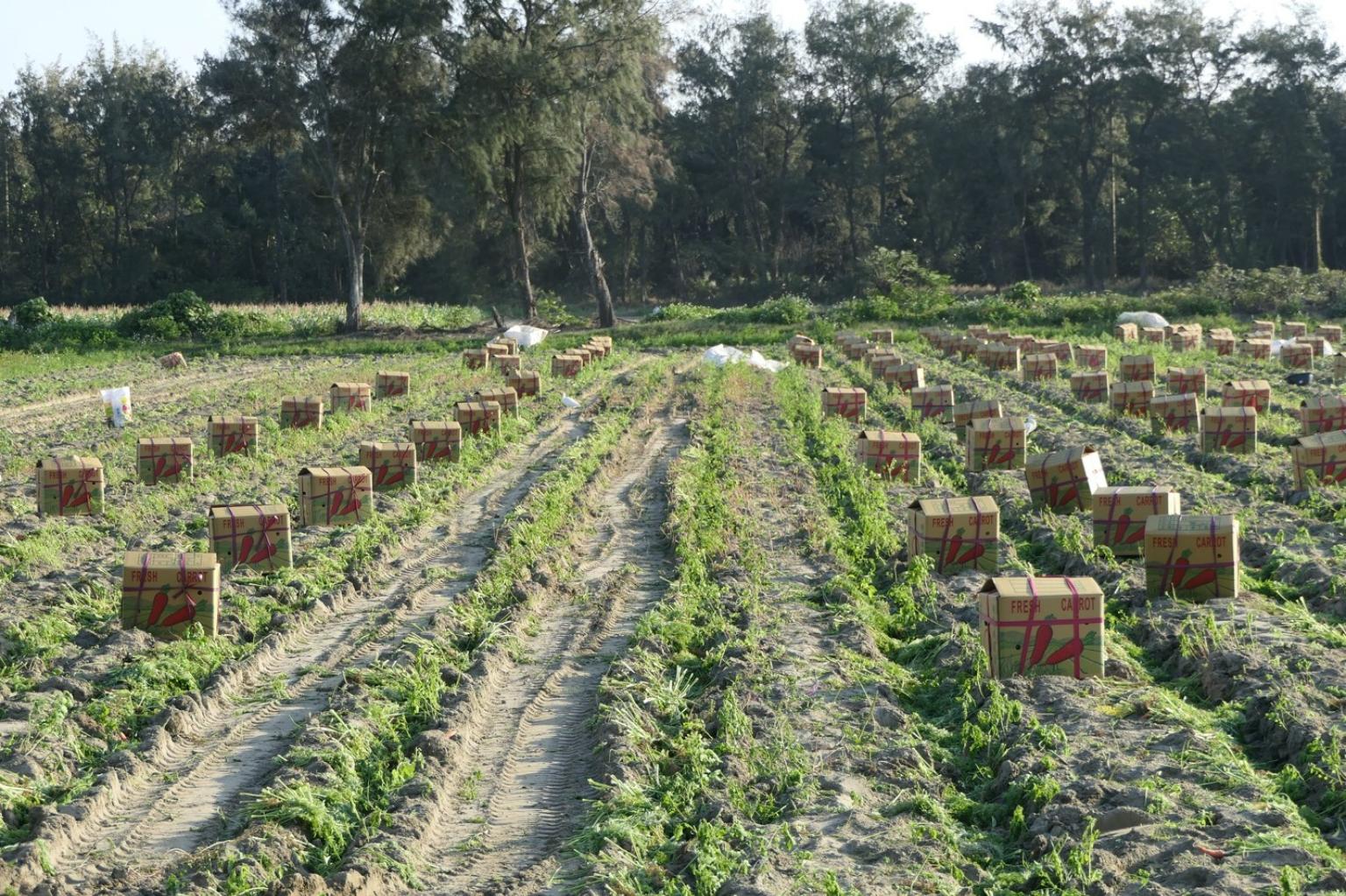
Under international agricultural carbon reduction methodologies, if tillage keeps more than 30% of the land covered, it contributes to soil carbon sequestration.
In international agricultural carbon reduction methodologies, the requirement for ploughing is simple: the tilled area should not exceed 70%, leaving at least 30% of the land covered. Use crop stalks and leaves left after harvest or cut grass to keep the soil surface covered as much as possible. This reduces sunlight killing microbial colonies in the soil, protects earthworms and other insects and small animals, reduces rain wash-off, and lets these residues become organic matter that retains water.
Experiments comparing soil under conservation or humus tillage with conventionally tilled soil found that soil under conservation tillage retains more water and more organic matter, with clearly better flood and drought resilience. And of course, with control groups under the same conditions, conservation tillage yields were higher than conventional tillage yields.
Will the cultural foundations of farming change because of carbon farming?
In addition, because all tillage methods disturb the soil, and machinery compacts it with its weight, the soil forms an impermeable hardpan called the "plough pan" — the older term is "ox-tread layer", formed by oxen treading as they ploughed. Retired soil expert Kuo Hung-yu of the Taiwan Agricultural Research Institute says that in many places in Taiwan the farmland topsoil is only 18 cm deep — quite precisely, because the blade radius of the rotary tillers used in Taiwan is 18 cm. Below 18 cm lies the "plough pan": impermeable, poorly draining and poor at holding water, and crop roots can't penetrate it.
Generally, the deeper the soil the better. The layers beneath contain minerals and other important nutrients; the topsoil's nutrients are easily used up by plants and need to be supplied from deeper layers, but the "plough pan" blocks them. Fields also easily become waterlogged, causing roots and stems to rot or pests and diseases to appear. Then a deep tillage plough is needed to break the plough pan, letting the lower layers connect with the topsoil and aiding drainage and root development. However, this method is not suitable for paddy fields in Hualien and Taitung, because most fields there are made of soil brought in over a gravel layer; with a deep plough they can no longer hold standing water (paddy fields need to be flooded). For dryland crops, though, it's not a problem.
If Taiwan is to contribute to agricultural carbon reduction in future, it must find tillage methods suited to Taiwan that reduce organic carbon leaking from the soil and keep more carbon in it, while making farming more organic, reducing pesticides and chemical fertilisers, and passing on enough real hands-on experience and knowledge from the field to form a good farming culture. This cannot be achieved overnight.
As Taiwan moves towards net zero, the amount of carbon reduced and sequestered by agriculture may look small, but the smallholders and consumers it affects make up the vast majority of Taiwan's population, so its social and cultural influence is enormous. Bringing in international agricultural carbon reduction methodologies to keep Taiwan's agricultural carbon reduction in step with the world will, I believe, send out wider ripples, influence other industries and become common knowledge and consensus among Taiwanese — which would be a great good.
Source: CM Media ( https://www.cmmedia.com.tw/home/articles/34929 )


