 努力小農
本文尚無譯文。
Globalised inflation: cut the "fat" to save Taiwan and end the long perfect storm
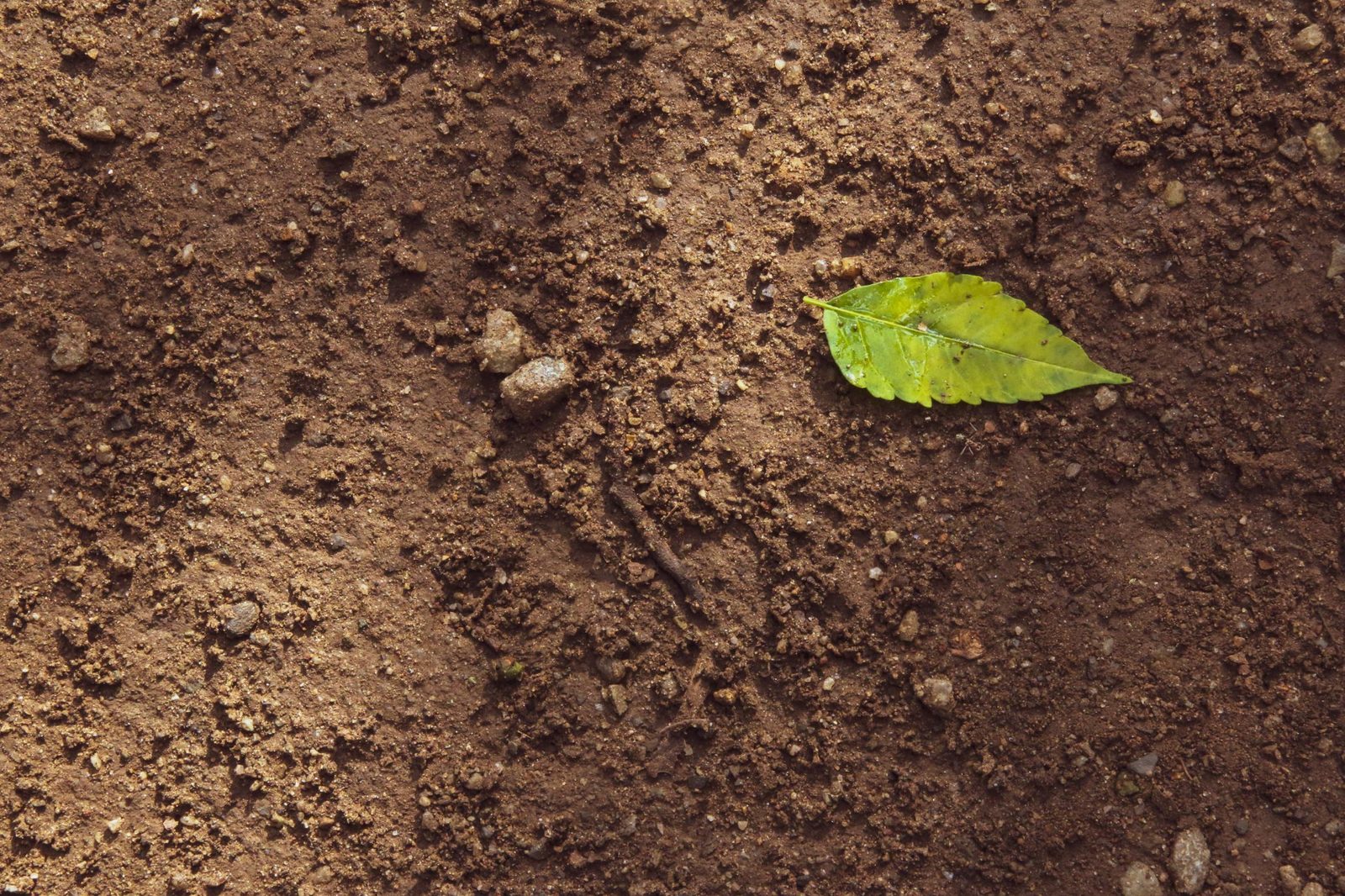
Fertiliser overuse is a serious problem in Taiwan. Just a few adjustments could easily cut more than 80% of the greenhouse gases from this source. (Photo: Unsplash)
A few years ago several European governments and parliaments declared a climate emergency. This past week's heatwave has brought forest fires, and Europe is in distress, like a Third World country plunged into catastrophe. Like a sci-fi disaster film, it is updated and replayed on the news every day. Whether or not you believe in global warming, even the biggest sceptic must admit that Europe is now in a "climate disaster".
Since early 2020 the sudden COVID-19 pandemic has changed the social, economic and political structure of the whole world. Humanity has gone through unprecedented mass quarantine; governments have used the virus to expand their powers almost without limit, restricting where people live and move, and printing money on a huge scale; and businesses, facing unprecedented challenges, have been tossed about in the storm.
International news this week has been alarming: a European heatwave, with Britain breaking records at over 40°C and France and Spain sweltering. Naturally the cry of "climate change" is everywhere, and all kinds of grumbling fill traditional media and online communities. Meanwhile, news of food crises and rising food prices keeps coming.
The globalisation that began in the 1990s with the collapse of the Soviet Union and Eastern Europe is now 30 years old, and the world has changed because of it — especially with the rise of China, whose 1.4 billion people, a fifth of the world's population, embraced globalisation. Taiwan and China both joined the WTO around 2001–2002. Both sides of the Strait, which once proclaimed agriculture the foundation of the nation, gave up large amounts of farmland for industry, commerce, housing and offices. Taiwan became one of Asia's Four Little Dragons, China became the world's factory, mass-producing and exporting industrial goods and supplying cheap products to the First World, and both went from exporting farm produce to importing food.
The money countries rushed to print during the pandemic will inevitably bring inflation. Sri Lanka has gone bankrupt; how many more countries and governments will go under even before sea levels rise?
Globalised inflation
Russia's invasion of Ukraine has caused international tension and a humanitarian crisis, and has also triggered energy and food crises. Russia, vast and resource-rich, uses its coal, natural gas, oil and minerals as weapons against Western sanctions. Ukraine is a global wheat granary, and the blockade of its ports has set off a global food crisis.
Nitrogen, phosphorus and potassium are the three main plant nutrients. Russian natural gas is the raw material for chemical nitrogen fertiliser, making Russia a major nitrogen fertiliser exporter. Producing it not only uses fossil fuels but also needs a great deal of energy (also from fossil fuels), making it one of the major sources of greenhouse gases, accounting for 75% of agricultural greenhouse gas emissions. The Russia–Ukraine war has directly caused nitrogen fertiliser shortages and price rises.
Besides nitrogen, phosphate and potash prices have also climbed, pushing up fertiliser prices worldwide. This leads to feed shortages and higher feed prices, driving up food prices overall. Food is a necessity of survival that we cannot go without for a single day. Food shortages and rising food prices hit low-income people hardest, and a global crisis is just around the corner.
If Russia's invasion were only a short war, Taiwan might stay safely on the sidelines for a while. But it looks set to drag on endlessly like the pandemic, drawing every country in, and it will be hard for Taiwan to escape the eye of this perfect storm. In the past two years Taiwan relied on TSMC and the other semiconductor "sacred mountains protecting the nation" to hold up the sky, and with the stock market breaking record after record it grew against the trend during the pandemic, leading the world as it did in disease control. But how much longer can it hold?
Last year's shipping crunch brought a food crisis that hit Taiwan's eggs because of rising feed costs. This year's extreme heat has even made Taiwan's rice suffer from rice blast and fail to form ears, so food and feed prices look set to rise further. Egg supply and demand are currently out of balance, and the egg shortage of earlier this year has returned, felt by ordinary people everywhere. Big food factories and stallholders have taken the chance to raise prices, and even when the egg shortage passes, prices won't come back down because other raw materials are rising too. Wage earners suffer most.
Food self-sufficiency is a national security indicator
Last year China banned imports of Taiwanese pineapples and sugar apples, and this year grouper too, and Taiwan was hit immediately. Strangely, Taiwan's food self-sufficiency (estimated by calories) is only about 30%, so in theory we still have plenty of room to absorb the food we produce ourselves. Many experts and academics have stressed the importance of food self-sufficiency, and only now is it becoming apparent.
However much humanity pursues the metaverse and blockchain, looks for planets to emigrate to, or prepares for aliens, in the end we still have to bow for our daily bread — we have to eat.
A foreign research report notes that under inflation, because imported food is expensive, people in many countries are prioritising domestic food and cutting exports, and Southeast Asia's rice bowls — India, Thailand, Vietnam and Cambodia — are holding on to their rice and raising prices.
The WTO made Taiwan all but give up on agriculture. Whenever water is short, farmland is left fallow to guarantee industrial water supplies. Farm output value is too low; industry makes money and imports food, problem solved. Even if some countries suffer disasters, with global sourcing there is no shortage of cheap, good food. Now natural and man-made disasters show the power of globalisation too: not just global shipping and logistics and pandemics, even temperatures seem linked. These past two days, as heatwaves swept distant Europe, Taiwan, more than ten thousand kilometres away, saw 40.7°C even in Yuli, Hualien — a kind of heatwave "quantum entanglement".
Not just eggs: other farm produce will run into problems too. Wheat is short and soaring due to the Russia–Ukraine war, and flour prices have hit records. This year's heat brought serious rice blast to the first rice crop; the second crop is being planted now and has met another heatwave, so it may fail too. Other rice-producing countries are also holding back and raising prices, so rice prices in Taiwan will inevitably be affected in the second half of the year.
Once rice prices rise, all food prices will follow. Taiwan is also facing obvious heat damage, adding fuel to the fire. Will Taiwan still have a rice surplus in the second half of this year as in the past?
This is a huge "vicious circular economy": burning more fossil fuels throws the atmosphere out of balance, the climate becomes more extreme, agriculture, forestry, fisheries and livestock are affected, and people's livelihoods suffer. A local regional war, riding the aircraft carrier of globalisation, becomes a world war, drawing more countries into the disaster of war, escalating it further and causing more suffering. Fewer resources go to environmental protection, making the global climate problem worse, and extreme heat and cold force even more fossil fuel use, and so the cycle repeats. Pandemic and inflation run even more rampant amid the energy, food and military crises.
Agricultural carbon reduction seems far removed from these global disasters, but in fact it holds the chance to turn this "vicious circle" into a "virtuous circle".
To cut carbon, first cut the "fat"
Today the largest source of carbon dioxide from human activity worldwide is food production and processing, at as much as 34%, of which agricultural production and land use account for 39% and 32% respectively, 71% in total. If emissions from this part can be reduced, most of the problem can be solved. Agriculture also involves natural carbon sinks that can draw carbon back in and turn it into food, so simply by cutting emissions and increasing sinks we can greatly reduce greenhouse gas emissions.
Among agricultural greenhouse gases, nitrous oxide is the one most readily reduced. The large amounts of nitrogen in chemical fertiliser come from natural gas and consume a lot of energy, and overuse then produces nitrous oxide, the largest greenhouse gas emission, because 1 tonne of nitrous oxide is equivalent to about 300 tonnes of carbon dioxide. Effective control of sensible nitrogen use could cut agricultural greenhouse gas emissions by about 20%. Excessive nitrogen also inevitably acidifies the soil and kills beneficial microbes — a cancer of the land, you could say. Moreover, nitrogen oxides end up in fruit and vegetables as nitrates and nitrites, which are carcinogens and very harmful to the human body.
Reducing excess nitrogen will not cut yields. Farmers save a great deal on fertiliser, water pollution is reduced, as is air pollution at the source where fertiliser is made, and using biological and organic inputs makes the soil and land healthier and food safer.
Fertiliser overuse is a serious problem in Taiwan. Where 20–30 kg per hectare would be enough, 100 kg is often used, and over-fertilising actually harms the crops. In fact only adjustments to policies and measures are needed to easily cut more than 80% of the greenhouse gases from this source, and the government could also cut public subsidies for excessive fertiliser use — in line with the 80/20 principle of management.
The Earth is a living organism. Environmental problems are much like human health problems: misused by humans, the Earth has become too "fat" and produces toxins. Before trying to detox it today, let's first put it on a diet!
[MiHuMiSang: Globalised inflation — cut the "fat" to save Taiwan and end the long perfect storm]
Source: CM Media ( https://www.cmmedia.com.tw/home/articles/35190 )


