 努力小農
本文尚無譯文。
How do you scientifically quantify net zero and ESG? Smallholder carbon farming shares the same universal values as big business
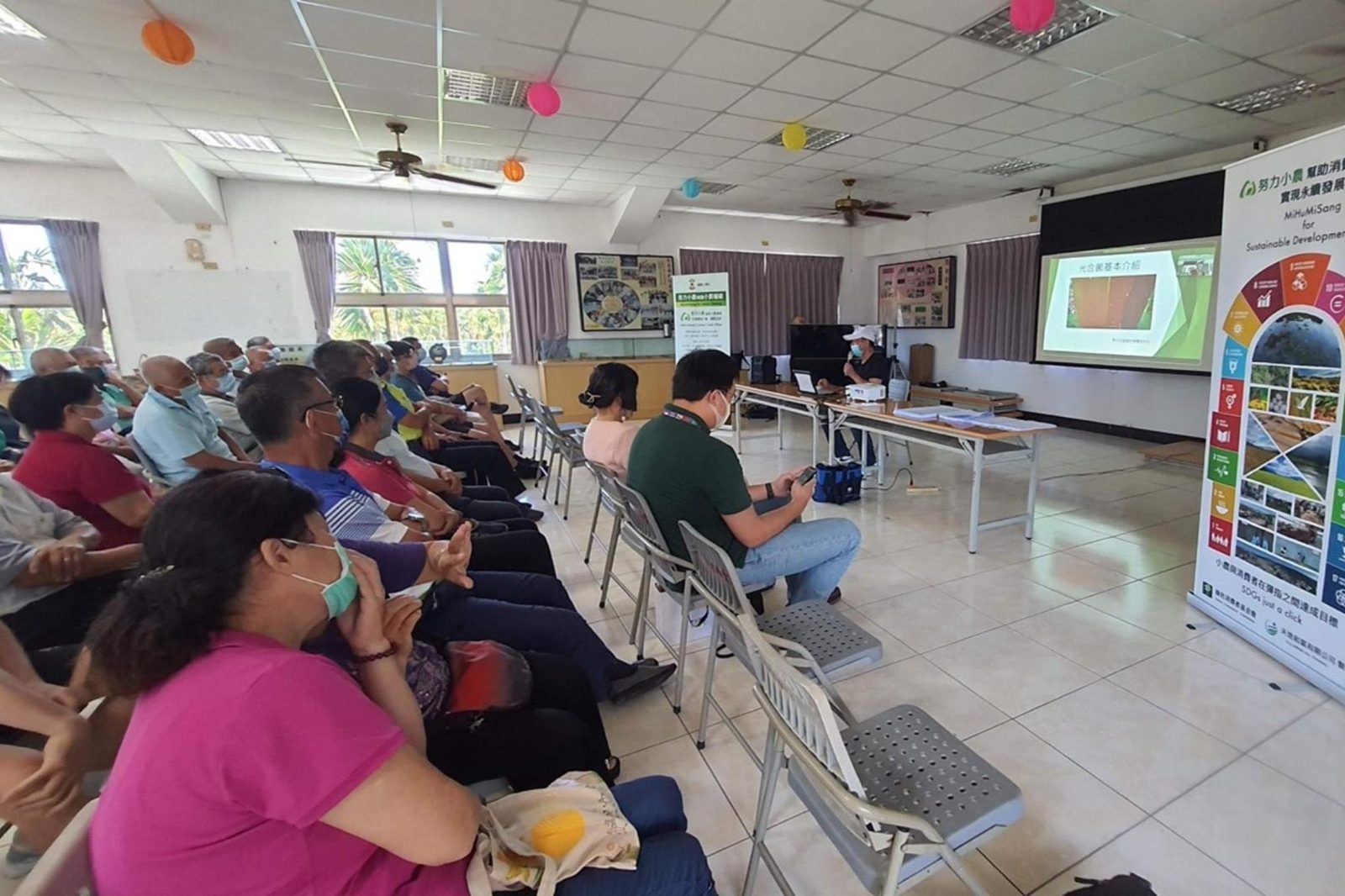
Explaining the link between smallholder carbon farming and the UN Sustainable Development Goals in Dongpian Village, Neipu Township, Pingtung: reducing betel nut cultivation can also help reduce oral cancer (Photo: Jay Fang)
Lately I have met many people who talk at length about net zero, the UN Sustainable Development Goals (SDGs), corporate Environmental, Social and Governance (ESG), the GRI (Global Reporting Initiative), and on the financial side the Task Force on Climate-related Financial Disclosures (TCFD), and the list goes on. Different industries, customers and regulators all require companies to write, submit and publish these reports, and central ministries and local governments have all released voluntary sustainable development reviews, published on the National Development Council's website.
How many Taiwanese companies can write sustainability reports and related documents, and then actually implement them?
Looking across all these goals, standards, initiatives and guidelines known by English acronyms, many companies, already operating in a harsh business environment in recent years, must also write these reports. Either they wear themselves out, or they pay consultants to ghost-write them, piecing together beautifully illustrated reports. But read them closely and you find they are mostly superficial, feel-good narratives. The hardest part is long-term quantitative indicators and monitoring reports rather than empty generalities, and this is exactly what Taiwanese companies, good at quick short-term plays, tend to lack. It takes a company the size of TSMC to produce sustainability reports with real substance. How many Taiwanese companies can write such reports and documents and genuinely implement them?
For over a month I have been writing the project design report for "smallholder carbon farming". Besides matching every requirement of the soil organic carbon methodology one by one and attaching the relevant documents, we must also provide baseline values, data collection methods and sources of data for monitoring reports. Moreover, the international voluntary carbon standard Gold Standard for the Global Goals requires that any project applying for certification after 14 March this year, regardless of size, must also report quantitative indicators against the 17 Sustainable Development Goals: besides SDG 13 Climate Action, at least two further SDGs are required to apply. During future certification periods, the verification body will check each of them before issuing carbon credits for emission reductions and SDG impact certification, all based on scientifically evidenced quantitative indicators.
Reducing and farming carbon isn't hard; quantifying the SDGs is
Writing quantitative SDG indicators for smallholders is no easy task. The SDGs may look broad, but matching them against each indicator and providing quantitative monitoring data up to 2030 is quite difficult. Take the very first indicator: "1.1.1 Proportion of the population living below the international poverty line by sex, age, employment status and geographic location (urban/rural)". This probably does not apply to Taiwan's smallholders, and it is hard to help people below the poverty line in Taiwan, so it cannot be applied to smallholders and we need to find suitable indicators instead.
Just understanding the 270-plus indicators is very difficult. Even experts and academics cannot fully grasp these all-encompassing indicators; it takes a period of discussion, reflection and consolidation before reaching a certain understanding and consensus and being able to begin.
After more than a month of struggle, writing quantitative SDG indicators for smallholder carbon farming is really hard; every day I feel trapped, and this could affect certification eligibility. The Gold Standard has created an "SDG Impact Tool" that provides quantification for SDG 13, but it is still hard to understand and operate. It is an Excel spreadsheet: after selecting soil organic carbon as the reduction method and then choosing an SDG Goal and Target, the next level of Indicators pops up automatically, meaning there are applicable indicators. If no sub-indicators pop up, there may be no applicable indicator, and the user must try a different target or set their own indicator.
A note here: in Chinese translation, Goal, Target and Indicator should correspond to the global sustainable development aims, targets and indicators for 2020–2030, but in Taiwan all of them are commonly translated as "sustainable development goals", so I translate Target as "sub-goal" to avoid confusion.
Quantifying SDG impact over the next 8 years
Then, under the indicators shown by the Excel quantification tool, we must also define the impact indicator, impact category, SDG, SDG target, description of impact, calculation method and other guidance, data unit, data source, measurement procedure, monitoring frequency, reference value and so on. Only then can we fill in the fields for each project indicator, estimate, monitoring method and quality assurance / quality control.
For example, in our smallholder carbon farming climate action, we plan to help smallholders market their produce. Because it carries carbon farming and reduction value, their income will rise, which corresponds to SDG 8, Decent Work and Economic Growth. We must then state compliance with target 8.5, "By 2030, achieve full and productive employment and decent work for all women and men, including for young people and persons with disabilities, and equal pay for work of equal value", and with indicators 8.5.1, average hourly earnings of employees by sex, age, occupation and persons with disabilities, and 8.5.2, unemployment rate by sex, age and persons with disabilities.
So we must make sure participating smallholders understand that over the next 8 years they need to pay attention to gender equality among workers, increasing employment opportunities and income, and providing information on the age and disability status of those taking part in the work.
In addition, for SDG 12, Responsible Consumption and Production, we drew on the Homemakers United Foundation's 20-year advocacy for reducing nitrate content in fruit and vegetables. The Homemakers Union Consumers Co-op has long monitored nitrate levels in its farmers' produce to protect consumers' health, because the International Agency for Research on Cancer has assessed the carcinogenicity of ingested nitrate and nitrite, concluding that ingested nitrate or nitrite under conditions that result in endogenous nitrosation, that is, conversion into N-nitroso compounds such as nitrosamines, carries a cancer risk. The UN has also stated that meat processed with nitrates and nitrites contains carcinogens.
How to link net zero and ESG quantitatively?
In the carbon farming process we stress that farmers should use fertiliser sensibly (both chemical and organic fertilisers are used in large, excessive amounts). Excess nitrogen is bad for plants: apart from the weather, a major cause of rice blast is too much nitrogen (urea). If use is reduced, the best evidence is a fall in nitrate, which can be measured simply with colour-comparison test strips.
While writing the project design I consulted many sources. In supply chain / value chain management, international companies also require themselves and their suppliers to meet certain ESG indicators, and most of these echo the UN's 17 SDGs. So the time spent now thinking through, planning and implementing quantitative SDG indicators for smallholder carbon farming is meaningful: it reveals the SDG impact of smallholders' work and connects it with the SDG components of corporate ESG.
Along the way I also asked a number of companies about the relationship between ESG and the SDGs, and found that most also gave descriptive accounts of past environmental and social responsibility work, and found it hard to plan future work from a quantitative angle.
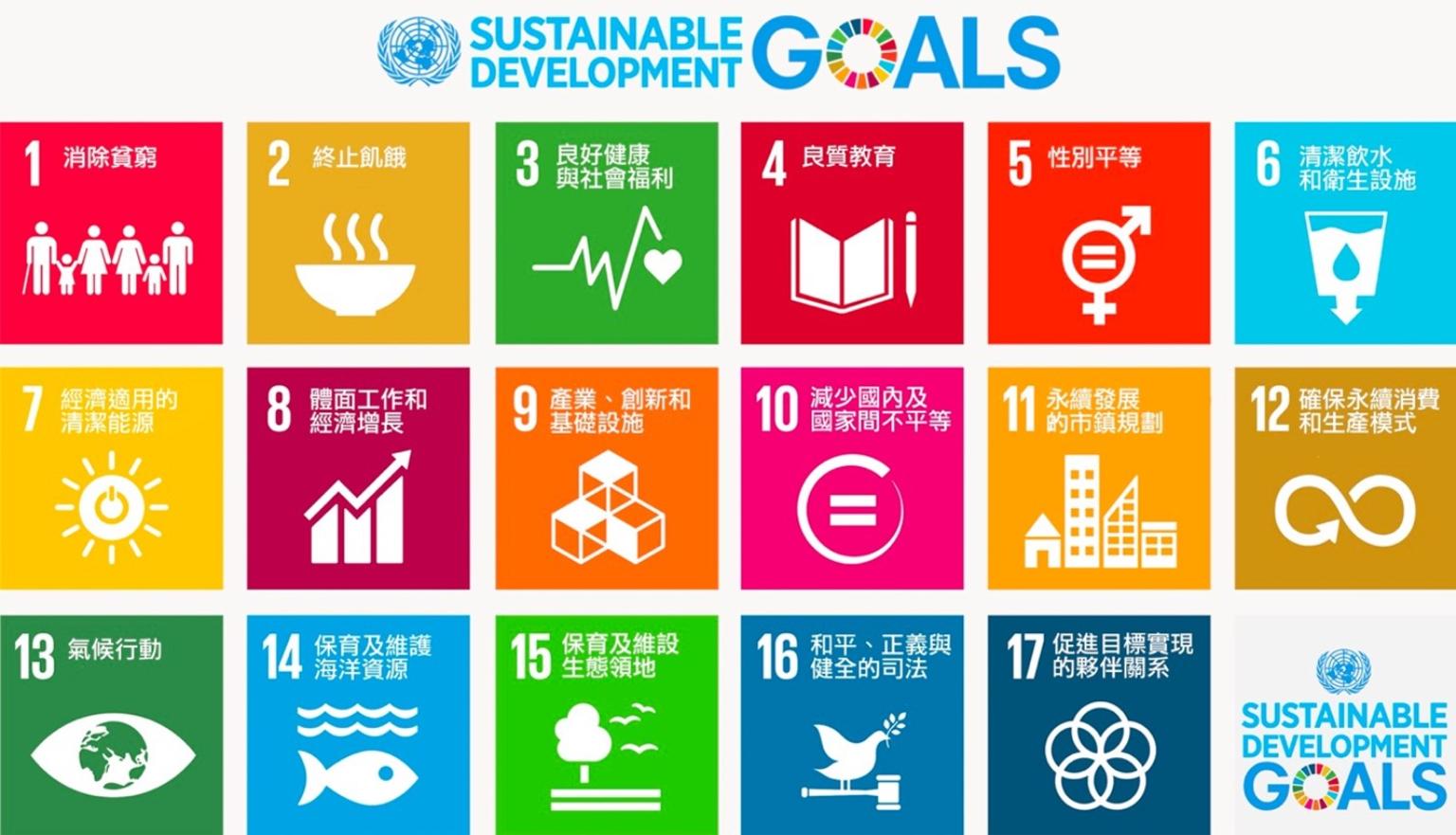
The UN Sustainable Development Goals are not just universal values but also indicators of future competitiveness.
In 2015 the UN set the SDGs to build on the eight poverty-ending goals of the Millennium Development Goals (MDGs) set in 2000, and they can be regarded as humanity's concrete universal values. Governments, companies and international organisations have therefore developed environmental and social responsibility indicators based on the SDGs as a shared direction of effort.
In corporate competition, the SDGs have become the yardstick of universal values and an important performance indicator of competitiveness. Taiwan is an important link in global supply chains and needs to adapt all the more: besides making money in highly competitive markets, it must consider how making money can benefit humanity in line with universal values, to secure Taiwan's position in the supply chain.
If companies can take agricultural carbon reduction into account as they develop their business, they can not only speed up their own emission reductions but also obtain certification of quantified SDG targets recognised by international organisations — killing several birds with one stone.
[MiHuMiSang: How to scientifically quantify net zero and ESG? Smallholder carbon farming shares the same universal values as big business]
Source: CM Media ( https://www.cmmedia.com.tw/home/articles/35302 )


