努力小農
本文尚無譯文。
A smallholder's ecological wisdom: Chiang Yu-pao's army of golden apple snail weeders
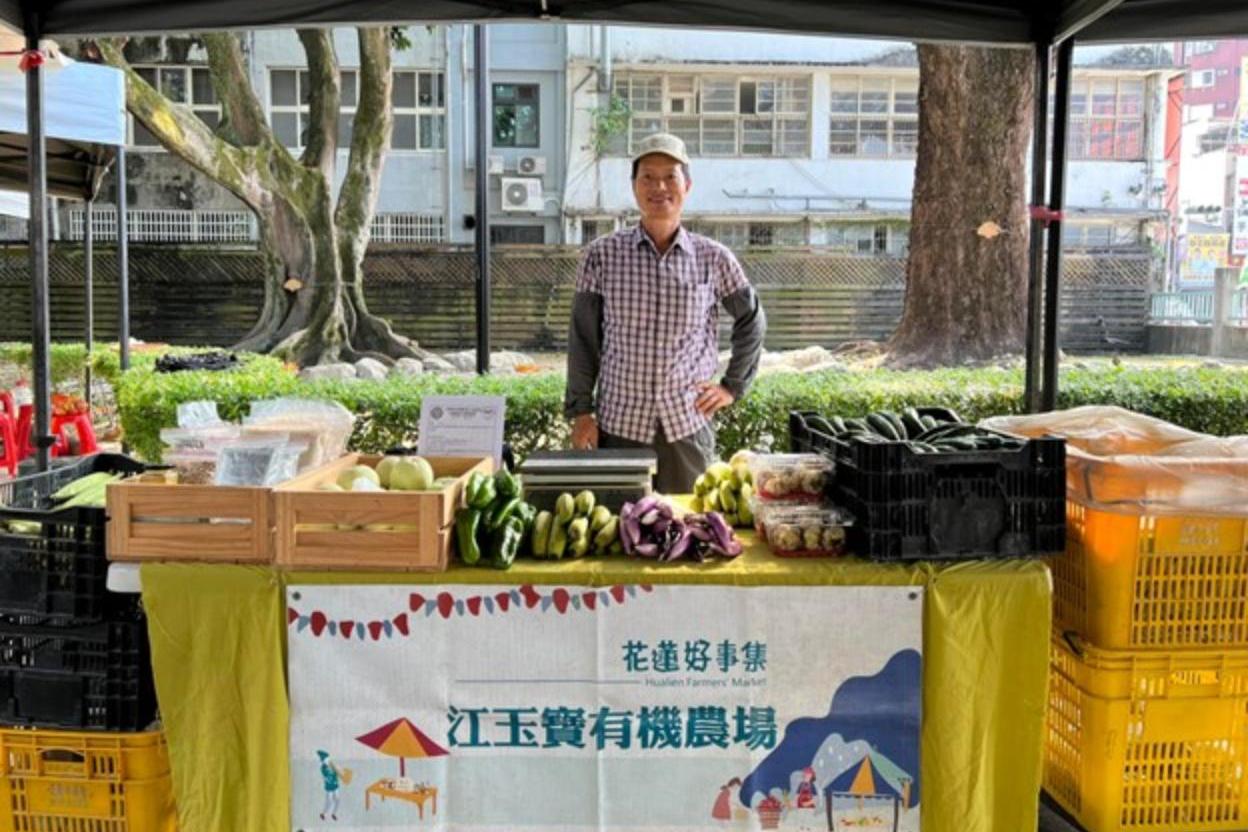
Chiang Yu-pao's idea of leisure is setting up a stall on weekends at the Hualien Good Market in the Railway Culture Park, Hualien City (No. 460 Fujian Street), chatting with customers. (Photo: Chiang Yu-pao Organic Farm Facebook)
"There are very few golden apple snails in my fields this year — I'm a bit worried!"
That was his surprising answer when I visited Chiang Yu-pao on 12 August, the Ghost Festival. He was demonstrating soil sampling in the field for smallholder carbon farming, and I asked him how the rice was doing this year.
An organic lily honesty shop guarded by the Earth God
In August 2020 I first visited Chiang Yu-pao's Ecological Farm in Shoufeng Township, Hualien. His lilies were served at the state banquets for the inaugurations of Ma Ying-jeou in 2008 and Tsai Ing-wen in 2016. This legend of edible lilies was packing his lilies for shipping. After a brief chat he went out to send the goods, leaving no one else on the farm. "Never mind, look around as you like. If you want to buy anything, take it yourself and slip the money into the gap at the top of the storeroom door. I'm an honesty shop."
In a world full of scams, there are still people who trust others like this. Like me — there are very few people who trust others first. It seems we're kindred spirits.
"Look, there's an Earth God shrine at my road junction — he's my security guard. Ha ha!" Chiang Yu-pao joked.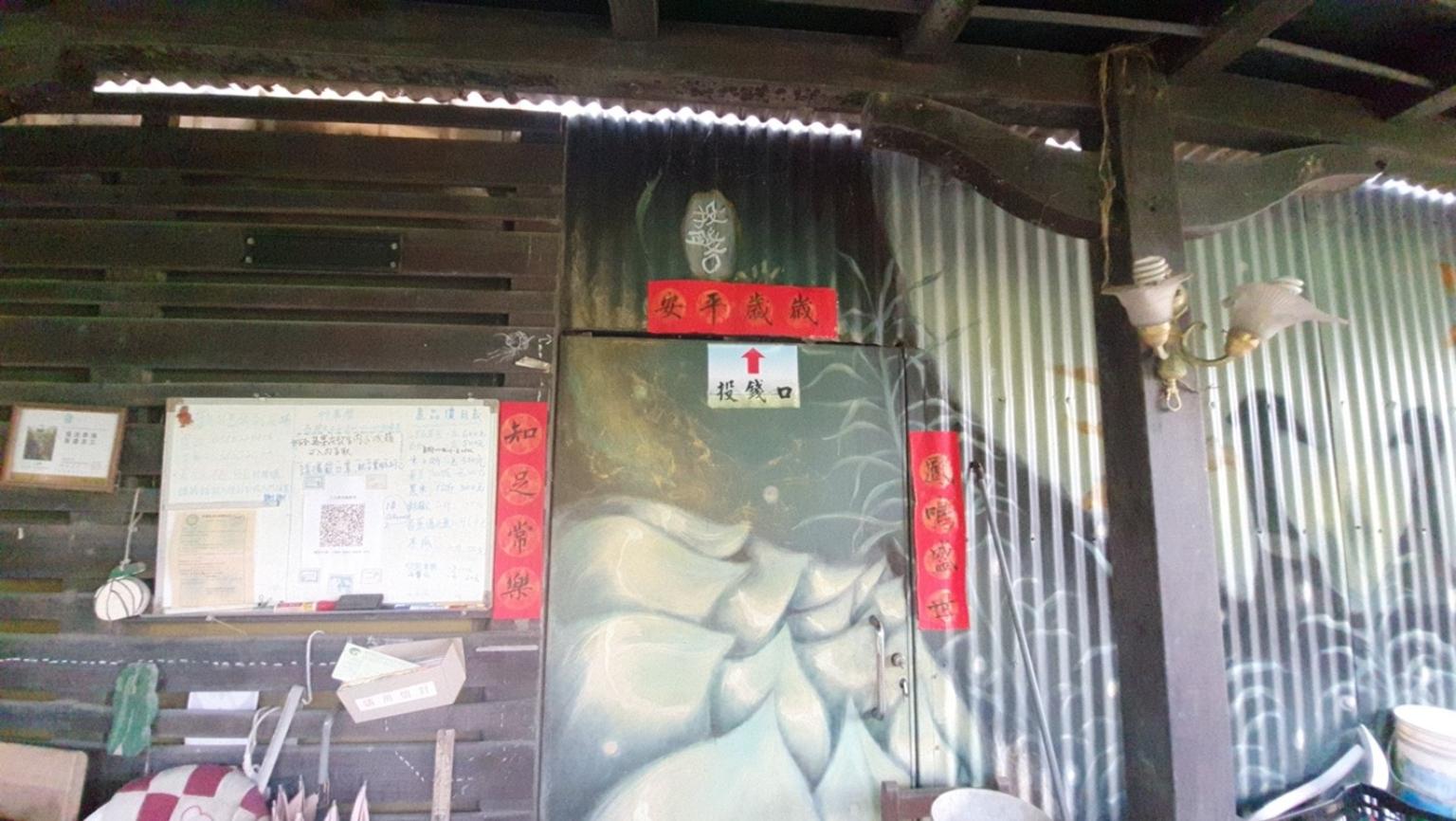
The owner isn't home: take what you want; prices are on the whiteboard; put the money in the coin slot yourself — "peace year after year".
Over the next two years, travelling north and south, I'd drop in to chat with Chiang Yu-pao whenever I passed through Shoufeng. He never used a smartphone until last year, when shipping with Black Cat delivery required scanning codes in an app and tracking shipments, and he finally took up the iPhone his daughter gave him.
Through the transformation from traditional to modern agriculture
Chiang Yu-pao, born in 1965, comes from a family that has farmed in Shoufeng since his grandfather's time; his father also farmed all his life. As a young man he went to Taipei to study electrical engineering and didn't intend to return to farming. But after he graduated and had worked for a while, his father told him that if he didn't come back, he would sell the one chia of fields. He thought it over and decided to go home and farm.
Trained as an engineer, Chiang Yu-pao at first followed his father's farming methods — fertilising and spraying when required, all for high yields and income. He picked it up quickly and soon mastered it. Because cucumber production in the west dropped in winter and Shoufeng's climate suited it, with stable yields apart from typhoons, he chose to grow mainly cucumbers and soon reached a ton of cucumbers a day. With stable yields and quality, within a few years he was earning NT$3 million a year and became somewhat well known locally.
Later he married and had children. When his children started primary school, he realised they had lost the childhood experiences he'd had: there were no loaches or earthworms in the fields, and fireflies and wildlife had disappeared. He realised the farming methods of those years had killed off his children's childhood memories, so he considered switching to organic farming without pesticides or fertilisers, and decided to convert 20 years ago.
In the first year yields plummeted and his income was only a little over NT$300,000. But he told his wife: "If I fail, no one else could succeed. I must keep at it and see; I won't give up until I've exhausted every option. My goal is to exceed my original output and income."
"I've seen my grandfather's traditional farming and my father's use of chemical fertilisers and pesticides, so I know the difference between the two."
Taking on organic farming
What sets Chiang Yu-pao apart is his cycle of observing, designing, implementing, verifying, then observing again and refining. He reasoned that however good organic or natural farming might be, yields couldn't exceed the past, so he had to find a suitable alternative product. He chose edible lilies as his main product. In Chinese medicine, lily is both food and medicine with benefits for the respiratory system (moistening the lungs, relieving coughs, calming the mind), and almost all of it was imported.
Many had tried growing edible lilies before Chiang Yu-pao, but none had brought them successfully to market. Chiang Yu-pao was the first to succeed in growing, breeding and continuously producing edible lilies, letting Taiwanese enjoy local lilies while reducing the food miles of imported ones.
To grow lilies, Chiang Yu-pao had to eliminate nematodes in the soil without pesticides, using only natural remedies. So before planting lilies he first grows rice; flooding the land reduces nematodes.
Growing rice takes a heavy toll on soil fertility, so before rice he first plants soybeans, which fix nitrogen and provide natural nitrogen fertiliser to nourish the rice and lilies.
The glamorous transformation of the golden apple snail
Rice farming can be mechanised, but rice farmers still have two big headaches: native weeds, and the invasive golden apple snail. They grind their teeth at this pair of local and foreign pests. Either they wage chemical warfare, or they're so Buddha-hearted that not a grain grows; there's rarely a middle way.
Rotating soybeans with rice not only adds nitrogen to the soil; soybeans are a dry-land crop, and there are no golden apple snails on dry land. Chiang Yu-pao only harrows the paddy (levels it with a tiller) just before transplanting, and his fields are very uneven — almost wavy. To other rice farmers this is substandard, because they insist on level fields for irrigation: only level water in the paddy ensures weed seeds are suppressed from germinating.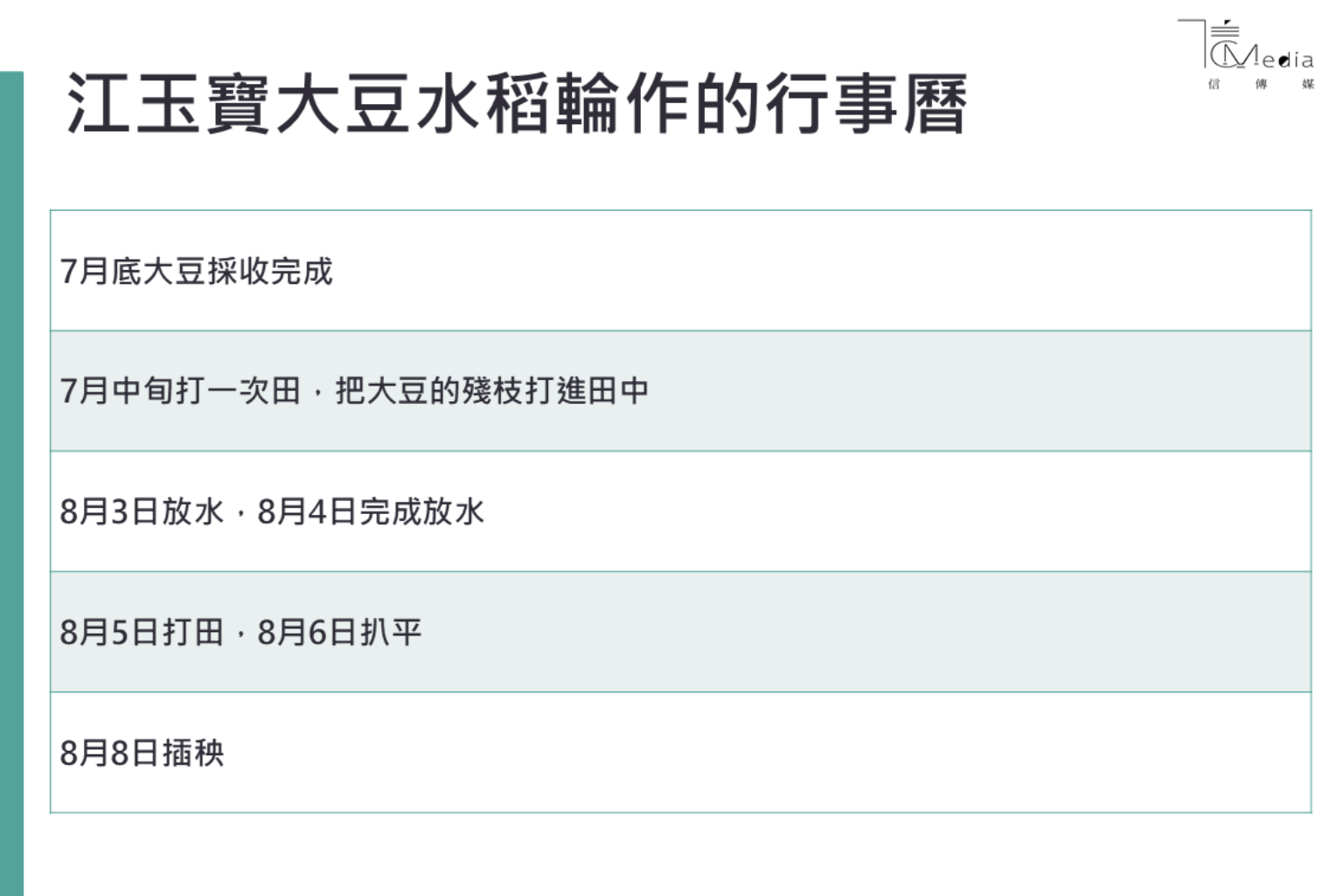
"I only harrow the field just before transplanting. After harrowing I immediately let in water, then transplant, so the weeds don't have time to grow. And I only let in a little water — just enough for the seedlings. I also put a net over the water inlet to keep out big golden apple snails; only small ones that fit through the net get in. Small snails don't do much harm to the seedlings — at most they eat 2 or 3 per cent, which doesn't matter."
"Also, my fields don't need to be so level. That halves the labour, and in an uneven field some spots are drier and some flooded, so the snails can't move easily and the area they damage is limited and controllable. And in shallow water the snails are easily spotted by birds, which come and eat them, keeping things in balance."
"When the seedlings have grown, I let in more water, 3–5 cm deep, and the big snails come in too. But by then my seedlings are big and the backs of the rice leaves have spines. The snails only eat tender seedlings and don't like coarse rice leaves. And by then the weeds in the field are just sprouting, so the snails have a choice and eat the weed seedlings instead of the rice. A little later, the snails can't eat the big rice leaves at all and only eat weeds."
A lazy man's farming method that can't bear to see snails die cruelly
"I have the golden apple snails to thank for weeding for me. I've never pulled a single weed in my fields; I leave it all to the snails."
"This year is strange — there are fewer snails. After transplanting I didn't even use the net on the water inlet. If there aren't many snails this year, there'll be more weeds."
I've asked many organic farmers, and most use tea-seed meal, an organic input, to get rid of golden apple snails in their fields. But Chiang Yu-pao doesn't use tea-seed meal at all.
"Tea-seed meal contains saponins, which break down the snails' mucus so it falls off and they die. Imagine the snail dying as its whole body sheds its skin — how painful that must be. Saponins also do the same harm to any animal with mucus or mucous membranes, killing earthworms, loaches and other slimy creatures in the field, which are beneficial to it."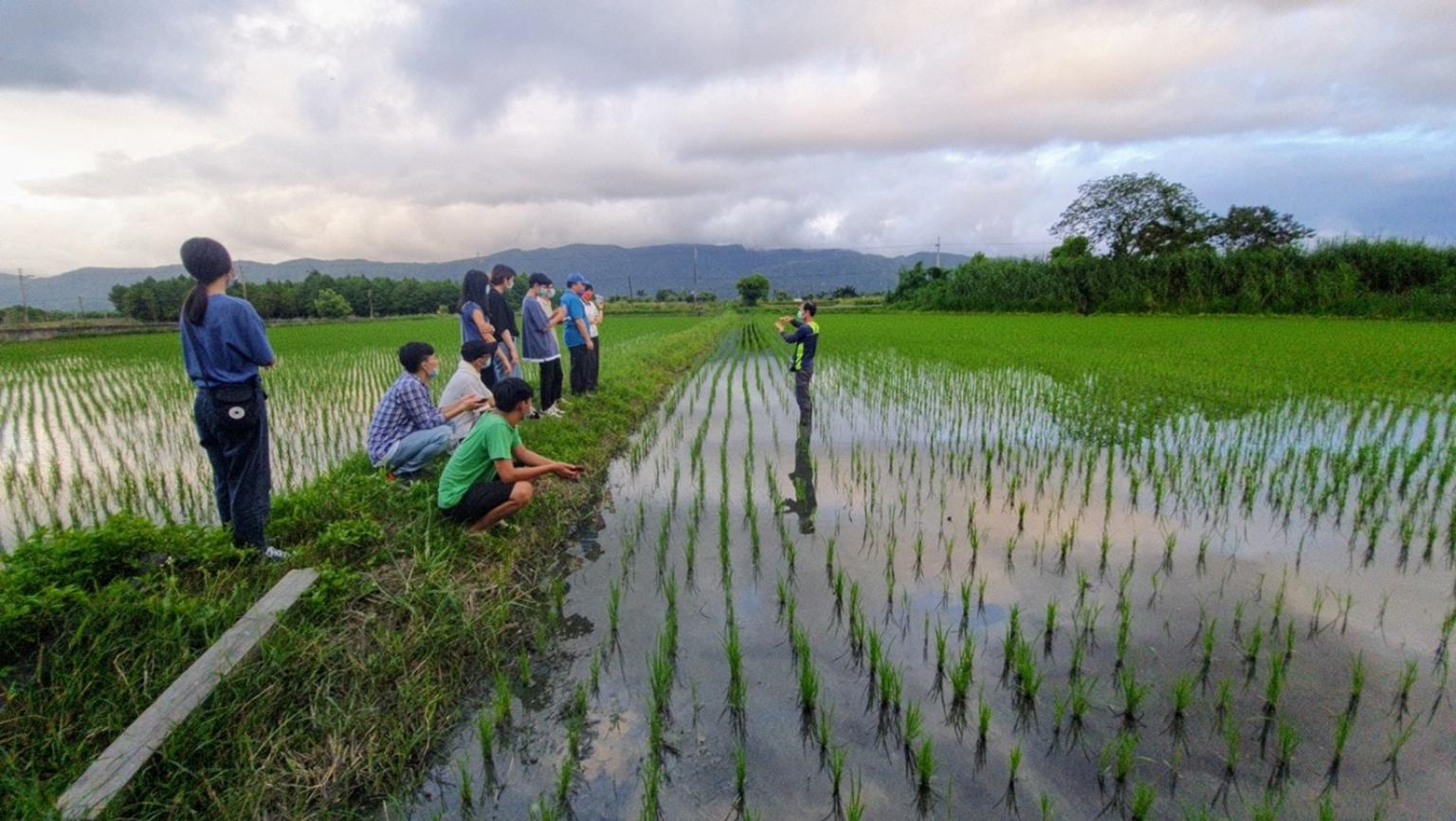
Chiang Yu-pao is happy to share his farming methods and hopes young people will take over. A video of Chiang Yu-pao explaining his coexistence with golden apple snails and weeds.
I've interviewed over a hundred smallholders. Very few can answer three "whys" in a row, but Chiang Yu-pao can — even five in a row — and they can be verified repeatedly in the field. This shows his farming method has become a system of its own. He describes it as "lazy man's farming".
Chiang Yu-pao also does three things few others can do at the same time:
First, when he started organic farming, his goal was for his income to exceed what he earned farming conventionally. He achieved it in the 15th year; now he has surpassed his previous peak and is still growing.
Second, he doesn't keep secrets; he's willing to share his failures and successes with everyone. If you search Google Maps for "Chiang Yu-pao Organic Farm", it's listed as a "school", because he has a classroom where he shares his experience with customers and school students. If anyone is willing to come and learn his farming methods, he's willing to teach.
Third, he does the work of three people on his own, with almost no help on three chia of land; now his daughter has come to help too.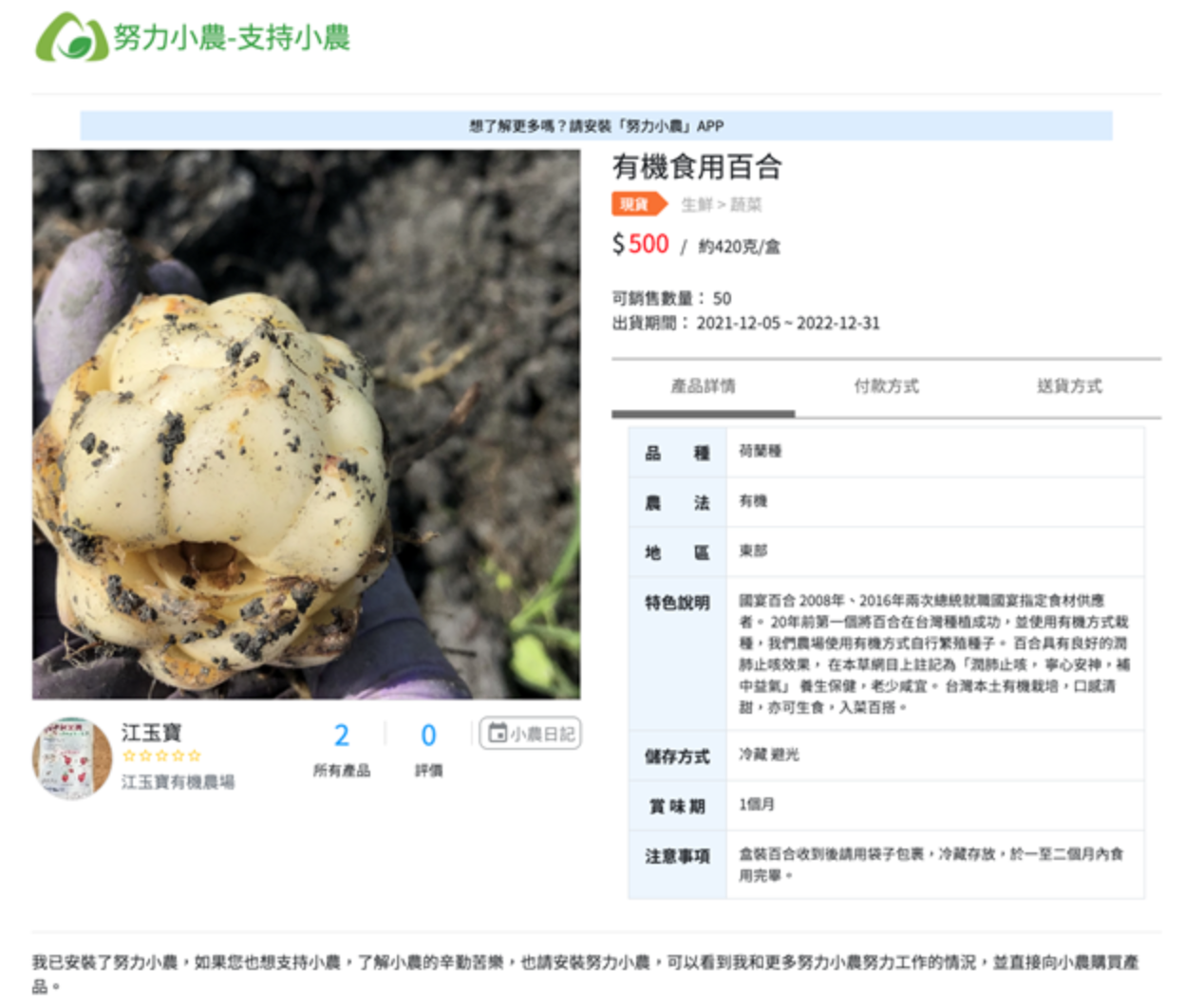
Source: CM Media ( https://www.cmmedia.com.tw/home/articles/35648 )