 努力小農
本文尚無譯文。
A smallholder's ecological wisdom: Chiang Yu-pao and his 30 concrete posts
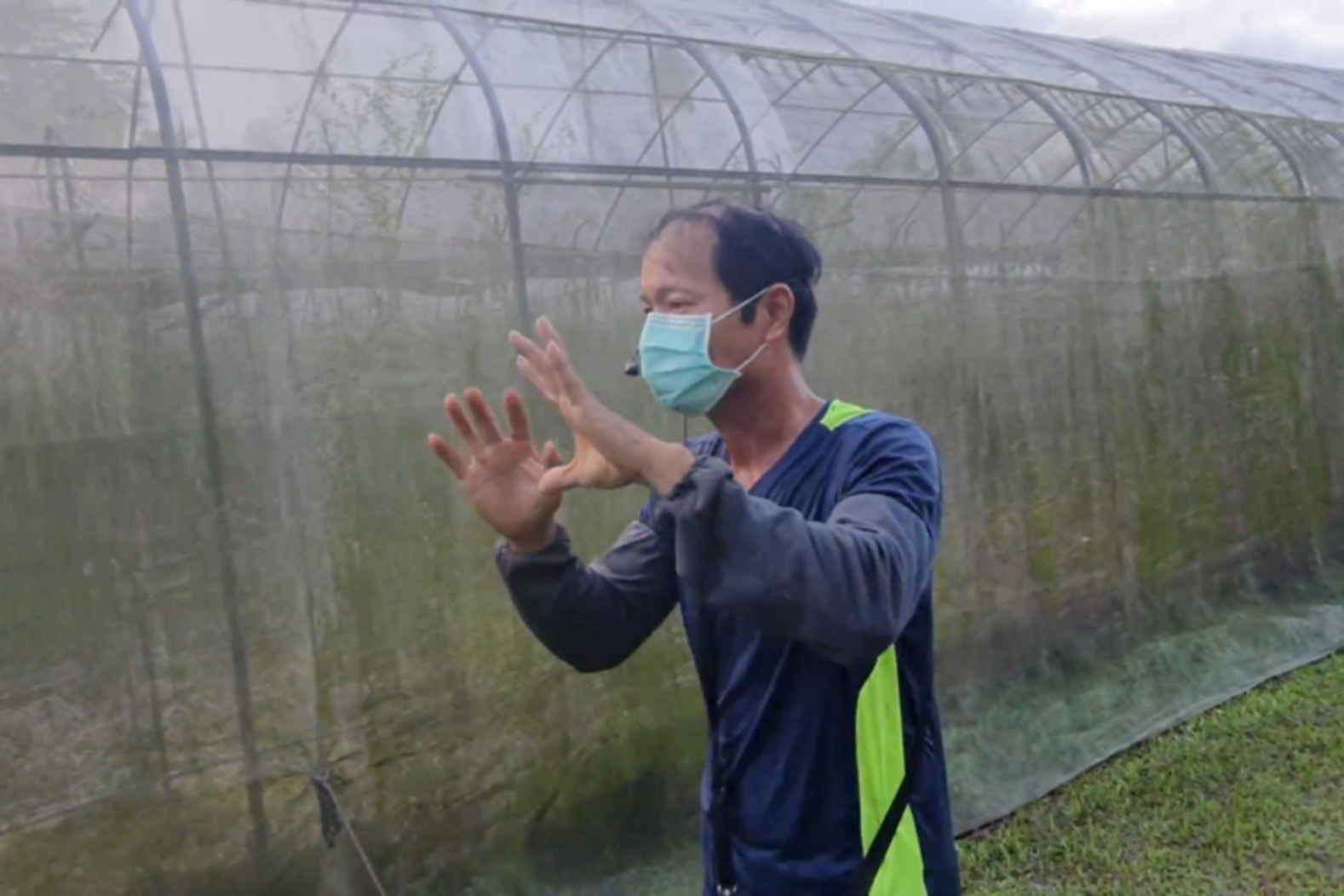
Usually taciturn, Chiang Yu-pao becomes a fountain of witty words when explaining his farming to visitors, pouring out the wisdom and hard work of 30 years.
On 9 September last year (2021), when I went to visit smallholders in Hualien and Taitung, Typhoon Chanthu strengthened from a moderate to a severe typhoon, heading from the Philippines towards Taiwan. I happened to catch it. At noon on 11 September I visited Chiang Yu-pao, who was agonising over whether to take the roofs off his greenhouses — partly to stop the typhoon tearing them off, partly to let the typhoon's heavy rain soak the greenhouse soil, because heavy rain brings nitrogen from the air into the soil. This is a very important step in greenhouse cultivation: if a greenhouse goes without rain for a long time, it loses natural nitrogen fertiliser and the soil easily clumps.
"My oldest greenhouses are 28 years old, and the newer ones 17." Chiang Yu-pao said this with confidence. "My greenhouses are much like anyone else's, but they last many years — more durable than those smart million-dollar greenhouses."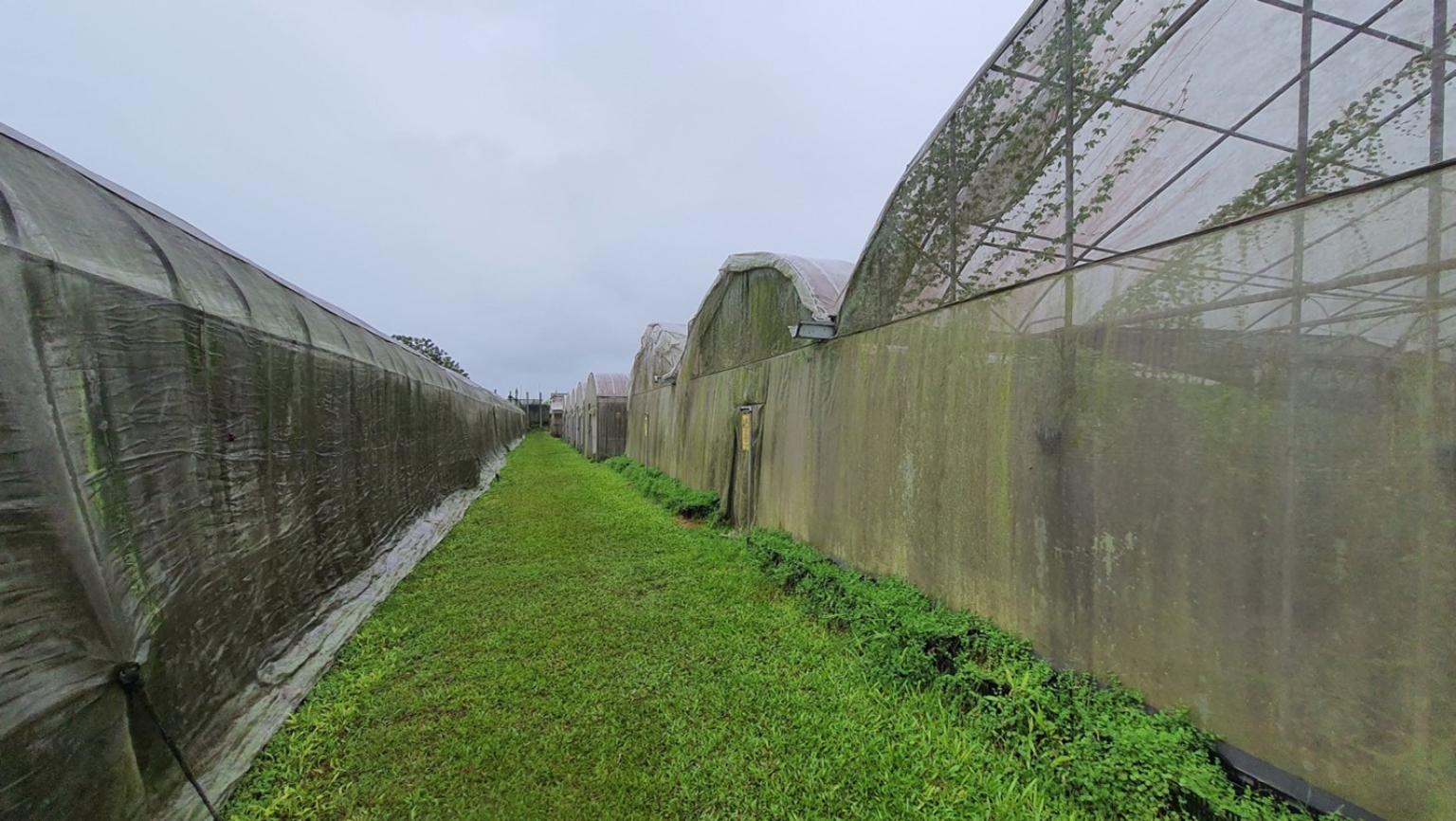
Besides his famous lilies, Chiang Yu-pao has two rows of greenhouses, 15 in all, some 28 years old, some 17 — "antique" facilities by any standard — producing organic vegetables and fruit in the Huadong Valley for his old and new customers.
Hualien and Taitung face the Pacific directly, and when a typhoon comes they bear the brunt with nowhere to hide. Whenever I go to Taitung, smallholders mention Typhoon Nepartak of 2016, still shaken, recounting how it washed away or blew away a decade or even decades of hard work. Even the speed cameras on the road from Fugang to the Taitung bridgehead were uprooted — that shows how fierce it was.
Since 2016, remarkably few typhoons have come to Taiwan. Some think climate change and warmer seas have pushed typhoons north and south of the Tropic of Cancer, so they pass by without coming in. Chanthu was the first strong typhoon to come so close to Taiwan since 2016. Farmers in Hualien and Taitung braced as if for a great enemy, and it was a chance for me to see how smallholder friends prepare for and resist typhoons.
Basically there are few greenhouses in Hualien and Taitung, because when a typhoon comes they rarely escape, with possible losses of millions of NT dollars plus rebuilding. Most greenhouses are in the Huadong Valley, where the Coastal Mountain Range blocks some of the wind. But typhoons are tremendously powerful, and the north–south valley forms a wind corridor capable of flattening ordinary greenhouses.
How have Chiang Yu-pao's greenhouses "survived" for nearly 30 years? These are "antique" greenhouses — a 30-year-old building could apply for cultural heritage preservation.
Utility poles and Baiji netting: the farm's guardians
Chiang Yu-pao is happy to share his secret: 30 utility poles and Baiji cloth (a black, very tough netting).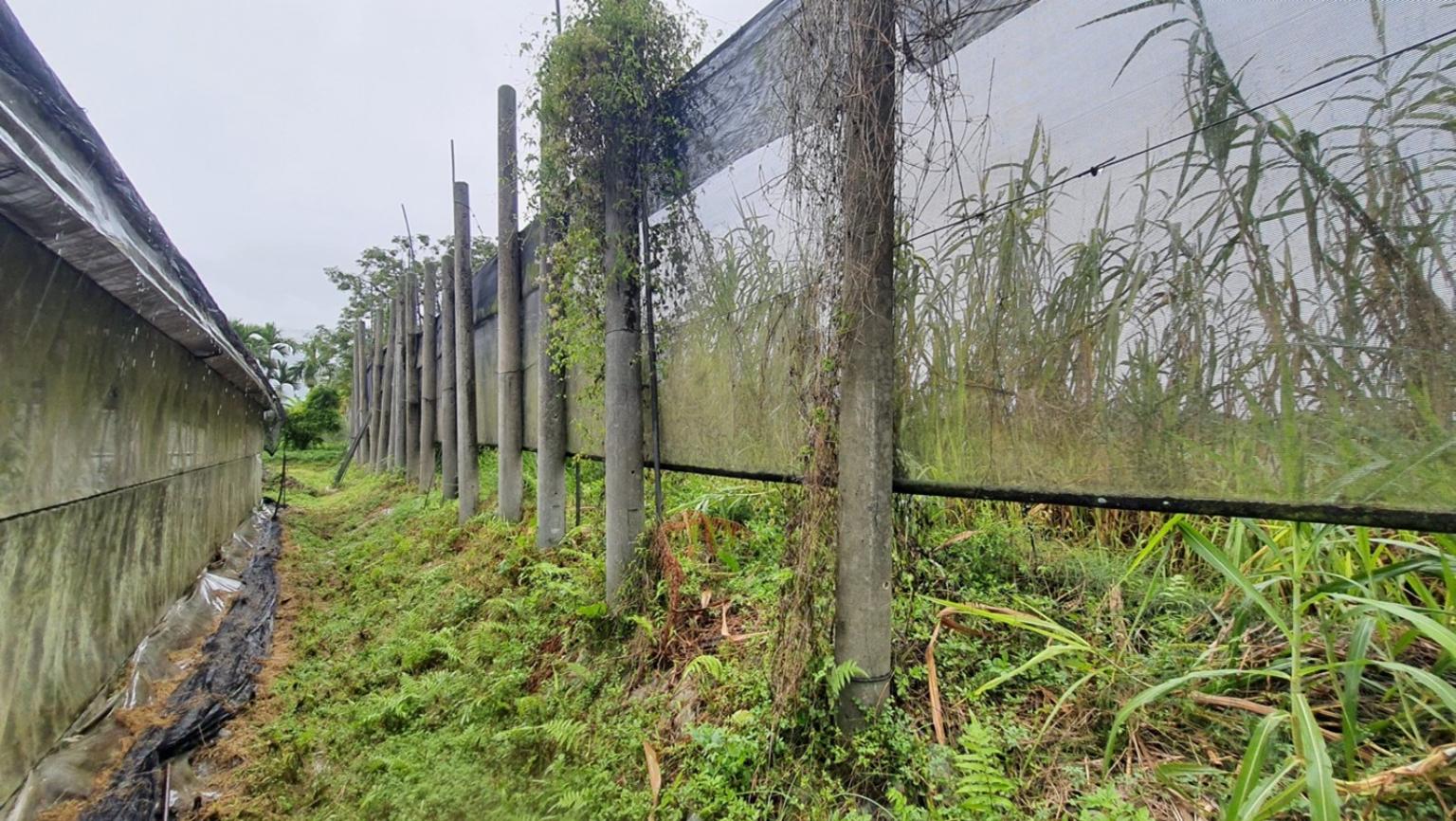
These utility poles don't look tall, because they're buried deep so typhoons can't uproot them.
Because typhoons in the northern hemisphere rotate anticlockwise, in the Huadong Valley a typhoon's strong winds blow mainly from north to south. Chiang Yu-pao's family has lived in Shoufeng, Hualien for generations, and he observed this characteristic of typhoons. Having studied electrical engineering, he understands engineering mechanics, so he tried out his own anti-typhoon solution.
"We can't change the coming of a typhoon, but we can locally change the wind's strength and reduce the damage it does to facilities. Another thing is greenhouse design: before a typhoon comes, you can roll up the roof, so the greenhouse isn't hit by the strong wind and lifted off — or even blown away entirely."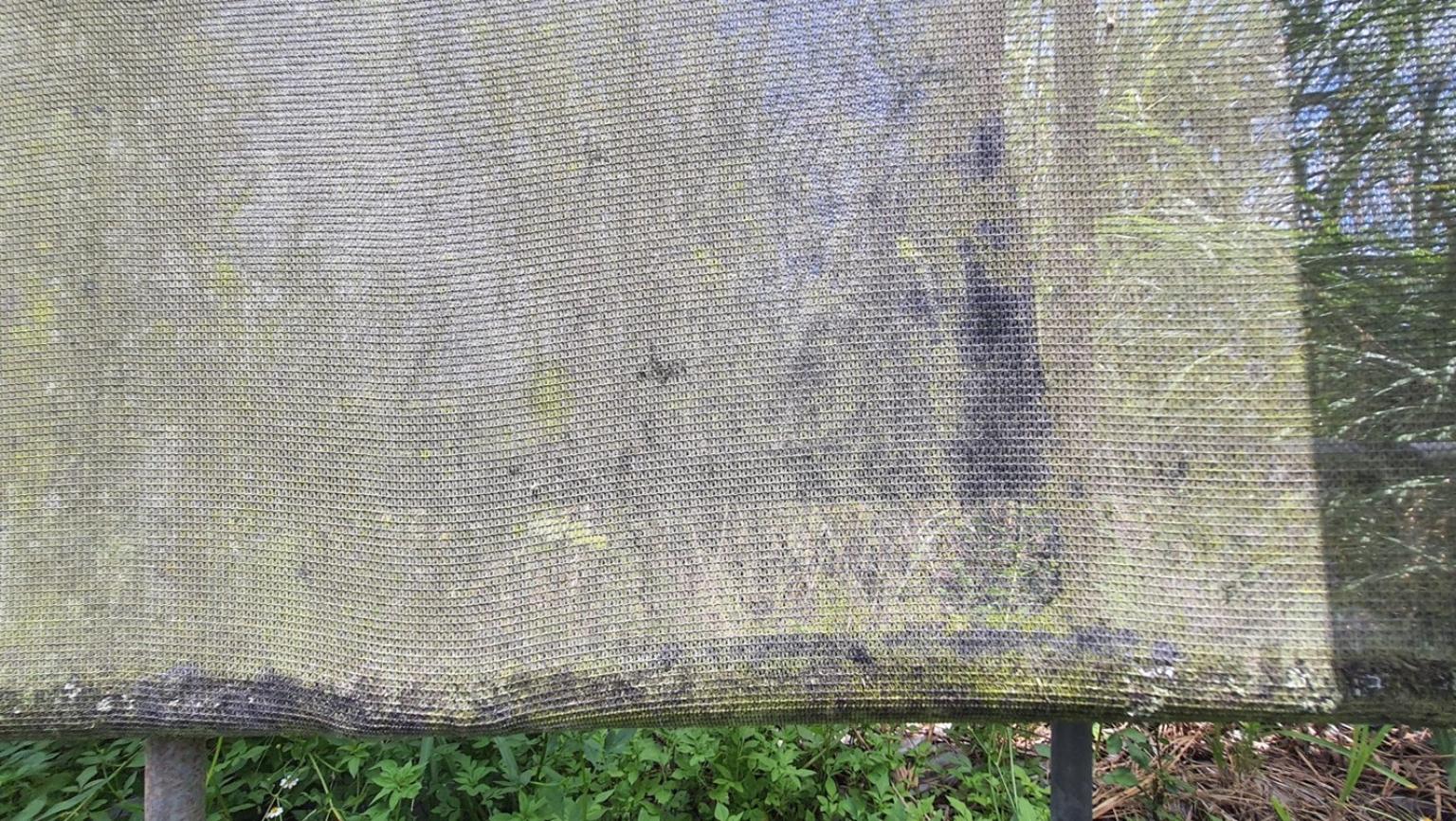
Baiji netting is a very ordinary agricultural material with fine mesh, strong, tough and UV-resistant, which can be used as a windbreak net. Chiang Yu-pao has used it for 18 years and it's still in service.
On Google Maps you can see the layout of Chiang Yu-pao's Ecological Farm: two rows of greenhouses running from southwest to northeast, 15 in all, with a row of windbreak netting he set up at the northeast corner.
Chiang Yu-pao believes concrete utility poles are the strongest, most wind-resistant building material, so he placed 30 utility poles on the northeast side of the greenhouses, their bases buried deep in the ground; even the strongest wind can't blow away these sturdy poles.
Between the poles Chiang Yu-pao strung Baiji netting, a sturdy, tough, elastic and UV-resistant mesh. So the row of poles hung with Baiji netting became a "windbreak" that lets wind through without falling over, yet dissipates and counteracts much of the typhoon's force.
After Typhoon Chanthu passed on 13 September, I visited Chiang Yu-pao again. Two days earlier he had finally decided not to take the roofs off, just to untie the edges of the roofs — if the wind was strong it would only take the roofing, and the main structure could still be saved. He took a gamble: the roofing cloth and netting had been used for many years and had paid for themselves anyway. Taking them down and putting them back would be quick to take down and slow to put up, and the roofing might be damaged in the process, so he left them. This time Chiang Yu-pao bet against heaven — and won!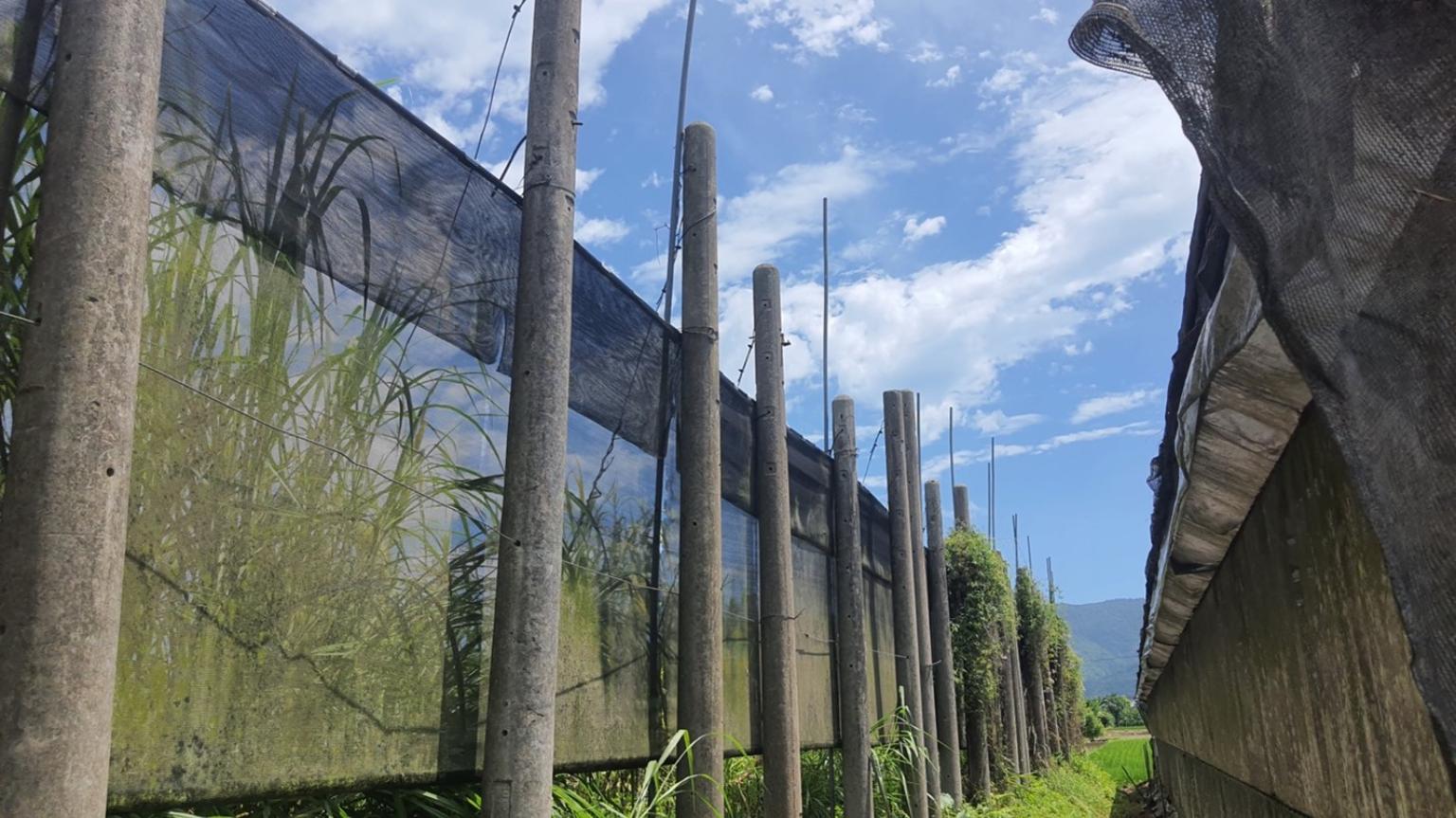
Typhoon Chanthu has gone; after the rain the sky is clear, and all is well.
Luckily, the fearsome Chanthu just moved north along the east coast without causing much damage in Hualien and Taitung. Chiang Yu-pao's greenhouses were intact and can be used for a few more years.
Chiang Yu-pao started experimenting 18 years ago. Through trials and the test of a typhoon every year, he has made some improvements, and he is very confident in his 30 posts.
It also shows Chiang Yu-pao's ability to size up the situation and use softness to overcome hardness, taming the typhoon winds farmers fear. It shows his ecological wisdom: he observes carefully, accumulates his own and others' experience, experiments boldly and keeps refining.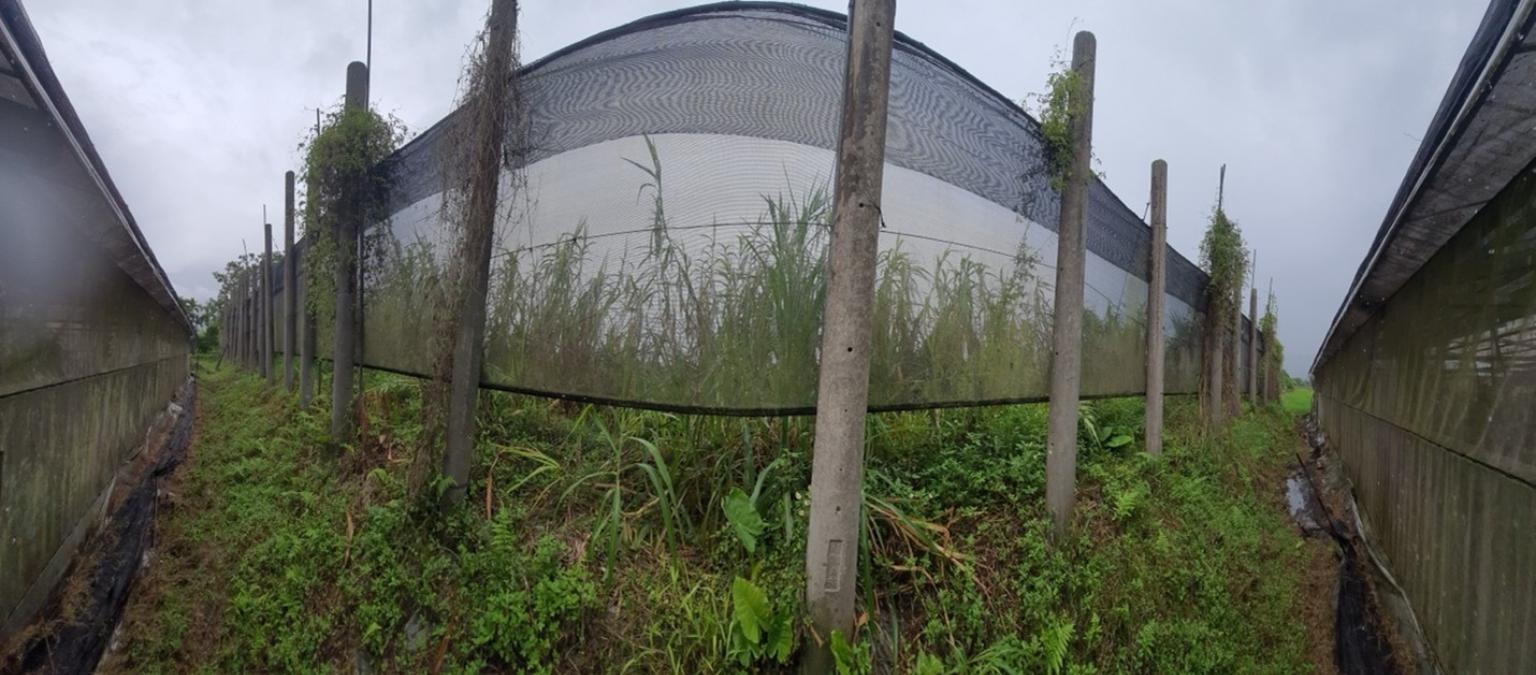
Chiang Yu-pao's 30 concrete utility poles plus Baiji netting have guarded his greenhouses for 18 years.
I've been observing Chiang Yu-pao for two years, with many interviews. He has many excellent ideas and practices. Usually he seems taciturn, but as soon as farming comes up he becomes a fountain of witty words, like a different person. That's because for 30 years he has devoted himself to farming, building on the one chia of land his father left him and later buying two more, making farming his main occupation, and also opening an ecological farm classroom.
If you're ever passing through Shoufeng, Hualien, be sure to visit this agricultural genius of Taiwan — but book in advance. Even without booking, you can go in yourself and buy some of his products at his "honesty shop", for yourself or as gifts.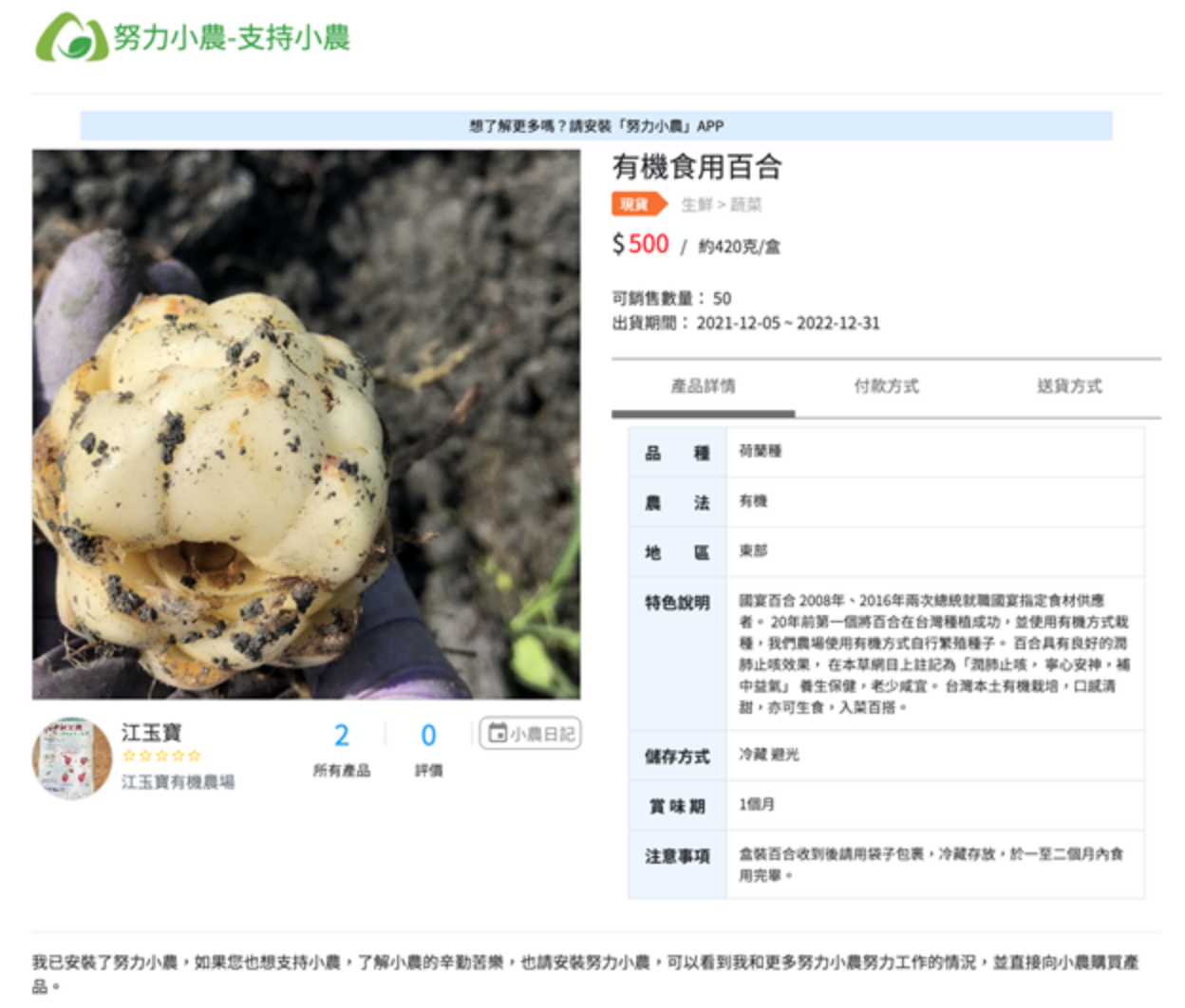
Source: CM Media ( https://www.cmmedia.com.tw/home/articles/35789 )


