努力小農
本文尚無譯文。
Kao Ko-chung and his lonely Taiwan oil millet: a smallholder story that keeps being copied and pasted
Taiwan oil millet is a three-year perennial that takes more than a year to mature, with low yields. Even with its potential to withstand warming, it struggles to compete with other crops. We hope international carbon reduction certification can bring more opportunities to add value to it.
"A scholar at Academia Sinica said 'oil millet is a lonely crop', because rice, wheat and djulis are everywhere in the world. And oil millet is a superfood of the future — I believe everyone will hear about it often."
I first met Kao Ko-chung on 11 April 2020 in Nanxi Village, Changbin Township, Taitung. Dressed in traditional Bunun clothing, in the plain language of Indigenous people, he introduced his fields to visiting students from National Taitung University, excitedly explaining what oil millet is, how nutritious it is, and that it was an important food of his Indigenous ancestors.
In 2020 he planted some on trial with good results, and invested some money in processing oil millet into products such as rice crackers and buns, hoping to open up a market.
Looking it up online, I found that News & Market had just published an in-depth report on oil millet on 5 April 2020, introducing the Academia Sinica research team and mentioning genetic resource issues — which is why Kao Ko-chung hesitated when introducing his products.
Since then I've noticed oil millet being promoted with phrases like unique to Taiwan, drought-resistant, warming-resistant, superfood, food crisis, salt-tolerant, highly nutritious, rich in XXXX chemical compounds, able to replace rice... These are all "politically correct" and "scientifically correct" words that could be applied to almost any emerging farm product.
But having tasted it, it has no special flavour and the texture is rather coarse — clearly not the soft, tender, chewy texture most Taiwanese like. Getting people to pay NT$100–200 for 100 g to eat as rice will probably be a challenge. Unless it has obvious miracle effects — reviving the dying, restoring youth, slimming or boosting virility — it won't sell on the market.
Who makes money from emerging foods?
For as long as I can remember, Taiwan has had new food fads every year, from cod liver oil in my childhood to quinoa, recently hot and now faded. From the era without TV or internet to today's flood of social media, there's never a shortage of "food therapy" information, fully satisfying the Chinese culture of tonics.
But what I see is that someone makes the first pot of gold, then wave after wave of "leeks" are harvested. The farmers who actually produce find it hard to make money; they farm diligently and enthusiastically, are hyped, then forgotten, and things return to calm, like clouds drifting in a clear breeze.
In 2021 Kao Ko-chung's oil millet crop failed. Lacking experience, he had spent a lot on organic fertiliser. Visiting his field, I saw sparse oil millet — a desolate sight. To make a living, he had to take odd jobs cutting grass for others.
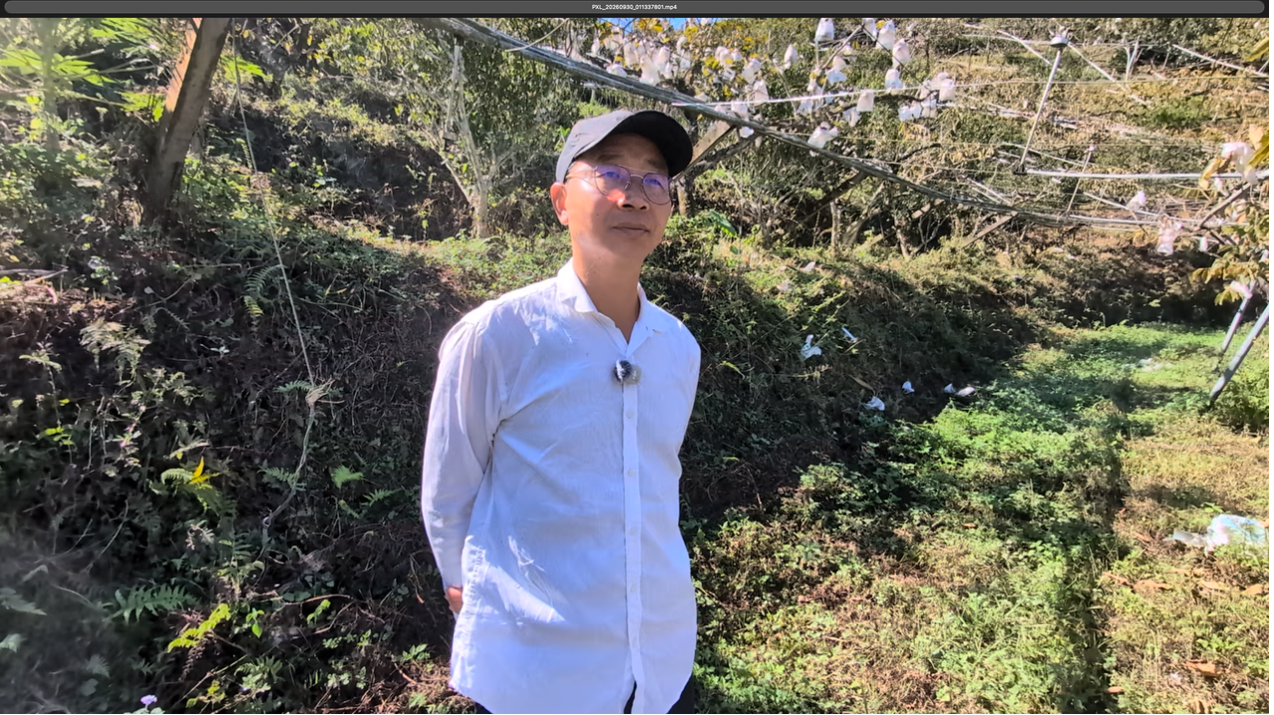
When I contacted him recently, he said it had been hot and dry in July so the oil millet didn't grow well. But when I visited again on 29 September, he happily told me he had now mastered the growing techniques. He made compost from weeds and dead branches in the field plus plant ash and biochar, and felt things were improving. Now his only fear is sparrows and monkeys eating it; from this year to next there should be a good harvest.
In the field Kao Ko-chung excitedly explained his experience. He lifted the tarpaulin to show me the compost he'd made and explained how he uses field waste to make it. His crop grew better this year: what he planted in April was less affected by drought; only what he planted in June grew poorly, and he later replanted some.
He turned over the soil to show how he applies plant ash in the oil millet field; much of the plant ash, biochar and compost had already combined with the soil.
For environmental sustainability, first sustain the business
"Six or seven years ago I came back to Nanxi from western Taiwan. My elder sister Kao Lien-mei was in poor health and needed care. I worked in the west, where the pollution made me unwell too, so I decided to come back, and I could also look after my sister."
Kao Ko-chung, born in 1955, grew up in the mountains and fields. As an adult he went away for work and suffered from the dirt of cities and the pollution of factories, so he cares deeply about the environment. He asked on his own initiative to join "smallholder carbon farming", seeing it as his duty, and is willing to learn to make biochar to help restore the land.
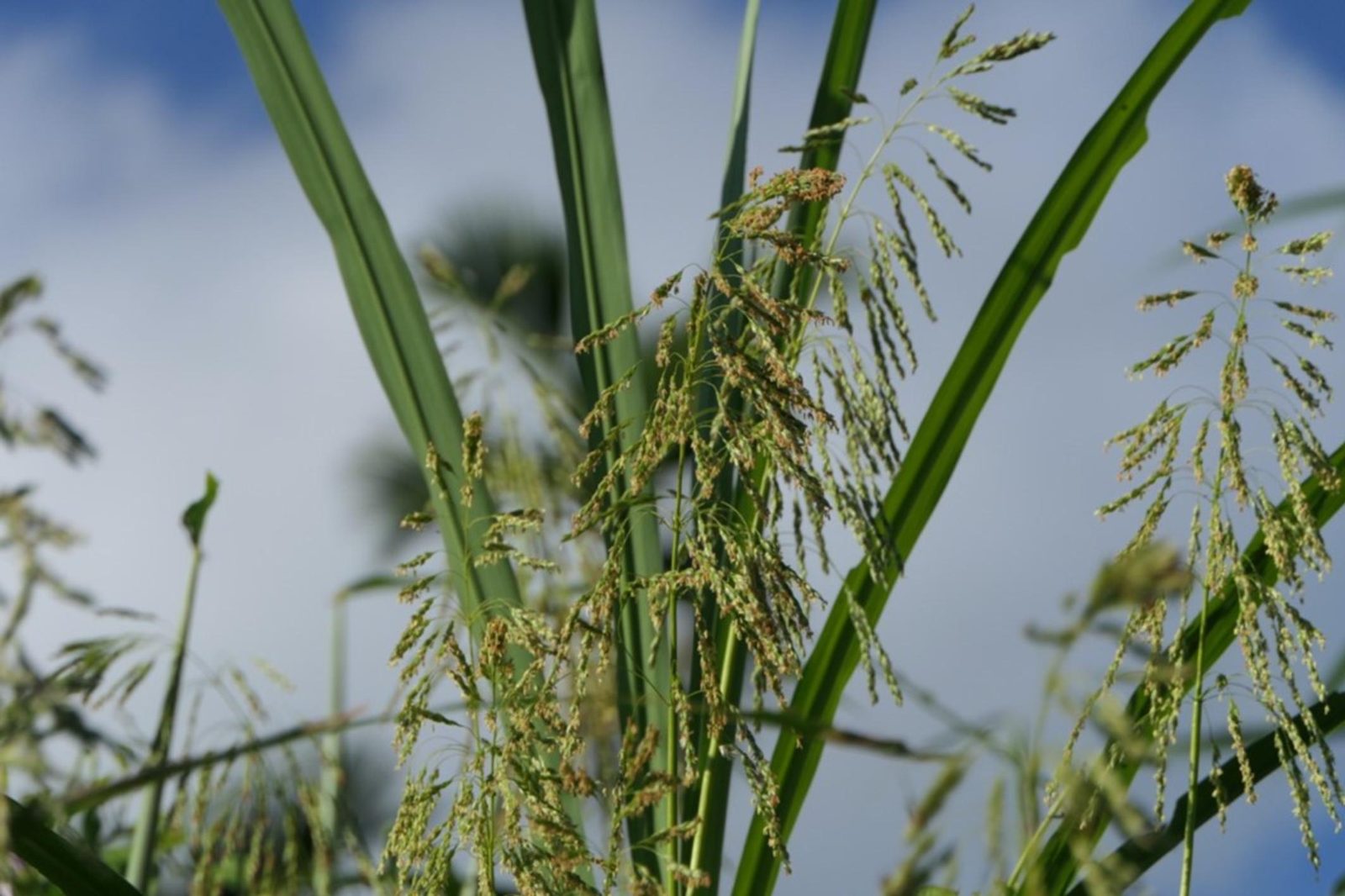
"Oil millet is drought-tolerant — a crop that resists warming." Oil millet is perennial (three years), so soil tillage can be reduced. Except at the seedling stage, when it can't compete with weeds, once it grows tall it can outcompete them. "I just cut the weeds when I start planting seedlings and lay them on the ground, then I can plant. Once the oil millet grows tall, it can coexist with the weeds."
Although oil millet has these soil-conserving benefits, rice ripens in three months and can be harvested, and with six months' fallow a chia of land still gets over NT$30,000 in subsidies. Oil millet takes more than a year to ripen, so the land's "use value" is much lower; its yields are limited and its price differs by more than tenfold. Rice also has established supply chains and markets. How could oil millet compete with rice to become a staple food?
In recent years domestic rice has received more attention, government protection and consumer support. Oil millet can't get that kind of treatment. It's much like the earlier case of djulis: a djulis craze blew up, then was quickly crushed by imported "organic quinoa". After all, the price difference is plain to see — how can Taiwanese smallholders and Indigenous farmers compete with large-scale cultivation abroad?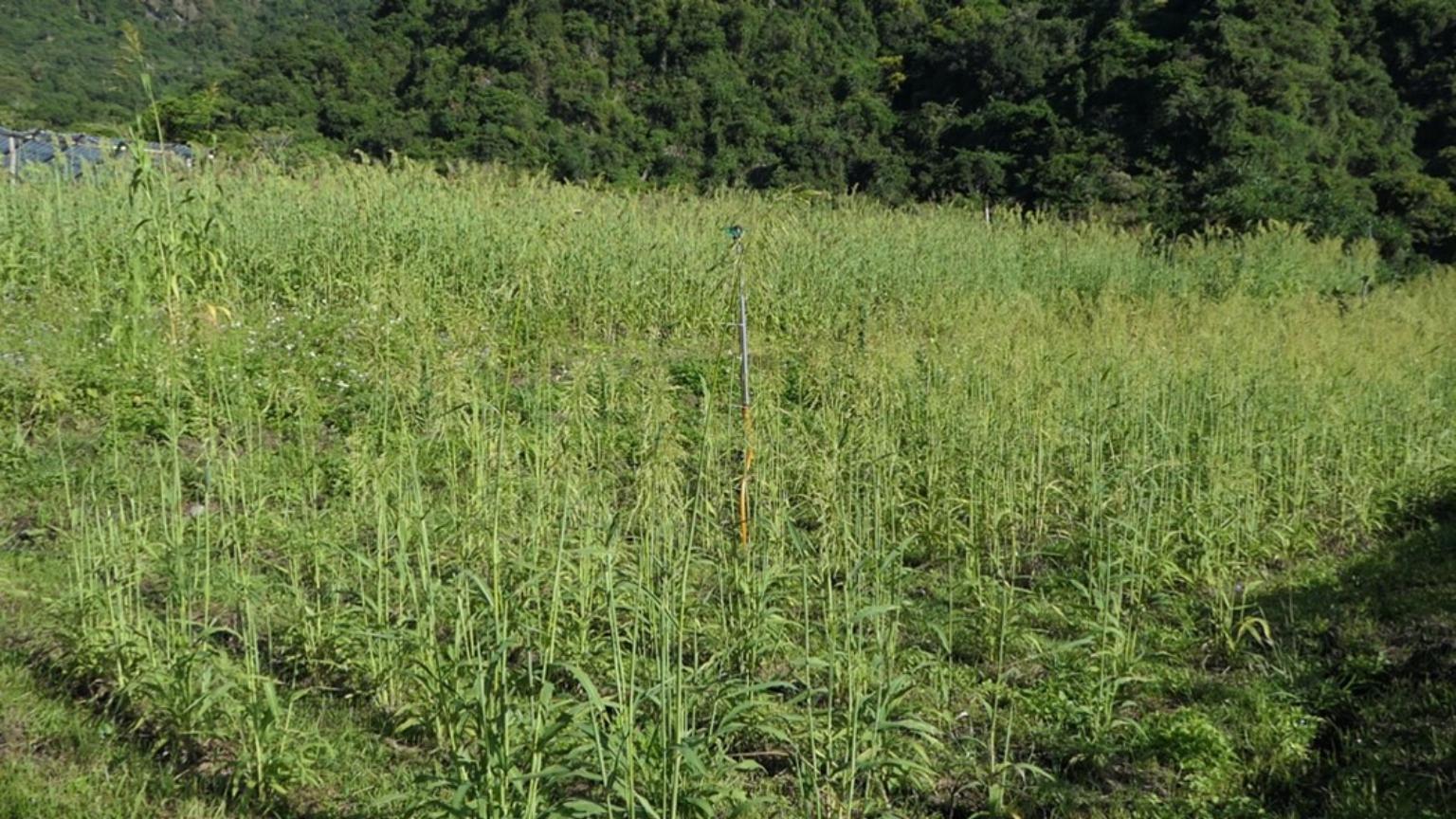
The tall oil millet grows higher than the weeds; once tall, it no longer fears them.
Reducing carbon together so smallholders are no longer lonely
Carbon reduction is the same. Taiwan's land is small; even with forests, what counts as carbon reduction under international certification is limited. So many companies plan to "import" carbon credits from abroad. A bank recently launched a "zero-carbon credit card", claiming the emissions from the plastic card are offset by credits from wind power in India,
How can local smallholders take part in international carbon trading? Besides receiving the small sums from carbon credit trading, more importantly their products gain the backing and added value of "carbon credits", earning better returns and a sustainable motivation to farm.
Bunun smallholder Kao Ko-chung's quiet efforts are as solitary as his oil millet. We hope smallholder carbon farming will let these smallholders, with their firm faith in protecting the land, join the international arena, so that even tiny carbon reduction actions can be seen and noticed.
Latest events:
Smallholder Carbon Farming Project biochar workshops
Registration link
The three workshops are as follows:
Kantiantian Farm, Aogu, Chiayi
Time: Tuesday 11 October 2022, 1:30–5:00 p.m.
Venue: meet at the entrance of the Dongshi Township Ecological Exhibition Hall, Chiayi County (No. 54, Sigu, Aogu Village)
356 Coffee Estate, Luye, Taitung
Time: Wednesday 12 October 2022, 1:30–5:00 p.m.
Venue: No. 17, Lane 111, Sec. 1, Zhonghua Road, Luye Township, Taitung County
Classroom at Chiang Yu-pao's Ecological Farm, Hualien
Time: Thursday 13 October 2022, 1:30–5:00 p.m.
Venue: No. 49, Siwei Road, Shoufeng Township, Hualien County
About
The Smallholder Carbon Farming Project has started, and we will hold a series of workshops to help smallholders take part.
Carbon farming means increasing organic carbon in farm soil. Most of the work is subtraction, such as less tillage and less pesticide and fertiliser use. Protecting microbes in the soil helps keep in the soil the 40% of organic matter produced by plant photosynthesis, not only increasing soil organic matter and converting it to carbon storage, but creating healthy soil — and healthy soil means healthy crops and healthy people.
By adding a few more elements beneficial to soil, we can improve both the quality and quantity of soil organic carbon. Thanks to promotion by the Tawushan Cultural and Educational Foundation and the Food Industry Research and Development Institute, many farmers already have in-depth knowledge and experience of "photosynthetic bacteria", and success stories.
Now we have invited Mr Liu Chin-hung of Grassroots Awareness Studio to help us build countless nanoscale homes for soil microbes, giving microbes and organic matter a place for symbiosis. This can raise organic matter, benefit carbon farming and carbon reduction, effectively increase soil fertility, lower production costs and improve crop quality.
You're welcome to sign up — places are limited to no more than 20 per session.
We will also hold an online session:
live on Facebook. If you can't attend, you can watch online or watch the video later.
Registration link
Mr Liu Chin-hung's handout
Source: CM Media ( https://www.cmmedia.com.tw/home/articles/36508 )