 努力小農
本文尚無譯文。
Redemption before COP27: can the world's agriculture and food giants really cut a third of global greenhouse gas emissions together?
A report from the Sustainable Markets Initiative, founded by King Charles III, warns international agriculture and food giants that if they don't make huge changes, they will push the planet to the brink of destruction.
Before resigning, former UK Prime Minister Truss personally asked King Charles III not to attend the 27th Conference of the Parties to the UN Framework Convention on Climate Change (UNFCCC COP27) in Egypt. But just days before the climate summit, the Sustainable Markets Initiative (SMI), founded by Charles III, published a report warning international agriculture and food giants that if they don't make huge changes, they will push the planet to the brink of destruction.
The report was signed by food and agriculture giants including Bayer, Mars, McCain Foods, McDonald's, Mondelēz, Olam, PepsiCo and Waitrose.
International food giants' 5 recommendations to save the planet
The report's theme is scaling up regenerative farming. Its action plan covers five key areas where it believes urgent action is needed to make the economics of regenerative farming more attractive to farmers:
1. Common metrics for measuring environmental outcomes (linked to the four recommendations below)
2. Increasing farmers' income from environmental outcomes such as reducing emissions and increasing carbon sequestration
3. Creating mechanisms to share transition costs with farmers
4. Ensuring government policies support and reward farmers' transition
5. Developing new procurement models to spread transition costs
The action plan also includes a guide outlining actions each part of the value chain can take now, and key insights for successful implementation. The task force will continue its work into 2023 to drive implementation of the report's five recommendations.
The huge environmental impact and responsibility of the agri-food industry
Agriculture is the world's largest industry. Pasture and cropland occupy about 50% of the Earth's habitable land and use about 70% of freshwater supplies. The climate crisis is challenging the industry worldwide, and the group's call for change comes as the industry (employing a billion people) faces supply chain problems after the coronavirus pandemic and soaring inflation. It also comes amid growing scepticism about commitments to change from companies that contribute to climate change.
Agri-food production accounts for a third of human carbon emissions, and the food companies above have a "poor track record". Swedish environmental activist Greta Thunberg has criticised the annual climate summits as just greenwashing PR stunts staged by the world's most powerful people.
Looking at these five recommendations, the core solutions are pushed onto "standards" that don't yet exist or are immature, and setting standards takes a long time; producing results before 2030 is almost impossible. How to increase farmers' income to change their farming behaviour is also easy to say and hard to do, because farmers are scattered without uniform production methods, and cultural, social, economic and political backgrounds differ from place to place. The mandatory measures taken in the Netherlands and New Zealand on livestock and dairy farming have caused huge backlash. Amid global recession, inflation and the shadow of war, even immediate worries like Europe's winter energy shortages and high prices can't be solved. With hunger and cold at the door, how many people will think about the long term?
Can PepsiCo be made to stop selling soda?
Devlin Kuyek, a researcher at GRAIN, a non-profit supporting small farmers, said it's becoming harder for big agriculture and food companies to ignore climate change, but in his view none of these companies — McDonald's, for example — has committed to selling fewer high-polluting products, and he doesn't expect PepsiCo to say the world doesn't need Pepsi.
Kuyek pointed out that another signatory, Yara, is the world's largest supplier of nitrogen-based fertiliser — roughly one in every 40 tonnes of greenhouse gases emitted each year comes from nitrogen fertiliser.
Kuyek called it dishonest: small, local food systems still feed most people on the planet, and the real threat is the expansion of industrial systems at the expense of truly sustainable ones. In his view the companies are creating smoke and mirrors to suggest they are part of the solution, when they are inevitably part of the problem.
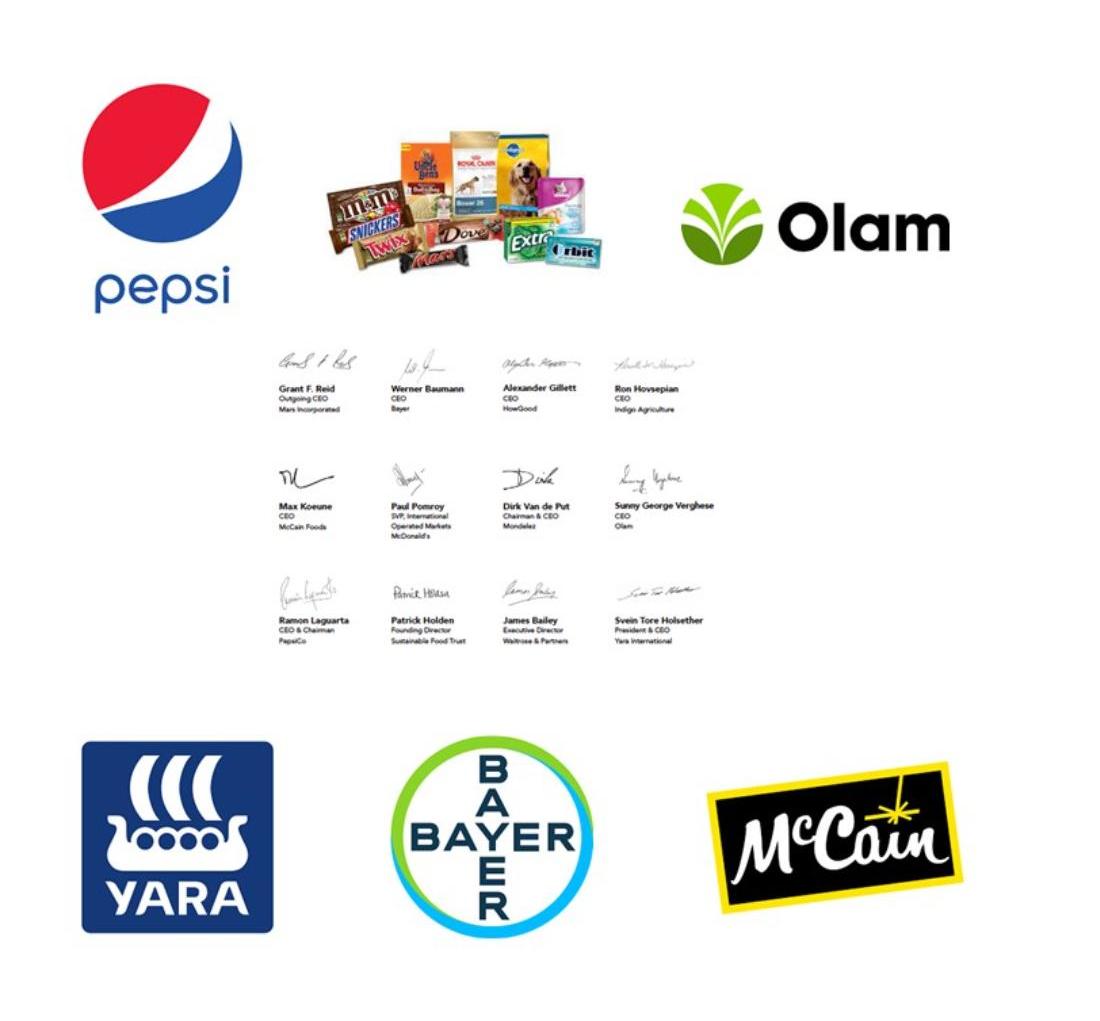
These food and agriculture giants published the report before the COP27 climate summit, signed by the heads of 12 multinationals. Is this genuine reform, or yet another round of greenwashing?
Given the controversial history of some companies in the report, Sunny George Verghese, CEO of food giant Olam International, said he expected criticism and scrutiny. In essence he said that if there is real greenwashing, every company must withstand scrutiny and there is nowhere to hide; Olam's goals are very clear and it is confident about making them public; all of them are making progress on their sustainability journey — not that they haven't made mistakes in the past, but as they get better they are willing to be scrutinised.
These multinationals are themselves competitors. Can they truly reform and work together to save the world from climate disaster? Or is it another round of greenwashing — lip service without substance? We'll have to wait and see, but time is running out.
Source: CM Media ( https://www.cmmedia.com.tw/home/articles/36955 )


