努力小農
本文尚無譯文。
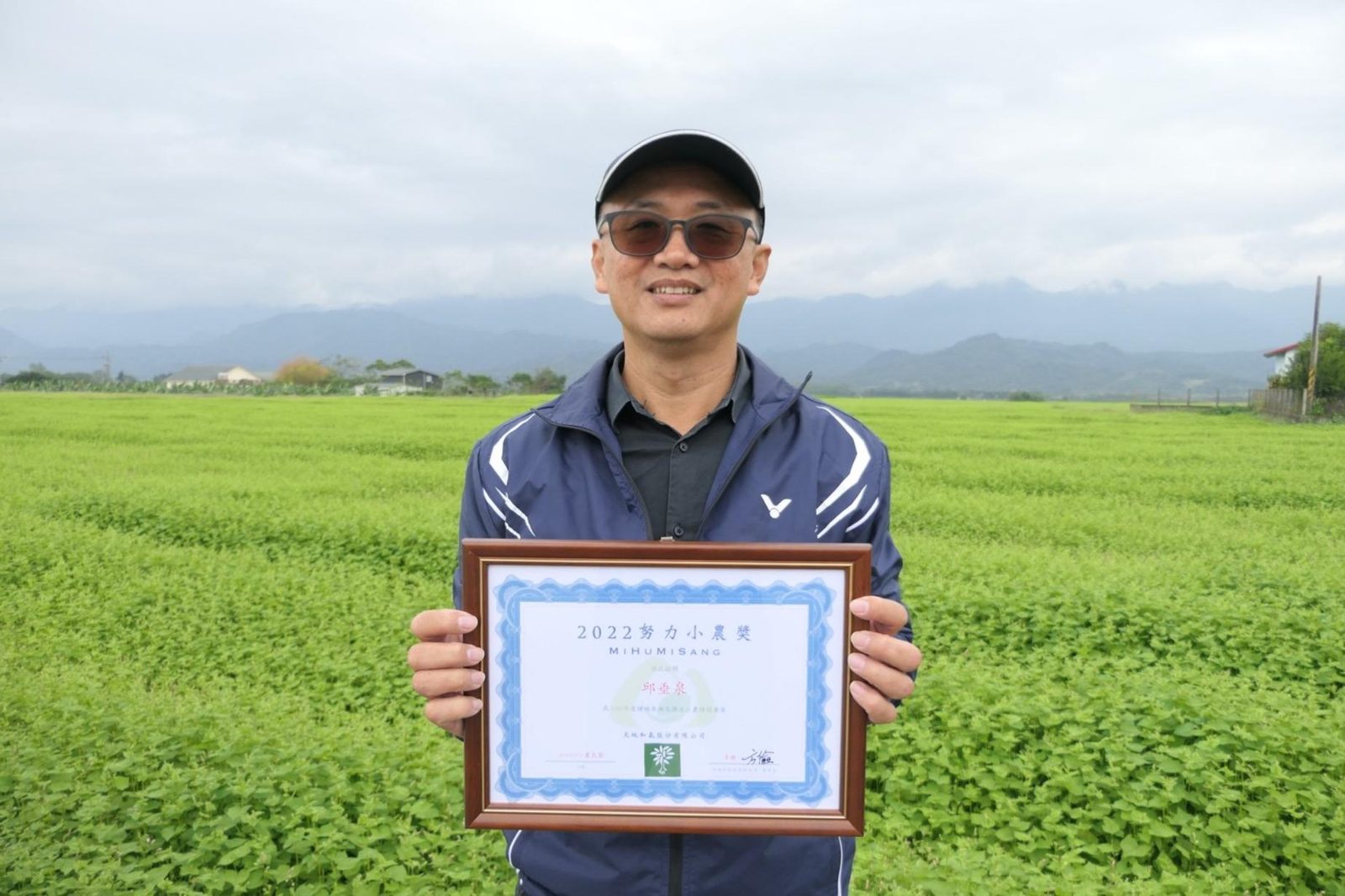
2022 MiHuMiSang Award winner: Chiu Chui-chuan connects with the world and creates a brand for his hometown rice
Born in 1969, Chiu Chui-chuan returned home in middle age to take over the family farm. Eager to learn and quick to act, he has taken an active part in smallholder carbon farming's global emission-reduction certification, and was chosen as winner of the 2022 MiHuMiSang Award in recognition of his tireless efforts, starting from the grassroots and connecting with the world.
We gave the 2022 MiHuMiSang Award to Yuli, Hualien smallholder Chiu Chui-chuan, in recognition of how he "thinks globally, acts locally": actively taking part in smallholder carbon farming and reaching out to others, helping more smallholders understand how farming can increase soil carbon sinks and how to join the global carbon farming movement.
"My hometown of Changliang has beautiful mountains, clean water and fresh air, and hard-working, honest farmers. This is the Qingshui River, the water source for Changliang's rice paddies, coming from Taiwan's true sacred mountain that protects the nation — the Central Mountain Range. It never runs dry. All year round you can see crystal-clear water flowing into our 200-odd jia of good fields. How could rice grown in a place like this be inferior to anyone else's?"
"I hope my hometown's rice can have its own image and brand, instead of being shipped mixed in with rice from more famous places."
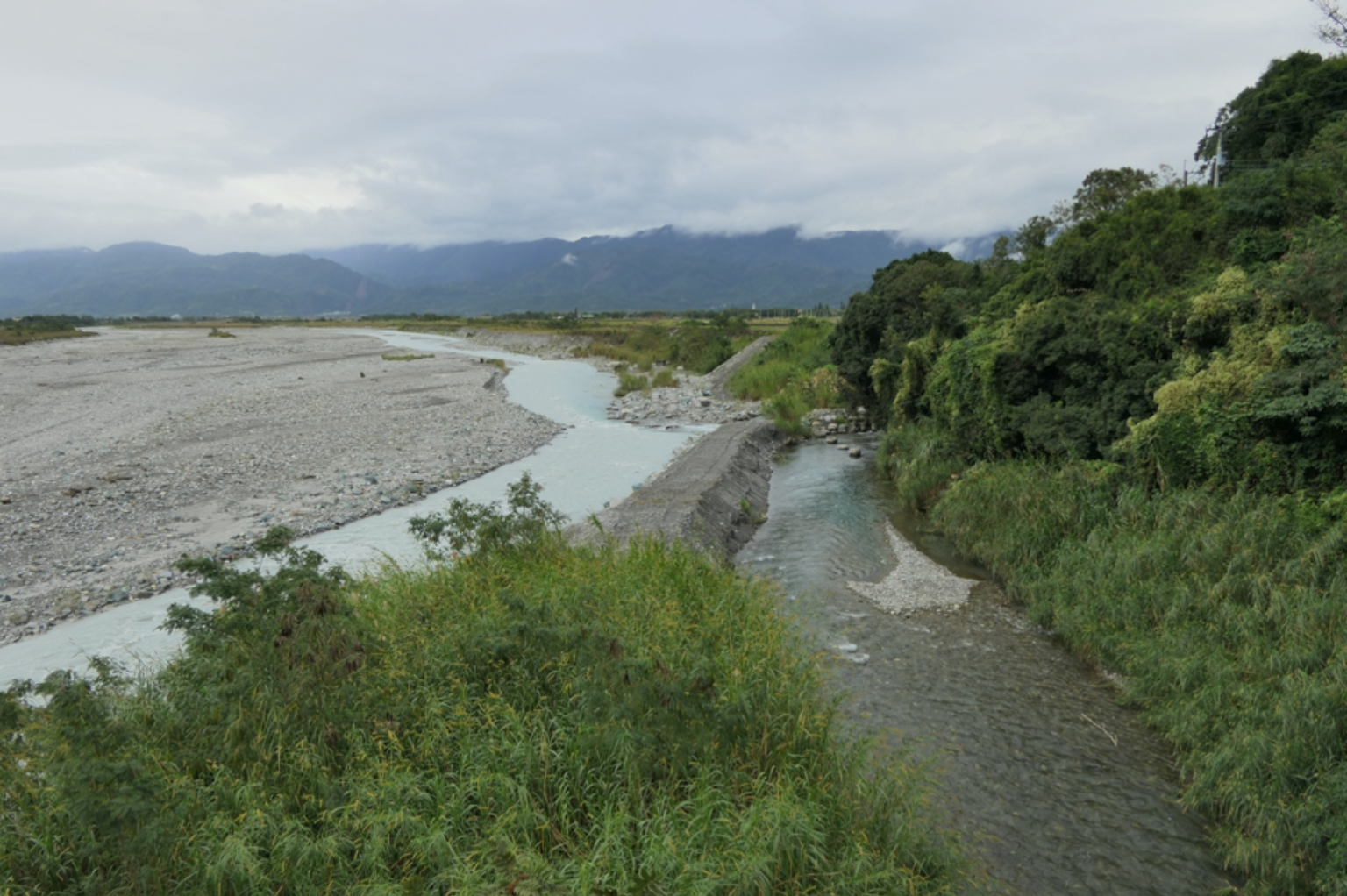
On the left the Lele River, on the right the crystal-clear Qingshui River, both flowing down from the Central Mountain Range. Because the forests upstream are intact, they run clear all year except after major typhoons and downpours.
A smallholder who came home in middle age grows good Yuli rice
Changliang, in the far southern corner of Yuli, recently came to public attention through the 918 Hualien earthquake, which seriously damaged the two bridges near the epicentre — the Yuchang Bridge (Yuli to Changliang) and the Changfu Bridge (Changliang to Fuli) — both closed to traffic to this day. Changliang, in the Huadong Rift Valley near the Central Mountain Range, is remote, one of the last lowland areas in Taiwan to be developed.
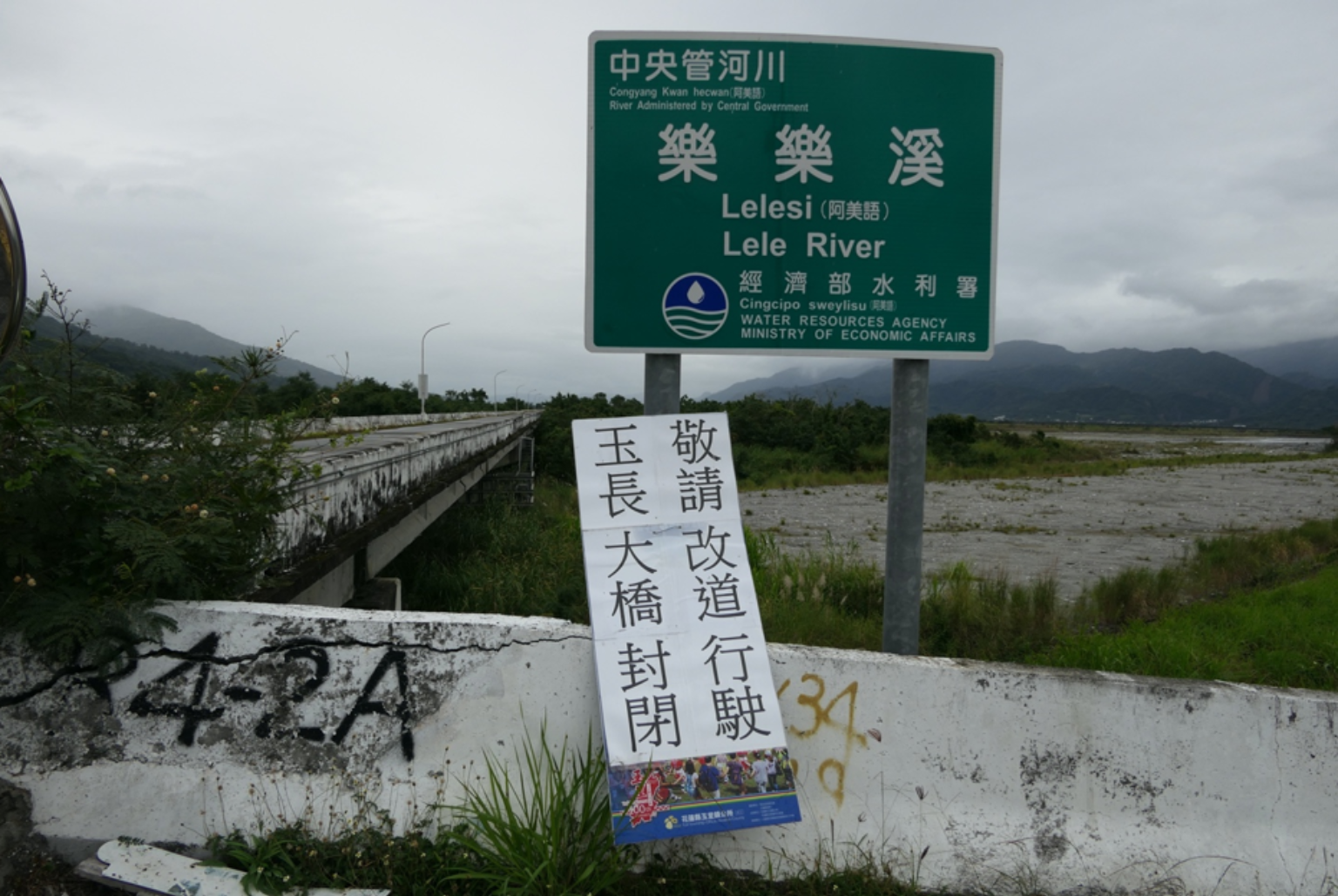
Last year's 918 earthquake in Yuli, Hualien, had its epicentre near Changliang, and the bridges linking Changliang to the outside were seriously damaged.
On 4 May 2022 in Yuli, Hualien, I met two smallholders, Chiu Chui-chuan (Changliang Village, Yuli Township) and Su Chun-lung (a Fuli smallholder), the first two to sign smallholder carbon farming contracts with me — the first to "eat the crab". After that came countless preparations, site visits and discussions with hundreds of smallholders, but only a few understood and joined carbon farming. After all, this isn't a "government-subsidised" activity, and in recent years some smallholders have been tricked into "growing electricity", so genuine farmers flinch when they hear "growing carbon".
After signing, Chiu and Su took part in our online meetings and offline activities as much as possible. I visited their fields several times and learned about local customs from the internet and from village elders — a very important part of international emission-reduction certification. Besides cutting carbon, a project must be integrated with the local community; you can't get international certification just for bare tonnes of carbon reduced. Many people have long misunderstood this, thinking carbon reduction is just carbon reduction. Genuine emission-reduction and carbon farming projects are never about "keeping oneself pure"; they must connect with the land and the community.
Getting to know Chiu gave me a deeper understanding of Yuli. Chiu is a salmon who returned home in middle age. Born in 1969, from 1992 he went abroad to work, building business and experiencing life in Japan, Malaysia, Thailand and China for many years; his son, now a university sophomore, was born in mainland China. Chiu's 30 years living overseas seem a microcosm of Taiwan's Hakka people.
Chiu's great-grandfather moved his family from Zhudong, Hsinchu, to Yuli about 90 years ago, then settled in Changliang. Most of Changliang's land then belonged to the Lien family of Yilan. At first they farmed rented land; later, under the 37.5% rent reduction programme, his grandfather exchanged grain for 7 jia of land, divided among six sons. His father was once a primary school teacher; as eldest son he had to carry on the family business and only took up farming later. Chiu left home young and watched his grandfather and father farm, rarely taking part himself beyond odd jobs.
Farming at home without losing touch with the global "carbon farming" trend
Because his mother fell seriously ill in 2019, Chiu had to come home to care for her. She died at the end of the year. He had planned to go back to China for business, but with the spread of COVID and his elderly father to care for, he had to stay in Taiwan and put down roots in his hometown. He saw that Taiwan's agriculture still had potential, and even encouraged his son, about to enter university, to apply for agriculture at National Ilan University.
He had worked in a large electronics firm and in mushroom cultivation, and was more used to an industrial mindset, not the small-output, closed ecosystem of Taiwan's smallholder economy. "Joining international carbon farming certification made me feel connected to the world again." Carbon farming has been an international trend only since 2016. He heard that Taiwan also had an emission-reduction certification project linked to the international community, which cost nothing extra and carried little risk. After certification his rice could carry an international label saying "so many kilograms of carbon reduced", and he believed it would fetch a better price.
"Actually I've been 'farming carbon' for almost three years. In 2020, when I decided to stay and farm, I went to all sorts of classes. The Hualien District Agricultural Research and Extension Station was promoting rice-husk charcoal, so I took the class and even bought a carbonisation kiln, carbonising the husks left after threshing and spreading them on the fields."
"At first I just wanted to reduce agricultural waste. We weren't allowed to burn rice husks because of air pollution, so they'd blow onto the fields and were hard to deal with. Now they can be made into charcoal and returned to the fields to improve the soil — circular agriculture, you could say. These past two years my rice has looked healthier and more disease-resistant than other people's, and yields have been good too."
One day Chiu went with me to Fuli to see Su Chun-lung. Fuli's soil is more fertile than Changliang's. He pointed to lodged rice heavy with grain: "Farmers always think the more fertiliser, the bigger the yield. But this is overuse of nitrogen, causing lodging; this year's harvest will be smaller and the quality poor. Getting farmers to use less fertiliser for carbon farming will probably be a big challenge."
Hualien smallholders go international together
Through Chiu's introduction I met Chen Wen-hua, chief of Changliang Village and head of the Second Yuli Quality Rice Production and Marketing Group, as well as Chu Yen-lun, head of the Third Group, and former head Huang Cheng-hsien. Their explanations brought everyone closer, and we quickly worked out a carbon farming model the villagers could accept. At its meeting on 12 January the Third Group decided to join carbon farming.
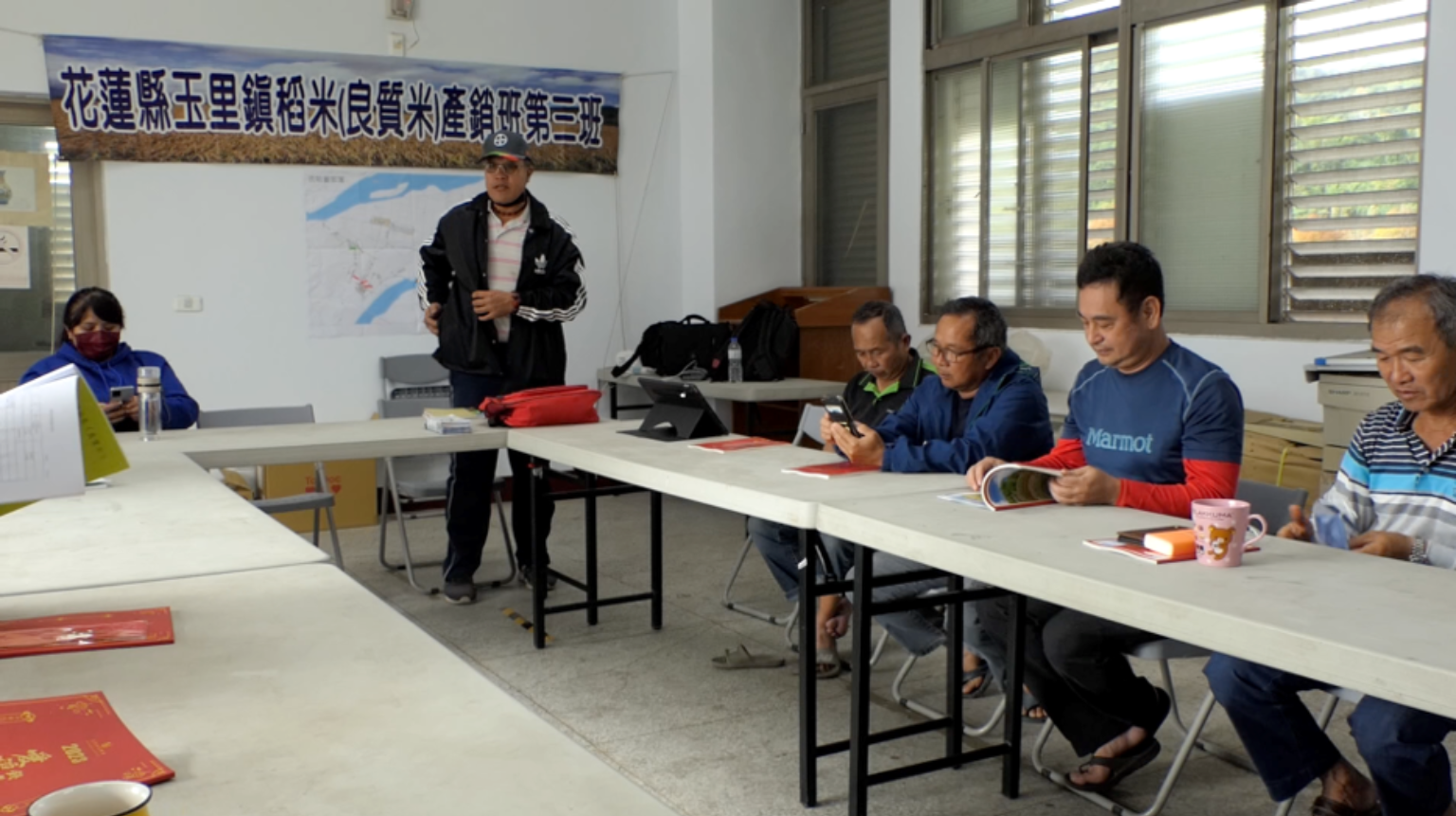
At its members' meeting on 12 January, the Third Quality Rice Production and Marketing Group of Yuli Township, Hualien County, decided to join smallholder carbon farming, entering international emission-reduction certification together and building the Changliang rice brand (standing in the middle is group head Chu Yen-lun).
Chiu cares a great deal about the ecological environment. He took me to see the two main water sources of Yuli's Lele River. One is the Lakulaku River, which supplies Yuli's main growing area; its water is grey and cloudy and alkaline because of marble deposits. The one flowing into Changliang is the Qingshui River, with no mines upstream, so its water is neutral — rare, good water. Besides the Changliang community, Changliang also has the Veterans Affairs Council's Changliang Farm, now Taiwan's largest specialised organic farming area, mostly leased to outsiders.
"I want to introduce Yuli's and Changliang's beautiful mountains, clean water and good rice to the world, but there was no good angle. Until I found that Taiwan could also take part in international emission-reduction certification. I thought perhaps we could become part of the global village and spark villagers' enthusiasm. Some young farmers have come home now, and they should be open to these new ideas. On the other hand, I'd long been in touch with the international community; coming back to farm in Changliang, I felt cut off from it. Taking part in carbon farming makes me feel I'm back in international society, which really helps me stay in my hometown for the long term without losing touch with the world."
We hope Chiu's hopes — also the wishes of many Changliang residents — will soon come true. A shared vision needs everyone's shared effort.
If you'd like to buy Chiu Chui-chuan's rice, I recommend his jasmine rice; its fragrance and texture are excellent.
Orders: 0928615112 (LINE ID)
Source: CM Media ( https://www.cmmedia.com.tw/home/articles/38186 )