努力小農
本文尚無譯文。
Can integrity be tested? Identifying authentic food is not simple at all
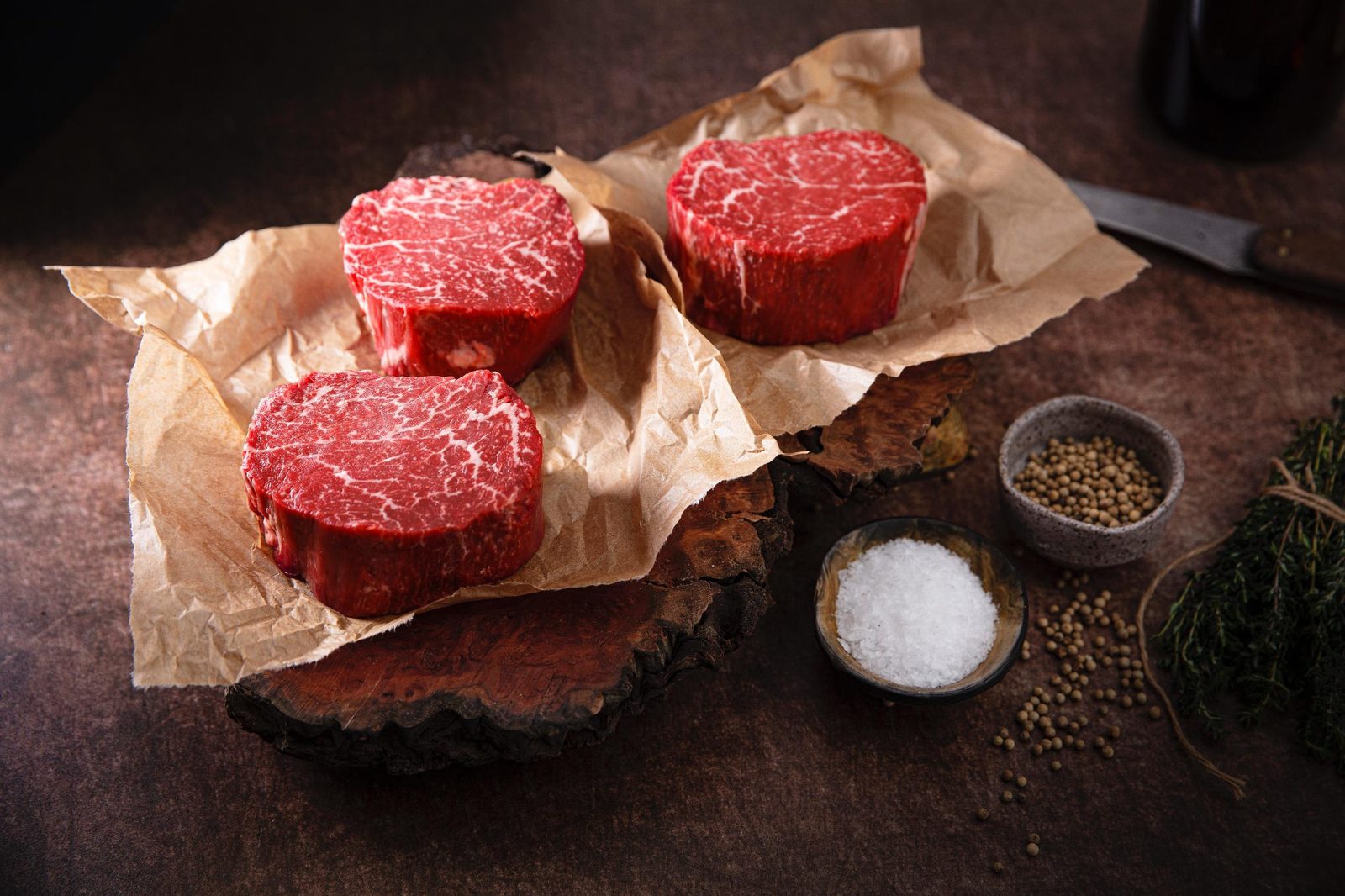
Food counterfeiting and adulteration problems keep emerging around the world, and the money involved in food crime even exceeds that of drug crime. Illustrative image. (Photo: Madie Hamilton @ Unsplash)
Food counterfeiting and adulteration problems keep emerging around the world. A report by Food Standards Scotland in the UK notes that the money involved in food crime exceeds that of drug crime, and fraud is the most common form, because traders always pass off fakes as genuine to deceive consumers and make huge profits. In 2013 the EU saw horse meat passed off as beef, and Eastern European lettuce passed off as Western European organic lettuce, causing major economic losses, a crisis of trust, and a large-scale food safety storm in which thousands of consumers fell ill or even died. The EU therefore stresses the importance of "Food Forensics" in preventing and investigating food crime. In 2014 I had the chance to join this anti-food-fraud testing work and learned cutting-edge food forensic science and testing technology.
IRMS
15 January 2015: the Isotope Ratio Mass Spectrometer (IRMS) bought from the UK company Sercon is installed and undergoes hot testing.
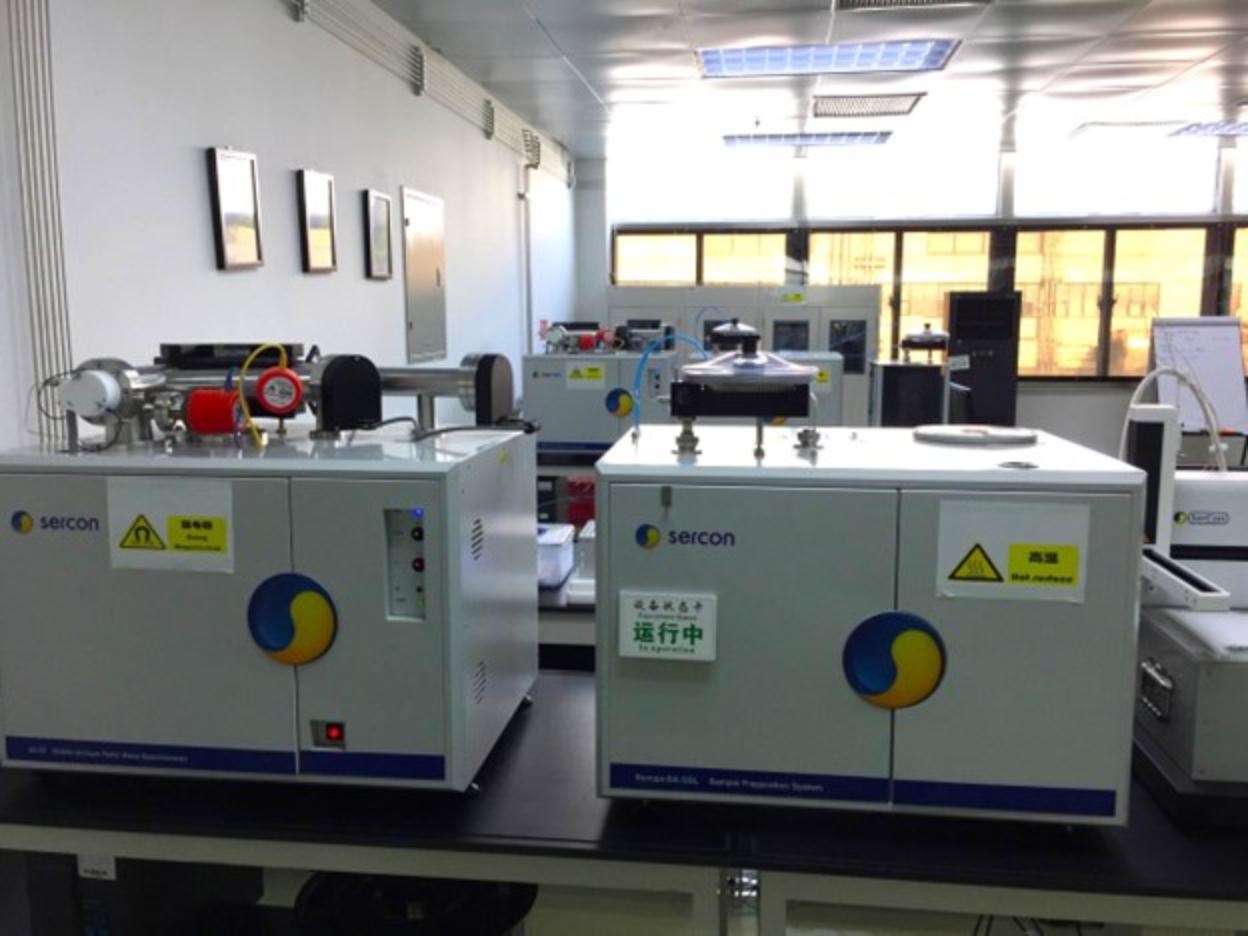
Stable isotope ratio testing equipment detects, at ultra-trace levels, the isotopes of atoms in organic molecules or water molecules. It is extremely precise — one set costs about as much as a Rolls-Royce — and testing is very expensive. Establishing the testing method (isotope fingerprint maps of products from their place of origin) is also very difficult and rarely succeeds, so it cannot be widely adopted.
From the end of 2013 I spent nearly three years helping a testing and certification group work withA UK food forensics laboratoryto build a food authenticity laboratory in Shanghai. It included a stable isotope ratio mass spectrometer, which can build "fingerprint maps" of the origin of food and farm products, and Polymerase Chain Reaction (PCR). I believe the whole world now knows about PCR testing, though few understand how it works — it has been part of human life for the past three years. PCR testing detects the genomes of animals and plants in food to identify species and strains, to verify whether food labels are truthful, or to detect allergens in food (such as soy, nuts, fish and shellfish, dairy and so on), to ensure food safety and protect consumers.
A stable isotope ratio mass spectrometer analyses the ratios of isotope atoms of carbon, nitrogen, hydrogen, oxygen and sulphur in the organic molecules of food or farm products. Differences in the isotope ratios of these five elements are used to identify the origin of food or farm products. Because latitude and longitude, altitude, soil, climate, pests and diseases, feed composition and other factors in each region affect the metabolism of plants and animals, the elemental isotope ratios in organic molecules differ from region to region. This makes it possible to distinguish the place of origin, and even the method of cultivation or husbandry (including whether it is organic).
The principle is simple, but carrying out the analysis and building stable isotope fingerprint maps is extremely difficult. The first to build such stable isotope maps was Interpol, to identify the sources of drugs such as cocaine and heroin. Isotope testing can of course also be used in archaeology, authentication of cultural relics, geology, and environmental pollution forensics. Its use in food forensics came after the 2013 horse-meat-as-beef food safety scandal in Europe, when the EU wanted to find where the horse meat had come from, used stable isotope ratio mass spectrometers to trace its origin, and developed certified methods.
Taiwan's "early deployment" on horse meat passed off as beef
In 1987, at the Min Sheng Daily, I spent half a year investigating and reporting on "horse meat passed off as beef", which later won me a Golden Tripod Award for public service. It seems Taiwan was 26 years ahead of Europe — proof once again of "how could the world catch up with Taiwan?" It was thanks to this "early deployment" experience that I got the job at the food authenticity laboratory.
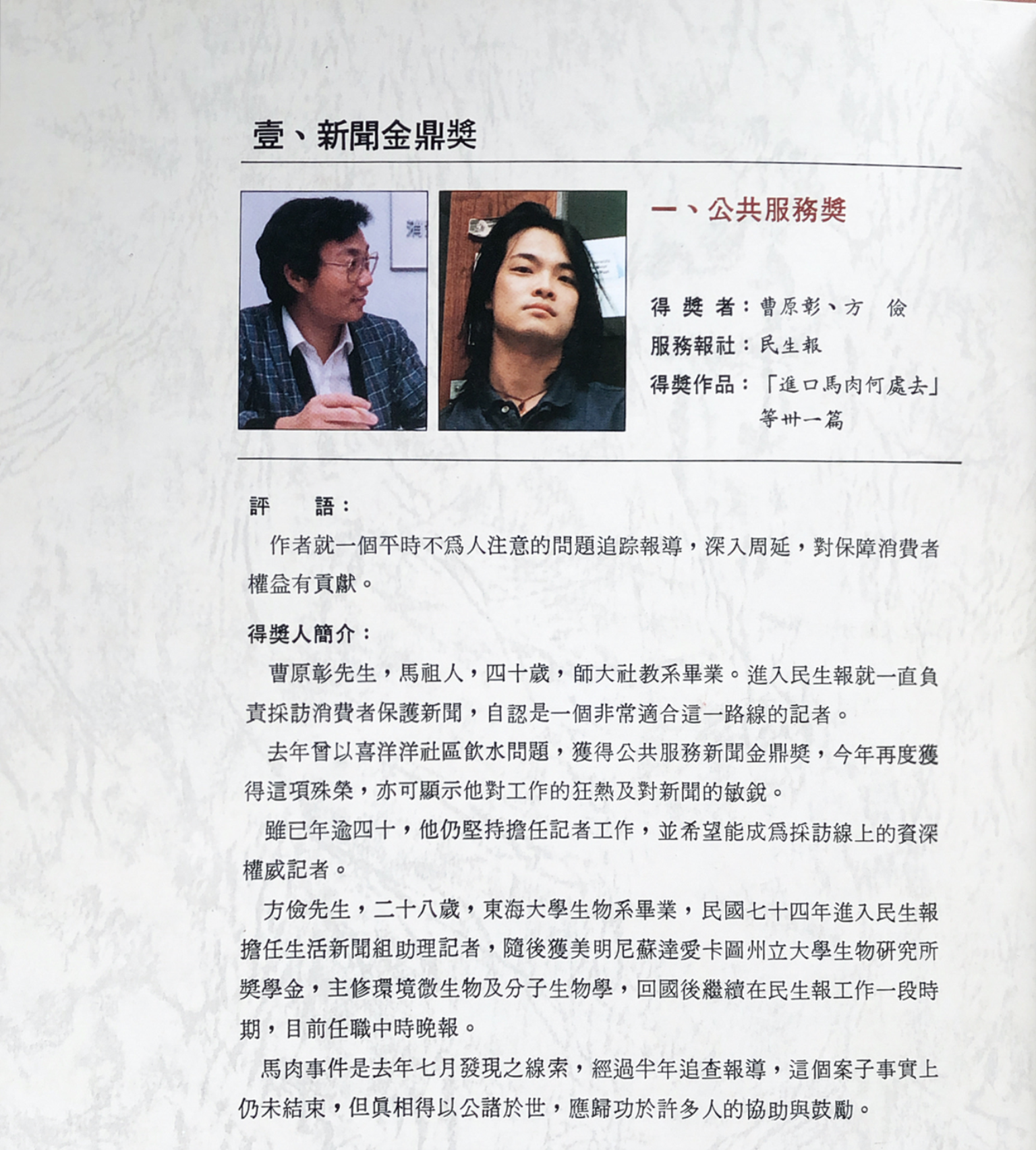
In 2014 I had the chance to work in an international food forensics laboratory, thanks to my time as an assistant reporter at the Min Sheng Daily in 1987.
Food forensics work is also part of global efforts to prevent food crime. Worldwide, food fraud alone amounts to US$30–40 billion a year. Add the health hazards of unsafe food, and the harm to human society, health and the economy exceeds that of the US$400 billion-a-year drug crime market. It is one of Interpol's main areas of work.
In food fraud, passing off cheap goods as expensive ones is the most common — just like fake designer handbags. Yet each place has its own terroir; each land nourishes its own people. Foods and farm products with geographical indications become targets of fakery, imitation and false labelling. It may look harmless, but think how terrible the harm is to farmers in the place of origin.
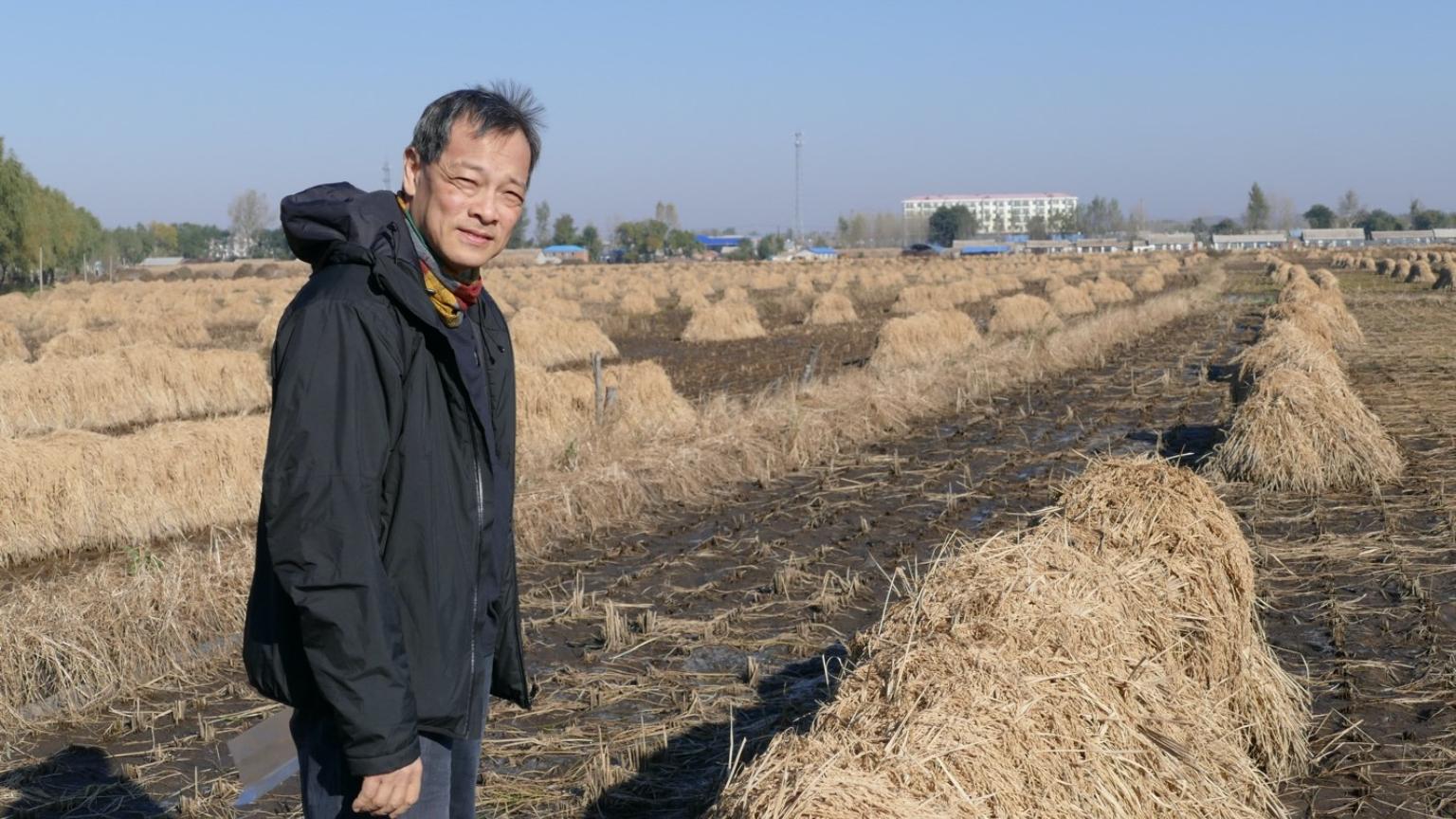
Sampling on site in the fields of Wuchang, Harbin, China. The experimental design must be done well, collecting a large number of statistically meaningful samples according to local terrain, geology, climate and hydrology.
The uncertain plight of Wuchang rice
During my time at the food forensics laboratory, I spent two years tracking and investigating Wuchang rice from Harbin, Heilongjiang Province, China. In "A Bite of China", Wuchang rice is covered in a single line calling it China's best rice — and nothing more.
Official statistics put genuine Wuchang rice production at 1 million tonnes a year, but the Wuchang rice sold on the market is at least 20–30 million tonnes. From 2014 to 2016 I stayed in Wuchang, investigating terroir and hydrology, designing experiments and sampling rules, and taking samples on site back to the lab for analysis, building a fingerprint map of Wuchang rice. Then we sampled and compared rice on the market: of 20 samples, only 1 matched. Some could be seen from their appearance not to be Wuchang rice, yet they were sold that way anyway — after all, few people have ever eaten genuine Wuchang rice. Someone who eats Wuchang rice regularly can immediately tell whether it is Wuchang's Daohuaxiang No. 2, because it has a distinctive "flavor signature" that is hard to fake.
In fact, the biggest counterfeiters of Wuchang rice are the major local grain traders. At harvest time at the end of the year, before Wuchang's paddy has even been milled, large numbers of trucks bring paddy into Wuchang from other provinces, forming long queues outside the traders' granaries waiting to deliver. Wuchang's rice farmers can only look on helplessly.
When I ate at restaurants in Wuchang, I always asked the owner where the rice came from. Not one used Wuchang rice — all of it was cheap rice from other provinces. This is commonplace: in Taiwan's famous rice towns, how many restaurants use pure, high-quality local rice? If consumers, the people who eat rice, don't pay attention, no restaurant will care either.
An integrity-management app builds a value chain of integrity
Building a laboratory that meets food forensics and authenticity requirements involves technical difficulty and expensive instruments (one set costs about as much as a Rolls-Royce, and you need at least two sets to be complete — one for oxidation-reduction and one for pyrolysis — plus water equilibration). It takes a lot of time to build fingerprint data models (big-data statistical analysis), sampling failure rates are high, and building one map costs about US$100,000–200,000. Meanwhile, big sellers on the market won't buy this kind of testing and shoot themselves in the foot. So although the lab was built successfully and gained international accreditation (UKAS), the market had no room for it. My ambitions lay elsewhere. I had signed a 2–3-year contract in an advisory capacity, though in practice I headed the lab, and I left once it was built — after all, I didn't want to spend the rest of my career shut up in a laboratory, dealing with clients who didn't mean what they said.
Today I make the MiHuMiSang app because, after decades of work in global sourcing, quality, certification and testing, I see farmers at the bottom of the whole food supply chain. Today's market profit structure is an inverted pyramid: farmers work hardest and receive the least. If this continues, farmers will care only about yield, not quality, still less the environment; they must pay for testing and also bear the risks of global climate change. If this doesn't change, all environmental efforts are end-of-pipe and futile.
Working with Taiwan's farmers often over these three years, I find more problems every day. I believe that to solve problems we must face them honestly to find their source. And the source of the problem is honesty.
I believe even more that authenticity and traceability are the foundation of all management and progress. This is not achieved by certification and testing, but by people's self-confidence and mutual trust between people. That is why I launched "smallholder carbon farming", a global agricultural carbon sink certification project, to help smallholders build self-confidence that they can achieve global certification, and to build channels for direct dialogue with consumers and a new market rule — integrity: earning clean money with your head held high.
Source: CM Media ( https://www.cmmedia.com.tw/home/articles/38690 )