努力小農
本文尚無譯文。
Young Grandpa Music Rice – a multiverse of sustainable food and farming education from field to market
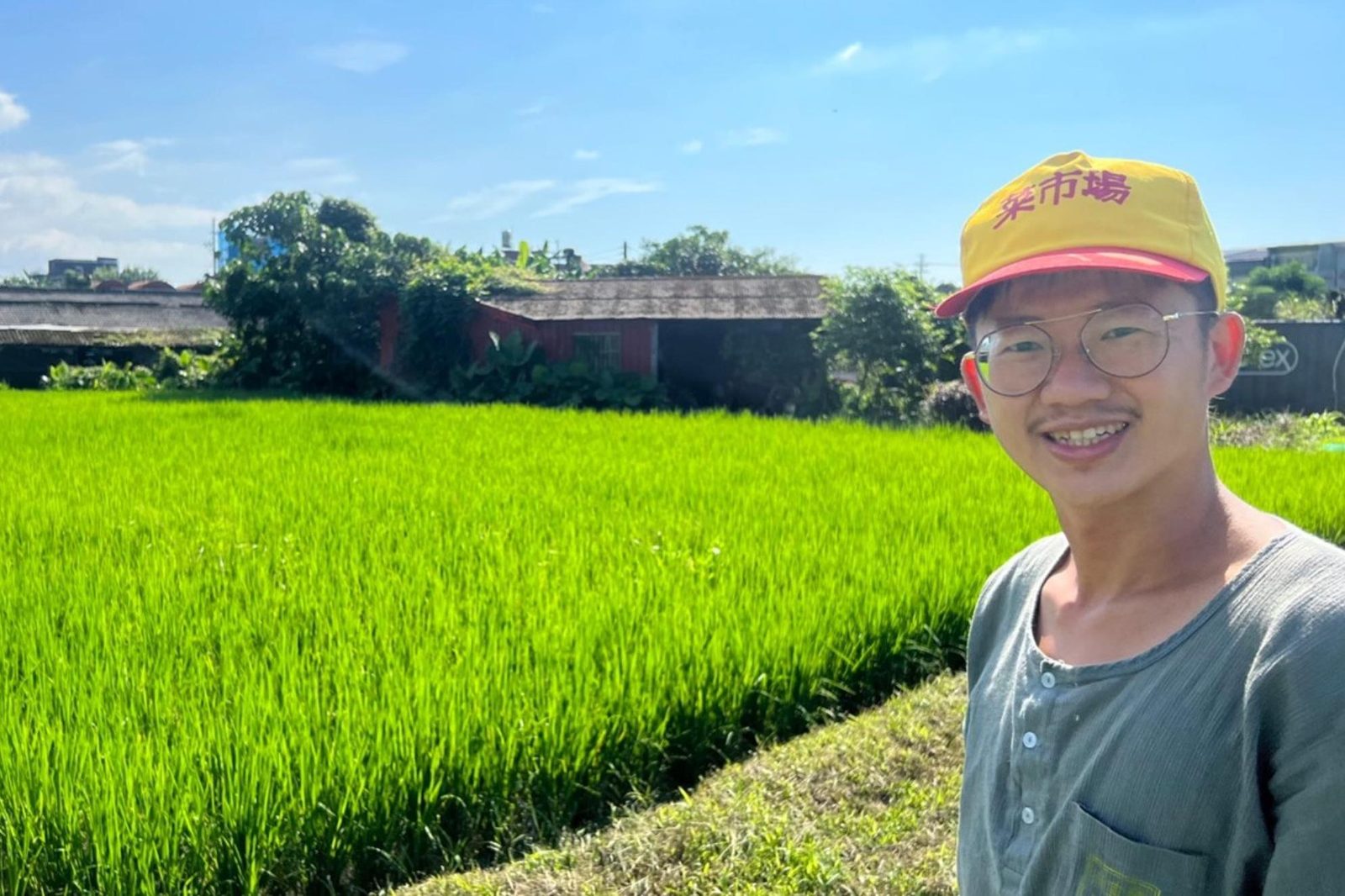
Fang Tzu-wei, 40, isn't a grandfather. As a youngster he longed for his grandfather's rural life and copied his grandfather's clothes, work and way of living, so people called him "Young Grandpa".
"So here it's the women who plough the fields!"
In Taiwan it's hard even to see oxen ploughing, and men ploughing by hand is rarer still. But on Google Maps at "Yellow + Field" you can actually see two young women harrowing and levelling a paddy field — truly unusual. What's more, they are young people from Taichung who drifted north to work, and came here over the Tomb-Sweeping holiday to exercise, going barefoot to experience "ploughing" in close contact with the mud.
What draws them and other young people to throw themselves into farm work? I believe it is a return to simplicity after industrialisation and urbanisation. The person who offers 7 li of land (70% of a fen; one fen is about 300 m², 100 ping) for people to experience planting by hand is "Young Grandpa", young Yilan farmer Fang Tzu-wei.
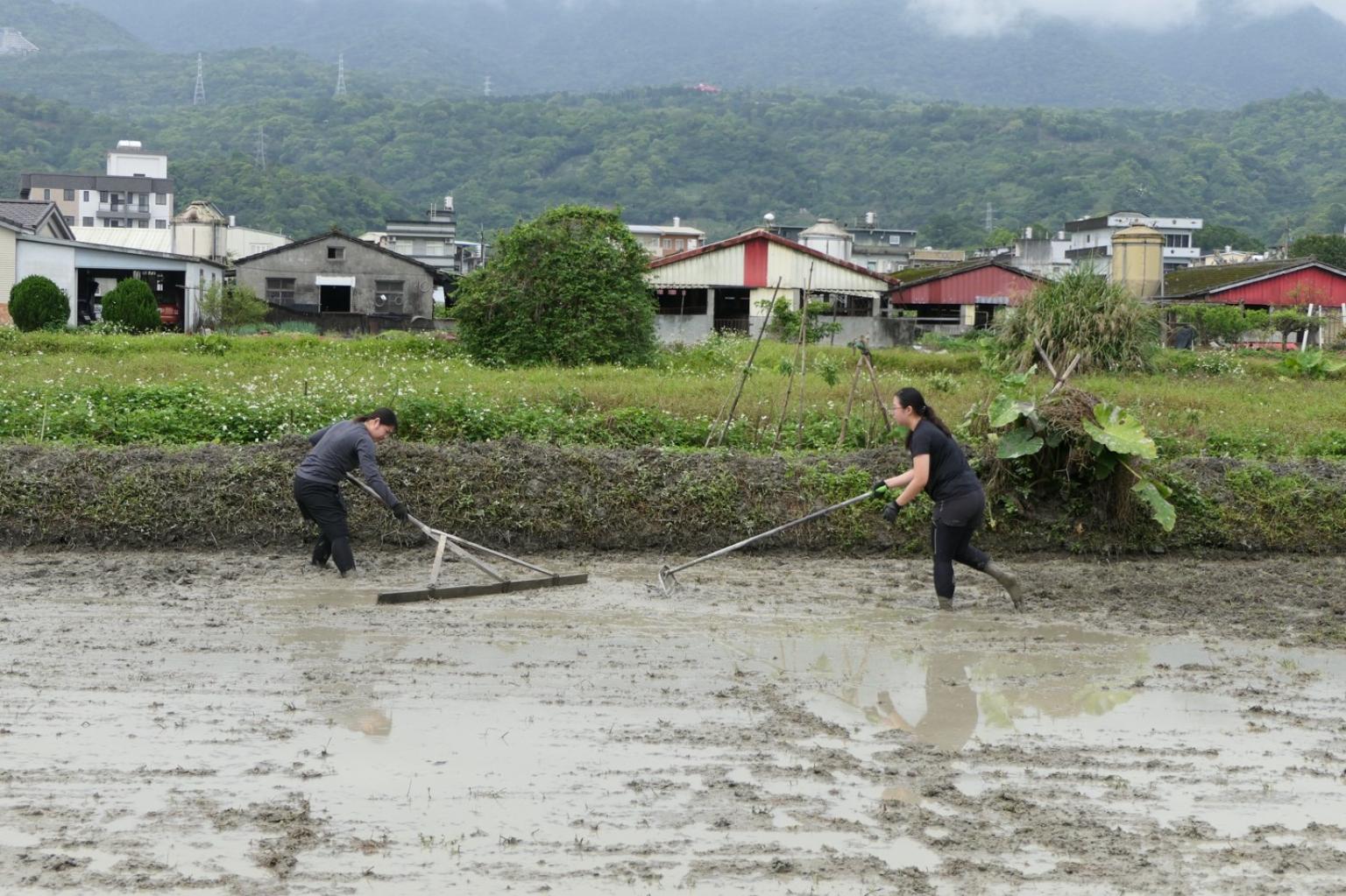
In Taiwan it's hard even to see oxen ploughing, and women ploughing is rarer still. This is real connection with and experience of the land. Anyone who has never had the chance to get close to the soil can come and try.
"I'd really like to oppose extending the high-speed rail to Yilan, because it would speed up change in Yilan. More people would come to build 'farmhouses' and destroy Yilan's farmland. With falling birth rates, Taiwan is running out of people, yet they still want to build houses no one will live in, breaking up farmland that was once whole." Fang Tzu-wei has a young face, yet calls himself Young Grandpa at every turn — a slightly odd match.
Fang Tzu-wei, 40, calls himself "Young Grandpa". It's not that he married and had children young and became a grandfather early; he wants to recover his grandfather's rural farming life and pour fresh water into modern living. So, together with his wife, the "Music Fairy", he founded "Young Grandpa Music Rice" in Yilan, developing multiple creative skills: food and farming education, cultural tours, event hosting, creative agricultural thinking, English and Japanese translation — and he has even started becoming an online influencer with his own media.
Fang Tzu-wei has his own distinctive views on the environment, sustainability and food and farming education. He believes in letting everyone get their hands dirty and experience working in the field themselves — something many people have never done.
A great classroom of sustainable living from field to market
His family runs a clothing shop inside Yilan's First Market. Growing up immersed in market life, he developed a never-ending, fluent patter. Combined with the setting itself, he easily draws people into the "Augmented Reality (AR)" he creates — with added human warmth and the bustle of the market enriching all the senses.
As a child I read the story of Mencius's mother moving three times: fearing young Mencius would pick up bad habits, she moved house three times — first away from a graveyard, then away from a market, and finally next to a school. The story simply reflects the cultural belief that "all pursuits are lowly; only study is lofty". This has led Chinese intellectuals for a long time to scorn the real substance of life while mouthing hypocritical talk of benevolence and morality, cut off from nature and vitality, ending up in what Bo Yang called "soy-sauce vat culture".
Fang Tzu-wei, by contrast, treats farmland and markets as classrooms. Born into a clothing shop in Yilan's First Market (also known locally as Nanbeiguan), he grew up familiar with market trading and hawking, and so developed his Mandarin, Taiwanese, English and Japanese. Meeting different people in different settings, he switches languages and accents with ease, blending into the environment and social situation of the moment.
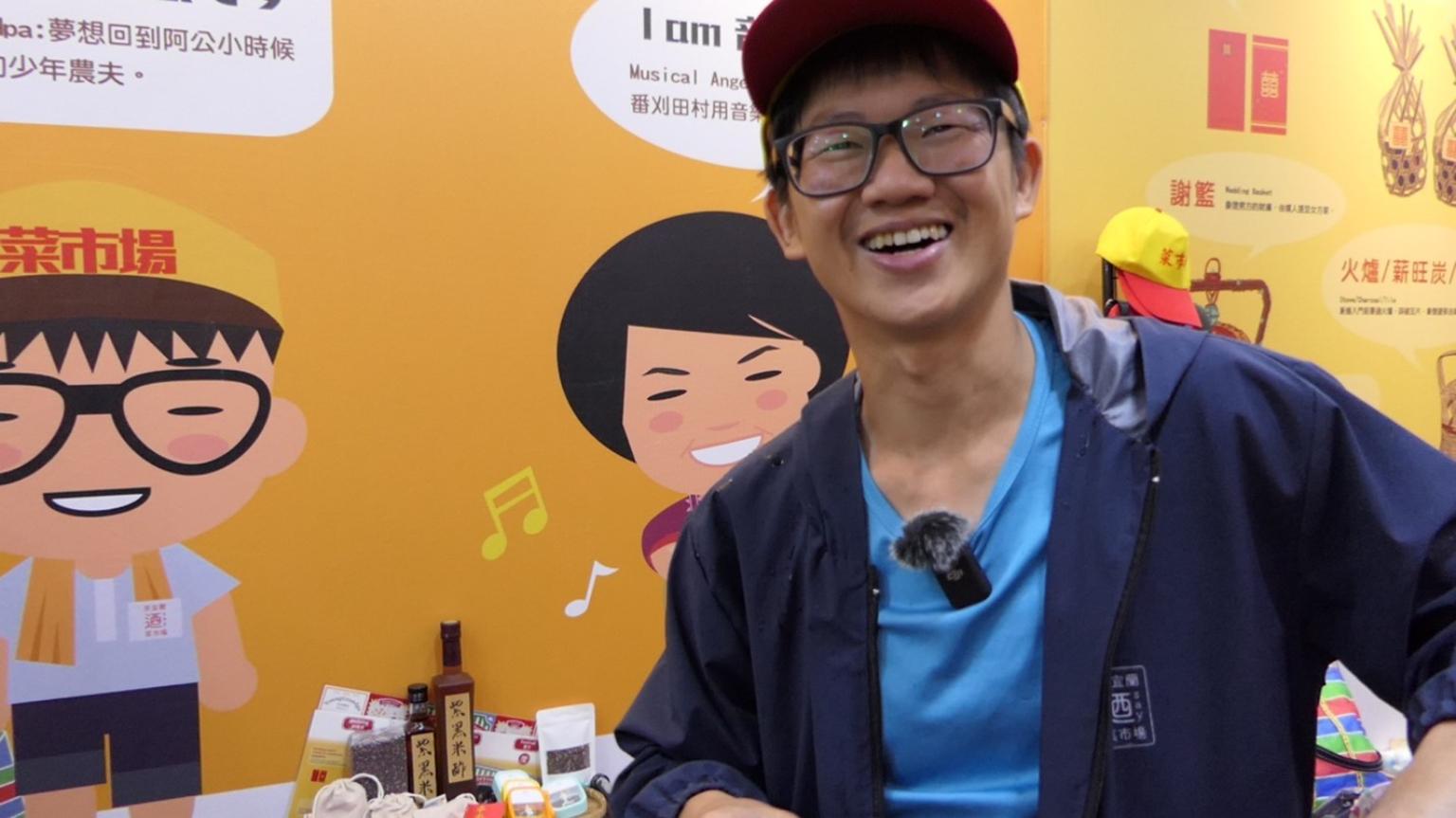
Fang Tzu-wei's family home is a clothing shop in the market, where he developed his fluent delivery. He can guide people through environmental food and farming education from the field to the market.
Fang Tzu-wei didn't originally farm; as an adult he came to long for the farming life of his grandfather's era and chose to return to the land. The land belongs to his wife's family; it had been left fallow and overgrown, and a century-old house had fallen into ruin. He set about changing it, and together with his wife's music he broke out of his echo chamber, meeting people from all walks of life and offering people of all ages, and parents with children, the chance to return to the land. Hence the strange sight early one morning of two city-raised women ploughing in the field.
This experience of contact between people and land can't be felt by reading, watching videos or hearing stories. You have to take off your shoes and socks, roll up your trousers and step into the sticky clay of a muddy paddy to connect directly with the "energy of the earth". Only when you are covered head to toe in mud, which dries into grey-white soil and falls away, do you understand "dust to dust, earth to earth" and the cause and effect of "body and land are one".
Following Fang Tzu-wei's tour into "Nanbeiguan", he is like a fish back in water. Under his guidance, the market is a transfer station connecting land and people, countryside and city. Here you can see again how the vitality of the land enters urbanised crowds, providing nourishment for life and living.
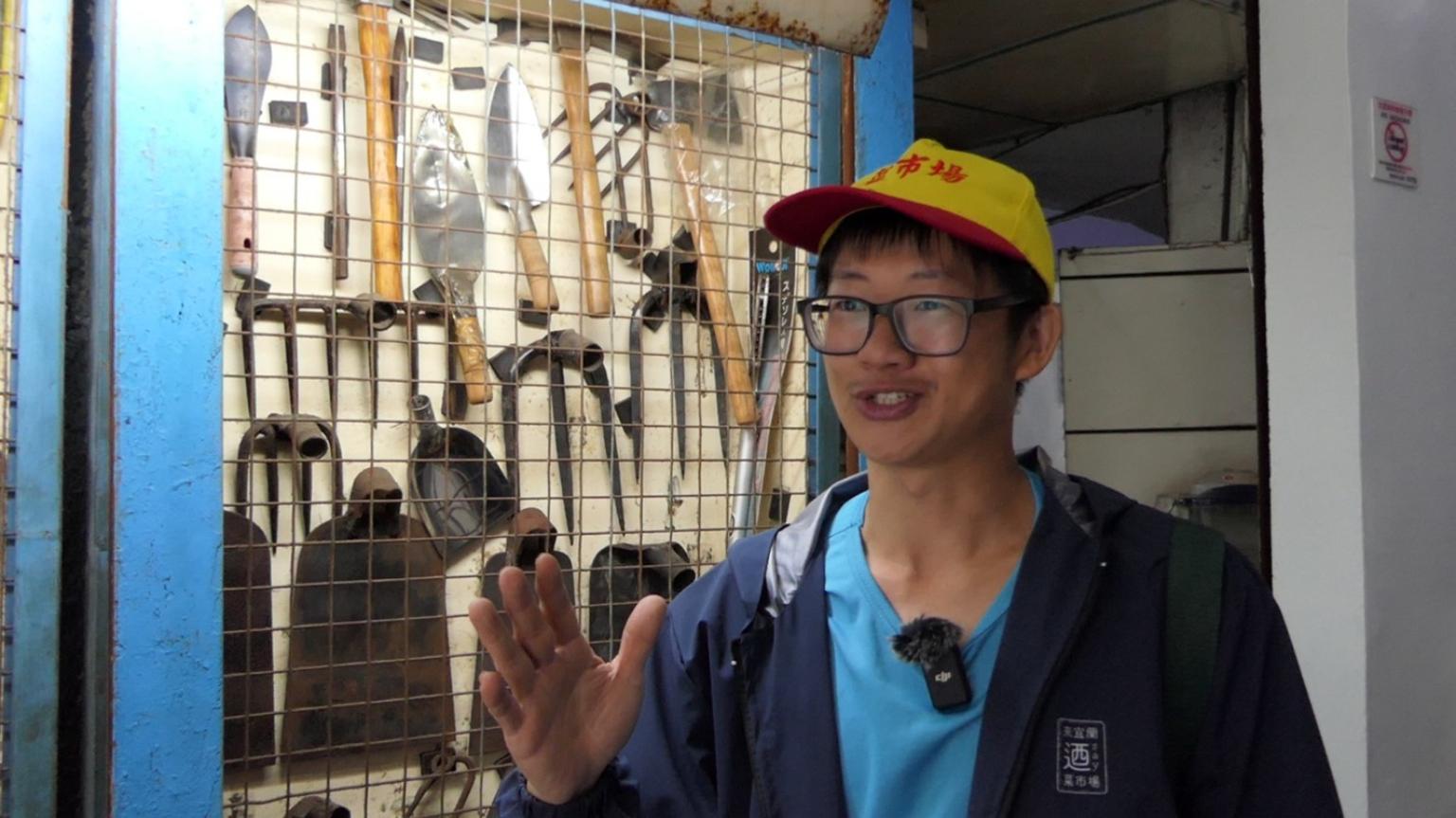
The knife and farm tool shops in the market become props for Fang Tzu-wei's many skills.
Vegetable sellers and stalls, rice sellers, knife sharpeners, herbal shops — things we take for granted. We never knew each has a fascinating story behind it, and that like a net they closely connect everyone, giving the city its life.
Today's Mencius's mother might go back to the market
I believe that if Mencius's mother lived today, she too would take young Mencius to farmland, markets, graveyards and the wilderness to learn anew. The model mother of more than 2,000 years ago confined her son in a man-made school. Shouldn't we today free our children from confining environments and ways of thinking, to face a multiverse?
On 30 May 2022 Fang Tzu-wei joined the "Smallholder carbon farming" international emission-reduction certification and carbon trading project. The land he farms is small — just 3 fen — and he also practises rotation, farming only part each year and letting the rest "rest" and grow grass. So farming is not his main source of income; rather, he uses farming to draw people into re-examining the relationship between people and land.
To step into Fang Tzu-wei's multiverse, watch this record of a visit to Nanbeiguan with him over the 2023 Tomb-Sweeping holiday.
Fang Tzu-wei's contact details are on Google Maps.
Source: CM Media ( https://www.cmmedia.com.tw/home/articles/39480 )