 努力小農
本文尚無譯文。
Why can't we have a farmers' almanac that keeps up with the times?
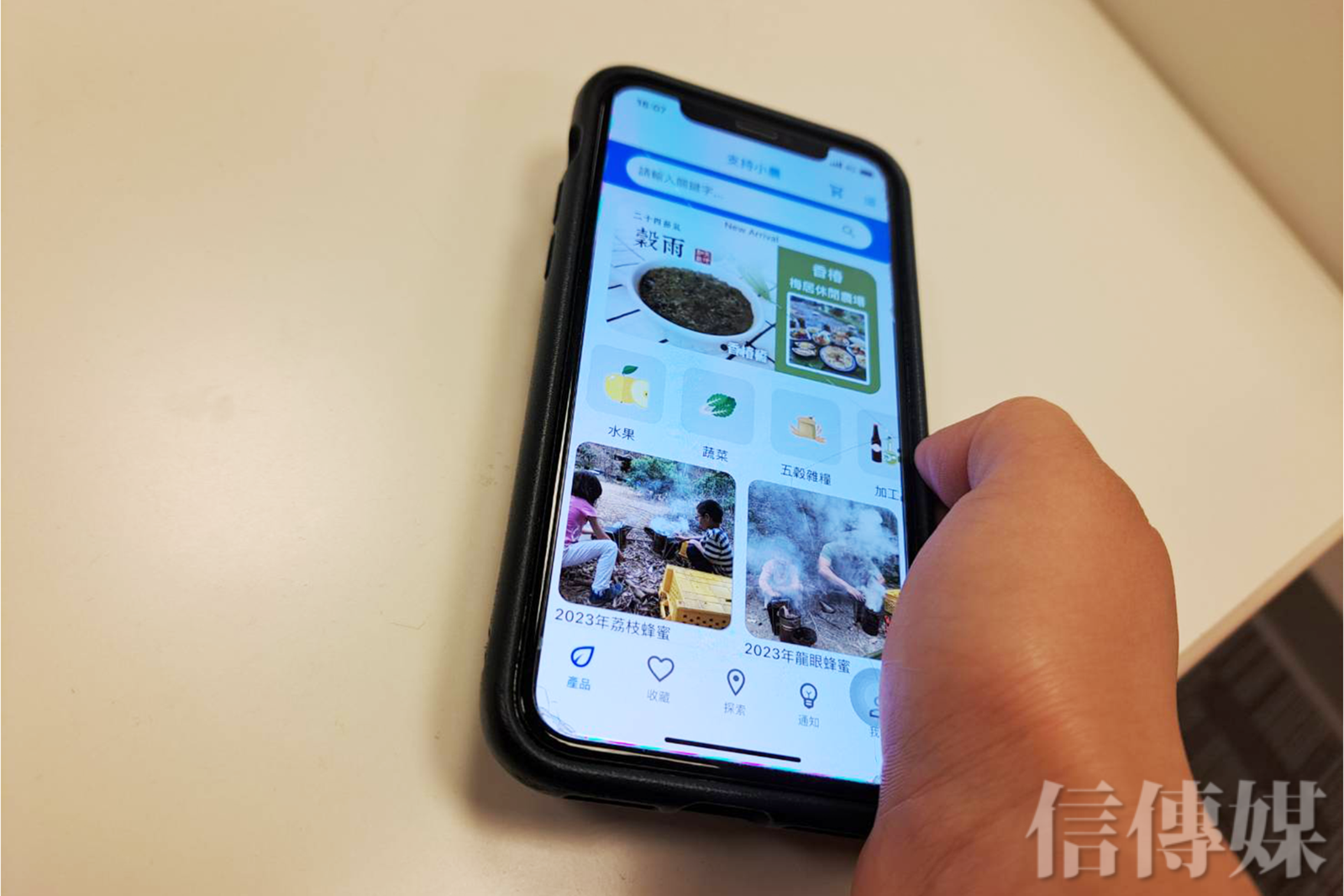
The farmers' almanac is like a crystallisation of the ancients' "big data". MiHuMiSang uses records to present modern farmers' wisdom through the app. (Photo: CM Media editorial team)
Since ancient times, the calendar was the emperor's prerogative. Now it is something everyone can take part in, complete and improve.
The farmers' almanac harmonises yin and yang
My second maternal uncle was a well-known master of Bazi (Four Pillars) and feng shui, who once attracted distinguished visitors and countless students. As a child I lived at my maternal grandfather's house, and my uncle taught me about yin and yang, the five elements, and the heavenly stems and earthly branches in the almanac. But I was a rebellious child who didn't like being bound by rules of etiquette, so I paid little attention. Looking back now, it's rather a pity.
When I began project management for the Y2K (millennium bug) date crisis in 1998, I learned about the calendars of various countries and found that every ancient civilisation had calendars going back over a thousand years, all with considerable logic and science. Whether used for agriculture, navigation, or rituals and festivals, they carry value as legitimate traditions.
A calendar is the crystallisation of a civilisation's accumulated knowledge and experience. The lunar calendar is the Yellow Calendar (also called the Imperial Calendar, tied to the ruler's reign). It not only told farmers what to do; even emperors of every dynasty followed it to worship heaven, earth and ancestors. Whenever a dynasty changed, the calendar's start was reset (as with "Republic of China" years, another era name), but mostly it was old wine in new bottles — how could people change the laws of the sun and moon's movements? "China" is a concept, geographically dynamic, but in time it has followed the farmers' almanac, since farmers made up most of the population and everyone lives under the same sky.
Taiwan still uses the lunar calendar. Besides festivals and solar terms, it remains closely tied to agriculture. Although this almanac originated on the Huang-Huai plain, its culture spread across East Asia, Northeast Asia and Southeast Asia, crossing boundaries of latitude and longitude, with each place adjusting within the margin of error.
From a modern perspective, the calendar is an application of big data — an algorithm ("Agrithem") formed over years and months. I don't want to call it AI (artificial intelligence), because AI is too overhyped; algorithm is the right term. Our lunisolar calendar harmonises yin and yang, built from a solar calendar and a lunar calendar. The solar calendar is based on the Earth's revolution around the sun, a year of 365¼ days. The solar terms all follow the solar calendar, sometimes shifting by a day or two because of the leap day every four years.
The lunar calendar is based on the moon's revolution around the Earth: each cycle of waxing and waning is 29.53 days, with long months of 30 days and short months of 29, giving a year of 354 or 355 days. Every few years there is a leap month — this year, for example, there are two second lunar months.
The calendar – an algorithm from the ancients' big data on astronomy and solar terms
We can imagine the movements of the sun, Earth and moon as gears. With the sun at the centre, the Earth goes round it once a year, 365.2425 days, while the moon goes round the Earth once a month, 29.53 days, forming a cycle of their least common multiple. The Earth is affected by the light, heat, radiation and magnetic fields of the sun and moon, which shape the living things in each region (including viruses, microbes, plants and animals). Add each place's terrain, geology, hydrology and ocean tides, and you get all kinds of natural parameters affecting the growth of everything on Earth.
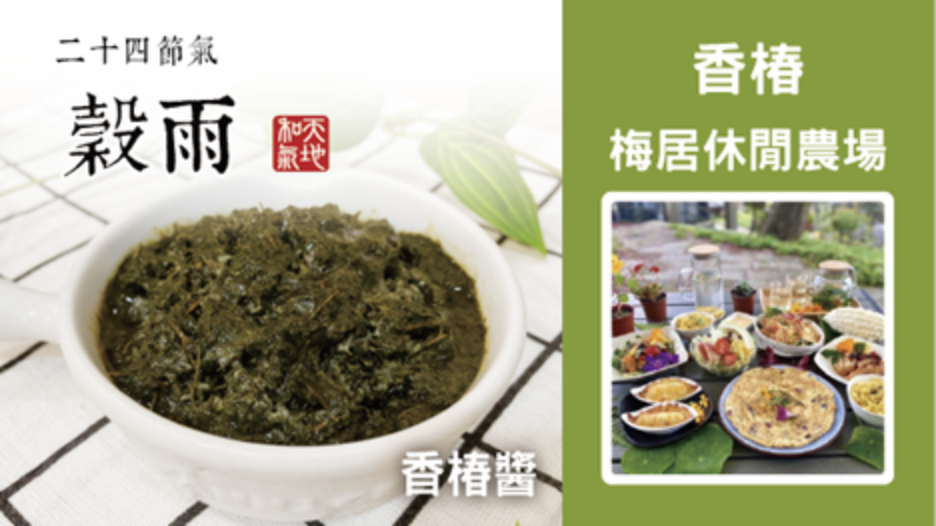
The farmers' calendar is lunar, but the 24 solar terms follow the 12 months of the solar calendar, because it is a calendar that combines the Earth orbiting the sun and the moon orbiting the Earth, harmonising lunar and solar calendars. (Image: MiHuMiSang website)
Food is heaven to the people. Since humans began farming tens of thousands of years ago, moving from gathering, fishing and hunting to farming and herding, they have been influenced to varying degrees by these natural parameters, which turned into religion, culture, belief (superstition) and customs — the process of humans adapting to the Earth.
After industrialisation in the 18th century, humans gained the ability to change local environments and arrogantly believed that "man can conquer nature", thinking they could escape nature's laws. Today some of the world's richest people (Bezos, Musk) even believe we can emigrate to other planets or Mars, with crowds of followers cheering them on. But they forget "evolution": humans survived because they are the Earth's "fittest"; on another planet they would have to adapt all over again. As in the last scene of the film Don't Look Up, the humans who leave Earth reach their new planet and, as soon as they step off the spaceship, are swallowed whole by a local creature.
The MiHuMiSang app is like a farmers' almanac that keeps up with the times
Today we still use the farmers' almanac set down hundreds or thousands of years ago. It isn't exact, but it isn't far off. Our ancestors had no computers — not even calculators — yet they could induce and deduce the almanac. But we mustn't be stuck in the past. As times change and the world transforms, can we predict the future more precisely?
Taiwan clearly has everything, yet always seems short of something — short of electricity one day, eggs the next — while also worrying that farm produce can't be exported. Production and marketing of produce seem to have a goldfish memory of three seconds, never learning. And the answers from officials, businesses, journalists and the public in the news are always the same. Why can't we be a bit more civilised and use science, technology and management to solve these persistently basic problems?
Agriculture has a great many variables, and with climate change in recent years, every smallholder I know has endless stories and complaints as soon as the weather of the past few years comes up. But if we want to find "big data" in these experiences, it's very difficult.
The MiHuMiSang app was developed mainly to give smallholders a free personal digital assistant (PDA) they can carry with them. As long as smallholders regularly photograph and check in their work (entering what they did and the tools and inputs used) and upload it to the cloud, they can build a database of their own work records. Together with production and sales records, this can be used for personal big-data statistical analysis in future. Its best use is customer relationship management (CRM): communicating with customers over the long term and turning them into fans or loyal supporters. Each smallholder is an operating unit; when many smallholders do it together, regional big data takes shape.
In the past, the highly respected Imperial Astronomical Bureau observed, recorded and calculated the heavens. Now every smallholder can contribute their own experience and knowledge to form big data, let computers find the rules of the algorithm, and then, according to each smallholder's situation, deduce what each should plant, when and how to plant it, and how and to whom to sell.
Using the MiHuMiSang app for international emission-reduction certification uses only part of its scheduling and diary functions. As more people use it in future, it will form big data on carbon-reducing farming methods, becoming customised methods for each locality and making agricultural carbon reduction simpler and more effective.
Consumers, meanwhile, can find on the MiHuMiSang app nutritious, safe and reliable local, seasonal food, or places to travel and relax.
It's just like the almanac's guidance on seeking good fortune and avoiding misfortune, only more customised and more timely. Isn't this just like ChatGPT, so hot right now? But it isn't just the patter of a language model — it's the real thing, a data service generated from everyone's contributions. Not artificial intelligence, but "collective intelligence".
Source: CM Media ( https://www.cmmedia.com.tw/home/articles/39950 )


