 努力小農
本文尚無譯文。
Beware the harm microplastics do to farming: a soil-ecology killer lurking for years
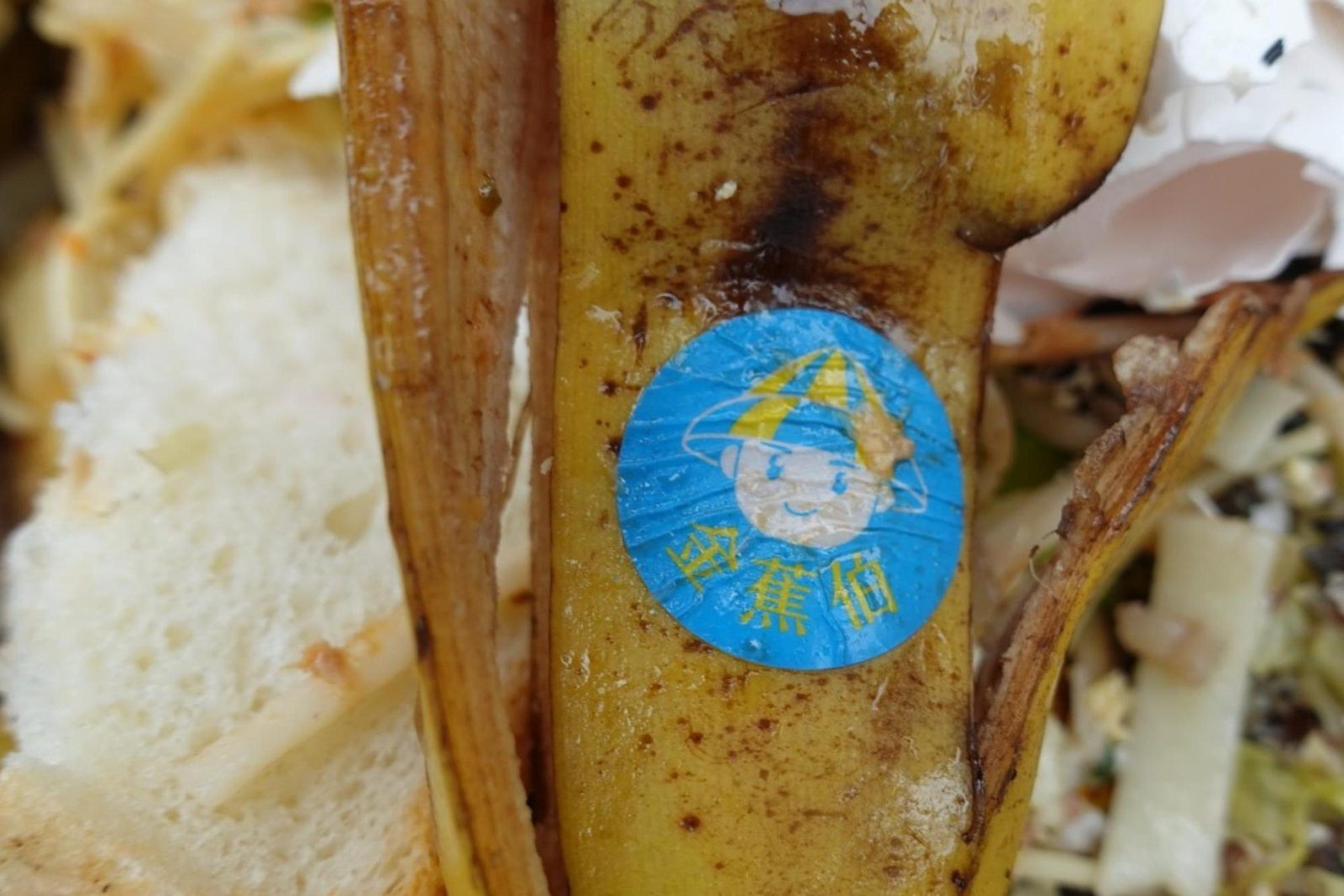
A well-known banana brand puts a label on every banana. It looks upmarket, but it's bad news when the peels are recycled into compost.
In May at Meiju Leisure Farm on Yangmingshan, certified permaculture design teacher Tammy Turner taught a dozen or so students how to make compost and sheet mulch, turning the farm's fallen branches and leaves, weeds and kitchen scraps into organic compost. Tammy showed the students how to carefully remove the plastic labels from banana peels and the tape from cardboard boxes.
"If this plastic gets into the compost, it's very bad, so we must remove it to make good compost," Tammy explained to the students.
"Plastic doesn't break down, so how can it be bad for soil?" Many people probably think so. According to many soil studies, farmland soil is already full of plastic and microplastics, which are damaging the soil and the survival of soil microbes and small animals, and also affecting agriculture and food safety.
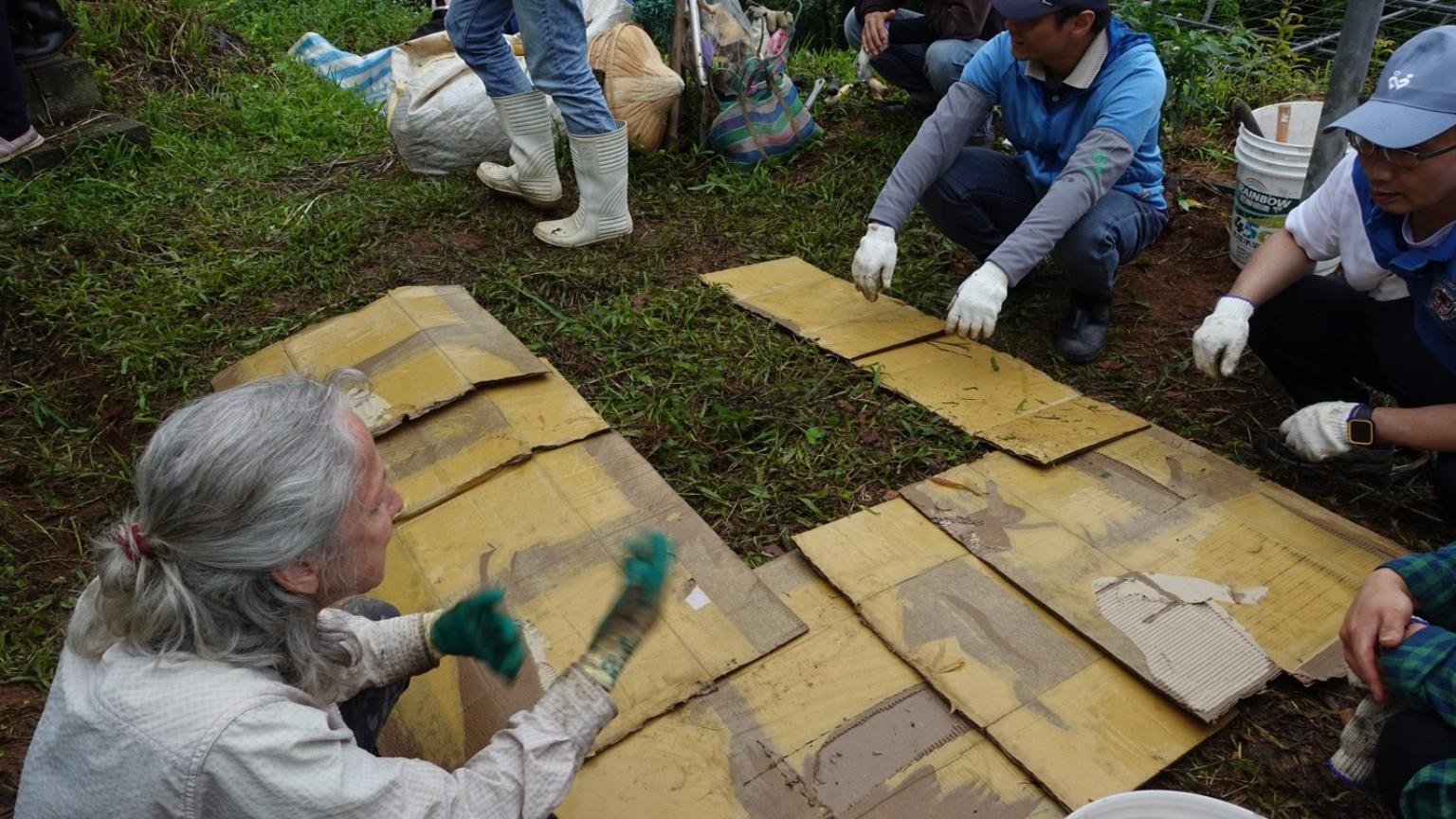
The cardboard used as the bottom barrier layer in sheet mulching had strips of tape stuck on it. Tammy had the students peel the tape off strip by strip to reduce the plastic entering the soil in future.
The weeping sea turtle and the silent soil
A few years ago there was a video of conservationists pulling a straw out of a sea turtle's nostril. Blood flowed from the nostril, and the turtle's eyes seemed to shed tears of pain. The video moved many people and led many countries, including Taiwan, to start banning plastic straws. Yet far larger quantities of microplastics (plastic fragments under 5 mm in diameter) are silently eroding our soil. If we don't act now, they will cause a more serious environmental crisis and food security problems.
Mass production, low prices and fast consumption, combined with inadequate recycling and management and slow degradation, have led to large accumulations of plastic waste and microplastics in farmland. Microplastics are stable and small, with a relatively large surface area and strong hydrophobicity. They carry many hydrophobic organic pollutants, heavy metals, pathogens and drug-resistance genes, and microplastic pollution in soils worldwide has drawn wide concern.
Plastics are made by cracking and synthesising light oil from petroleum. They became popular from the 1950s and have a history of nearly 80 years; use has grown exponentially, and it is almost impossible for modern people to live in a "plastic-free" environment. Some think plastic "never breaks down in a thousand years", but in fact in the natural environment plastic is easily broken down by ultraviolet light — into fragments that spread more widely rather than disappearing. That is, its carbon-based organic molecules are fragmented and enter deeper into the environment, including the oceans and soil.
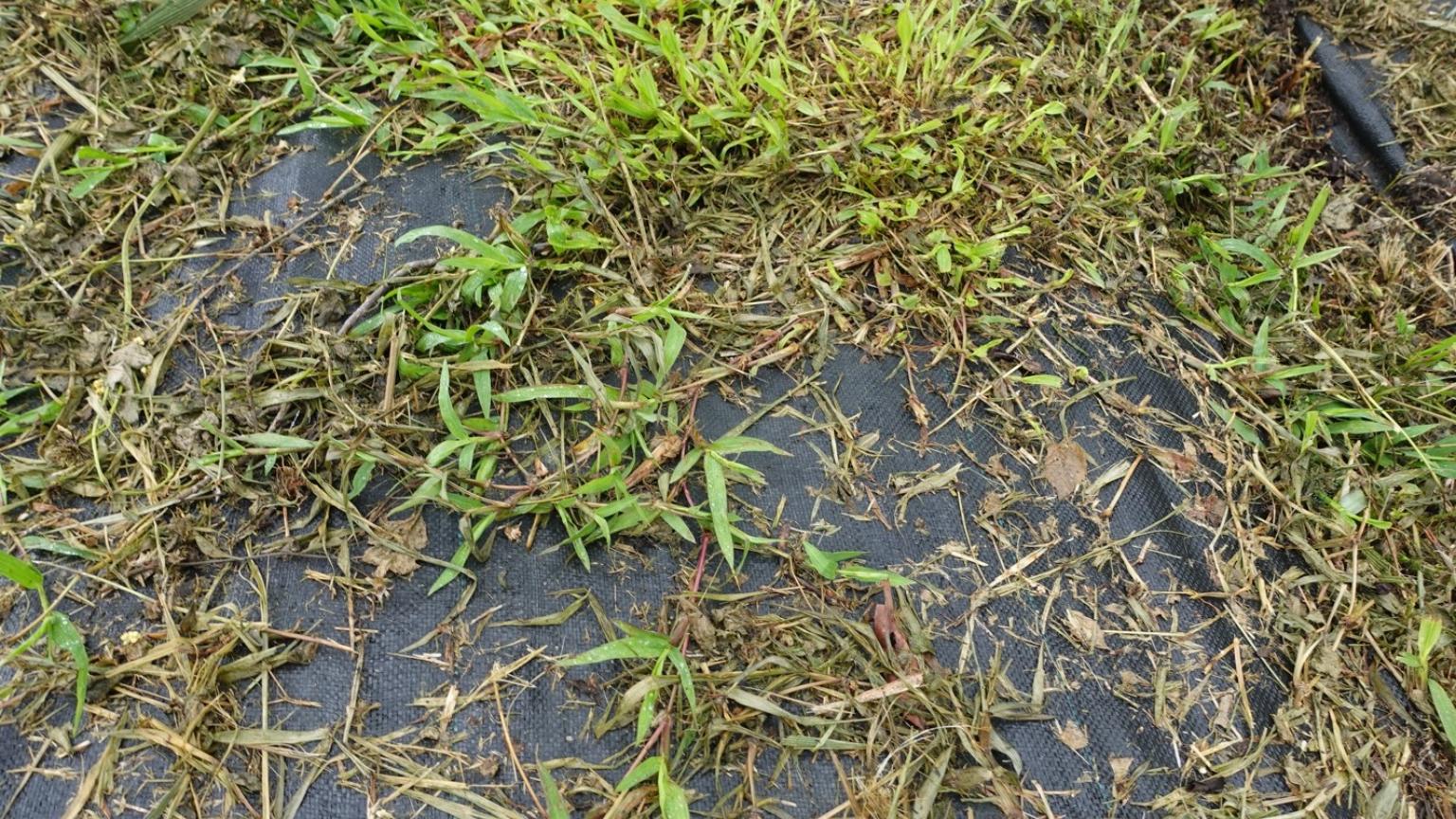
Widely used weed mats don't necessarily stop weeds growing, but they will certainly kill the soil.
Most of us are familiar with the ocean side: there are several gyres of microplastics in the Pacific, like a huge pot of soup of plastic from cities on both its eastern and western shores, plus large amounts of discarded fishing nets, devastating marine ecosystems. But we may have overlooked the microplastics problem in the soil right beneath our feet.
Microplastics in soil do cause environmental and health problems. These tiny plastic particles can have various negative effects on soil properties, ecosystems and potentially human health.
Some products labelled "biodegradable plastic" are actually corn starch or soy protein mixed into plastic resin and made into plastic sheeting, plastic bags or other products. In these "degradable plastics", only the starch and protein break down and the plastic fragments; it doesn't truly "degrade". Another major problem with such fake degradable plastics is that when they are recycled as plastic, the added starch and protein molecules spoil the original recyclability of the plastic, turning other recyclable plastics into unrecyclable waste.
Tiny harm causes irreversible disaster
In general, microplastics cause the following harm to soil:
Changing soil properties - Microplastics can change the physical and chemical properties of soil. Their hydrophobicity makes soil lose its water-holding capacity and disrupts its original structure and pH. These changes affect the overall health and fertility of the soil, and in turn plant growth and agricultural productivity.
Ecosystem disruption - Microplastics can interact with soil animals such as earthworms and soil insects, affecting their behaviour, reproduction and survival. This can disrupt soil ecosystems and food chains, with potential consequences for the wider environment.
Disease vectors - The surfaces of microplastic fragments can carry pathogenic organisms, acting as vectors of disease in the environment. This may pose risks to wildlife and human health.
Contamination of food and water - Microplastics can enter the food chain through eating contaminated plants and animals, enter streams and lakes, and have even been found in tap water. The long-term health effects of ingesting microplastics are not yet fully understood, and plasticisers from plastics are continually being released into the food chain.
We need to re-examine the harm of agricultural plastic waste: avoid using it as far as possible, or reduce its use; if it must be used, reuse it and make sure it can be recycled.
Source: CM Media ( https://www.cmmedia.com.tw/home/articles/40511 )


