 努力小農
本文尚無譯文。
Regenerative agriculture and the circular economy: only healthy land can feed healthy people
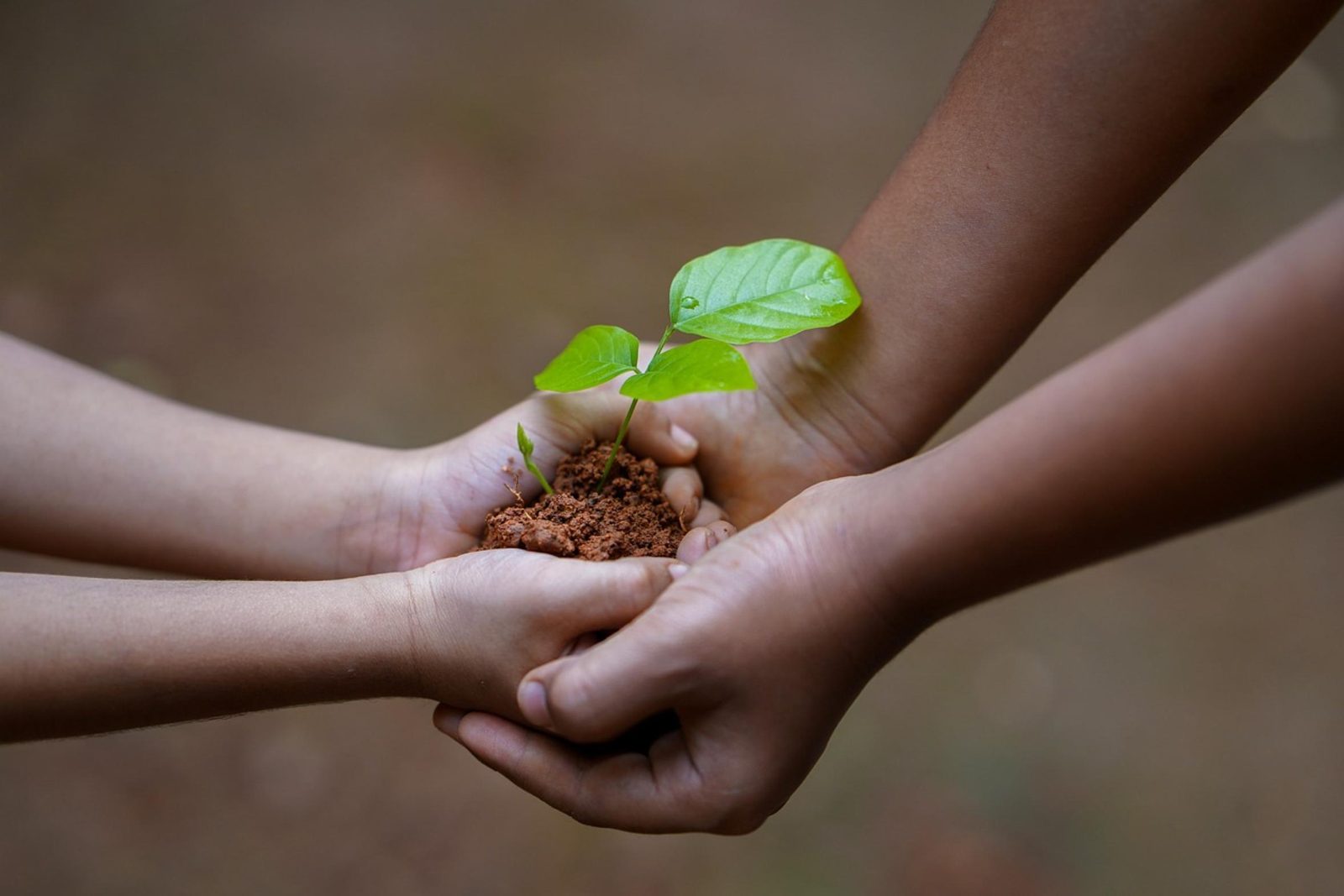
Only when the microbes in the soil are thriving can healthy land produce healthy food to feed healthy people. (Photo: Pixabay @ Shameer Pk)
The three old Rs of environmental protection never go out of date
I recently interviewed Huang Yu-cheng, chairman of the Circular Taiwan Network, and we discussed the "linear economy" since the Industrial Revolution: taking energy, resources and materials from nature, making them into products, then selling, consuming and discarding them, until they finally become "useless" rubbish, or even toxic and harmful substances that endanger humanity over the long term. This is a common problem facing all of humanity. How to think systematically and transform? Perhaps by starting again from agriculture, we have a chance of finding the answer.
It is just as with nuclear waste: before humanity had worked out a safe and economically viable way to recycle and reuse it, nuclear power was used on a large scale, as if it had no side effects and could be used freely. Only after the Fukushima disaster, when radioactive wastewater began to be discharged, did countries start to notice that this was not a chance "butterfly effect" but an inevitable fate.
The three old Rs of environmental protection — Reduce, Reuse and Recycle — will never go out of date. Reduce also carries the sense of Refuse, and Reuse also of Repair. Taken together, they amount to Regenerative or Recircular.
Ancient agriculture in fact naturally followed the three Rs. Besides wasting nothing, it used solar energy to produce food that sustained ancient people, who were self-sufficient and could raise more children.
Today's economy is moving towards fast production, fast product cycles, fast consumption and fast disposal — so fast that people can hardly breathe. I believe an industrial ecology of living and production like this will soon become unbearable for everyone and collapse or burn out.
Regenerative also means renewal. Because we live in such a linear vortex of fast consumption, everything is fast, cheap and fragmented — much like the vortex of microplastics that has appeared in the Pacific. At the same time, in the densely populated parts of the Earth, land and fresh water are also full of the massive pollution formed by these microplastics.
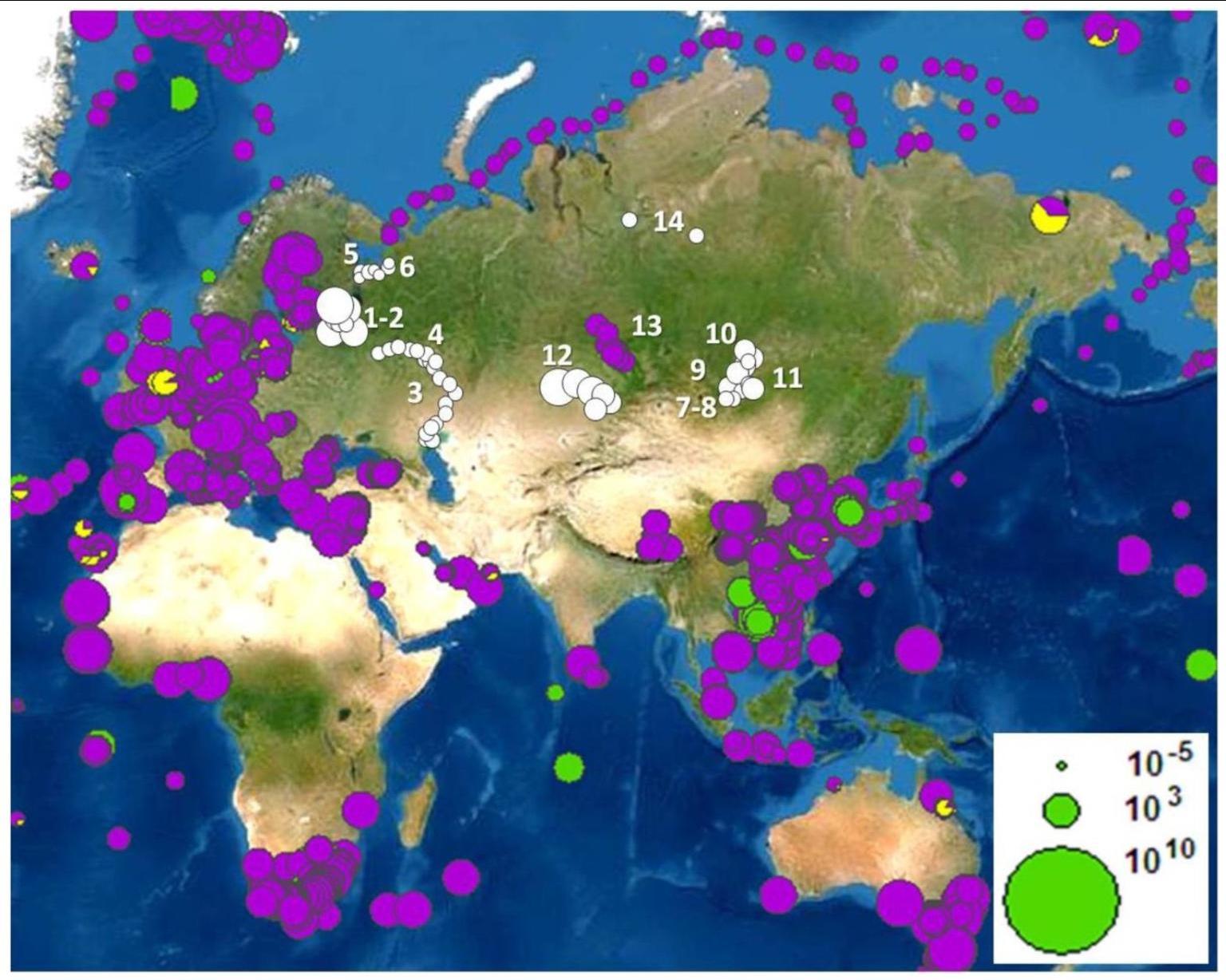
This map of microplastic distribution drawn by scientists shows the oceans, fresh water and land around the world full of single-use microplastics that cannot be recycled or treated. Data source
Where will the linear economy end?
The inability to recycle and regenerate is also reflected in our society. Taiwan, China, South Korea and Japan face severe falling birth rates. Even though governments spend trillions encouraging births to stop endless population decline, the whole fast-consumption society, economy, finance, politics and culture forms a heavy net that makes people not want to have children, or unable to. This is a deeper structural problem. By the time it is noticed, it is entrenched, and instead more fast-consumption policies are used to "rescue the population crisis" — such as handouts and social housing, laws and policies that only scratch the surface — concentrating resources further in the hands of a few, driving more people to despair and creating a vicious cycle.
This is part of the bitter fruit of the linear economy, and the same is true of other industries that support society. Under "Moore's Law", chips keep processing faster, from hundreds of nanometres to a few nanometres today, seemingly without limit. But chip production is energy-intensive, and countless toxic chemicals are produced, used and discarded in the process and cannot be treated. What will the outcome be?
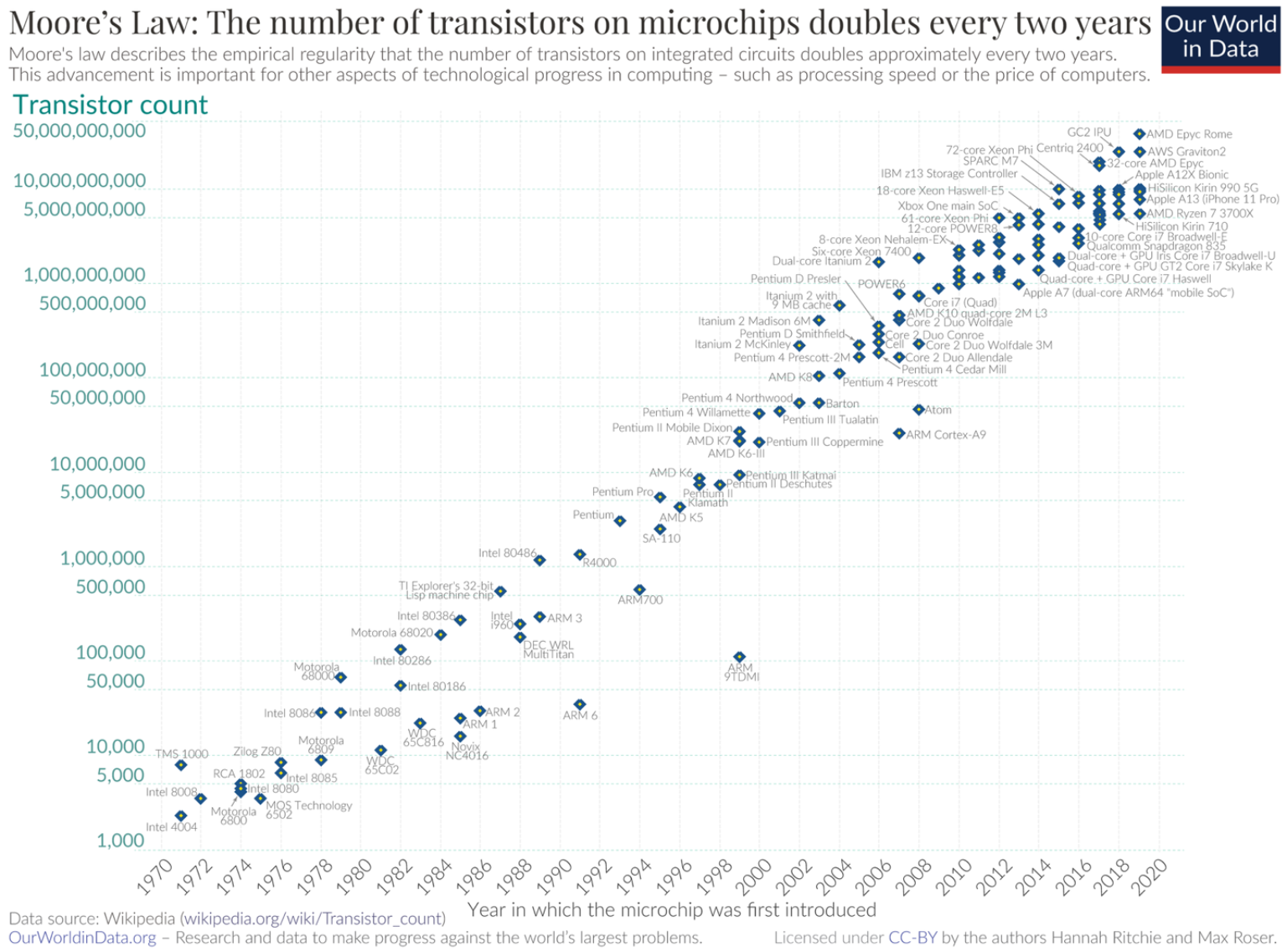
Under Moore's Law, chip speed doubles every two years. Where will such speed end? (Source: Wikipedia)
What will people eat in outer space?
Agriculture is an industry humans began more than 10,000 years ago, and originally it was circular and regenerative. Even with slash-and-burn, setting fire to hillsides, under limited development nature could still recover. Overall, it was a kind of cycle. Barring wars and man-made disasters, populations could keep growing even with major natural disasters.
Agriculture raised the number of people each unit of land could support, but it also became a sword of Damocles hanging over population growth. Even today, about one billion people — roughly one in eight — go hungry. Thisnumberhas risen since 2019 because of the COVID-19 pandemic and climate change, foreshadowing a wave of famine that humanity will face.
I really don't understand how the world's richest men, Amazon's Bezos and Tesla's Musk, having made money on Earth and left behind a pile of problems, advocate and carry out plans to emigrate to outer space. Why does no one ask: if we haven't even solved the food problem on Earth, what will people eat in space?
I believe people who go to outer space will have to "exchange excrement and eat it" — a concept of "circular food".
Regenerative organic agriculture promotes soil carbon sinks
In recent years, talk of organic agriculture has often been limited to not using pesticides and chemical fertilisers. Many countries have also begun discussing "regenerative agriculture", pushing agriculture towards being part of the circular economy, and have even developed "regenerative agriculture certification" or "regenerative organic certification (Regenerative Organic Cerified)", combined with emission-reduction certification, forming a new trend.
Regenerative plus organic agriculture, plus soil carbon sinks, may make agricultural sustainability more complete. (Photo: courtesy of Jay Fang)
The "Smallholder Carbon Farming Project", which takes part in international emission-reduction certification and trading, aims to increase soil organic carbon. The source of organic carbon is microbes in the soil — living microbes — because the dead organic carbon left by dead organisms is quickly converted into carbon dioxide in the soil and disappears. Only by restoring the power of natural cycles and regeneration, letting microbes, earthworms, insects and so on flourish naturally in the soil, can soil microbes grow. Simply adding organic fertiliser artificially is not only expensive but ineffective; over-fertilising can even "salt to death" the microbes in the soil.
Whatever farming method farmers use, only when microbes in the soil are thriving can there be healthy soil and land, which can then produce healthy food to feed healthy people.
Source: CM Media ( https://www.cmmedia.com.tw/home/articles/40646 )


