 努力小農
本文尚無譯文。
One month to the carbon exchange's opening: is Taiwan ready?
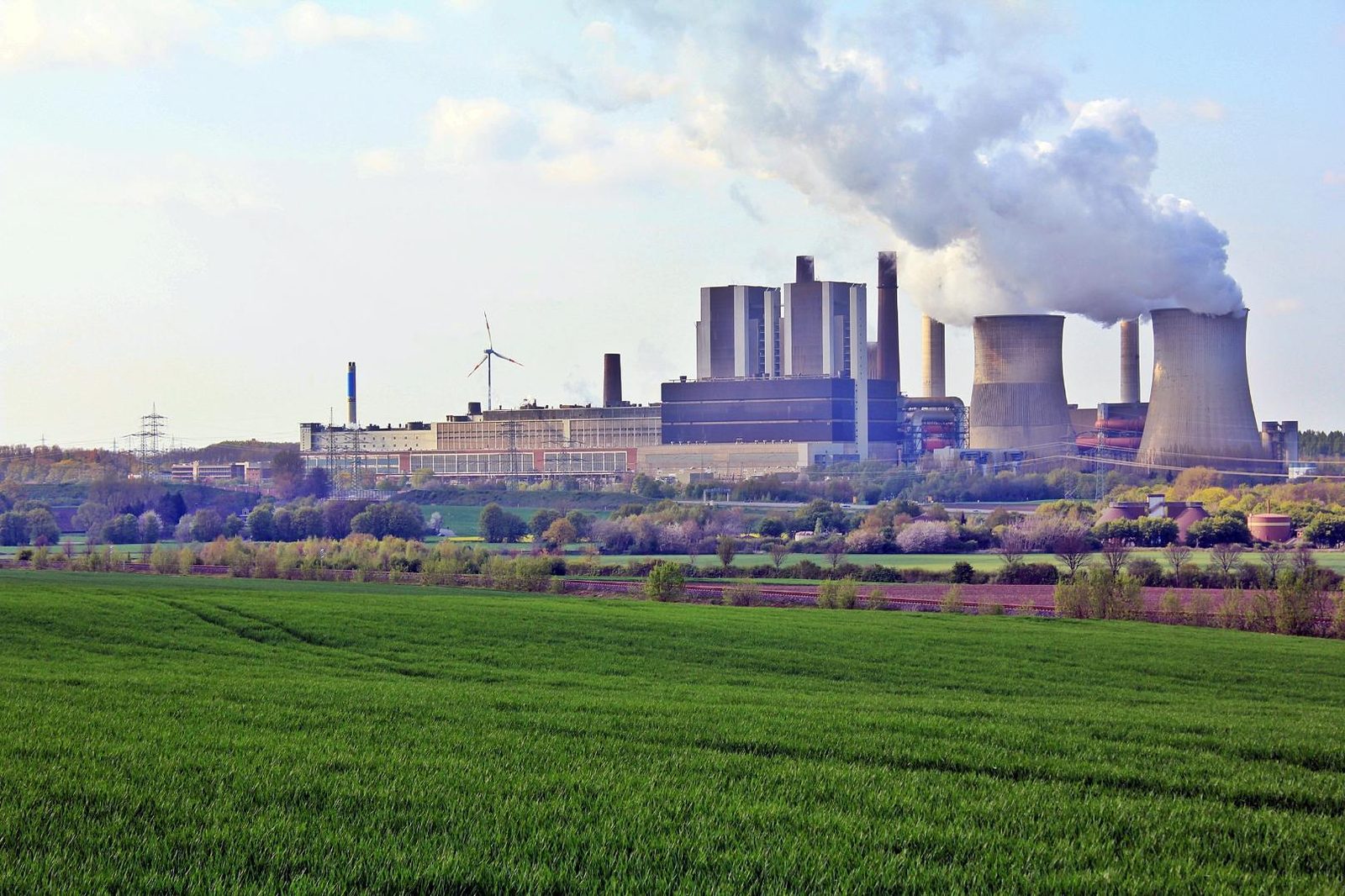
Taiwan's carbon exchange is about to launch. How to connect with international carbon trading is a big question. (Photo: pxhere)
Taiwan's carbon exchange will be formally established on 7 August. Lin Hsiu-ming, chairman of the Taiwan Stock Exchange, today (4th) described its three main operations: it will start with "carbon consulting", then trade foreign carbon credits, and only after the subsidiary regulations on domestic carbon trading are approved will it handle domestic carbon credit trading. The exchange's three main operations are domestic carbon credit trading, buying and selling foreign carbon credits, and carbon consulting.
After this news came out, more people asked how to trade carbon and how carbon credits are generated and calculated. Yet many people in Taiwan don't understand what carbon credits are or how they are generated and traded. If they are to be traded in Taiwan, how to connect and convert with international carbon credit trading will be a very important issue. Otherwise, carbon credits traded in Taiwan won't be internationally recognised, which would not only make Taiwan lose competitiveness on international markets but also cause it to lose face internationally.
Taiwan sets up a carbon exchange
The carbon trading system originates from one of the three flexible mechanisms defined in the Kyoto Protocol under the UN Framework Convention on Climate Change — a carbon offset scheme allowing countries to fund greenhouse gas reduction projects in other countries and count the emissions saved as part of their own efforts to meet international emission targets.
The Clean Development Mechanism is defined in Article 12 of the Kyoto Protocol. It aims to achieve two goals: (1) to assist Parties not included in Annex I in achieving sustainable development and contributing to the ultimate objective of the Convention; and (2) to assist Parties included in Annex I in achieving compliance with their emission commitments. Under the Kyoto Protocol, each Party has a "Designated National Authority" (DNA) responsible for, and representing, that country's carbon credits.
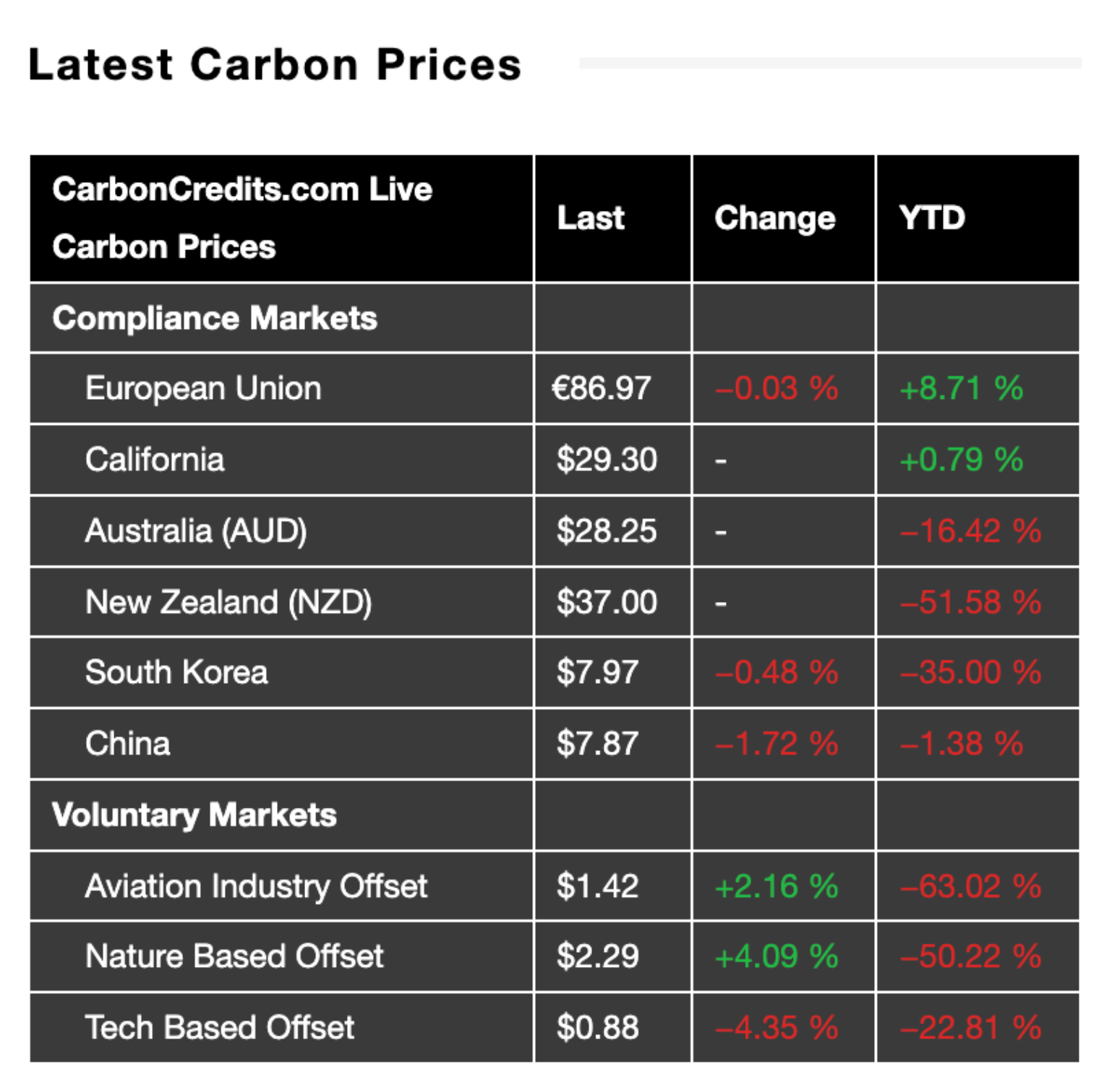
Taiwan is not a UN member and has no DNA, so it cannot enter international mandatory or compliance carbon markets. It can only go to the voluntary emission-reduction market made up of international private bodies. Carbon prices in international compliance markets are far higher than in voluntary ones. The EU's compliance carbon price once reached nearly US$100 a tonne, whereas voluntary market prices are very low, under US$5 a tonne. For daily prices, seeinternational carbon credit web page— the fluctuations are considerable.
First understand international markets and mechanisms
To reach net zero, international organisations hold that industries pledging net zero must first cut emissions by 90–95%, and only the 5–10% that cannot be cut may be offset through carbon trading. Industry net-zero pledges generally target 2040 to 2050, and carbon prices will rise gradually before then. Because carbon credit offsets need not be used in the year they are bought, and can be held for 20 years or longer — much like an option — a credit only disappears when it is retired at the time it is needed for offsetting.
Carbon credit trading in each country and internationally is a highly complex mechanism. For example, the EU sets quantitative limits on carbon trading, and three types — nuclear, forestry activities, and destruction of industrial HFCs and nitrous oxide — cannot be included in its Emissions Trading System (ETS). And each country's trading mechanisms keep changing, dizzyingly.
In any case, every trading mechanism must have a recognised "formula" — a methodology. To understand the internationally recognised CDM methodologies, you must first downloadCDM Methodologies Bookletthis booklet. It provides a concise summary of the CDM and descriptions of the methodologies and methodological tools approved by the CDM Executive Board, the highest authority of the CDM. It was created to help CDM project developers identify methodologies suitable for their CDM project activities.
The general purpose of the booklet is to help achieve the Board's goal of raising awareness of CDM methodologies.
The booklet is intended for different readers: potential CDM project developers interested in the CDM, especially those who have some idea of the mitigation project activity they intend to implement.
It helps with an initial selection of potentially applicable methodologies. However, it cannot provide detailed guidance on the specific elements of each methodology, nor replace the approved methodologies. Project developers should therefore refer to the original methodologies, available on the UNFCCC CDM methodologies website.
The booklet provides the following information:
• the typical types of projects to which a methodology applies;
• the type of greenhouse gas reduction action;
• important applicability conditions.
Methodology:
• key parameters that need to be determined or monitored;
• a visual description of the baseline and project scenarios.
How to find a suitable methodology?
1. By type of mitigation activity
This way of finding methodologies is based on the relevant sectoral scope and type of mitigation activity, such as renewable energy, low-carbon electricity generation, energy efficiency measures, fuel and feedstock switching, GHG destruction, GHG emission avoidance, displacement of GHG-intensive output, and GHG removal by sinks.
Project developers who understand the type of mitigation activity to be implemented in their project can therefore easily identify potentially suitable methodologies.
2. By type of technology/measure applied
The second way of finding methodologies focuses on the technology applied in the project activity. Classification by technology type allows project developers to identify a set of comparable methodologies applicable to the technology to be implemented in their project.
First use international methodologies for Taiwan's projects
I find that many people haven't even looked into the existing 200-plus methodologies before rushing to develop their own. And what these people call a methodology is actually a project, or even just a process or technology within a project — not a methodology at all. For example, a particular technology for a particular incinerator is not a methodology; it might be a patent. Applying to make it a methodology is really an attempt to rig bids in favour of that technology. Such a "technology" can actually be used for a project under existing international methodologies; if it were made into a methodology, it would be a laughing stock internationally.
On the other hand, international compliance or voluntary emission-reduction certification requires at least four essential roles: a standard or certification body (a DNA-designated body, or a private voluntary emission-reduction certification body), a verification body (a Verification and Validation Body, VVB, approved by the certification body), a project developer, and a project owner. In the Smallholder Carbon Farming Project, the standard body is Gold Standard, the certification body is SustainCERT, the verification body is CEPRI, the developer is Eco-affinity Inc. (a developer can be an organisation or an individual), and the project owners are smallholders, cooperatives, production and marketing groups, and agricultural companies.
But in Taiwan's greenhouse gas reduction market, everyone focuses on methodologies, though internationally these have largely already been developed and there isn't much left to develop. What's missing are project developers. The real owners of carbon credits are the project owners — in agriculture, overwhelmingly smallholders — who need project developers to design projects for them and to aggregate smallholders' carbon credit development. Such a mechanism has not yet been established in Taiwan.
Besides agriculture, other types — energy, transport, industry, buildings, waste, forestry and so on — also follow this form.
To do carbon trading well, we need talent and institutions for all kinds of carbon markets, operating according to international conventions, regulations and standards. Otherwise we're just working behind closed doors, pleasing ourselves for a while — and once outside the country, who will recognise it?
Source: CM Media ( https://www.cmmedia.com.tw/home/articles/41025 )


