 努力小農
本文尚無譯文。
A key role in carbon trading: the project developer
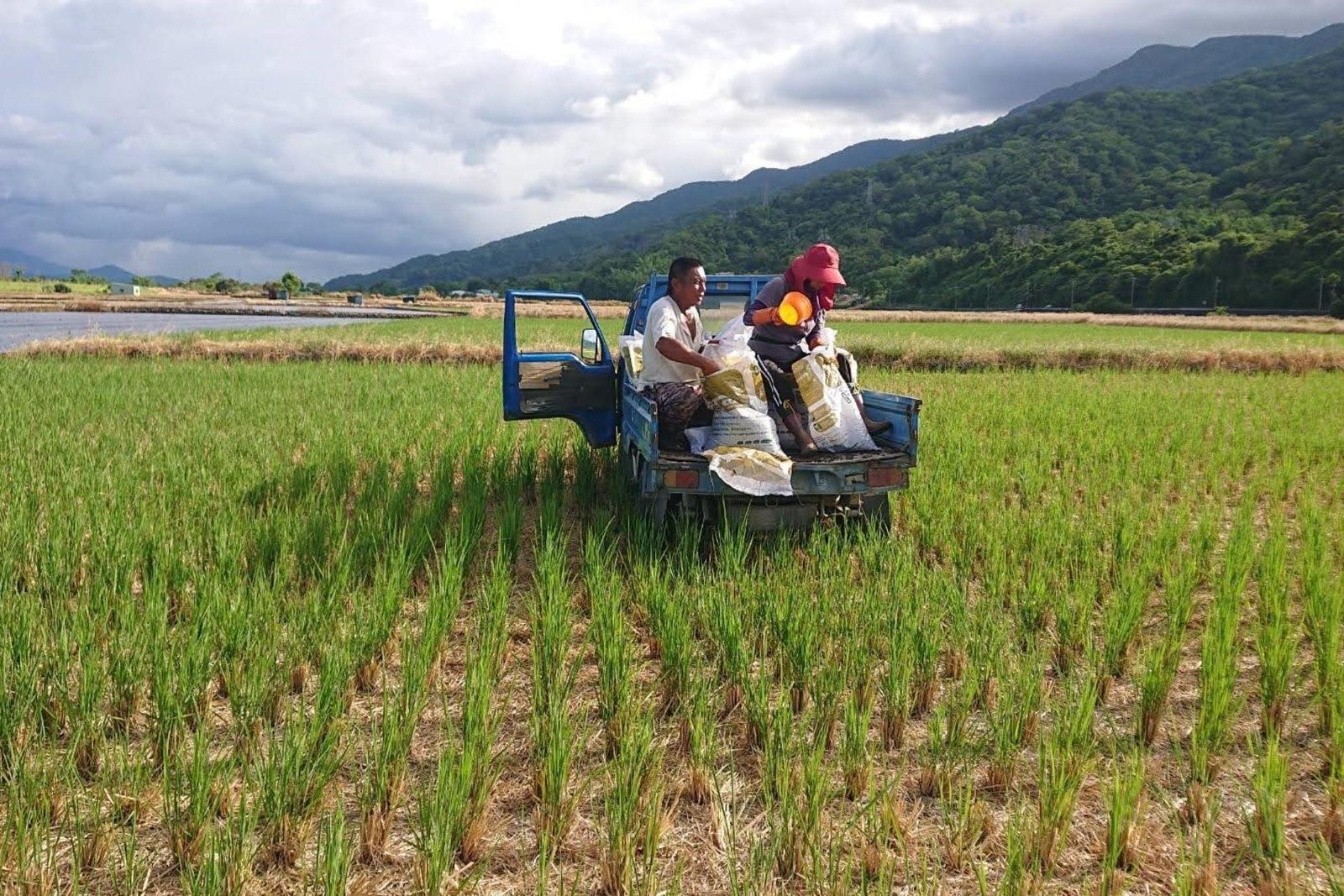
In agricultural carbon reduction — the Smallholder Carbon Farming Project, which ensures soil organic matter keeps rising and is maintained — smallholders are like Bitcoin "miners", but working under the blazing sun, they have it even harder than miners. (Photo: courtesy of Chen Wen-hua, chief of Changliang Village, Yuli Township)
"Carbon trading" is all the rage in Taiwan, but when I ask people, they are quite unfamiliar with the "Project Developer (PD)". This will be a major gap as Taiwan seeks to commercialise and marketise carbon reduction and carbon credits. If this is to be rolled out fully in future, project developers should be trained and appropriately regulated.
Only with emission-reduction project development can there be carbon credits
In the international carbon credit development process and market, there are many different roles. Besides governments and their regulators, there are accredited certification bodies or self-established carbon credit standards (such as Gold Standard, Verra and ACR in international voluntary reduction), and approved Verification and Validation Bodies (VVBs). Besides these regulatory and certifying roles, the actual generators of carbon credits are the Project Owners of credit development projects and the Project Developers (PDs), as well as Traders who broker deals, Buyers, and the End Users — emitters who ultimately use the credits for offsetting. The relationships among these roles are very flexible and quite complex, and of course have given rise to many abuses.
Taiwan's carbon market is about to start in August. Of all these roles, I think the most crucial is the project developer. Whether in past Clean Development Mechanism projects or today's international voluntary emission-reduction projects, public registry documents list the name of a project developer, and anyone wanting to trade carbon credits at the source will contact the project developer directly.
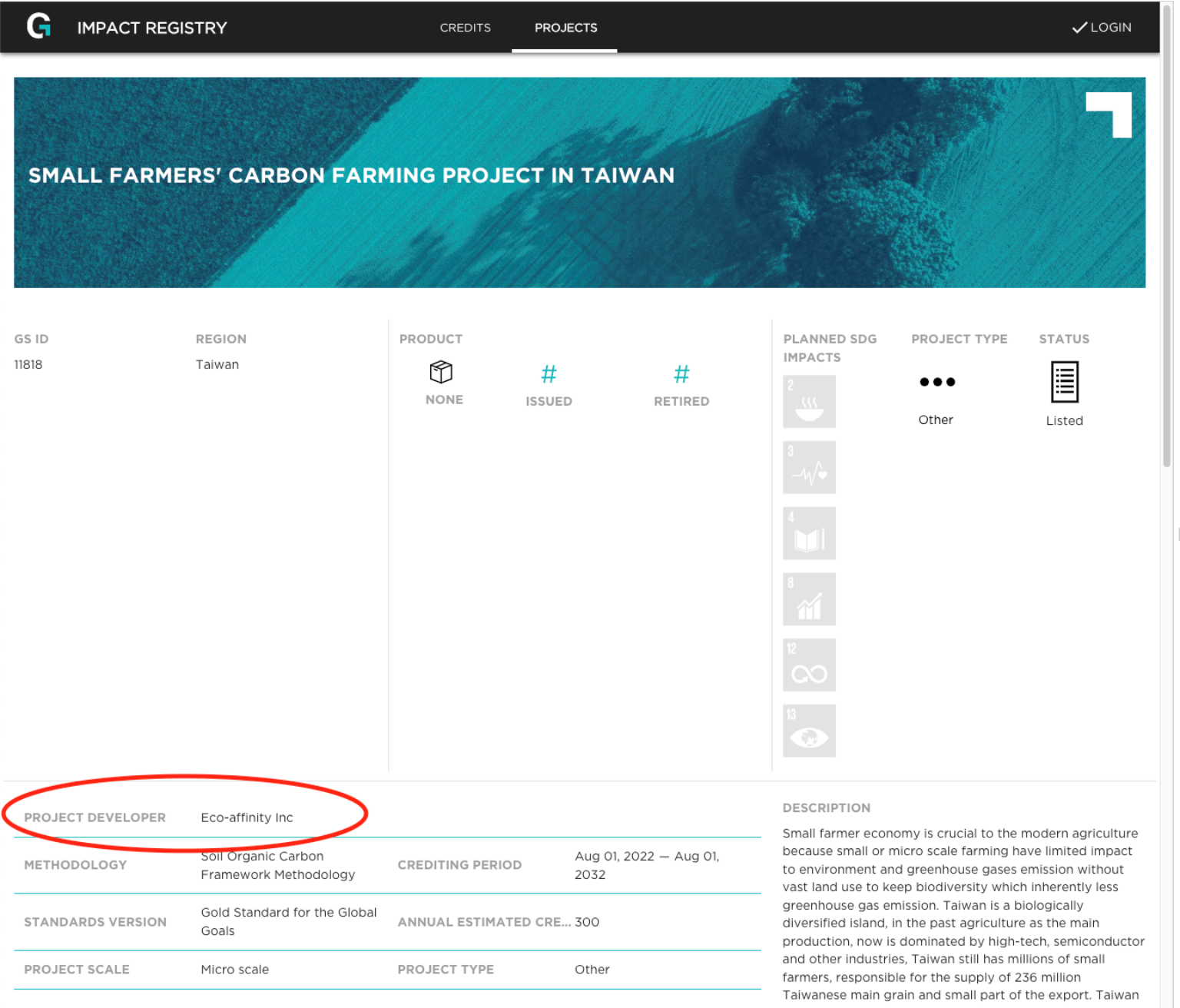
In international carbon credit certification markets, the project developer acts as agent for the holders of each emission-reduction credit; brokers, buyers or end users can all contact the project developer directly. (Photo: courtesy of Jay Fang)
Only with project developers can there be emission-reduction projects
In international emission-reduction certification and trading, the PD is the one who actually carries out carbon credit development. A PD must understand policy, regulations and technology thoroughly to fulfil its role; otherwise it is hard for a single company or consultancy to manage the whole carbon life cycle. A carbon credit development project lasts at least 5 years and up to 20 or 30, and needs a professional body to take responsibility.
The work of project developers in the Clean Development Mechanism: designing, implementing and monitoring projects that reduce greenhouse gas emissions, finding suitable entities to carry out reduction projects, applying to certification bodies for registration, and arranging verification with verification bodies (both certification and verification bodies have relevant qualification and competence requirements and rules). A project developer can be a private company, an NGO, a public entity, a consortium of different actors, or even an individual. Project developers must follow CDM rules and procedures, such as writing Project Design Documents, having projects validated by accredited entities, registering projects with the CDM Executive Board, having emission reductions verified and certified, and issuing and selling certified emission reduction units.
The project developer's role has advantages and disadvantages. On the one hand, project developers can contribute to sustainable development, environmental protection and climate mitigation in developing countries while earning income from selling carbon credits. They can also obtain funding and technical support from various sources, such as multilateral funds, bilateral agencies, private investors or carbon markets. On the other hand, project developers face many challenges and risks, such as high transaction costs, complex and uncertain regulations, lack of institutional capacity, political instability, market volatility, and competition from other project developers.
Yet this important role has no qualification requirements internationally — it is quite free. So in carbon markets the project developer is somewhat like the "minter" role of Bitcoin miners in cryptocurrency: the hardest, most energy-intensive work requiring the most investment. Once, one person with one computer could "mine"; now competition is fierce, and miners need big investment and lots of electricity. The era of one person, one computer is long gone.
Fairness, justice and openness: easy to know, hard to do
But what everyone focuses on is investing in building blockchains and speculating on coins, because buying and selling on the spread can turn over profits of several or even hundreds of times — or a crash can wipe you out.
Cryptocurrency is a product of bits in a virtual computer world, whereas carbon credits belong to the real world of atoms. Some now want to turn carbon credits into carbon coins for trading, which is still as unrealistic as "remote acupuncture". Yet online and in the media, people still like to focus discussion on how to make money from carbon sinks or carbon sink speculation.
It's just like today's food market: farmers are at the very bottom, working hardest to clear land, build up soil, and farm, irrigate, fertilise and harvest under the blazing sun, perhaps also doing primary processing — yet their income and profits are the lowest. Going through wholesalers and distribution channels to consumers, the downstream channels take 40–50% of the retail price, wholesalers take 30–40%, and only 10–20% is left for farmers. With such a distribution of benefits, how could densely populated, land-scarce Taiwan have a good food supply environment?
Carbon credits are the same. In the past, the CDM's over-issuance of credits caused the system to fail and collapse, with bad project developers contributing most. From over €30 a tonne in 2007–2008, prices have dropped to just a few cents, and the credits can no longer be used in the EU ETS. This has left hundreds of millions of tonnes of carbon credits and sinks in the hands of would-be speculators.
Wherever there is a market there may be speculation. To seek good and avoid harm in future, carbon credit trading must be open and transparent, traceable to the source, method of generation and owner of every tonne of credit, with appropriate distribution to the original producers of the credits, so as to encourage high-quality credit suppliers.
For any policy or regulation to succeed, it must be fair, just and open. As Taiwan builds a carbon market, it must not violate these principles, and must pay even more attention to professional ethics and avoiding conflicts of interest among the roles, to protect the public interest. Easy to say, truly hard to do.
Source: CM Media ( https://www.cmmedia.com.tw/home/articles/41258 )


