 努力小農
本文尚無譯文。
Taiwan's agricultural carbon reduction methodology strides ahead
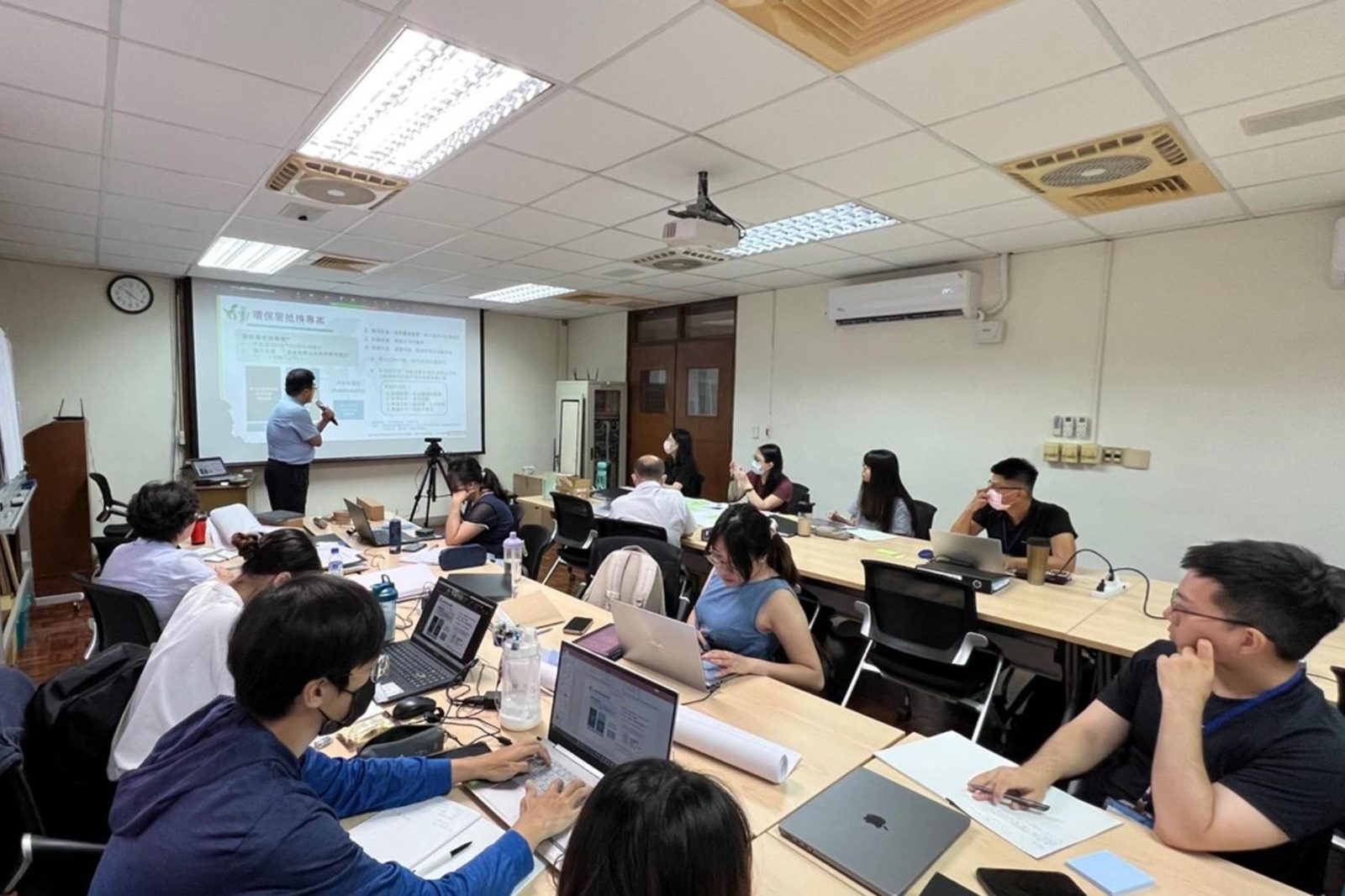
An agricultural carbon reduction methodology development workshop in progress. With methodologies, farmers' carbon reduction work has a basis, and it can also help companies reduce carbon and contribute to the SDGs/ESG.
"My family has a patch of woodland — can it reduce carbon and sell carbon credits?" I hear this question often lately. It shows that many people want to take part in carbon reduction but don't know how. If you simply want to reduce carbon and lower greenhouse gases, do whatever you like. But to turn it into carbon credits for trading, you must follow a recognised methodology, be certified by an internationally recognised emission-reduction body, and be audited and validated by a verification body before you have carbon credits.
Methodologies are the rules of emission-reduction certification
The Ministry of Agriculture's Taiwan Agricultural Research Institute (TARI) has recently been developing agricultural carbon reduction methodologies and is preparing to propose seven draft methodologies. Public briefings will soon be held, and stakeholders and groups from all sectors are welcome to attend and make suggestions. This follows the methodology development rules of the Clean Development Mechanism (CDM) under the UN Framework Convention on Climate Change (UNFCCC), drawing on internationally approved methodologies to develop agricultural methodologies suited to Taiwan.
Agricultural carbon reduction only began receiving international attention after 2015, when people suddenly realised that agriculture has the largest emissions of any sector, but is also an opportunity for carbon sequestration, because soil is the Earth's largest carbon sink. If farming practices were changed, agriculture could become the world's largest carbon sequestration tool. According to the "4 per 1000 Initiative", increasing soil organic carbon by four per thousand each year could balance human greenhouse gas emissions, solving both the climate crisis and the food crisis. But agriculture is an ancient, traditional industry; good methods are needed to help farmers gradually change how they farm while adapting to an already irreversible global warming trend.
In the past, carbon reduction focused on industry, transport, buildings and energy, and agricultural methodologies were quite limited; only in recent years have they begun to be developed step by step. Because agriculture is affected by the natural environment, many uncertainties must be considered. For example, the recent Typhoon Haikui caused debris flows that hit many smallholders in Hualien and Taitung, which affects carbon sequestration results. And Taiwan's farmers are all smallholders, with an average of just half a hectare per household, making good, integrated methodologies all the more necessary.
This time, experts from TARI, the District Agricultural Research and Extension Stations and the Agricultural Technology Research Institute — Taiwan's agricultural elite — studied the CDM rules for establishing methodologies in workshops and selected methodologies suitable for Taiwan, combining international agricultural methodologies with domestic scientific research and long-term field survey results to localise methodologies or develop new ones for future agricultural carbon reduction needs.
Without rules, nothing can be done properly. Future agricultural carbon reduction will not be a qualitative feeling of reducing carbon, but scientifically quantified reduction results. Methodologies are the rules for measuring carbon reduction. With them, agricultural carbon reduction projects can be developed step by step around the country, turning quantified reduction results into carbon credits.
Three agricultural methodology briefings open the curtain on agricultural carbon reduction in Taiwan
Three briefings on agricultural carbon reduction methodologies, each with a different focus, will be held in Taipei, Yunlin and Yilan, using real cases to explain the rules and requirements of the methodologies and how to implement them. Everyone is welcome to sign up.
Session 1: Recycling agricultural residues into resources — biochar, and converting microalgae into bioenergy:
Covering the carbon sequestration effect of biochar and the conversion of plants or microbes into bioenergy. Biochar's carbon sequestration has been applied for thousands of years — for example, the black earth (Terra Preta) of the Amazon rainforest. Archaeologists have found that local Indigenous people made biochar 8,000 years ago to improve the soil, and to this day the soil there is better for growing maize than land without biochar.
In recent years the Agricultural Technology Research Institute has worked with industry on research showing that microalgae can absorb carbon dioxide from flue gas, turning it through photosynthesis into algal biomass, achieving biological carbon sequestration. If the carbon-fixing algae are dried, solidified and stored, carbon can be sequestered long-term, achieving carbon reduction. Microalgae can also be refined into biodiesel to replace some diesel, reducing carbon by cutting fossil fuel use.
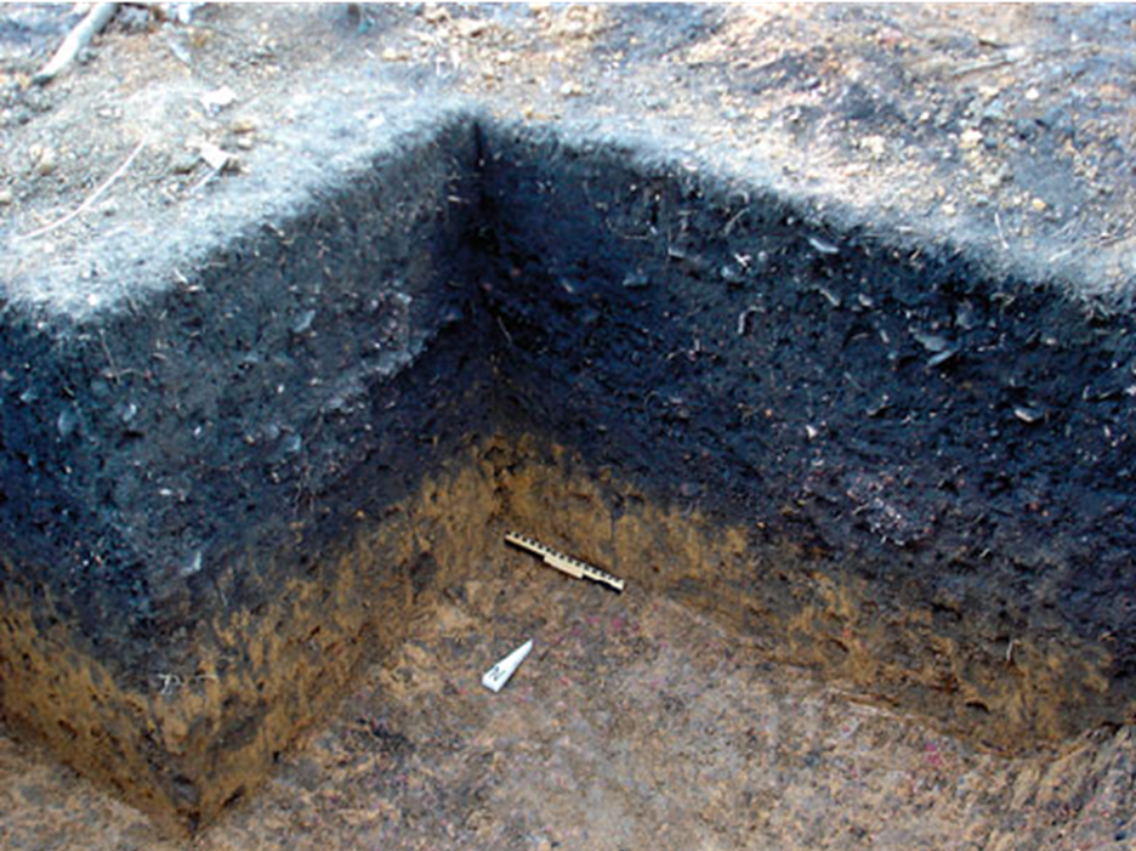
Archaeological anthropologists have found that the "black earth" in the Amazon rainforest is evidence of biochar made thousands of years ago to improve local farming. Today biochar can also be made into organic inputs that sequester carbon at the same time.
Session 2: Increasing sinks through land management, and recycling livestock waste to reduce greenhouse gas emissions.
Covering three methodologies: use of biogas digestate (liquid and solid), composting, and land management. When poultry and livestock farms turn manure into biogas (methane), it can produce biofuel for use as renewable energy, which is already widely applied. The remaining liquid and solid digestate, properly treated, can be used as fertiliser, reducing subsequent fugitive methane emissions. These fertilisers also replace synthetic chemical fertilisers, cutting emissions from mining, manufacturing and transporting imported fertilisers. In Taiwan, manure from many small poultry and livestock farms causes environmental pollution — stench, wastewater and waste — and piled manure ferments anaerobically and produces methane, whose greenhouse effect is 25 times that of carbon dioxide — very serious. Switching to aerobic composting not only reduces this methane but also produces bio-organic fertiliser for agriculture, raising soil organic matter and in turn becoming a soil carbon sink. TARI has also combined international land management methodologies with Taiwan's conditions to propose agricultural land management methodologies suited to Taiwan, using diverse methods to help farmers manage farmland, livestock and cultivation, reducing methane and nitrous oxide emissions and increasing soil carbon sinks.
Session 3: Azolla in paddy fields, and reducing chemical fertiliser to cut greenhouse gas emissions.
Yilan is one of the few areas in Taiwan with abundant water, but because of heavy rain in the second half of the year, rice can't be grown then. For a century, local farmers have planted green manure after the first harvest (after July), ploughed it into the fields in October, then flooded the fields to suppress weeds and provide habitat for migratory birds. But flooding causes anaerobic fermentation in the fields, emitting large amounts of methane. In recent years the Hualien District Agricultural Research and Extension Station has researched using azolla (a fern) instead of sesbania green manure as an innovative agricultural carbon reduction methodology. Farmers simply flood the paddies, and as long as the azolla grows well, it can greatly reduce methane while also serving as green manure and reducing chemical fertiliser use — killing several birds with one stone.
On the other hand, Taiwanese farmers tend to overuse chemical fertiliser, which causes unnecessary nitrous oxide emissions (nitrous oxide's greenhouse effect is 298 times that of carbon dioxide — truly frightening) and can make crops prone to pests and diseases. The real-name system for agricultural inputs introduced in recent years can effectively rationalise fertiliser use while reducing greenhouse gas emissions. A methodology can effectively quantify the reduction, turning cutting fertiliser into cutting carbon.
If these agricultural methodologies pass review, they can be applied to farmland all over Taiwan for agricultural carbon reduction. Some companies, having learned about them, have expressed willingness to fully support their application by buying carbon credits and certified low-carbon farm produce, opening another path to carbon reduction beyond green energy and tree planting. Moreover, besides climate action through carbon reduction (SDG 13), agricultural carbon reduction offers quantified performance on six sustainable development goals: food security (SDG 2), better health for farmers and consumers through less fertiliser and pesticide (SDG 3), quality education (SDG 4), greater dignity and income for farmers (SDG 8), and responsible consumption and production (SDG 12).
These SDG performance results can also be converted into corporate ESG performance — an advantage agricultural carbon reduction has over other kinds. In future, companies will also be involved in developing and applying these methodologies, making agricultural carbon reduction work far more effective.
Everyone is welcome to register for the agricultural carbon reduction methodology briefings. Please click the link:https://forms.gle/pWeEpG3MPGXoSsvW7
Source: CM Media ( https://www.cmmedia.com.tw/home/articles/42236 )


