努力小農
本文尚無譯文。
Only traceability and transparency can fix things at the root: the eggs come from the 15th year of Wanli
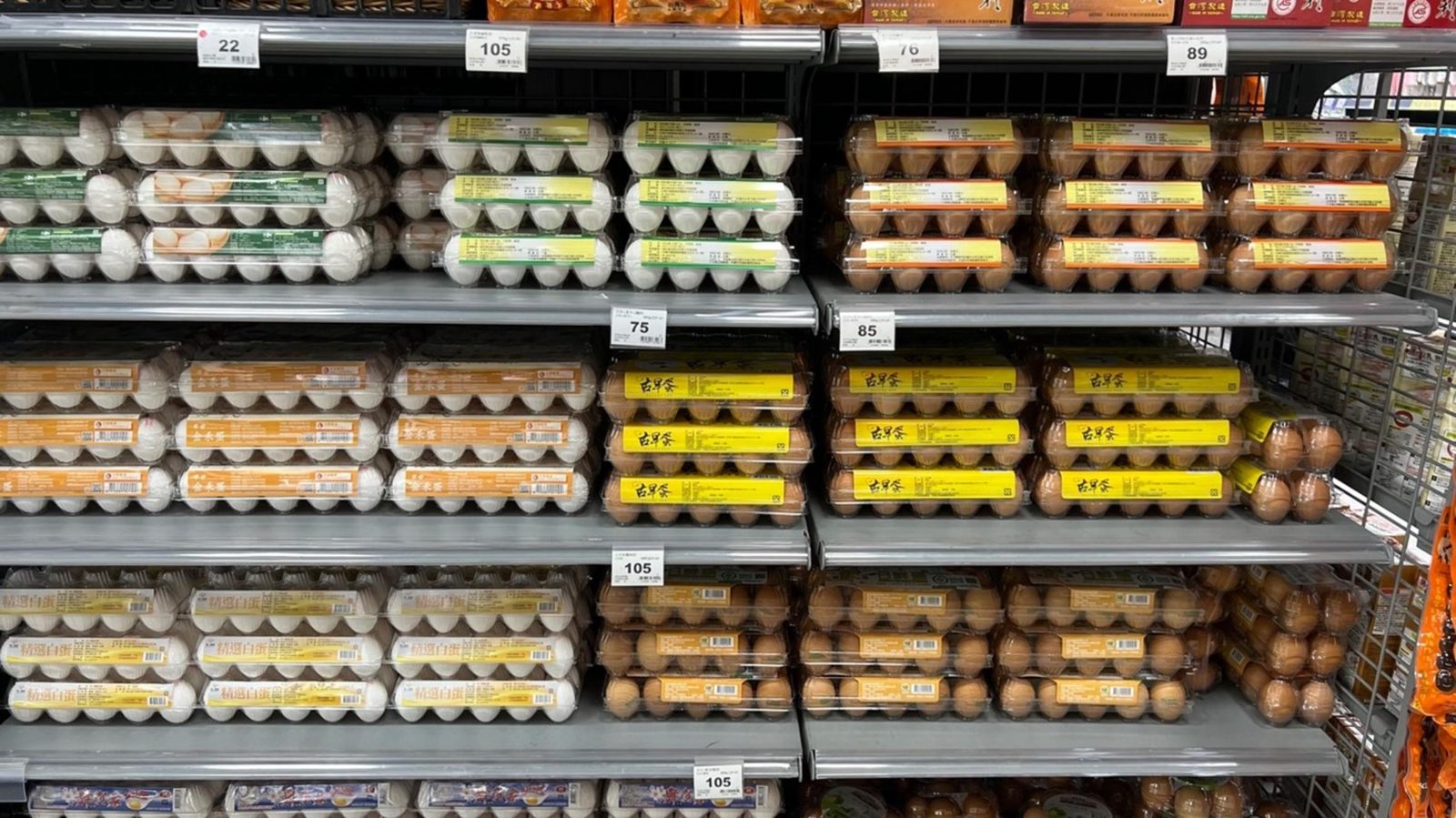
Today the supermarket shelves are full of eggs, and not one is imported. No more egg shortage at last!
No more egg shortage at last!
Imported eggs have recently been a hot controversy. The upside: shelves are full of eggs and there's no longer a shortage; the first Minister of Agriculture, only 51 days in office, and the chairman of the National Animal Industry Foundation have stepped down, and the opposition parties are happy. The downside: I can't buy imported eggs either, and the domino effect of the imported egg problem will hurt domestic egg farmers. But never mind, because winter is coming soon, Taiwan's bird flu will seize its chance to break out, laying hens will be short again, eggs will be short again — and then people will worry about bird flu and won't dare eat eggs...
Since the transfer of power between parties, deep-rooted food safety problems have never been properly addressed, because much of the money flow can't be made public. If money flows aren't public, logistics and information flows can't be either. Add an ignorant media that only reports superficial political battles, utterly incapable of touching the core issues; politicians happy to dance to the shallow main tune; and a public that trusts the government completely. It's like an endless dead loop: every day we see "recall" news on rotation. It saves everyone trouble — you don't need to watch these stories to understand: this country is beyond saving.
"The eggs I import are packed abroad before export and already quarantined in the exporting country. After import they should just go straight to the contracted supermarkets — how can there be a problem? But Taiwan quarantines them again, so they sit at customs for several more days," said one egg importer.
Why not inspect and quarantine according to the WTO agreement?
Indeed, under the WTO's SPS (Sanitary and Phytosanitary Measures) Agreement, member states should have food and agricultural inspection agreements with each other, with no need to re-inspect every batch — especially as farm produce, seafood and food have very short shelf lives. The WTO is an organisation for smooth international trade; what it wants is free flow of goods. But Taiwan's quarantine and food safety agencies overlap layer upon layer, adding many non-tariff trade barriers and making life hard for consumers, importers and the domestic farm and fishery production and marketing systems. All the problems arise because the bureaucracy doesn't follow international conventions and arbitrarily adds strange requirements. We can't help suspecting that these PhDs and master's graduates aren't stupid but bad, because this lets them expand their powers without limit, giving rise to many abuses. The more uncertainty, the more back doors and opportunities for corruption.
Why must imported eggs be quarantined, repacked, washed and graded again? Is the intent to import bad eggs? Why has such a simple thing become so complicated, when it has worked internationally for years? It would be hard to explain if there were no wrongdoing.
This is properly a matter for civil servants. But the learned PhD political appointees mostly taught at universities, where students had to obey them to pass exams and graduate. These political appointees may have plenty of experience in infighting and complex calculation, but they are naive about the market and society. They're also used to only looking at PowerPoint briefings, without digging into the authenticity, reliability and uncertainty of the data presented by civil servants or commissioned units; if the briefing is agreeable, they approve it. And their sedan chairs still have to be carried by these civil servants. If the civil servants don't cooperate, slack off, or even make life hard for the appointees by tipping off the opposition or rival factions, no political appointee can withstand it.
For more than 30 years I've watched these farces coldly from the sidelines. The actors (officials, businesspeople), the announcers (media) and the audience (the public, consumers) all play their parts with gusto, so the farce never ends.
In 1987, at the Min Sheng Daily, I reported on horse meat passed off as beef. The reason was simple: from customs records I found dozens of containers of horse meat imported from Canada and the US every month, yet no horse meat products (food or feed) could be seen on the market. That piqued my interest, and I visited the biggest importers one by one according to the import records. After the story ran, prosecutors and investigators took notice and stepped in; the Investigation Bureau checked these importers' books, and soon the truth came out: horse meat imported as feed had been sold to military camps and stall vendors... because horse meat cost only a fifth of the price of beef.
Even local governments can no longer get egg import information!
Thirty-six years later, martial law has ended and computing is far more advanced, yet these import records have become the exclusive preserve of government officials on the grounds of "protecting companies' personal data". Even local governments asking for them are turned away — truly incredible. Everyone can only use data published by the Ministry of Agriculture or the Ministry of Health and Welfare, whose authenticity and timeliness are another question.
What we should see are import customs declarations searchable online at any time. If this information were open and transparent, I believe abuses and scandals would decrease. Under the Freedom of Government Information Law, such information held by government must be proactively disclosed: who imported it, from where, the landed price and the batch number should all be public. If there's no data here, everything after becomes an "unsolvable case".
Didn't we once have a "food safety cloud"? This data should go on the food safety cloud, and the subsequent flows should also be open and transparent.
Now, with imports of ractopamine beef and pork and food and fish from nuclear-affected areas, I have repeatedly called for a system that "fights the battle beyond our borders" with exporting countries under the SPS Agreement: production and sales records, quarantine and inspection done in the exporting country, with systems of accountability and trust. After import, apart from first imports and high-risk products requiring batch-by-batch inspection, the rest should go straight to logistics centres — because Taiwan's import and domestic cold chains aren't well run either, and everyone has the attitude that "a little dirt never hurt anyone".
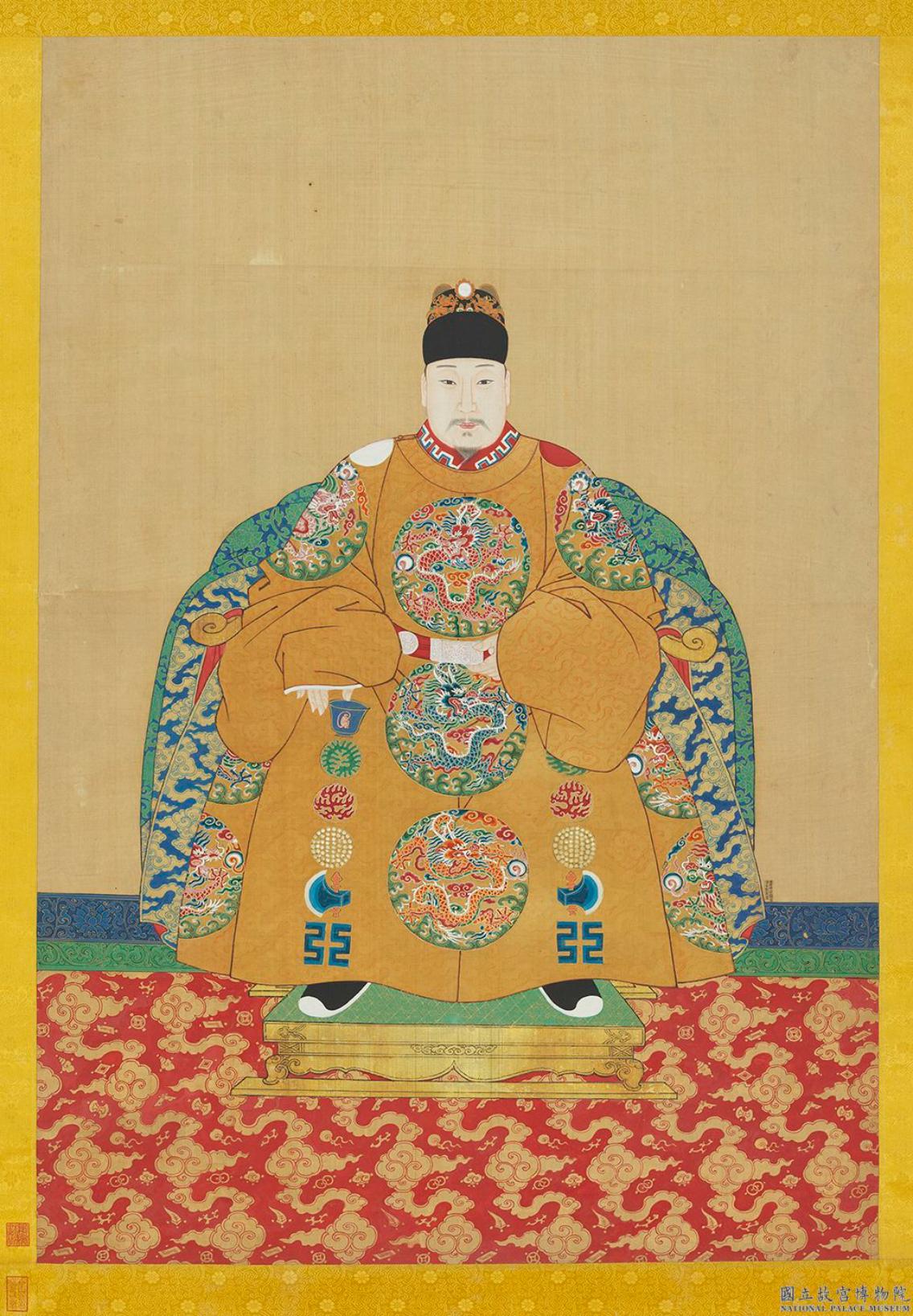
Emperor Shenzong of Ming (Wanli) was diligent and cared for his people in his early years, but later set the example in sloth, was corrupt as emperor, and didn't attend court for 30 years — one of history's oddest emperors. I believe the eggs in today's egg controversy come from the Ming bureaucracy of 400 years ago. (Image: National Palace Museum collection)
Because our party politics, bureaucracy, universities, academia and business have no habit of traceability or openness and transparency — and no environment of fair competition — when things happen people just insist they're right, and once that's done, it's over. Everyone did their best, no one was wrong. Naturally a system of "bad money driving out good" forms. Small problems go unsolved, so big ones can't be solved. Whether food safety, environmental safety, agricultural safety, land justice, intergenerational justice or low wages, no one can find the causes or sources, and we can only keep sinking.
Emperor Shenzong of Ming (Wanli) was diligent and cared for his people in his early years, but later set the example in sloth, was corrupt as emperor, and didn't attend court for 30 years — one of history's oddest emperors. I believe the eggs in today's egg controversy come from the Ming bureaucracy of 400 years ago.
I recently spent an hour watching "The Life of a Mountain Road Monkey" and felt deeply the shallow sorrow of young people. Of course, when young people grow up without a normal, open and transparent information environment, they can only live in the small comfort zones they create (which are actually very cramped and painful). With no past, there is of course no future.
If we trace the source of this "egg controversy", it is a replay of "1587, A Year of No Significance" (the 15th year of Wanli) in Republic of China year 112. I can guarantee that in years 113, 114, 115... however parties alternate in power — even with independence or unification — we will still be stuck in the 15th year of Wanli, because today's officialdom is a complete replica of the bureaucratic thinking and mentality of those times. They never intended to trace information properly and disclose it to the people; what remains is just the ignorant, autocratic system of the Wanli Emperor.
Source: CM Media ( https://www.cmmedia.com.tw/home/articles/42517 )