 努力小農
本文尚無譯文。
Yield and waste reduction are the true purpose of carbon reduction
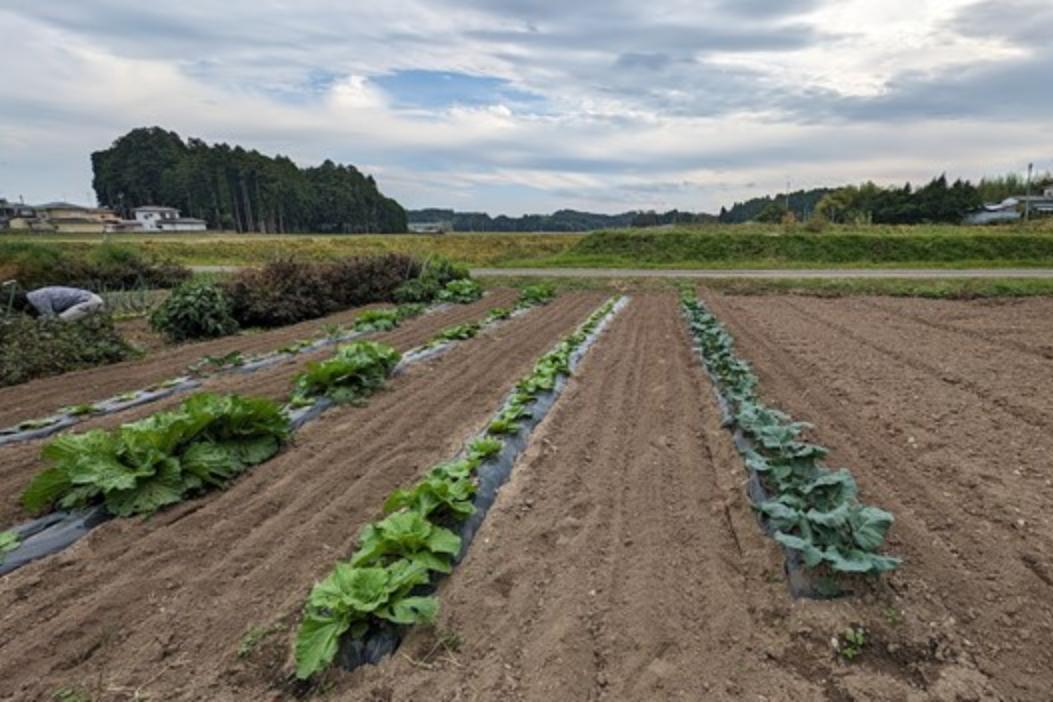
Large areas of bare soil not only cost money but also sacrifice much of the soil organic carbon that could be stored.
Why must Your Majesty speak of profit?
Mencius went to see King Hui of Liang. The king said: "Venerable sir, since you have not counted a thousand li too far to come here, surely you have something to profit my kingdom?"
Mencius replied: "Why must Your Majesty speak of profit? There is only benevolence and righteousness.
If Your Majesty says 'How shall I profit my kingdom?', the great officers will say 'How shall we profit our families?', and the scholars and common people will say 'How shall we profit ourselves?' When superiors and inferiors compete for profit, the state is endangered.
In a kingdom of ten thousand chariots, the one who murders his sovereign will be the head of a family of a thousand chariots. In a kingdom of a thousand chariots, the one who murders his sovereign will be the head of a family of a hundred chariots. To have a thousand out of ten thousand, or a hundred out of a thousand, is not a small share.
But if righteousness is put last and profit first, they will not be satisfied without snatching everything.
There has never been a benevolent man who neglected his parents, nor a righteous man who put his sovereign last.
Let Your Majesty speak only of benevolence and righteousness. Why must you speak of profit?"
Competing for profit, forgetting external costs
The first chapter of Mencius is the King Hui of Liang chapter, and looking at 2050 net zero today, it is just the same. Many people out there use carbon reduction and selling carbon credits as a front for making big money, swindling everywhere and amassing ill-gotten wealth. Even Interpol has spent the past decade strengthening international prevention of and crackdowns on "Carbon Trading Crime" as transnational crime. International carbon trading is led by the UN; Taiwan has long not been a UN member and lacks information, and the public is ill-informed. So many people, seeing media reports that international "carbon tariffs" will affect corporate exports, and the government saying carbon reduction holds hundreds of billions in business opportunities, have fallen into so-called "carbon anxiety", while quite a few, greedy for overnight riches, have fallen into carbon traps.
Because carbon trading is highly internationalised, with a very fine division of labour, it's hard for outsiders to understand. Industry feels 2050 net zero is a "deadline": some fear the sky will fall, others aren't worried because taller people (bigger emitters) will hold it up. Few think about how "the purpose of net zero is sustainability" — how to let industry keep developing sustainably.
Taiwan's society, economy and culture rarely consider external or social costs, and attach extreme importance to short-term gains over two or three years: an investment must pay back within two or three years. There are 27 years until 2050 — equal to 9–13.5 payback periods for a typical Taiwanese company. Today's investors can hardly think about something so far off.
Those without foresight will face trouble close at hand. Without a 30-year long-term plan, net zero is impossible. Rely on the government? How to overcome the "natural barrier" of four-year terms and get politicians to set aside their biases and seriously discuss the environment and economy 30 years from now is even more unimaginable.
People may only see the threat "net zero" poses to themselves, or fantasise about using it to make a "net-zero fortune" — another kind of profiteering from national crisis. As King Hui of Liang's story warns, when "superiors and inferiors compete for profit", it is very dangerous for the future of companies and the country. When everyone seeks profit for themselves, the value chain collapses, carbon reduction becomes impossible, and net zero naturally hard to reach. If the world emphasises net zero in future, laggards will be kicked out of supply chains, and Taiwan's industries, which profit mainly from contract manufacturing, will be doomed to elimination. Or Taiwan could use the fact that it isn't a UN member to hide under the umbrella of "a province of China" and enjoy temporary peace — but it would have already lost control of its own industrial lifeline.
Smallholder carbon farming: only by counting the world's benefit do we benefit ourselves
Back to basics: net zero is not about putting on a show or faking it to fool ourselves and others. Looking again at the "Smallholder Carbon Farming Project" (increasing soil organic carbon to obtain carbon credits): to increase soil organic carbon we carry out carbon-reducing practices (which can go with various farming methods). Here are some things we can do:
Reduce fertiliser. Taiwan "governs by supplements": cram school from childhood, subsidies for farmers too. People generally think "more fertiliser = higher yields". Take nitrogen fertiliser: one chia (about a hectare) of land needs only 20 kg, but 80 or even 100 kg is used. The extra 60–80 kg is waste — double waste and high emissions. 1) Making nitrogen fertiliser uses a great deal of fossil fuel to turn natural gas (CH4), with nitrogen from the air replacing the carbon, into nitrogen fertiliser (NH4). Natural gas and high energy use are major emitters: producing one tonne of nitrogen fertiliser (ammonium nitrate, for example) generally emits 2–3 tonnes of CO2-equivalent, and after use the nitrogen fertiliser turns into nitrous oxide, producing another 3.6 tonnes of CO2-equivalent — 6–7 tonnes of CO2 emissions in all. Nitrogen from organic fertilisers also produces large amounts of CO2. And large amounts of fertiliser are costly: NT$30 per kilo, NT$30,000 per tonne. Cutting one tonne of nitrogen fertiliser saves NT$30,000 and 6–7 tonnes of CO2.
Reduce tillage. Tillage destroys the soil's crumb structure and exposes the tiny organisms in the soil (bacteria, fungi, earthworms, insects) to the sun's UV rays, killing almost all of them, causing soil organic matter (nutrients) to be lost and releasing large amounts of carbon dioxide. Today a day's tillage labour costs over NT$3,000, and a tiller costs NT$2 million; tilling one chia once costs over a thousand NT dollars — a big burden. Less tillage also reduces CO2 emissions from farm machinery burning petrol and diesel. Unless unavoidable, tilling less also saves money.
Increase cover. After weeding, removing the weeds takes a lot of labour, which is expensive, and bare ground is exposed to the sun and washed by rain and irrigation water, causing soil organic matter to be lost. Worse still is using herbicides: though cheap thanks to government subsidies, spraying still costs labour, and herbicides kill microbes in the soil, reducing the soil's vitality and organic carbon storage. So increasing cover also reduces farming costs while increasing soil organic carbon.
Circular agriculture. Use waste from the fields to make compost, biochar and home-made enzymes and to culture photosynthetic bacteria, making the most of materials and land. This adds organic carbon to the soil, saves a great deal on fertiliser, and stops agricultural waste from being wasted.
Reduce rejects. Substandard produce can be processed into jam or pickles — simple processing that adds income. If badly damaged or rotten, it can be made into compost or enzymes. Nothing should be wasted, and this reduces the costs of fertiliser and pest and disease control.
Smallholder carbon farming hasn't yet completed a year, and we haven't carefully calculated its costs. But qualitatively, introducing carbon-reducing practices won't increase costs; it may lower them and increase income.
The net-zero mindset: raise yields, reduce waste
If this is true for smallholders, it is true for industrial carbon reduction too. Rather than sitting trapped and worrying needlessly, it's better to examine factory processes and equipment energy use, raise capacity utilisation sensibly, reuse offcuts, and manage suppliers to reduce defective inputs. If waste at every step and the defect rate of final products can be reduced, carbon reduction opportunities can be found at no cost at all, while saving large sums and unpredictable costs of poor quality (including customer returns and claims).
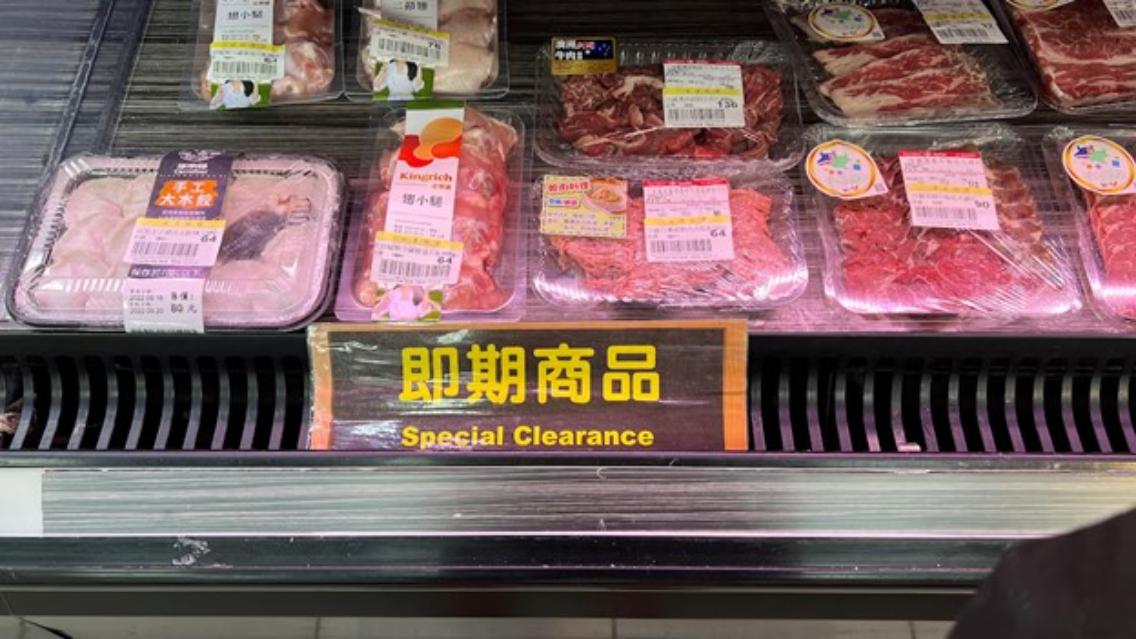
Overproduction and poor quality cause waste, which ends up as the biggest carbon emissions — and if it doesn't sell, you lose money too.
I've visited many factories where some waste is treated internally as routine, not included in KPIs, and no one cares. In fact, unnoticed, this waste and scrap create a huge carbon footprint. If it can be reduced — if yield rises by 10% — it produces more than 10% carbon reduction benefit, because across the supply chain, defect rates involve upstream and downstream costs of poor quality (equivalent to emissions). Scrap has zero or even negative value, yet its emissions don't decrease; they keep fermenting and wreaking havoc in the supply chain's costs of poor quality. If it comes to a final product recall, emissions are not just infinite — the company's very survival is at stake.
Quality management, business management and supply chain management should all raise yield, increase capacity utilisation, and reduce scrap and waste — lowering not only internal costs but also external (social) costs, while achieving carbon reduction and net-zero goals at almost no cost and becoming the best example of carbon reduction in the industry.
Global climate change is the result of all humanity competing for profit. Everyone produces seemingly harmless carbon dioxide, which has become the culprit of the Earth's sixth mass extinction. So looking at "Why must Your Majesty speak of profit?" today, this "profit" is the individual interest of each department or person. Competition among individual interests does harm the interest of the whole. Only by taking external costs and social benefits into account can we hope to solve the problem — since the Industrial Revolution — of humanity squandering the Earth's resources to grab short-term profits at the cost of long-term survival.
Source: CM Media ( https://www.cmmedia.com.tw/home/articles/43136 )


