 努力小農
本文尚無譯文。
The fruit of more than a year's hard work: want to taste carbon-reduced rice?
Having come through two typhoons, the surviving rice has even stronger vitality.
After the strong typhoons Haikui and Koinu headed straight for Hualien and Taitung in September, many smallholders suffered heavy damage. Even rice farmers in Yunlin received disaster cash relief, Ruisui earlier reported 300 tonnes of pomelos being dumped, and the market already expects rice prices to rise next year. Even several major grain-producing regions in northern and southern China have suffered severe crop failures from extreme flooding and drought, and grain prices have already risen.
It seems we can't help but believe in global warming. We must cut carbon emissions as quickly as possible. What we should do most — and what can be rolled out widely for the long term with few side effects — is "carbon farming" built on circular agriculture: absorbing carbon dioxide from the air and storing carbon in the soil, which can both solve the climate crisis and restore the soil, increasing the quality and quantity of food.
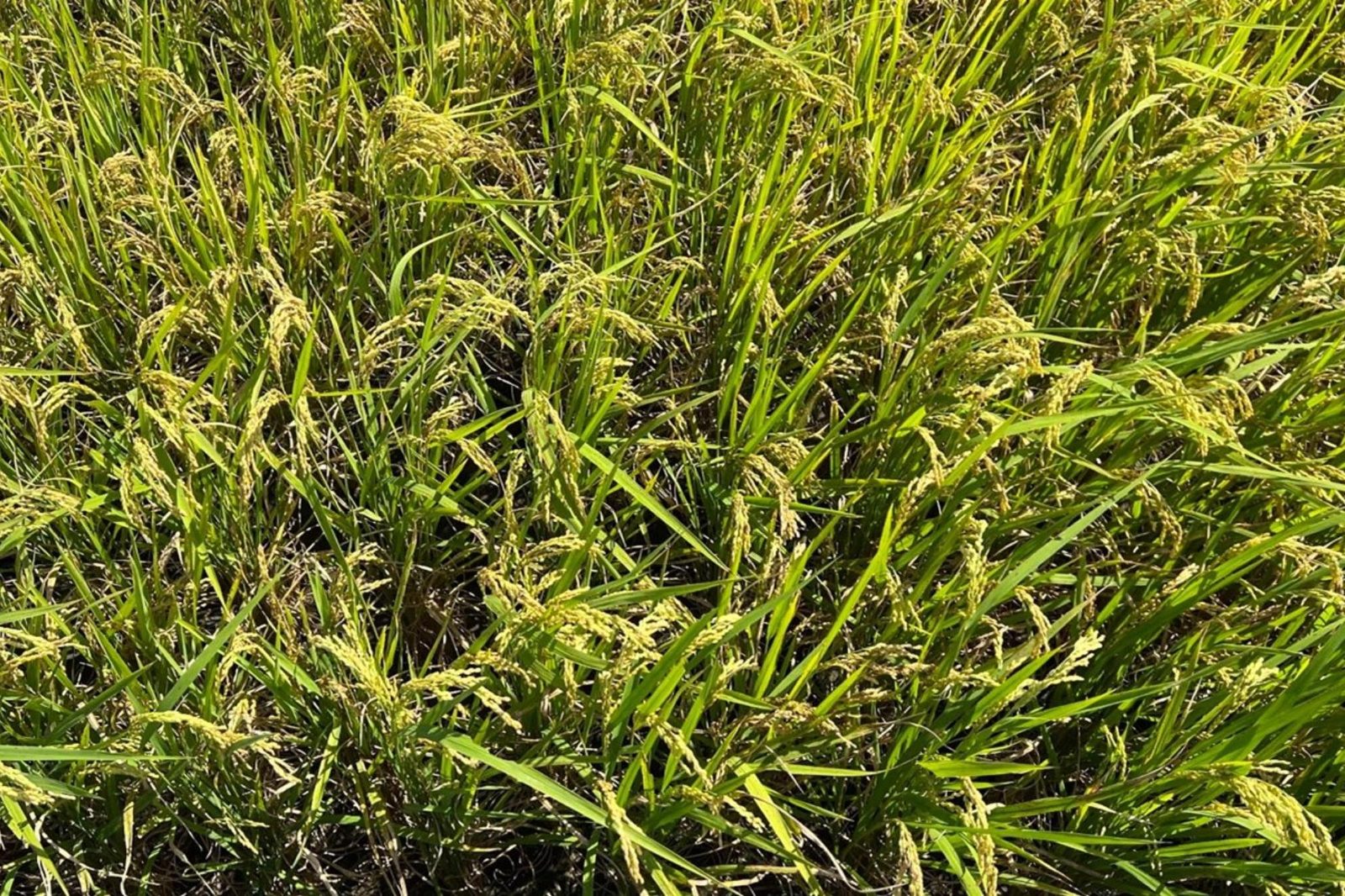
Rice that survived two direct typhoon hits
harvested on 17 NovemberWe harvested the rice of Changliang village chief Chen Wen-hua in Yuli. This is the harvest three months afterfertiliser spread on 14 July.
After Haikui and Koinu I went to Changliang to assess the damage. Although the impact wasn't great, when harvesting began in November many farmers looked glum, because the typhoons were so powerful: most smallholders got only 5 or 6 ge per hectare (per chia), 7 or 8 at best. Farmers measure harvests in "ge": 1 ge is 1,000 catties (600 kg), so typically only 3,600 kg of paddy — much less than the normal 5,000–6,000 kg. Because this is a general effect of a natural disaster and not caused by carbon farming, it shouldn't violate the rule that "yields must not fall by 5%".
On 4 May last year, Changliang smallholderChiu Chui-chuan and Fuli young farmer Su Chun-lung signed contracts 001 and 002 of the "Taiwan Smallholder Carbon Farming Project", openinga new era of Taiwan's participation in agricultural carbon reduction. We began observing and recording continuously from the second half of last year. At the end of last year, Chiu Chui-chuan introduced me to village chief Chen Wen-hua, and we met with Changliang's two quality rice production and marketing groups and decided that the whole village would join carbon farming — 144.7 hectares in total.
No one in Taiwan had ever farmed carbon before; smallholders were even more confused, and I only half understood it, learning as I went. Later I grasped the outline of the knowledge: emulate the natural, primordial symbiosis of plants, microbes and animals, playing the roles of producers, decomposers and consumers, maintaining the cycles of carbon, nitrogen, hydrogen and oxygen. Through the action of microbes, earthworms and so on, mud, sand and gravel become soil, including humus, plant and animal remains and multiplying microbes, producing large amounts of "biomass" — the main component of soil organic matter.
We could only try every feasible method: reducing tillage and its effects, and if tillage was necessary, immediately adding cover to avoid sunlight, so that soil microbes aren't killed by UV rays — the biggest cause of soil losing organic matter.
Using biochar and bio-organic inputs was a big question, because no one was sure how to use them effectively. At that point Lin Chen-fa, chairman of Uni-President Biotech, was willing to work with us to trial Uni-President Biotech's organic fertiliser: 50% chicken manure, sterilised at high temperature, cooled, with microbial agents added, then dewatered, dried and granulated.
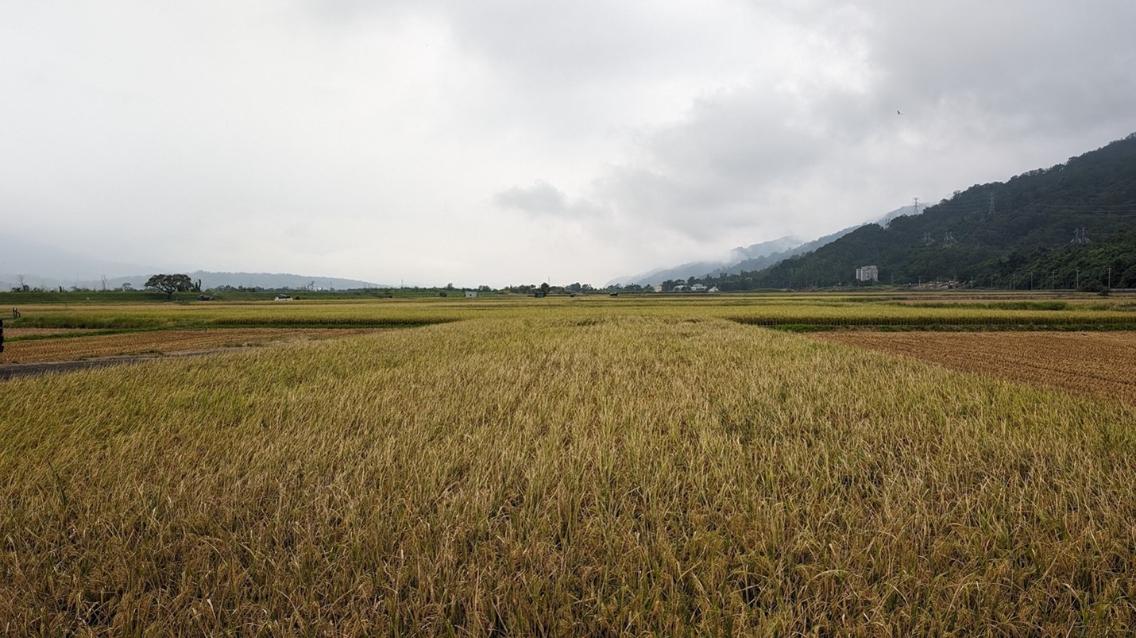
This field is our trial plot. (23°16'19.3"N 121°17'13.0"E)
No one expected this day... with such good results
The price of the organic fertiliser isn't too high — NT$170 for a 20 kg bag (farmers' association price) — but one hectare needs 150 bags, 3 tonnes in all, costing NT$25,500. Add two bottles of liquid fertiliser for top dressing at NT$1,800, and fertiliser alone costs NT$27,300 — quite considerable.
To reduce pesticides, Chief Chen recommended planting Tainung No. 81 rice, with better resistance to disease and pests, so even pesticides could be saved.
Since this was an experiment, we first tried it on one hectare of Chief Chen Wen-hua's land. With no experience, spreading 3 tonnes of fertiliser on the field was hard work, and we only just finished. That was a lesson: in future we need suitable machinery, otherwise spreading 3 tonnes of fertiliser takes two days of time and labour.
The trial field was fertilised on 14 July and transplanted two weeks later. In early September the rice was growing very well and the village chief was pleased. But after Haikui everyone began to worry, and then Typhoon Koinu came, worrying farmers even more.
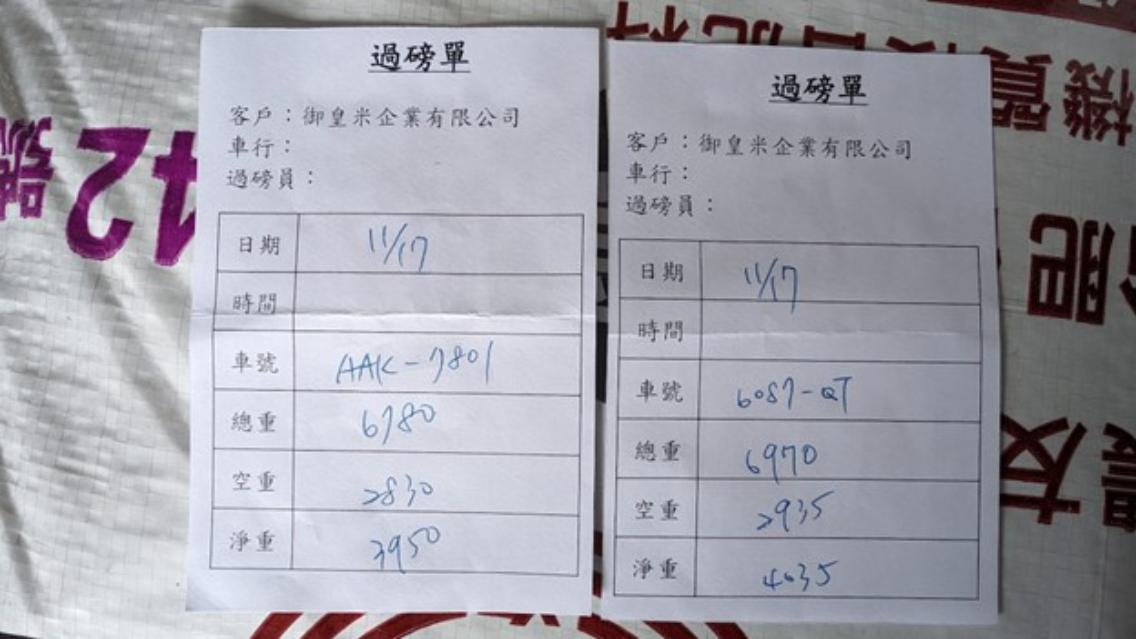
Sure enough, after the typhoons, strong winds and flooding caused rice blast, with many "duds" (ears that didn't fill). Chief Chen's field looked about the same as other plots on the surface, and before harvest on 17 November he was quite anxious about whether the results would be good. When harvesting began, the grains seemed larger. After two hours of harvesting, two truckloads of paddy were weighed: one at 3,950 kg and one at 4,035 kg, over 8,000 kg together. After drying there were nine bulk bags, sent to the Hsinfeng Rice Mill in Xinyuan Township, Pingtung, weighing 5,937 kg in total — 10,000 Taiwanese catties.
On the western Chiayi–Tainan or Kaohsiung–Pingtung plains, fields producing 20,000 catties of paddy per hectare are everywhere. In Hualien and Taitung, 6,000 catties is good for organic growers. For an ordinary second crop transplanted after July, with shorter daylight and lower yields, 10,000 catties is very good — and this year, after two typhoons, yields were down 30–40%.
On the market, genuine Hualien–Taitung rice costs two or three times as much as western rice (about NT$50/kg for western rice versus NT$100–150 for Hualien–Taitung rice), because Hualien–Taitung rice has small output, high costs and high shipping costs.
This time we witnessed that bio-organic fertiliser can deliver outstanding yields. And on tasting, though the rice is ordinary japonica without special fragrance, it has a good texture and is still top-quality Hualien–Taitung rice. This gives us more confidence.
We are starting to sell Chief Chen Wen-hua's carbon-reduced "first rice". Because this is Taiwan's first step in international carbon reduction certification — and "rice" and "metre" are the same word, mi — it marks a big step forward.
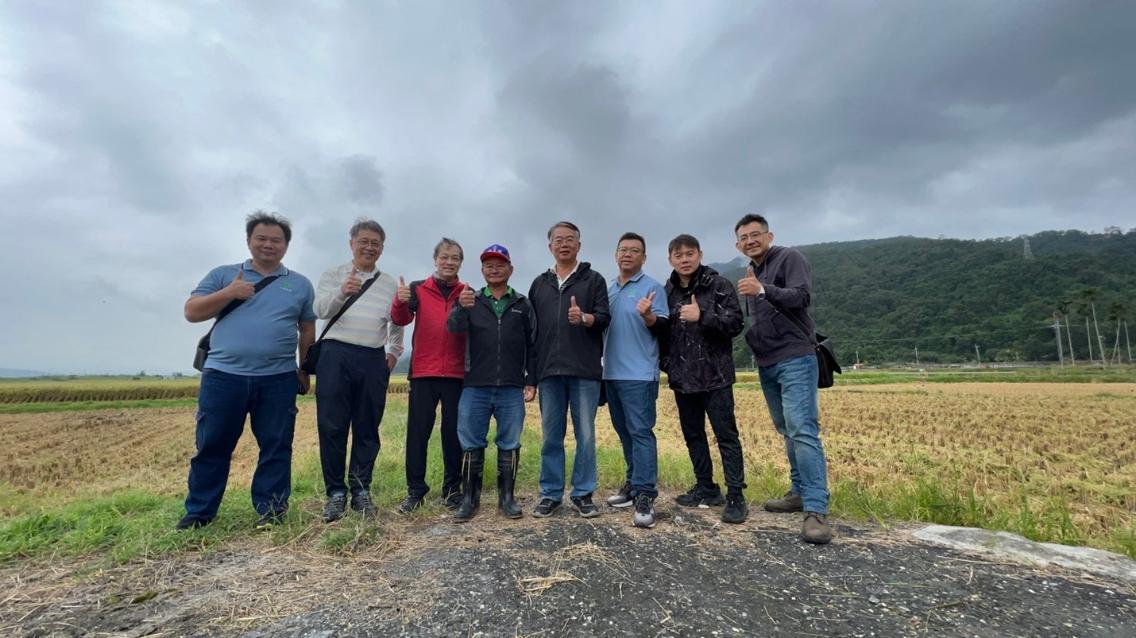
Sharing the joy of the harvest. Fifth from left, standing in the middle wearing a hat, is the rice-growing smallholder, Changliang village chief Chen Wen-hua.
Interested friends can order our rice. It has gone through rigorous certification and witnessing procedures in line with the Gold Standard for international carbon reduction certification, yet we are still selling it at ordinary prices. Information on this batch of rice:
"Changliang Carbon-Reduction First Rice" — Taiwan's first rice in international agricultural carbon reduction
We hope to supply it to companies for staff canteens or as gifts. At the same time, the project's international carbon reduction and quantified SDG certification can be converted into corporate ESG performance, customised to different types of companies and needs.
It is produced on fields registered with Gold Standard global carbon reduction (project no. GS11818) and quantified SDG certification, fully recorded in the MiHuMiSang app and open to public view.
Although not certified organic, it was grown entirely with bio-organic fertiliser. The variety is Tainung No. 81 japonica rice, which can be grown without pesticides, and I have confirmed that the smallholder applied no pesticides.
This rice survived this year's typhoons Haikui and Koinu. It has a little rice blast, but not seriously.
Our direct cost is NT$80. Expected group-purchase prices:
1 kg pack: NT$130
2 kg pack: NT$240
3 kg pack: NT$320
20 kg pack: NT$2,000
Tax included, shipping extra
The price is on the low side for Hualien–Taitung rice. For large purchases for group catering, we also have possible SDG/ESG partnership plans. We are currently in talks with the Shilin Bread of Life Church's senior centre in Qiyan, Beitou.
We are proving that smallholders who take part in carbon farming can increase both yields and profits.
We hope you will support our efforts.
Product specifications:
Produced in a carbon-reduction zone registered with Gold Standard international carbon reduction certification
Project developer: Eco-affinity Inc.
Initiator: Green Consumers' Foundation
Expected to reduce 1 tonne of CO2 per year (confirmed each year by the actually certified reduction)
Production area: Plots 445, 448 and 456, Yongliang Section, Changliang Village, Yuli Township, Hualien — 1 hectare in total
Variety: Tainung No. 81, resistant to disease and pests, no need for pesticides
Fertiliser: Uni-President Biotech bio-organic fertiliser (video record:https://youtu.be/usWvNErgzio?si=gWVAdNzSV2-aUiyh)
Harvest date: 17 November 2023 (video record:https://youtu.be/UmaxfEZCZwg?si=bVCuzZUQyzGSjuLV)
Available for delivery: from 1 January 2024 (rice needs time in storage to settle before it is stable)
Rice is milled within one week before shipping to ensure quality. Please order in advance; lead time is about one week.
Expected supply: 3,600 kg
(Note: this is a trial sale. If it sells out, we have another 146 hectares of smallholder carbon farming paddies in Changliang.)
To order, please click the link below:https://forms.gle/hvFFbKpZcvCLHTw49
Companies are welcome to join the ESG investment programme
Source: CM Media ( https://www.cmmedia.com.tw/home/articles/43657 )


