努力小農
本文尚無譯文。
Changliang carbon-reduced rice
Changliang carbon reduction: the first rice
After the international certification body comes to Taiwan next February to review the "Taiwan Smallholder Carbon Farming Project", Taiwan will have a batch of farm produce certified for carbon reduction and six Sustainable Development Goals. Among them, Changliang Village in Yuli, Hualien, will take Taiwan's "first metre" (a pun on "first rice") in international carbon reduction. And Changliang's history of more than a century is also a portrait of ethnic integration and agricultural development in Taiwan.
Rice that survived two typhoons
After the strong typhoons Haikui and Koinu headed straight for Hualien and Taitung in September, many smallholders suffered heavy damage. Even rice farmers in Yunlin received disaster cash relief, Ruisui earlier reported 300 tonnes of pomelos being dumped, and the market already expects rice prices to rise next year. Even several major grain-producing regions in northern and southern China have suffered severe crop failures from extreme flooding and drought, and grain prices have already risen.
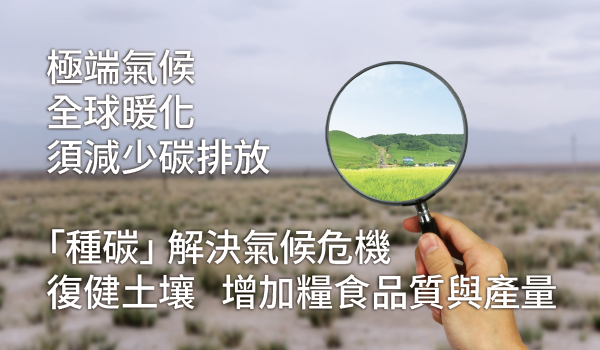
It seems we can't help but believe in global warming. We must cut carbon emissions as quickly as possible. What we should do most — and what can be rolled out widely for the long term with few side effects — is "carbon farming" built on circular agriculture: absorbing carbon dioxide from the air and storing carbon in the soil, which can both solve the climate crisis and restore the soil, increasing the quality and quantity of food.
The essence of the Qingshui River from the Yushan range
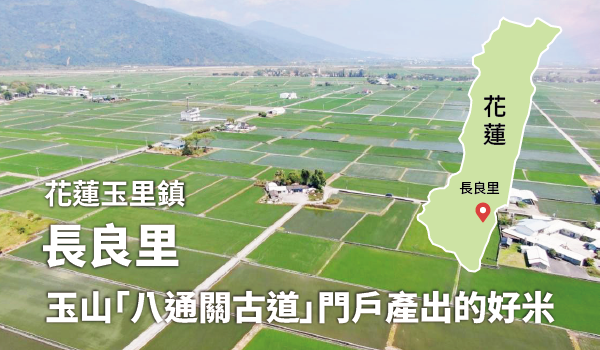
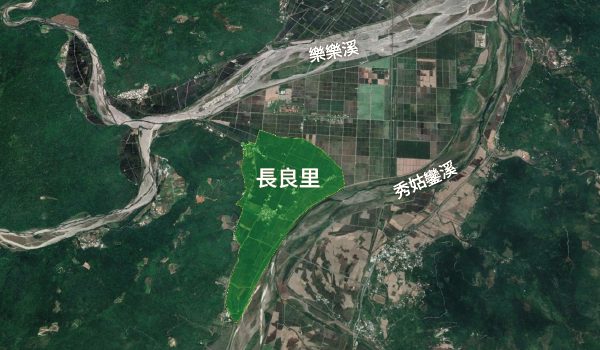
The Yushan Batongguan Trail exits at Yuli, and its gateway is Changliang Village. Where there are roads there is water: water from Yushan flows via the Lakulaku and Qingshui rivers into the Xiuguluan River, the largest river in Hualien and Taitung. Changliang's irrigation and drinking water comes from the Qingshui River.
Changliang Village is divided into two large parts. To the north is the Changliang Farm of the Veterans Affairs Council, about 500 hectares, cleared by veterans years ago; 250 hectares of it are now an organic agriculture zone managed by the Ministry of Agriculture. To the south, the residential area of Changliang, about 200 hectares, is farmed conventionally.
Apart from mountains unsuitable for farming, Changliang was among the last areas of eastern Taiwan to be developed for agriculture. Pingpu people migrated here in 1836 and turned it into good farmland, but in 1881 a flood of the Xiuguluan River turned the fields back into riverbed. Only after levees were built along the Qingshui River to the Xiuguluan River did the area enjoy more than 60 years of safety.
What is "carbon farming"?
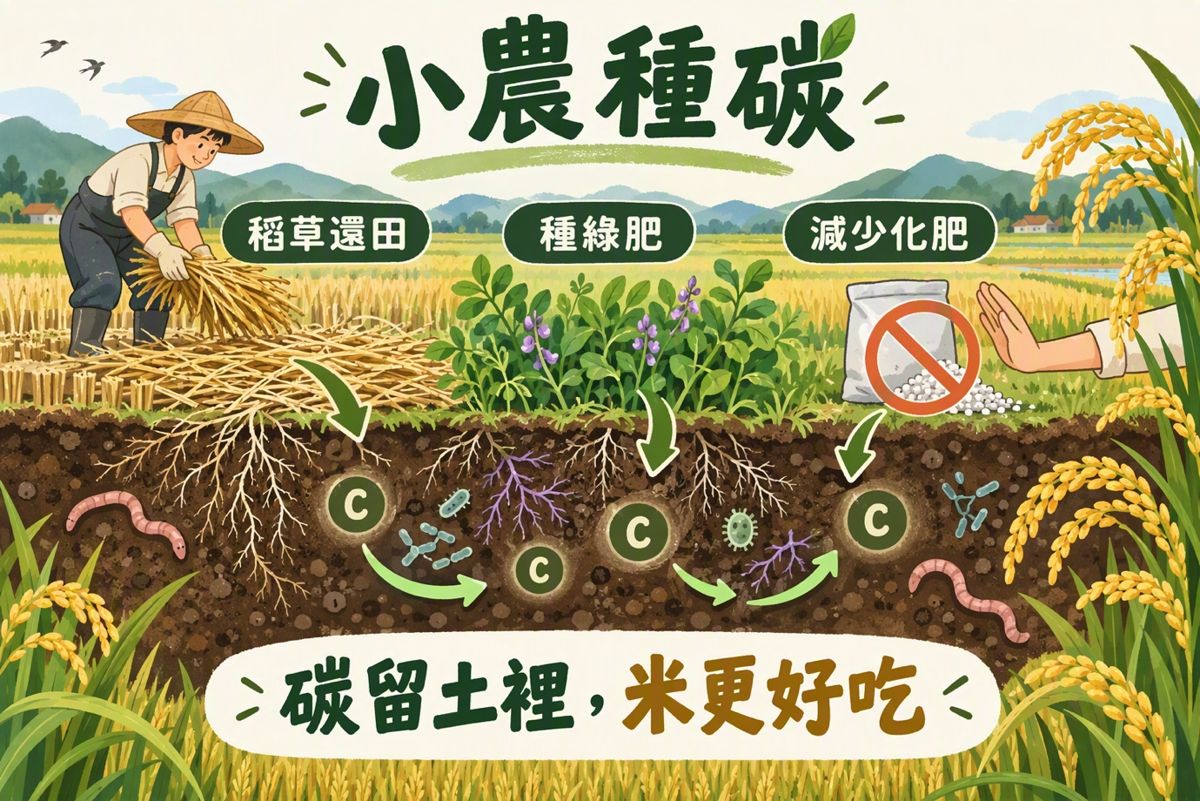
It is engineering by subtraction — not what you do, but what you don't do, including not removing straw and stalks after harvesting the grain, leaving them on the ground to protect the microbes in the soil. It means emulating the natural, primordial symbiosis of plants, microbes and animals, playing the roles of producers, decomposers and consumers, maintaining the cycles of carbon, nitrogen, hydrogen and oxygen. Through the action of microbes, earthworms and so on, mud, sand and gravel become soil, including humus, plant and animal remains and multiplying microbes, producing large amounts of "biomass" — the main component of soil organic matter.
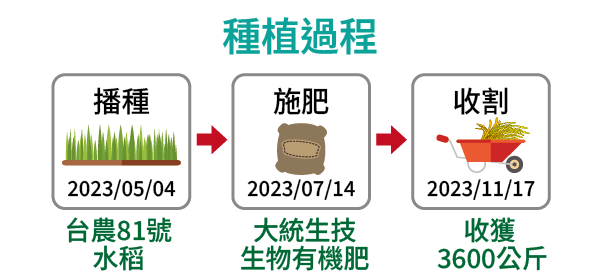
14 July 2023: press release and on-site application of Uni-President Biotech bio-organic fertiliser (Datong Four Seasons)
17 November 2023: rice harvest, yielding 10 ge (10,000 Taiwanese catties = 6,000 kg) of dry paddy. In Hualien and Taitung, nearby fields in the same area yielded 6–8 ge, so the trial field did well. We will continue and expand the area in future.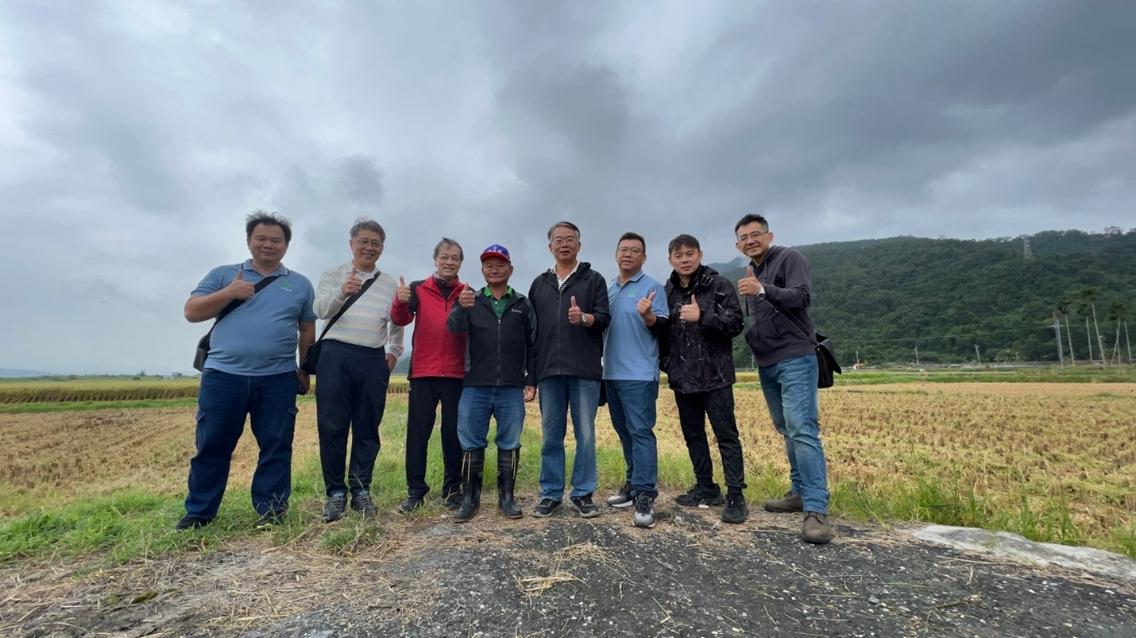
17 November 2023: harvest of carbon-reduction rice grown with Uni-President Biotech bio-organic fertiliser by Changliang village chief Chen Wen-hua (standing in the middle wearing a hat).
The methods we tried for this batch of rice:
- Reduce tillage, increase cover
- Reduce pesticides by planting Tainung No. 81 rice, with better resistance to disease and pests
- Trial Uni-President Biotech's organic fertiliser: 50% chicken manure, sterilised at high temperature, cooled, with microbial agents added, then dewatered, dried and granulated.

Three ways to invest and commit
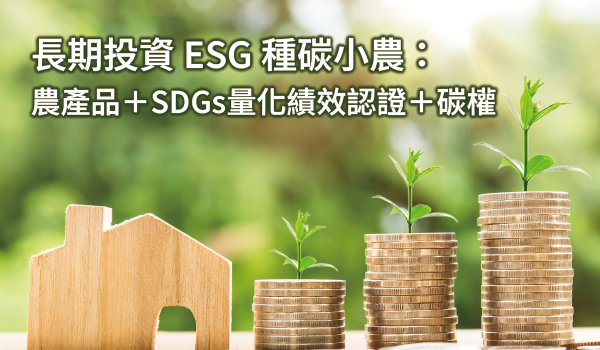
- Companies invest directly in smallholder products or projects
- Companies invest in the harvested products of carbon-farming smallholders, or have them processed for corporate clients, to use themselves or give back as gifts or premium items
- Jointly plan smallholder eco-tours, food and farming education or other smallholder projects, as customised options for companies after investing
Benefits of investing in carbon-farming smallholders:
- Providing quality products, eco-tours or food and farming education to companies and all sectors of society
- Through sales and consumption of smallholder carbon farming produce, expanding the SDG/ESG influence of carbon-reduced produce on the consumer side and strengthening SDG/ESG performance
- Each year's quantified SDG results certified by the international Gold Standard are converted into corporate ESG impact performance
Note: this does not include carbon credits generated by smallholders; carbon credits must be bought on international public trading markets. Alternatively, a separate agreement can be made to become a sponsor of carbon credits and gain priority rights to future credits.

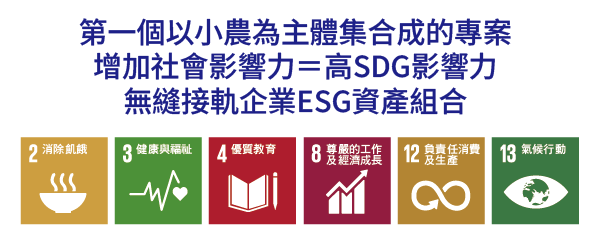
The Green Consumers' Foundation supports the international "4 per 1000 Initiative": increasing soil organic carbon by four per thousand can defuse the global warming crisis, restore life to the soil, and solve the climate and food crises together. Eco-affinity Inc. is responsible for promoting the "Smallholder Carbon Farming Project", helping bring smallholders together to change or strengthen existing farming practices, increasing soil organic carbon without reducing yields, as the target of emission-reduction certification (how many tonnes of carbon sink can be added per hectare per year compared with the 2023 base year).
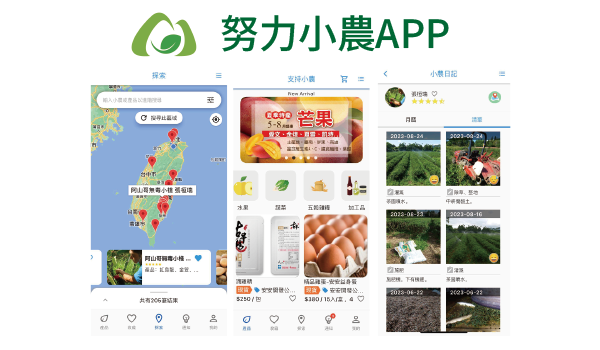
Eco-affinity Inc. has also launched the MiHuMiSang app, letting every smallholder use their phone to take photos, check in and upload their production records. It is a free mobile app for smallholders and consumers, designed to give smallholders a convenient, easy way to record their production process and to set their own prices, list and sell their products. Consumers can also easily find smallholders, see their work records, and buy directly from them or become friends. Every smallholder on the platform has been visited in person by Green Consumers' Foundation staff or volunteers to confirm their authenticity, ruling out anything false.
The "Smallholder Carbon Farming Project" currently being promoted follows the Clean Development Mechanism of the UN Framework Convention on Climate Change and the methodologies of international emission-reduction certification bodies, helping smallholders carry out agricultural carbon reduction, with international voluntary emission-reduction certification and carbon credit trading.
Note: for international carbon reduction certification, all certification administration and certification costs are paid by the developer, Eco-affinity Inc.; smallholders pay nothing and there is no signing fee. For details, see the "How to join carbon farming" page.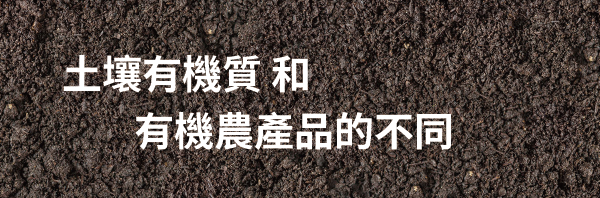
1. Soil organic matter can only rise over the long term on land that works in line with natural ecology
2. Increasing soil organic matter means increasing biodiversity and less harm to the land
3. There are international scientific sampling and testing standards for checking soil organic matter
4. Biological organic matter must be used to increase symbiotic soil bacteria and thus soil organic carbon
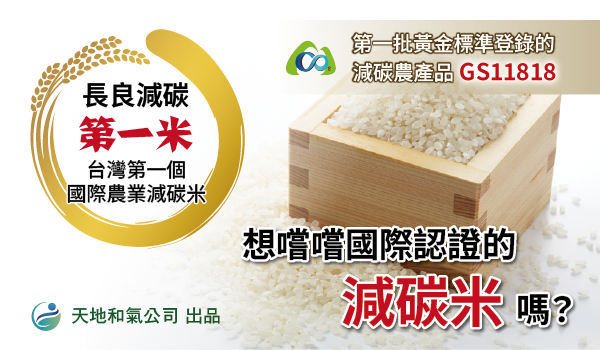
"Changliang Carbon-Reduction First Rice" — Taiwan's first rice in international agricultural carbon reduction
We hope to supply it to companies for staff canteens or as gifts. At the same time, the project's international carbon reduction and quantified SDG certification can be converted into corporate ESG performance, customised to different types of companies and needs.
It is produced on fields registered with Gold Standard global carbon reduction (project no. GS11818) and quantified SDG certification, fully recorded in the MiHuMiSang app and open to public view.
Although not certified organic, it was grown entirely with bio-organic fertiliser. The variety is Tainung No. 81 japonica rice, which can be grown without pesticides, and I have confirmed that the smallholder applied no pesticides.
This rice survived this year's typhoons Haikui and Koinu. It has a little rice blast, but not seriously.
Our direct cost is NT$80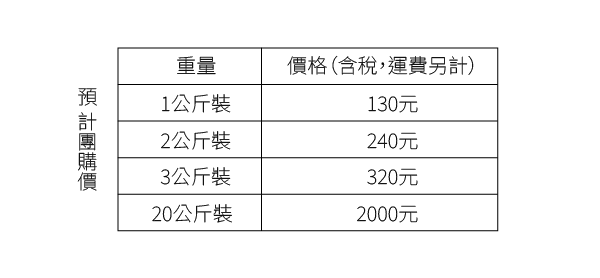
[Product specifications]
Produced in a carbon-reduction zone registered with Gold Standard international carbon reduction certification
Project developer: Eco-affinity Inc.
Initiator: Green Consumers' Foundation
Expected to reduce 1 tonne of CO2 per year (confirmed each year by the actually certified reduction)
Production area: Plots 445, 448 and 456, Yongliang Section, Changliang Village, Yuli Township, Hualien — 1 hectare in total
Variety: Tainung No. 81, resistant to disease and pests, no need for pesticides
Fertiliser: Uni-President Biotech bio-organic fertiliser
Harvest date: 17 November 2023
Available for delivery: from 1 January 2024
(rice needs time in storage to settle before it is stable)
Rice is milled within one week before shipping to ensure quality. Please order in advance; lead time is about one week.
Expected supply: 3,600 kg
How to order »
1) Google Form