 努力小農
本文尚無譯文。
The "first rice" of net-zero carbon: Changliang, Hualien, the promised land of agricultural carbon reduction
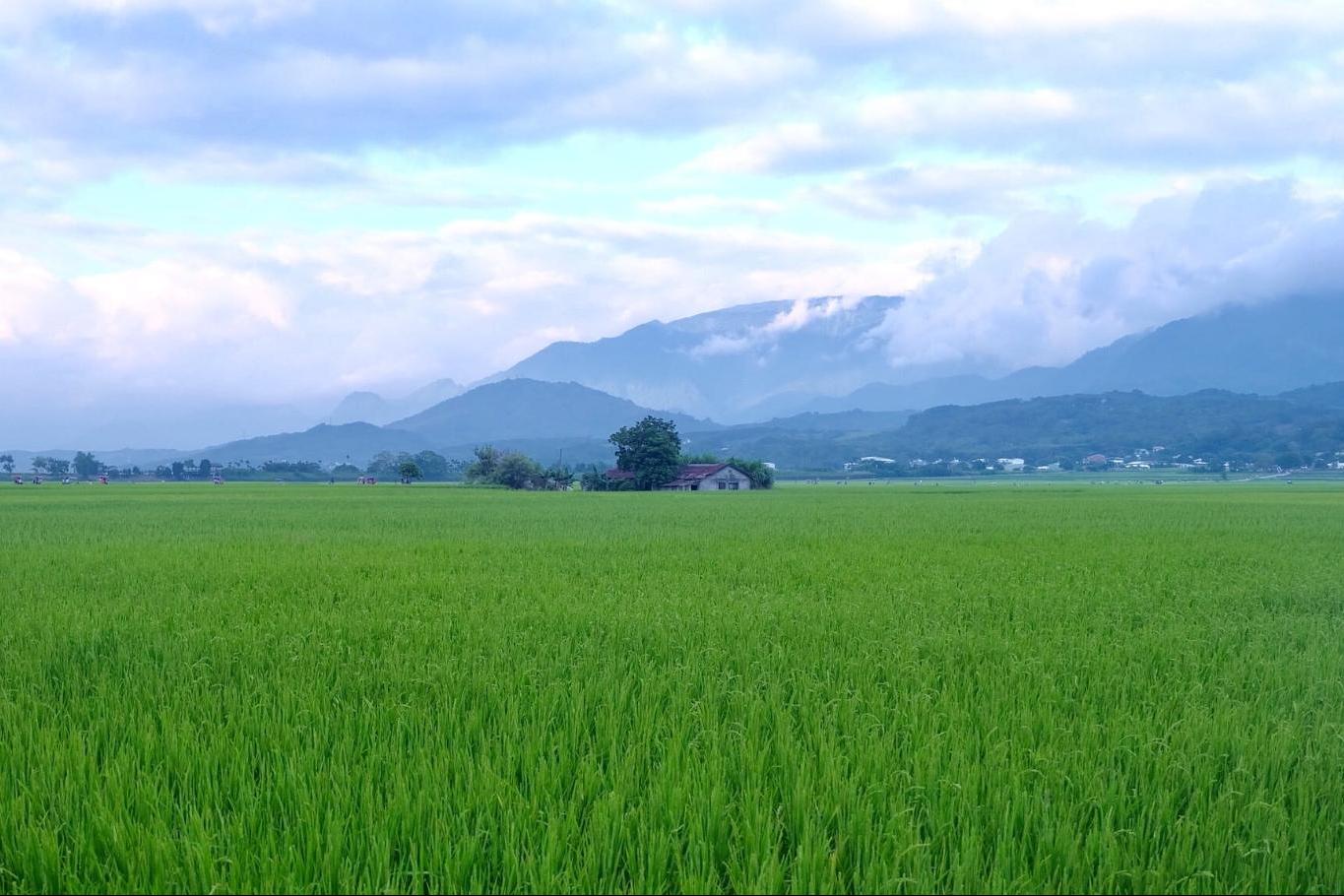
Changliang Village in Yuli Township, Hualien, has grown the "first rice" of Taiwan's net-zero agricultural carbon reduction. (Image: wallpaperflare)
After more than two years of effort, an experiment in Changliang Village has preliminarily verified that one hectare of farmland can accumulate four per thousand. Changliang, the last frontier of lowland agricultural development in Taiwan, has taken the "first rice" step towards net-zero carbon in Taiwan's agriculture — it is truly the promised land of agricultural carbon reduction in Taiwan.
Surprises and the unexpected
The international 4 per 1000 Initiative hopes that if farm and forest soils could increase their carbon by four parts per thousand, this would balance the CO2 emitted by industry each year. Yet many Taiwanese experts and scholars estimate that it is hard enough for the soil of one hectare of Taiwanese farmland to gain one tonne a year. Unexpectedly, according to data we monitored in Changliang Village, Yuli Township, Hualien County, it really is possible to accumulate four per thousand of carbon — equivalent to 66 tonnes of CO2 per hectare. This is an exciting result, but it is only a single-point test; in future it will be expanded to 20 hectares.
We will actively reconfirm it and research farming methods and inputs that can increase soil carbon sinks, improving repeatability and reproducibility. We also hope everyone will follow and take part, making agricultural carbon reduction a powerful tool on Taiwan's roadmap to net zero.
In September 2021 we began preparing to help Taiwan's smallholders join international emission-reduction certification. In April 2022 we started the Taiwan Smallholder Carbon Farming Project and applied to the Gold Standard, receiving initial project approval on 8 February this year. There were many dramatic and unexpected events along the way, but none hit me as hard as the initial test results from a one-hectare experimental paddy in Changliang Village, Yuli Township, Hualien County: after one rice crop, its soil had stored the equivalent of 66 more tonnes of CO2. Although this matches the 0.4% increase of the international 4 per 1000 Initiative, it overturned what I had believed for more than a year — that each hectare could gain at most one tonne.
Of course this is the result of a single experiment and does not mean every field, every time, will store an extra 0.4% of CO2 in the soil. But it is an exciting fact for farmers: agriculture really does have a chance to reduce carbon, and so do smallholders. We still hold to "doubting where there seems no room for doubt" and will not take one hectare and one experiment as conclusive. But we will make every step of the project public and share it with everyone, hoping more farmers will join the work of reducing carbon, take part in international certification, and increase their yields and output value.
I believe international standards certification is a transparent, open communication process with public participation — the universal value of standardisation. There are no secrets; we strive to make public all the standards and the details of conformity, for all stakeholders to scrutinise and refer to, extending the influence of standardisation.
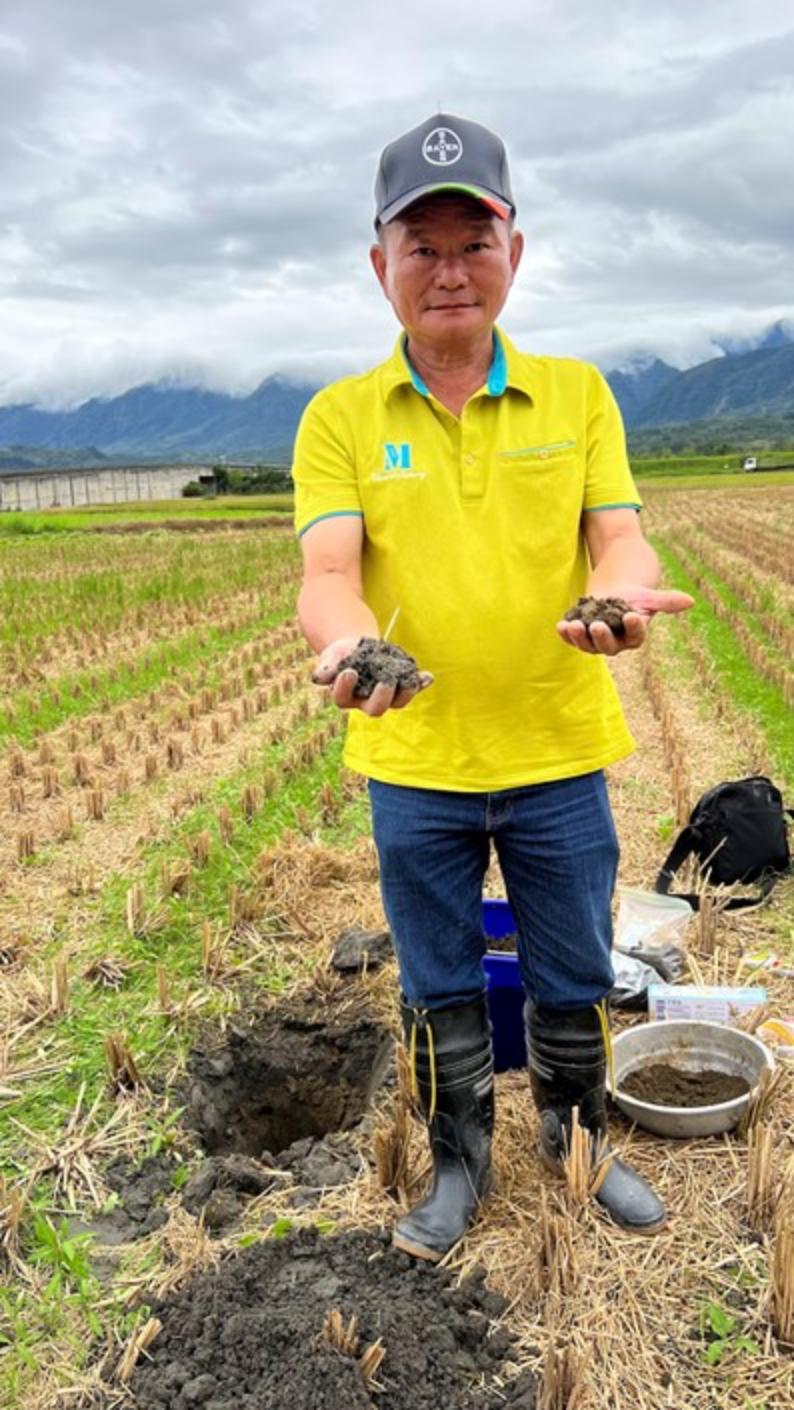
To understand changes in soil organic carbon, Changliang smallholder Chen Wen-hua, who is also the village chief, went back to his field on 14 December, a month after the harvest, to take samples and send them to a research institution for testing.
Increasing soil biomass: Bacillus subtilis licensed from National Chung Hsing University
First, our methodology is mainly based on the Gold Standard'sSoil Organic Carbon Framework Methodology and its various related rules (note that this is not a single standard but a certification system of more than 20 principles, rules, requirements and protocols). To meet these rules, I spent more than a year studying, understanding and researching these standards, discussing them with experts and scholars and sharing them with farmers, so that more smallholders can take part in carbon farming in future.
Following the methodology and the recommendations of the FAO's Recarbonization of Global Soils handbook, in Changliang we promoted no herbicides, less fertiliser (chemical or organic), more ground cover, less soil disturbance and damage, the use of biological inputs, and every means of increasing and protecting soil organic carbon and reducing losses.
Because these are high-yield paddy fields, fertiliser is necessary. After evaluation we used Datong Biotech's bio-organic fertiliser "Siji Wang", which has a 50% chicken-manure base plus used mushroom-growing bags, biochar and other ingredients, inoculated with Bacillus subtilis licensed from National Chung Hsing University. In theory this bacterium is highly resistant to extreme environments (dryness, high pH, etc.) and multiplies fast, producing 20–25 grams per litre; as long as it can live in symbiosis with rice in the soil, it should have a very good carbon-fixing effect.
On 14 July we spread 3 tonnes of bio-organic fertiliser over the one-hectare paddy, then ten days later puddled the field, flooded it and transplanted the rice.
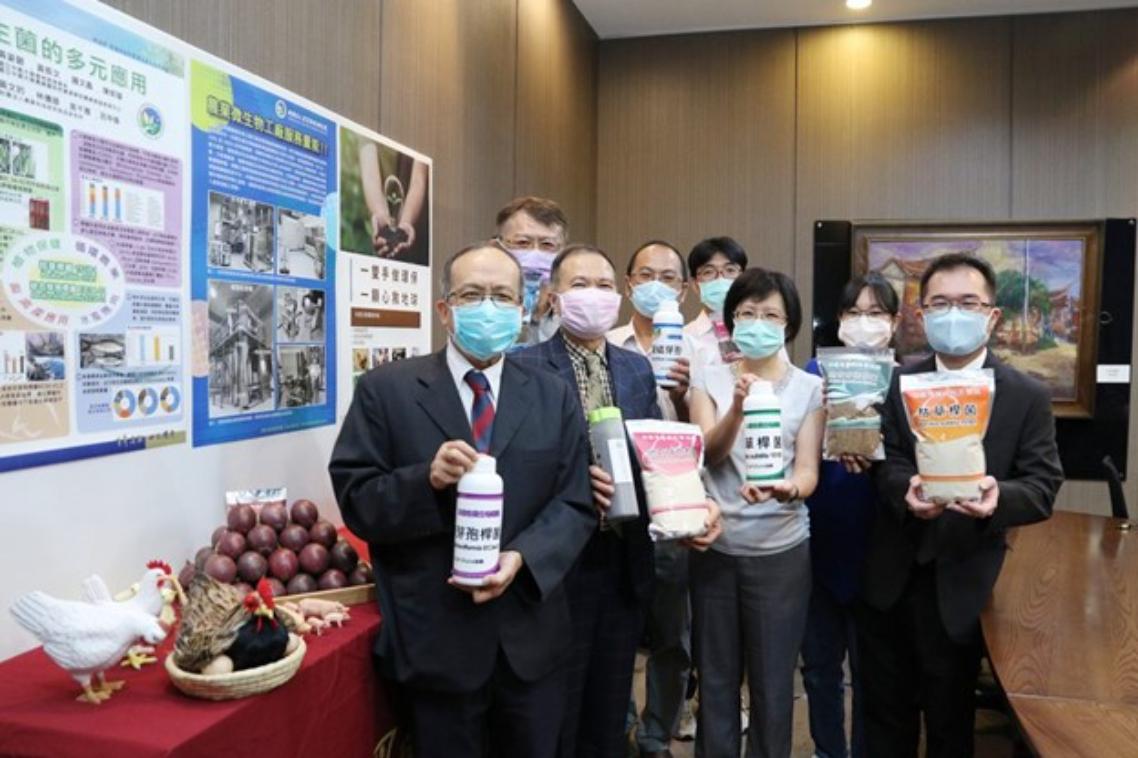
Chung Hsing University's agricultural technology is internationally leading, and the Agricultural Technology Research Institute is seen as "the ITRI of agriculture". With support from the Ministry of Science and Technology, the two carried out the "Application of beneficial microbiomes in agriculture" programme, developing a series of Bacillus subtilis strains for health care, crop safety, circular agriculture, livestock and poultry farming and aquaculture, and proving their effectiveness through scientific trials to make the products more competitive. The technology transfer agreement was signed by NCHU President Shiue Fu-sheng, ATRI President Chen Chien-pin, Datong International Biotech Chairman Lin Chen-fa and inventor representative NCHU Vice-President Huang Jenn-wen. (Quoted from NCHU's website)
Sampling and testing methods
We took soil samples according to theICRAF protocol of thesampling method (for detailed sampling methods seehere). In the central area of the field, within a circle of radius 12.2 metres and about 100 square metres, divided into three, samples were taken at ① the centre and towards ② 12 o'clock, ③ 4 o'clock and ④ 8 o'clock, digging at depths of 0–20 cm and 20–50 cm and taking several kilograms of soil at each. Soil from different depths must be kept separate. After digging, mix it thoroughly in a bucket or basin, remove twigs, roots, leaves, stones and other debris, keeping only the soil; then divide it into sample bags labelled by position and layer to avoid confusion.
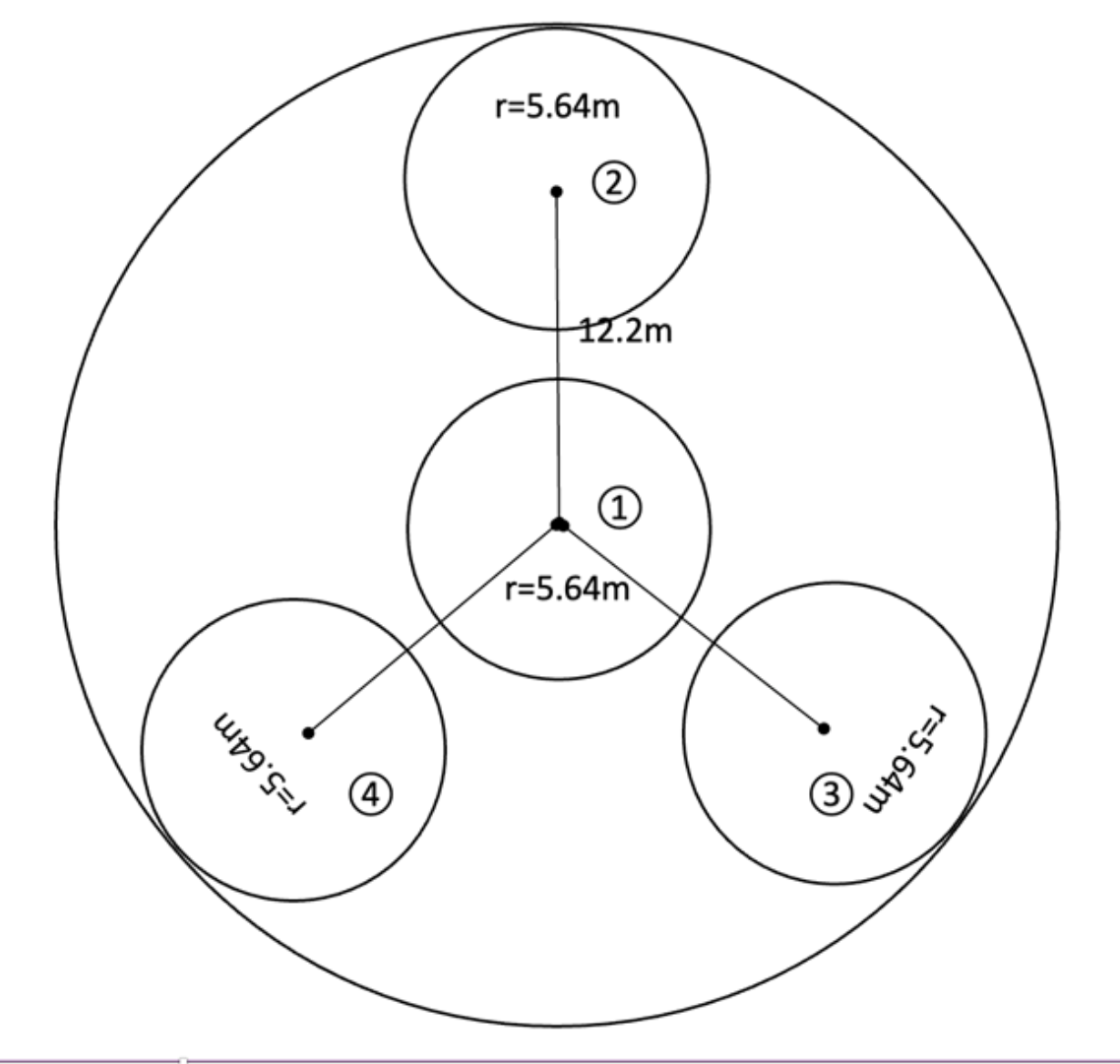
Under international soil organic carbon sampling standards, samples must be taken at 4 points within 100 square metres, each within a circle 5.64 metres in diameter, at two layers: 0–20 cm and 20–50 cm.
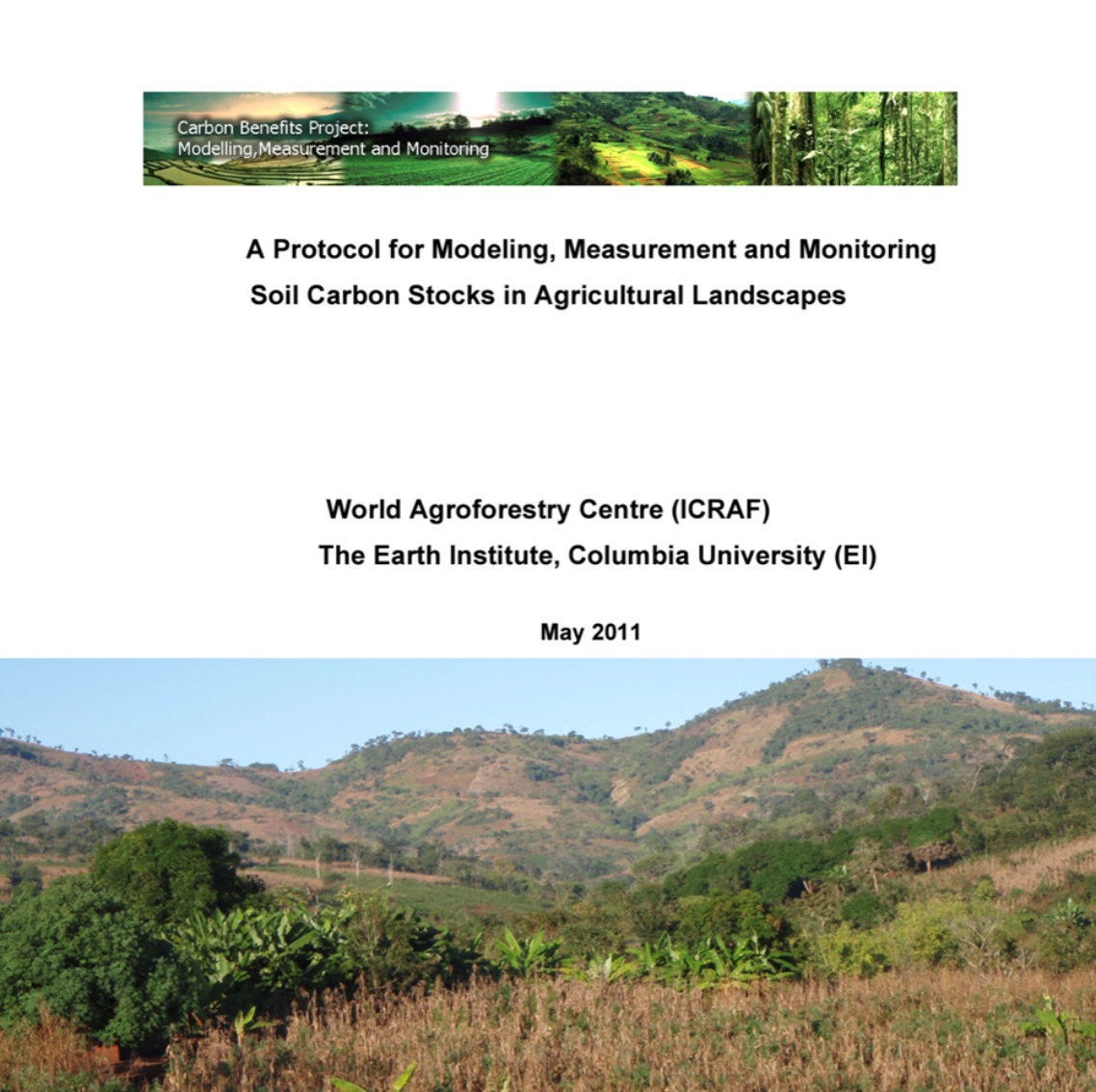
A protocol handbook for modelling, measuring and monitoring soil organic carbon on farmland.
We took soil samples before planting and fertilising the second rice crop (July) as the baseline before carbon farming; the rice was transplanted on 24 July. After the harvest on 17 November we sampled again.
The harvest on 17 November was very good. Even after two strong typhoons, this one-hectare experimental field yielded 6,000 kg of dry paddy — equivalent to "10 ge" — better than all the control fields.
During soil sampling it was clear that whereas before cultivation the field had an obvious "plough pan", at harvest-time sampling the plough pan was much less apparent, showing that biological activity had loosened it. (Note: a plough pan is an impermeable hardened layer produced when soil is compressed for a long time by heavy farm machinery,
The samples were sent to a government-approved soil fertility testing institution, and the results from each point on both occasions were analysed statistically. The calculation sheet is as follows:
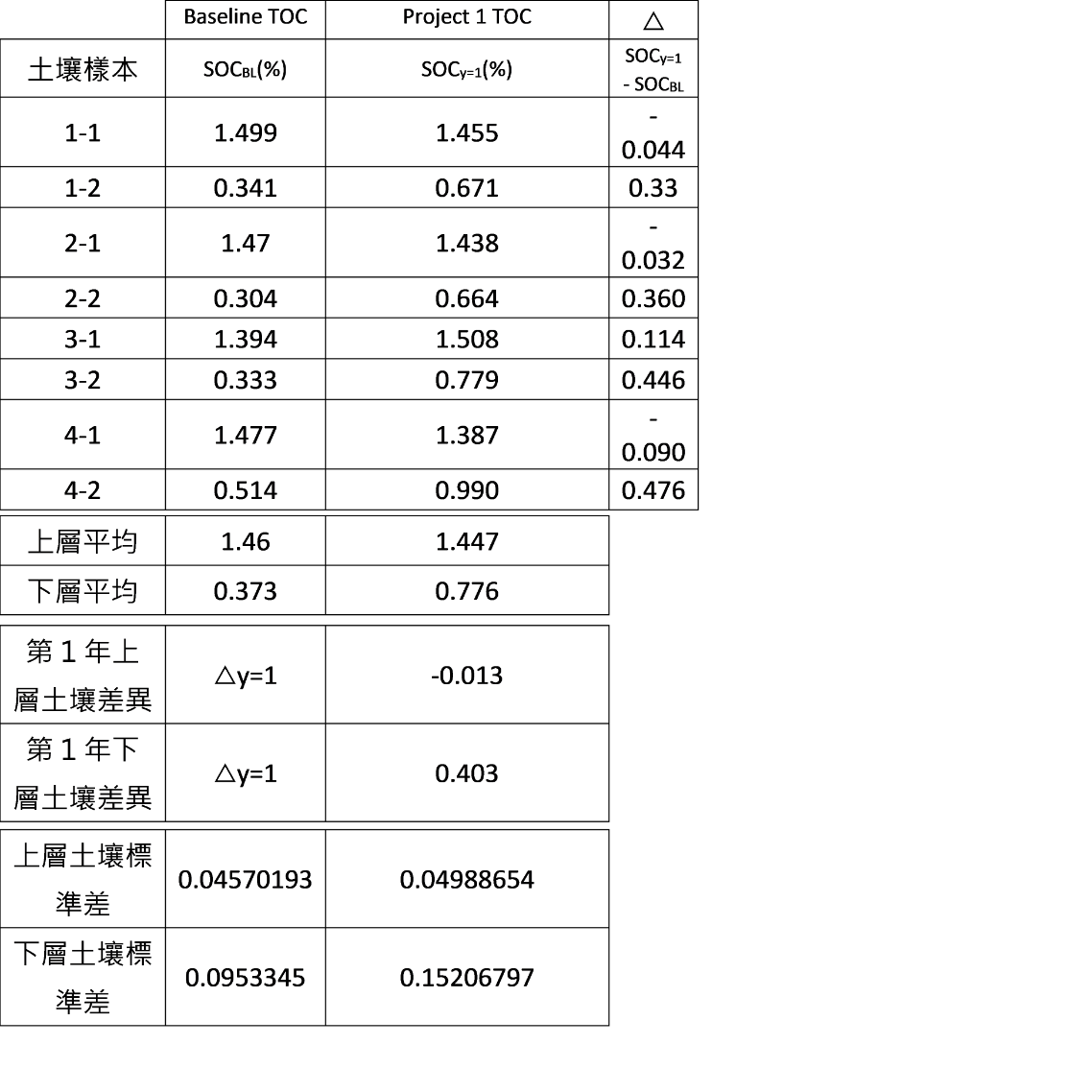
Total organic carbon in the upper layer fell slightly (by about 1.3 per ten thousand), but total organic carbon in the lower layer rose by four per thousand. We estimate the loss in the upper layer
Checking the data on soil organic matter changes for the one hectare that grew this rice, we found organic carbon in the 20–50 cm layer rose by 0.4% (four per thousand), while the upper layer lost a little, 1.3 per ten thousand. Because two typhoons (Saola and Koinu) battered Hualien and Taitung in a row this September, the loss is normal — but that the lower layer gained four per thousand astonished me!
The formula for converting soil organic carbon into tonnes of CO2 equivalent is:
tCO2e = increase in soil total organic carbon (TOC) % × area (m²) × soil depth (m) × soil density × 44/12 (ratio of CO2's molecular weight 44 to carbon's atomic weight 12)
The data for this experiment: CO2 equivalent for one hectare of paddy = 0.4% × 10,000 m² × 0.3 m × 1.5 (sandy loam density) × 44/12
By calculation, in less than a year this one hectare gained 18 tonnes of carbon; converted at the CO2 ratio of 3.67 (CO2 molecular weight 44 / carbon atomic weight 12), that is equivalent to 66 tonnes of CO2. In fact I worked this out last Thursday when I got the test data, but the figure was almost unbelievably high: equivalent to 132,000 kWh of green electricity, when one hectare covered in solar panels can produce at most 180,000 kWh. And this was after two typhoons. Before this, every expert told me that reducing one tonne of carbon per hectare of farmland would be remarkable.
This one-hectare experimental field was originally farmed conventionally (with long-term pesticides and chemical fertilisers) and was provided by Chen Wen-hua, chief of Changliang Village, Yuli Township, Hualien. For the experiment in the second rice crop of 2023 we used no chemical fertiliser, switching to Datong Biotech's Siji Wang bio-organic fertiliser inoculated with Bacillus subtilis licensed from National Chung Hsing University. After hearing Datong Biotech chairman Lin Chen-fa describe it, I wanted to try, and bought the fertiliser myself — NT$200 a bag, 150 bags, 3 tonnes — applied in the field on 14 July.
To reduce pesticides, Chief Chen recommended the highly resistant Tainung 81 variety, and indeed no pesticide was used. There was some rice blast after the typhoon, causing slight losses, but it didn't matter much.
Unexpectedly, in September, when the rice was heading, two typhoons came in a row. I thought it was all over — soil organic matter was bound to be lost. Treating it as a lost cause anyway, I steeled myself and went to Changliang on 17 November to take soil samples, and found the field's soil already softer than at the last sampling, as if there were no plough pan.
And the rice harvested that day yielded 10 ge of dry paddy. "Ge" is Taiwanese rice farmers' jargon: 1 ge is 1,000 catties (600 kg), so 10 ge is 10,000 catties, 6,000 kg. In western Taiwan 10 ge is a very low yield, but in Hualien and Taitung, especially for the second crop and after two big typhoons, 5 or 6 ge is good — 10 ge is a champion yield there. Chief Chen earned over NT$50,000 more than others as a result (dry paddy sells for about NT$14.5 a catty), 4,000–5,000 catties more.
On this calculation, after carbon credit certification next February, Chief Chen could receive an immediate income of US$660 (NT$20,796). For me, of the original estimate of one tonne per hectare — 300 tonnes a year from 300 hectares — more than a fifth was achieved on this one hectare.
Converting again: this one hectare produced 3,600 kg of rice and reduced 66 tonnes of carbon, an average of 18.33 kg of CO2 reduced per kilogram of rice — equivalent to the emissions of 36.67 kWh of electricity (each kWh emits about 0.5 kg of CO2).
Why did the carbon sink increase so much?
Many people are surprised and question why the carbon sink increased so much. In fact, from the perspective of the 4 per 1000 Initiative, it isn't much: this time only the lower layer increased by four per thousand, and the upper layer didn't increase. Without the typhoons, if the upper layer had increased too, it should have reached around 100 tonnes.
Pending further scientific verification, we remain cautious. We follow the main argument of international soil carbon sink science: of the CO2 absorbed by plant photosynthesis, 30% becomes the plant body above ground, 30% the plant body below ground, and 40% enters the soil. If interaction with soil microbes is good, the organic carbon from plant metabolism and residues becomes food for bacteria, and as bacteria multiply, carbon is fixed long-term.
Although we used only 3 tonnes of bio-organic fertiliser, it is rich in Bacillus subtilis. In theory, these bacteria absorb the organic matter from rice metabolism and decomposing plant residues and multiply greatly, increasing the organic carbon content of the soil.
At the same time, this field's yield was 20% higher than fields in the same area with the same variety and the same grower. This also shows a positive effect on soil fertility and health, which is why the rice was healthy and disease-resistant and still yielded well after the typhoons.
In any case, this is a single isolated value without overall statistical significance, and we must keep going. We hope even more that like-minded smallholders will join us! Everyone is also welcome to witness and research it together and replicate Changliang's experience, speeding up Taiwan's progress towards net zero.
Want to taste "Changliang's first low-carbon rice"? Please click the consignment link. It is also a good target for corporate ESG investment; if interested, please contact Eco-affinity Inc. — email: [email protected]; tel: 0977453789.
=======
Source: CM Media ( https://www.cmmedia.com.tw/home/articles/44079 )


