 努力小農
本文尚無譯文。
Taiwan's farmland alchemy, the "seven steps to ruin": farmers' choices amid a crisis of trust and a crisis of national land
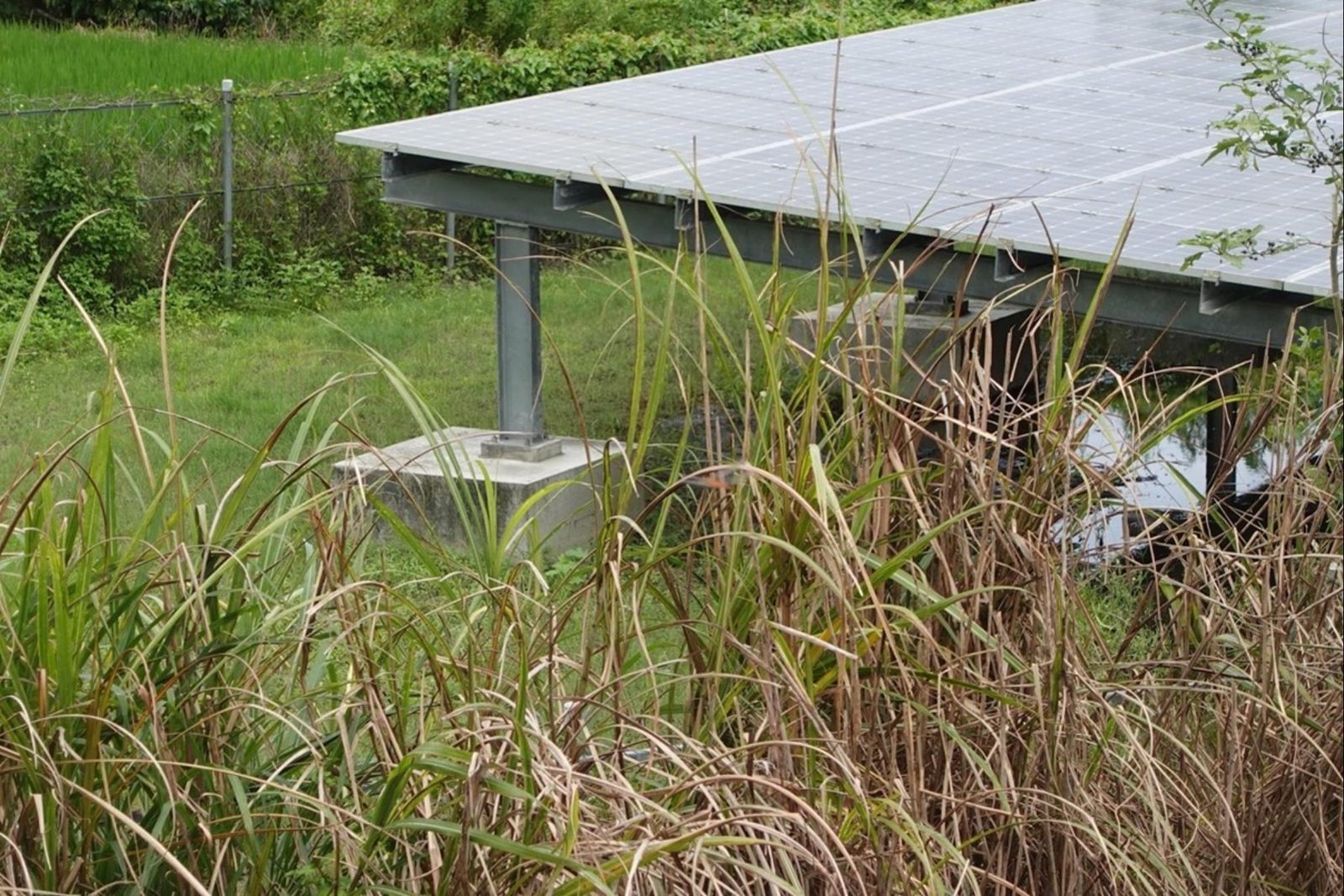
For fear of typhoons and earthquakes, Taiwan's solar panels are mounted very low, making it impossible to farm beneath them; instead, weeds and vines easily cover the panels and impair generation.
Before every election, many people's embarrassing secrets or misdeeds get dragged into the open. In 2024 all three presidential candidates were mired in land and illegal-building controversies — a portrait of Taiwan's floating world under "democratic big data". And the greater the power, the greater the harm; buoyed by votes, the less accountable they become.
Soil is like human skin: a thin layer, yet essential to sustaining life. For rock to gradually turn into soil takes at least 60,000 years to form one centimetre — only then is there a chance for green plants to survive. Even in a forest it takes 1,000 years to produce one centimetre of soil. Plains can receive soil lost from upstream forests through flooding.
Taiwan's farmland alchemy: the "seven steps to ruin"
Today, speculation on farmland follows these steps. Step one: leave it fallow. Once grass and trees grow, it is no longer fit for cultivation unless re-levelled and restored, which costs a lot of time, effort and money. Step two: abandon it, so no crops can be produced. Step three: sell the top 20–30 cm of soil — soil from Yangmingshan sells for NT$30 a kilogram, so a truckload is worth tens of thousands. Step four: dig deeper and sell it as sand and gravel. Step five: accept construction spoil and waste from elsewhere as backfill. Step six: convert it to a car park or install solar panels. Step seven: rezone it as building land and build houses.
These are the "seven steps to ruin" of Taiwan's farmland alchemy, turning once-thriving land into a lifeless concrete jungle — the method by which many people "love Taiwan's land". This would be impossible in a normal country under the rule of law, but under Taiwan's electoral politics the impossible becomes possible. Most of those who profit by stripping the land layer by layer have children who emigrate abroad; they live as landlords collecting rent in Taiwan, enjoy life overseas, and come back to use national health insurance when ill — "premium Taiwanese".
Such speculation — especially on originally cheap farmland — offers even larger margins. In just 60 years Taiwan has lost a great deal of farmland, going from a food exporter to a country that imports most (70%) of its food, and Taiwan's agriculture will wither further in future.
Recently, through agricultural carbon reduction, I have come to understand Taiwan's agriculture in depth. Take rice farmers in Hualien and Taitung: renting land now costs NT$30,000–50,000 per hectare per crop (two crops a year, so NT$60,000–100,000); seedlings, fertiliser and pesticides cost NT$30,000 (NT$60,000 a year for two crops); contracted ploughing, transplanting and harvesting another NT$40,000 a year; and drying the grain twice NT$20,000 a year. Altogether annual costs are around NT$220,000. A good harvest of dry paddy is 10,000 catties at NT$16 a catty — NT$120,000–160,000 a crop, NT$240,000–320,000 a year. But in reality, if the harvest is only half — 5,000 or 6,000 catties — income is halved and they lose NT$70,000–80,000. So even people who own land rent it to others to farm, collecting rent with no risk.
Speculated land becomes barren
Of course, if farmland can be rezoned, it "attains enlightenment" — plain water becomes chicken soup. But in Hualien and Taitung such chances are very rare; the only option is building farmhouses (villas) on farmland. On the Yilan plain farmhouses or homestays are already everywhere. Yet once a reinforced-concrete house is built on farmland, it can never return to cultivation, and Taiwan's farmland is lost.
It isn't just Taiwan; it's like this almost everywhere. The biggest challenge to future agricultural and food acreage is that the value of land for construction or other industrial uses exceeds that of growing crops. In recent years Taiwanese farmland has been converted to solar, with rents in some places reaching NT$300,000–400,000 a year. Given the costs and returns of farming above, rent for one jia is at most NT$100,000, and even farming your own land, earning NT$200,000–300,000 a year is the ceiling — and that takes effort and money. Just rent the land out and lie flat collecting money; the government encourages green power too, so why not?
Recently News&Market published "The fragmented west coast: farms, fish ponds and a sea of solar panels", which is alarming: with a stroke of the pen the government designated 8,000 hectares (1% of Taiwan's farmland, or 2% excluding fallow land) as "low land-use, unfavourable for cultivation" areas — meaning unfit for farming and suitable for solar.
Green-energy solar's crisis of trust
That's not really the case — are solar profits really that good? Even if panels generate for 4 hours a day, one jia producing 1,000 kWh per hour gives 4,000 kWh a day, 1.46 million kWh a year; at NT$4 per kWh that's NT$5.84 million, so paying the landowner NT$400,000 a year in rent seems reasonable. But in Taiwan's solar model, because of frequent typhoons, thick, low steel frames and huge concrete foundations are needed to withstand typhoons for the next 20 years. So the land can no longer be farmed and doesn't qualify as "agrivoltaics" (both solar power and farming); farmers can't claim the farmland exemption from land tax and must pay high land value tax.
On the other hand, many solar sites don't generate that well. Add cheap panels and inverters with questionable reliability, generation efficiency drops sharply after a year or two, and low panels are easily covered by weeds and vines — half the projected output is doing well.
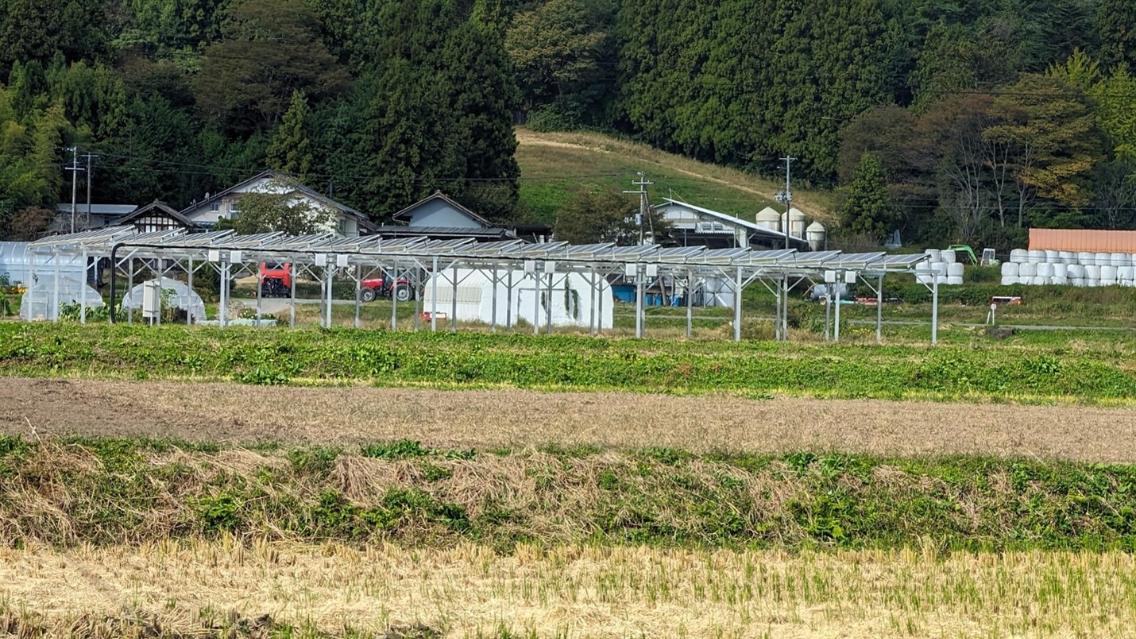
Land in Fukushima, Japan, contaminated by the nuclear disaster is what's truly unfit for farming — yet even there rural solar panels are mounted more than 2 metres high, with crops still grown beneath.
Because the rents of a few solar sites influence other farmland rents, farmland rents in recent years have risen 20–50%, a catastrophe for meagre farm incomes.
Add the ageing rural population: young people who want to return home to farm first run into land rents, or can't rent suitable land. Walking through the countryside you see abandoned farmland everywhere, but ask about prices or rents and those hoping to buy or rent land to farm are immediately scared off.
The government heavily subsidises agriculture on one hand, and even more heavily subsidises solar or fallowing on the other — too clever by half, it ends up defeating itself. Once land is used for solar or left fallow, bringing it back into production takes enormous effort, an unbearable burden for smallholders who truly farm for a living.
In a few days we vote for president and legislators. Looking at every party and candidate, all we see is competition to win TSMC fabs, with little about a vision for the future of farmland, rural villages and farmers, or solutions to current problems. Taiwan still has two or three million people in agriculture, but their contribution to GDP is limited and farmers have no good organisational system to make their voices heard. Perhaps farmers themselves need to work hard and reflect on how to exercise their power in elections.
=======
Source: CM Media ( https://www.cmmedia.com.tw/home/articles/44364 )


