努力小農
本文尚無譯文。
Lin Shih-feng's orchard with a Buddha heart: true fruit from hard practice
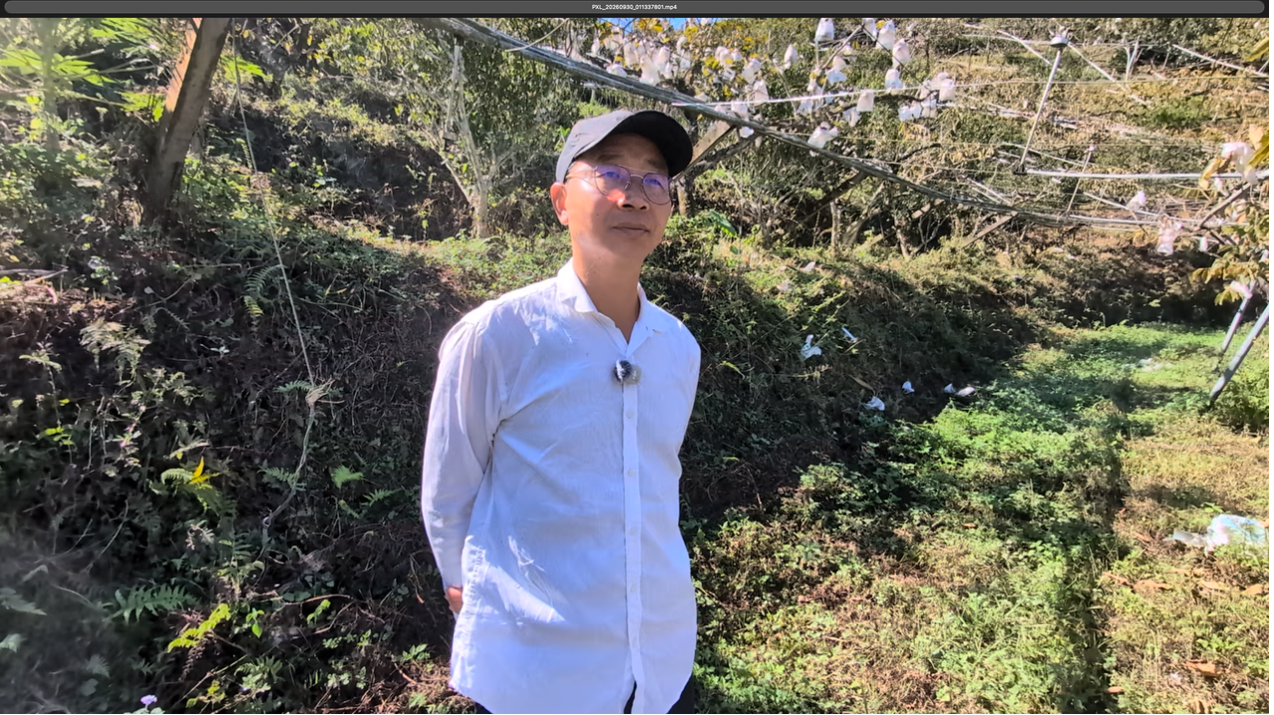
Lin Shih-feng practises Shumei natural agriculture hands-on. Besides using no fertilisers or pesticides, he doesn't even make compost. Apart from pruning, mulching and weeding, he more or less leaves the fruit trees "to live or die on their own", simply tending them by season and harvesting the fruit. (Image: FB@林世豐)
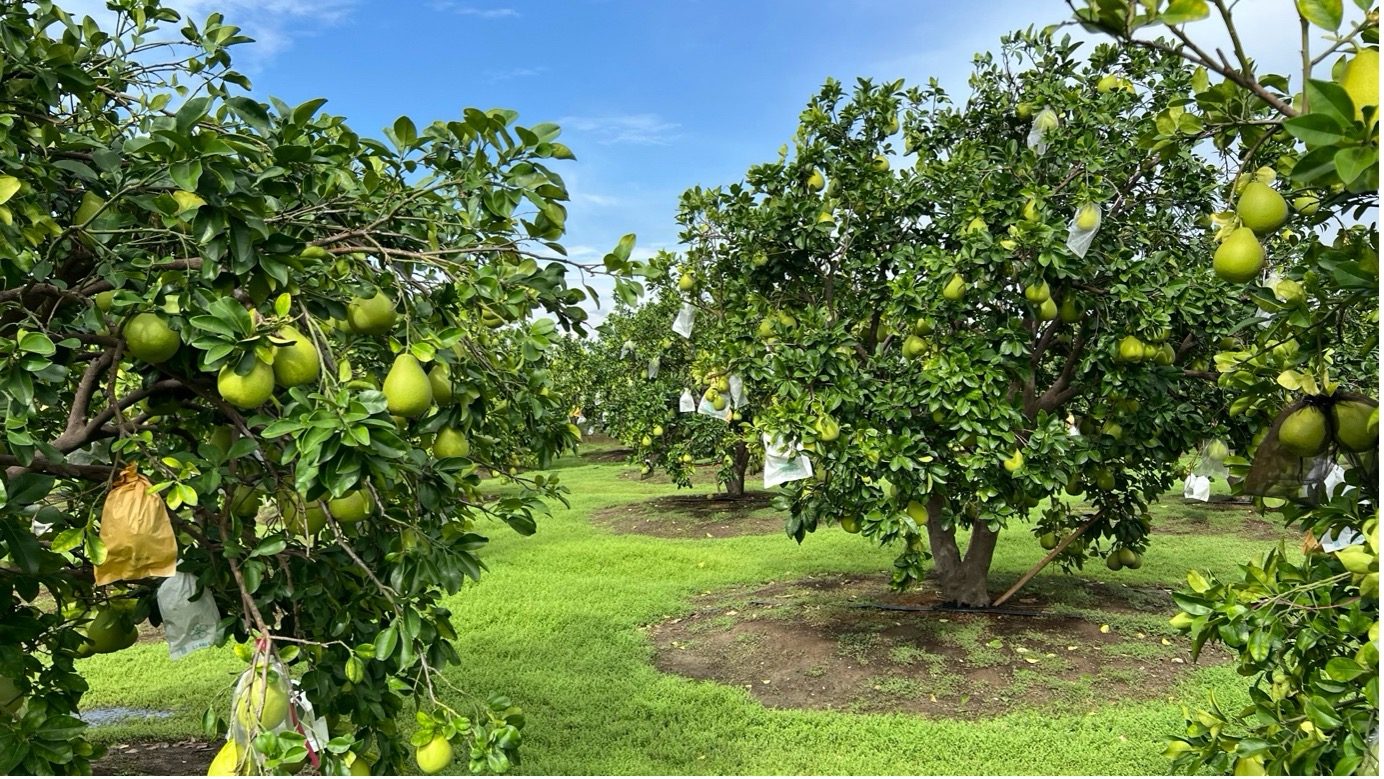
Shih-feng Orchard is called a "grassy orchard" because Lin never removes the weeds and it's covered in grass. He inherited the orchard from his father, who in 1960 came to clear land in the mountains around Daguan in Heping Township (now Heping District, Taichung) and farm there. The orchard was originally farmed like any other, with chemical fertilisers and pesticides. It lies near Motianling, famous in Taiwan for its persimmons, and there are citrus too. Lin grows all kinds of fruit trees, including bananas, plantains, passion fruit, guava and plums, as well as the kiwifruit he is proud of.
Perhaps through a Buddhist affinity, about 13 years ago he began learning Shumei natural agriculture. As the MIHO Museum explains: "Shumei Natural Agriculture is a natural cultivation method advocated by the late master Mokichi Okada (1882–1955). Apart from natural compost such as fallen leaves and dry grass, no impure substances are ever added, purifying the soil and bringing out its original power. As Master Okada said, 'Everything is taught to us by nature'; the basic philosophy of this method is 'respect nature and follow nature', characterised by pure soil, saving one's own seeds, the farmer's love for the crops, and gratitude to the earth. Crops that grow in nature's original beautiful environment are full of vitality and delicious, and make people healthy in body and mind."
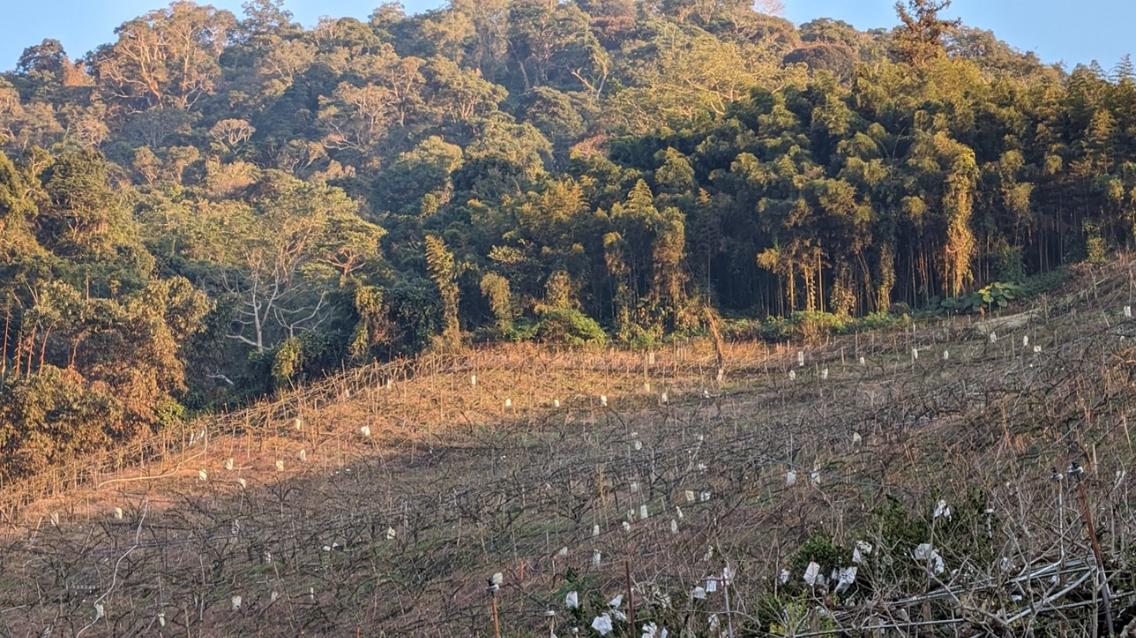
Intensive tillage and dense planting only strip the mountain forests bare, eventually leaving barren land.
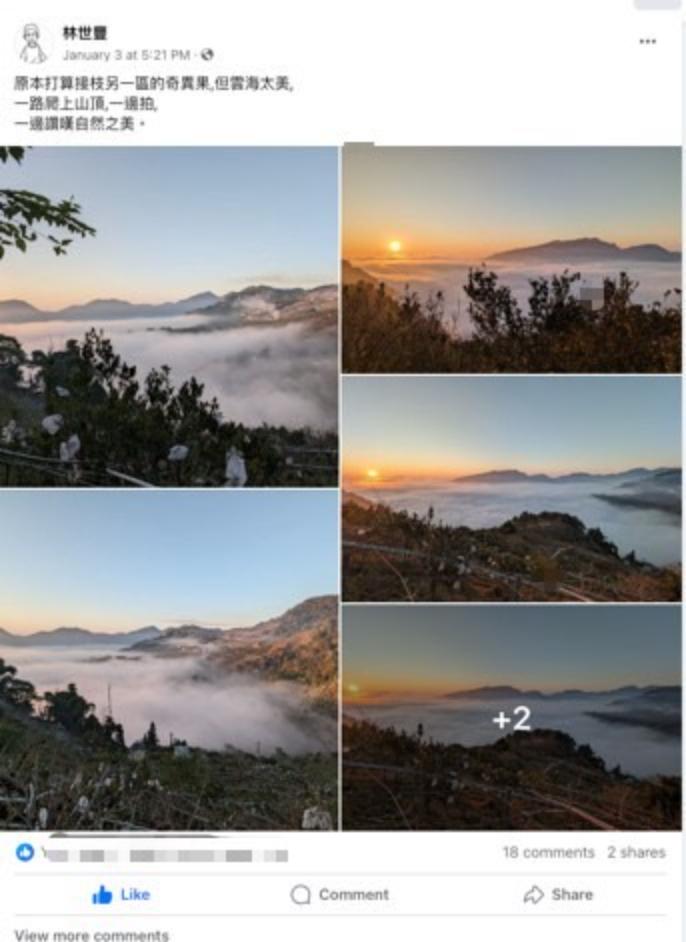
Lin posts photos of farm work and the environment and ecology on Facebook every day, so his followers always know what he's up to and can order from him. (Image: Lin Shih-feng's Facebook)
No fertilisers or pesticides: a practitioner of Shumei natural agriculture
The farmland Lin took over from his father had always been farmed with chemical fertilisers and pesticides. From 2012, because of his religious faith — his guru, a Rinpoche, held that spraying pesticides is also killing — he didn't want to kill; using pesticides put great pressure on his mind and was bad for his body. In 2011 he took a course in pesticide-free cultivation and stopped using pesticides and chemical fertilisers. Then he met Akinori Kimura, Japan's "apple grandpa", on a visit to Taiwan, who explained that he went eight years with almost no harvest, but later found the soil in the forest soft and fertile and managed his orchard on forest principles. Lin also found many Shumei seniors who used no pesticides or fertilisers, saving labour while still getting good productivity and yields, so he resolved to give it ten years.
Lin Shih-feng practises Shumei natural agriculture hands-on. Besides using no fertilisers or pesticides, he doesn't even make compost. Apart from pruning, mulching and weeding, he more or less leaves the fruit trees "to live or die on their own", simply tending them by season and harvesting the fruit.
The land is like a mirror: however we treat it, it reflects our own face back. If we only think of exploiting the land for maximum yield, we may succeed for a few years, but in the end it becomes barren.
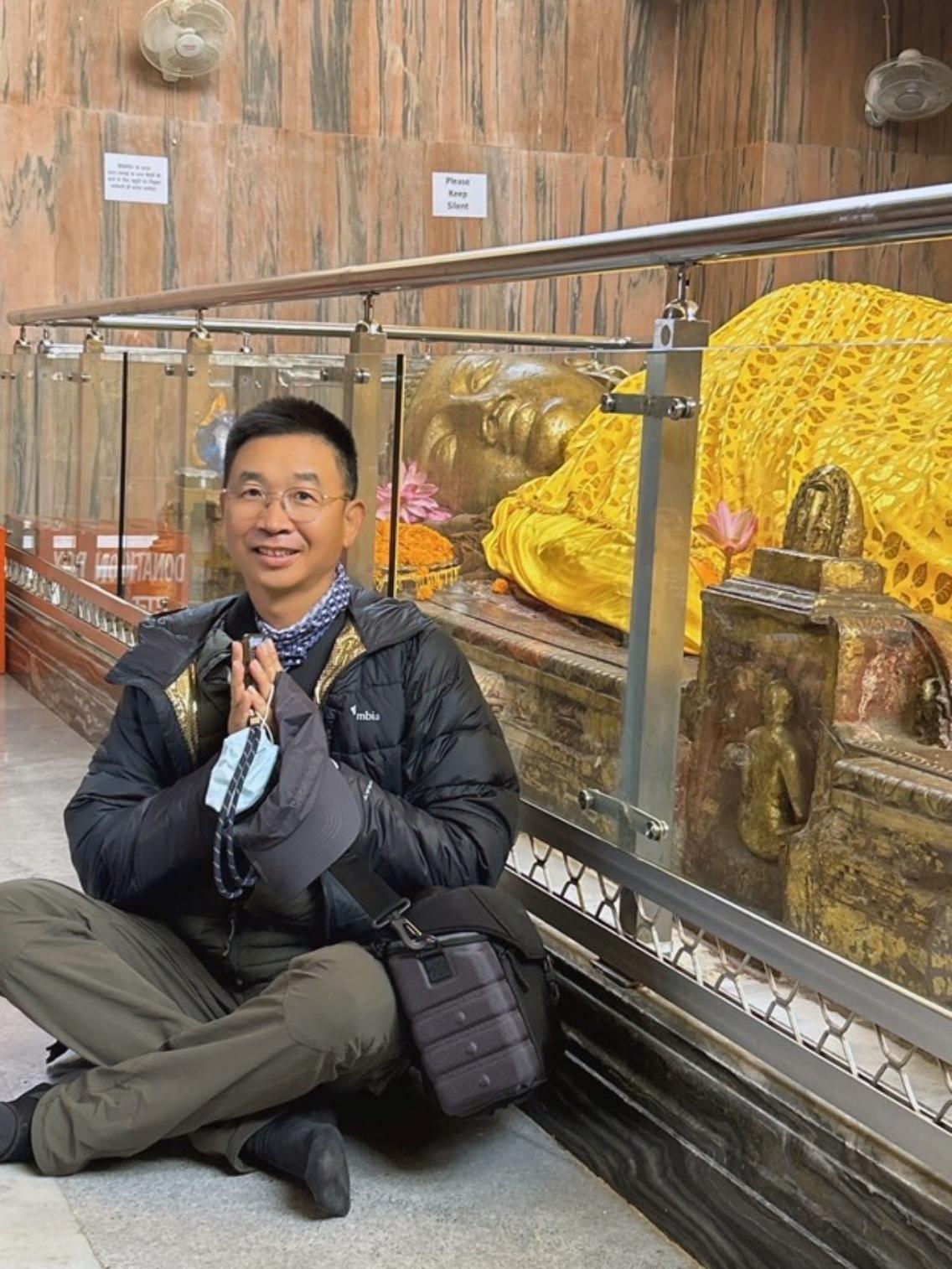
Last December Lin travelled to India and visited the place where the Buddha entered parinirvana. (Image: FB@林世豐)
The first time I visited him, I had to drive up a rather steep, narrow mountain road — how do you manage soil and water conservation in a place like this? And it is in this very harsh environment that Lin "practises", living out the natural philosophy of Shumei agriculture: farming on sunny days and reading on rainy ones.
Under natural farming, soil can heal itself
Lin is also a Tibetan Buddhist. Last December (2023) he went with his guru on a pilgrimage to Nepal and India. Every few years, once the farm work is arranged, he sets off on a spiritual journey. This has taken Lin from not killing to loving and protecting life, keeping his grassy orchard as natural as possible. Unfortunately his neighbours are still keen users of pesticides and chemical fertilisers, so over time his 4 hectares near the mountaintop have become a refuge for wildlife — wild boar, monkeys, muntjacs, squirrels, ferret-badgers and more often visit, and Lin generously treats them to fruit.
Like other smallholders, Lin's harvests are sometimes good and sometimes bad, depending on the weather, the market and whether the wildlife leaves any. Over the years Lin has survived thanks to the support of a group of loyal long-time customers. He has no marketing website, relying on frequent Facebook posts and interaction with friends; his old friends know what he's up to and which fruits are available to order, so demand always exceeds supply.
In early 2022 Lin started using the MiHuMiSang app and joined the Taiwan Smallholder Carbon Farming Project to reduce carbon. The first step was sampling his soil to test organic matter. After more than ten years of persisting with Shumei natural agriculture, his soil organic matter had risen from 2% to around 10%, showing that his soil's organic matter kept increasing over those years. This also proves that under natural farming the soil can heal itself, in line with the principle of increasing soil organic carbon by "four per thousand" a year. It means that a handful of soil dug from Lin's orchard is one-tenth organic matter, whereas ordinary soil is only 2%, or one-fiftieth — clearly Shumei natural agriculture can raise soil organic matter and make the soil healthier.
Many of Lin's loyal fans come for the strong "energy" of his fruit. Besides the essence of heaven, earth, sun and moon, that energy comes above all from the life force in the soil.
Since installing the MiHuMiSang app, Lin can easily trace what he did on a particular day or period in the past, and plan what to do over the next year or two as reminders to himself. It also serves as an important farm record for organic certification or carbon-reduction certification, and changing phones doesn't affect the work.
Lin Shih-feng's Facebook
Source: CM Media ( https://www.cmmedia.com.tw/home/articles/44603 )