努力小農
本文尚無譯文。
The radishes are white: come to Changliang and head towards net zero together
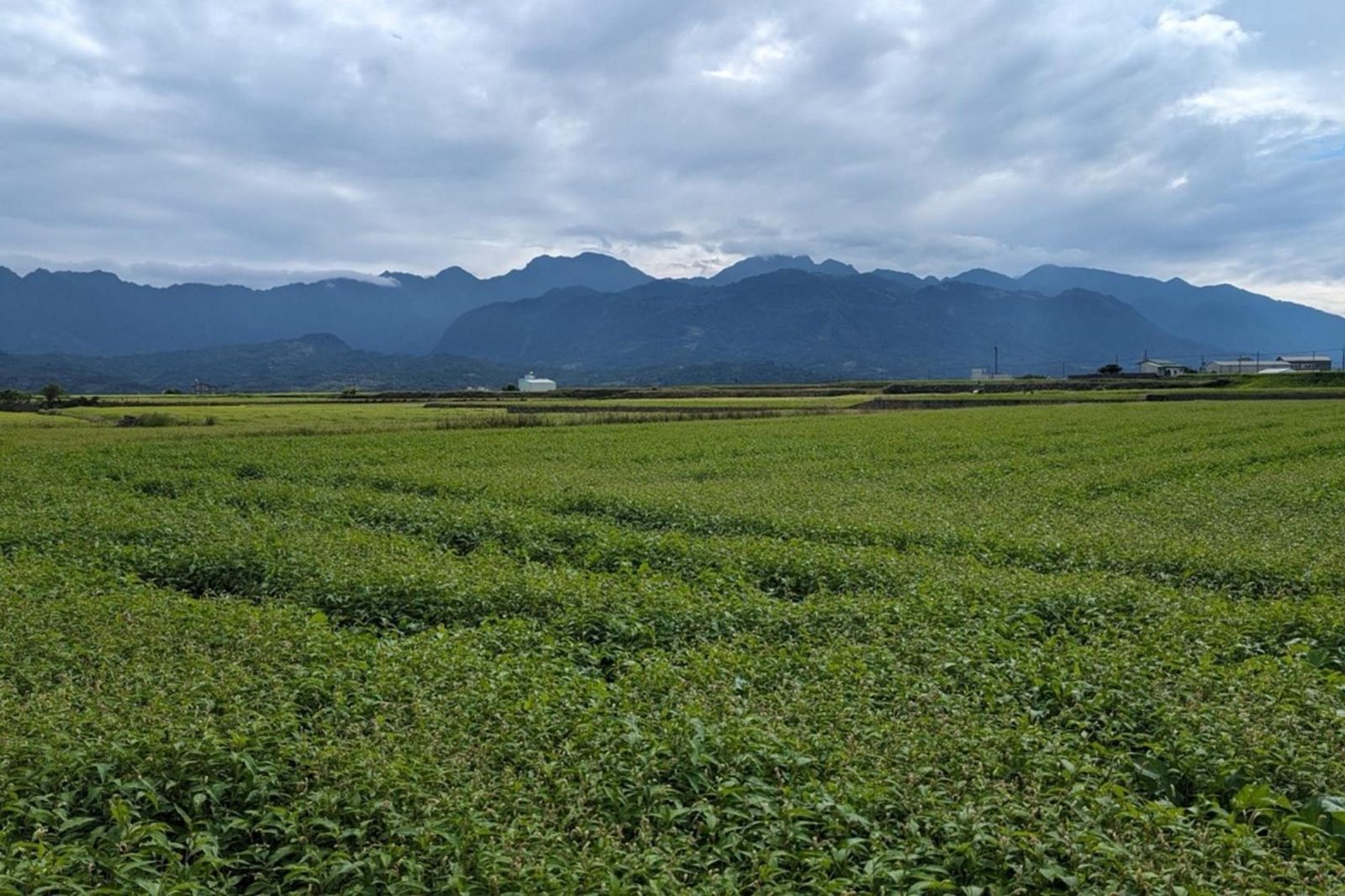
In this field, thousands of radishes are waiting for everyone to pull them up, while experiencing the principles of smallholder carbon farming along with good food and scenery.
Fight warming with Changliang ("long-cool")
The Changliang Village Radish Festival will be held at 9 a.m. on 27 January in Yuli, Hualien County. It is the first event of a Taiwanese smallholder carbon-reduction project before international certification. In line with SDG 4, Quality Education, the fields become a classroom, showing how Changliang's smallholders increase soil carbon sinks to achieve the aim of the international 4 per 1000 Initiative: "healthy soil, healthy crops, healthy people".
In early May 2022, Changliang resident Chiu Chui-chuan was the first to join the Taiwan Smallholder Carbon Farming Project registered with the Gold Standard for the Global Goals. With the support of village chief Chen Wen-hua, almost all the village's smallholders were mobilised to join, establishing, at the foot of Yushan in the Central Mountain Range, the first net-zero agricultural village.
For details of Changliang's participation in the international smallholder carbon farming project, see the earlier column "MiHuMiSang: the "first rice" of net-zero carbon — Changliang, Hualien, the promised land of agricultural carbon reduction」
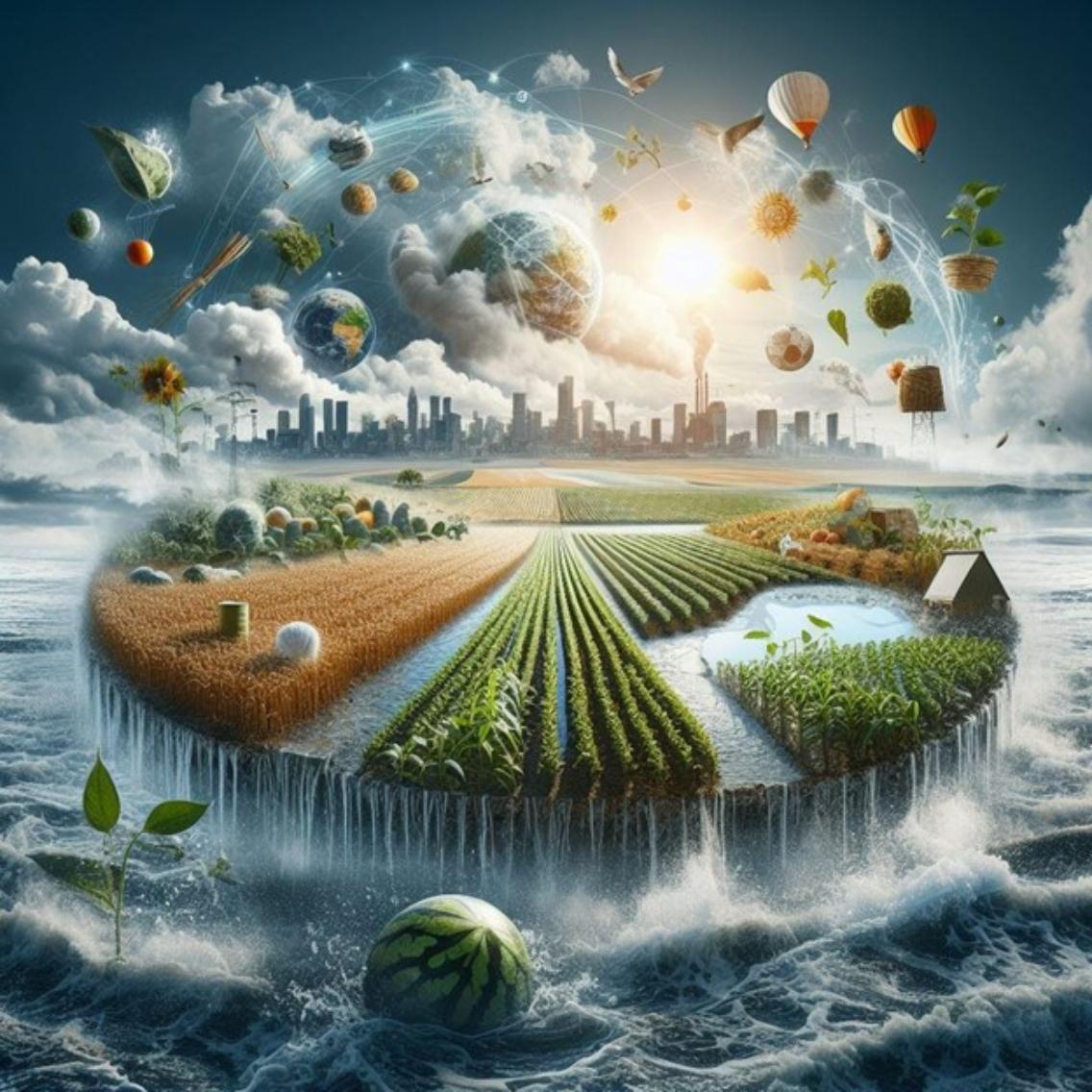
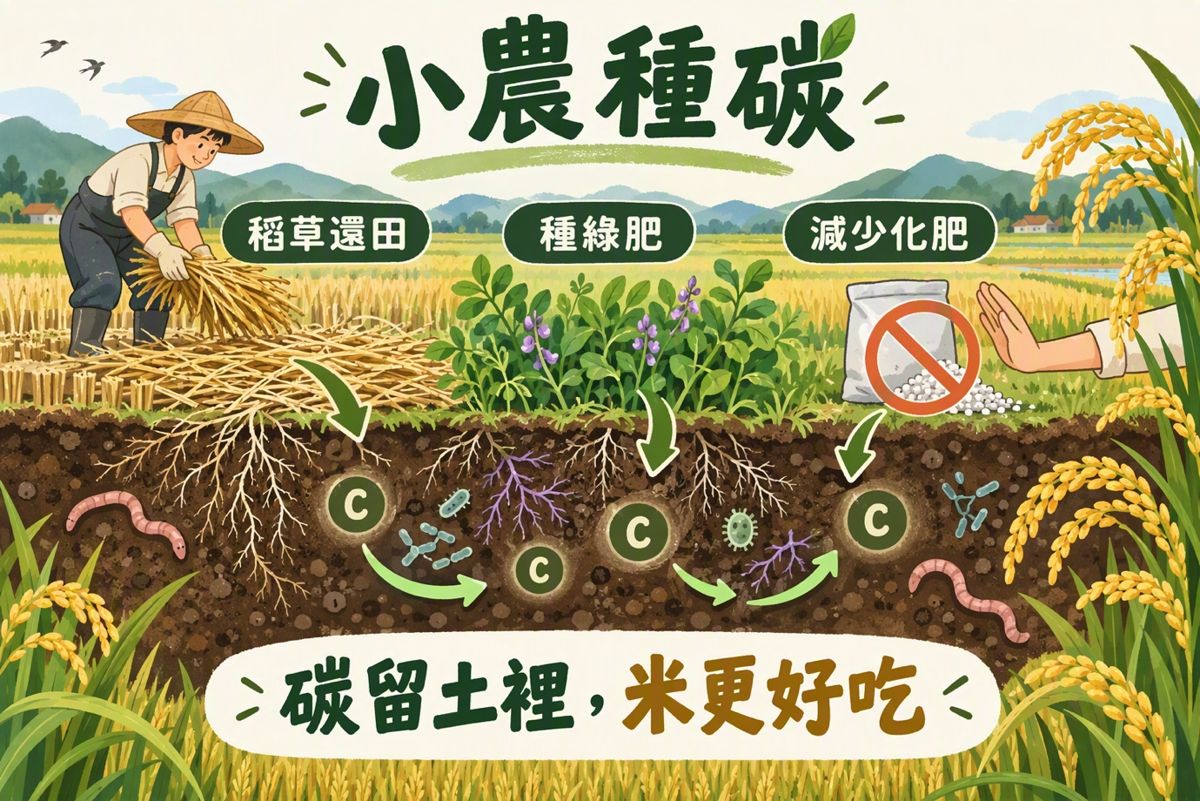
Global warming requires agriculture to "enrich" CO2 back into the soil. Only with healthy soil can there be healthy food and healthy people. (Image: generated with DALL-E)
Radish festivals are a traditional activity in many Taiwanese farming villages. After the second rice harvest in late November and before spring ploughing the following February, many farmers scatter radish seeds in their fields. During the three fallow months the radishes grow, just in time for Lunar New Year, when the whole family gathers to pull radishes and uses the mud from the fields to build earth kilns for roasting sweet potatoes, corn and more.
Changliang's residents are a blend of Hoklo, Hakka, indigenous and mainlander communities, and they offer local specialities such as hanging-vegetable chicken, pickled-mustard duck and radish cake to share with everyone.
We've given the traditional radish festival a touch of "carbon farming and carbon reduction", combining the mutual generation and restraint of the natural elements — metal, wood, water, fire and earth — and natural cycles with low-carbon circular agriculture. In particular, it highlights the importance and precious value of soil, presenting to villagers, visitors, parents and children a traditional slack-season activity combined with international agricultural carbon-reduction and soil-carbon-sink methodologies.
Preliminary verification showed that the soil of Changliang's one-hectare experimental field "enriched" organic carbon equivalent to 66 tonnes of CO2 last year, achieving the goal of the 4 per 1000 Initiative. This surprised many experts and scholars, but on reflection, it was the microbes in the soil that achieved the carbon reduction. See "MiHuMiSang: the fruit of more than a year's hard work — want to taste low-carbon rice?」
In the natural environment, the many microbes in the earth live in symbiosis with plants. The organic matter that plants produce from CO2 by photosynthesis accumulates in large amounts in the earth, forming soil, which nourishes plants again; plants become food for animals, and animal excrement and the remains of dead animals and plants are again decomposed by microbes into organic soil components, forming an Earth where all things flourish together. Animals and plants buried in the soil tens of millions of years ago became fossils such as oil, coal and natural gas through crustal movements.
Modern chemical fertilisers, pesticides and heavy machinery tillage have wiped out the microbes in the soil, cutting off life at the base of the ecological food chain. Like drug addiction, without heavy fertiliser, heavy pesticides and deeper tillage, food can't be grown. Some even believe that in another 60 years the soil of most of the world's farmland will be exhausted.
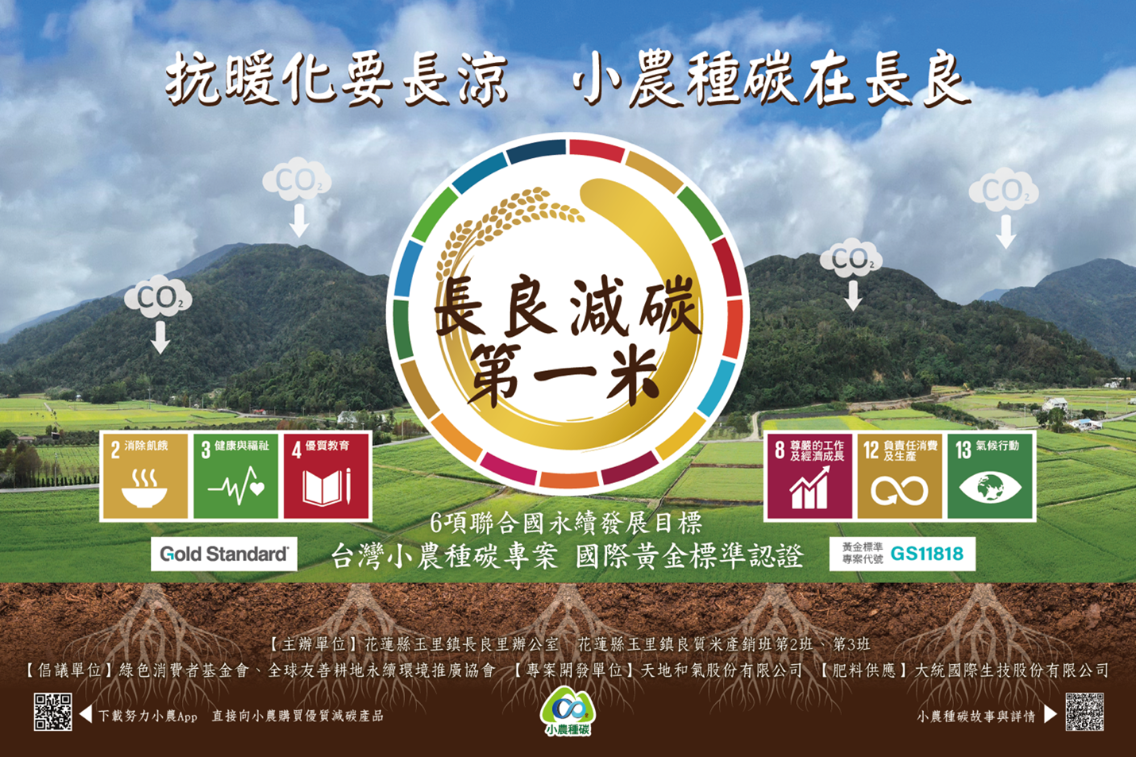
Want to know how Taiwan's first low-carbon rice was made? Come to the Radish Festival in Changliang Village, Yuli, Hualien, on 27 January.
Carbon farming isn't lifeless — it's living "enrichment"
So-called "carbon farming" uses photosynthesis by plants (crops) and soil microbes to create an ecosystem of diverse cycles and symbiosis, storing as much as possible of the CO2 absorbed by plants in the soil. Organic matter alone is not enough; microbial action is needed to create living biomass that becomes long-term, effective carbon enrichment. (Note: enrichment differs from capture. Enrichment is living and dynamic; capture is lifeless carbon sealed away permanently somewhere, as in carbon capture and storage (CCS).)
Pulling radishes lets children and adults see both the above-ground and below-ground parts of the plant, touch the soil, and observe the relationship between soil and plants. Look carefully and you can see the "crumb structure" formed by soil and bacteria around the roots — an "underground world" city dwellers rarely encounter. These crumbs are evidence that soil organic carbon is present.
An earth kiln is an even rarer experience for city dwellers. In nature, fire is the pivot of life's transformations: fire is the violent oxidation and combustion of carbon, producing light and heat, turning organic matter to ash that returns to the soil and becomes nutrients for plants again. Potash fertiliser, for instance, comes mainly from ash — which is why slash-and-burn farming has existed since ancient times. The English word potassium derives from "pot ash", because early scientists found abundant potassium in the ash at the bottom of pots.
During combustion there is an oxygen-free pyrolysis stage, where heat above 400°C cracks organic matter, especially lignin, into combustible gases such as methane and carbon monoxide (also called biogas), which can replace natural gas. The earth kiln has a chimney effect that speeds up pyrolysis during combustion, so the biogas burns at high temperature, improving combustion efficiency and saving energy.
This is wisdom that has existed in our lives for tens of thousands of years, but sadly we haven't paid attention and have forgotten these skills and knowledge. We hope this Changliang Radish Festival lets everyone recapture childlike fun and childhood memories and set out together towards the net-zero era.
27 January is two weeks before Lunar New Year; primary and junior high schools start winter break on 20 January, and the presidential and legislative elections will have ended two weeks earlier. The event is ideal for parents and children to learn and experience together; if you're interested, why not plan a two- or three-day trip to Hualien and Taitung. To keep the venue clean and orderly, adults are charged a NT$200 venue fee, which includes a kiln gift pack, limited to 200 people; students and children are free. Sign up here:https://forms.gle/MZ7HUUqkmjmdb1Rk8
Source: CM Media ( https://www.cmmedia.com.tw/home/articles/44731 )