 努力小農
本文尚無譯文。
A few things to share about the Gold Standard carbon credit certification audit
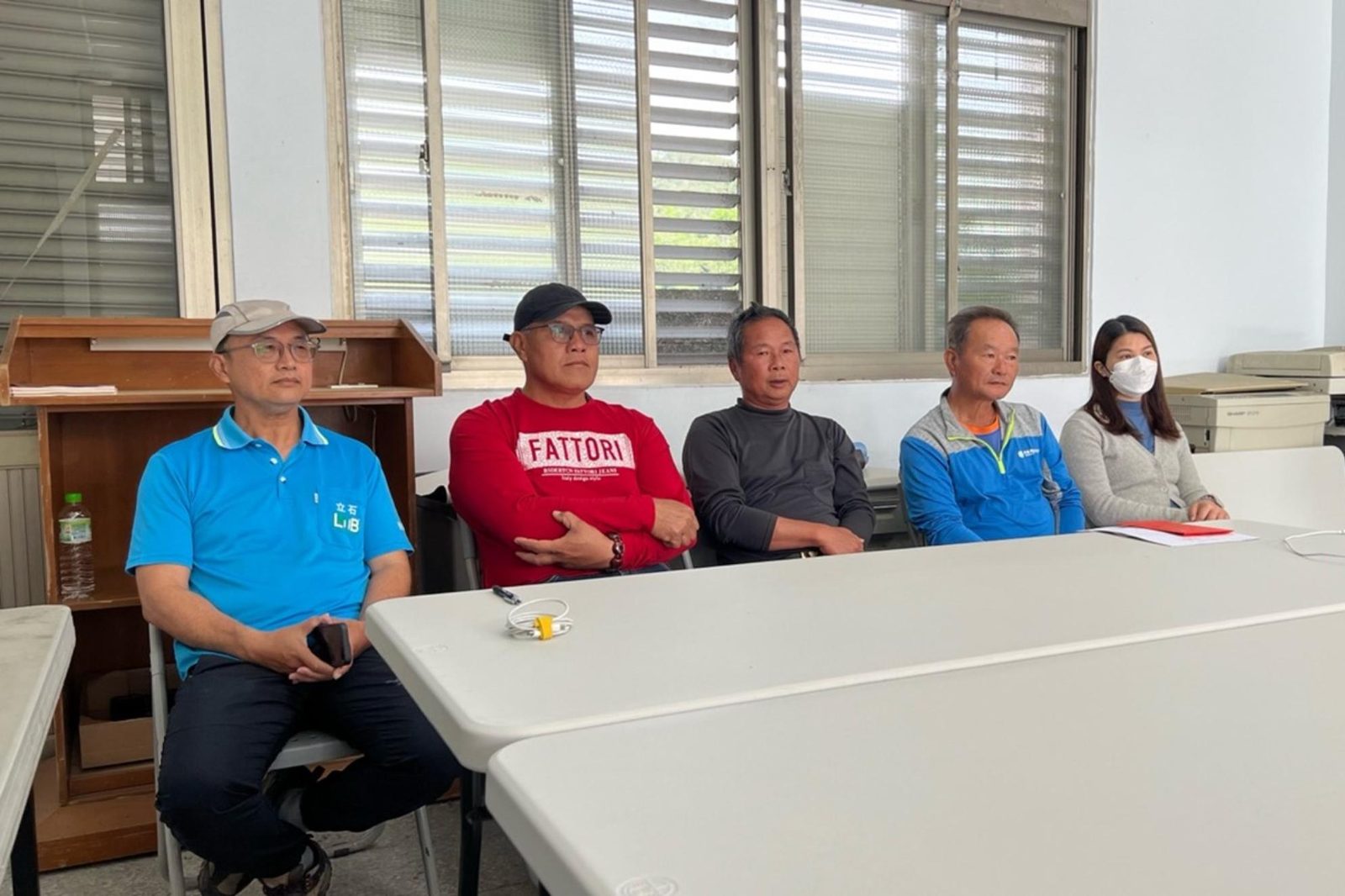
Changliang residents who actually take part in smallholder carbon farming were interviewed by the VVB and explained the carbon farming process. From left: Chiu Chui-chuan; Chu Yen-lun, head of the Third Quality Rice Production and Marketing Group; Li Ting-lun; Chen Wen-hua, village chief and head of the Second Group; Chu Hsiao-ying; and others.
Most audit and certification processes are full of a mysterious sense of ritual. The Taiwan Smallholder Carbon Farming Project, based on the Gold Standard's principles of openness, transparency and participation, welcomes stakeholders to witness it together and actively invites them to take part, demystifying emission-reduction certification so more people can join and speeding up the march towards net zero.
Many technical terms in international certification are quite confused in everyday language, which is undoubtedly a big obstacle to international standardisation and certification — especially the heaps of English acronyms, which often look the same but mean different things. If you don't ask clearly, people end up talking past each other. That is why many people dread certification audits — and emission-reduction certification involves an even wider range of activities. Here I'll explain in plain language, as far as possible, how the Taiwan Smallholder Carbon Farming Project went through its first project design validation and project performance verification.
Principles of openness, transparency and public participation in emission-reduction certification
For this audit we are especially grateful to Tsao Chi-hung, former chair of the Council of Agriculture, who first launched the 4 per 1000 Initiative in Taiwan in 2015; and to Chen Man-li, former legislator, former chair of the Homemakers United Foundation and now chair of the Taiwan Food Safety and Victims' Rights Promotion Association, who is also convener of the Taiwan Smallholder Carbon Farming Project's stakeholder consultation meeting. Both went in person to Changliang Village in Yuli, Hualien, to take part in the audit, exchanged views fully with the VVB, and explained the support of Taiwan's government and society for agricultural carbon reduction and farmers.
Today almost all international audits of management systems or project management derive from ISO 9000 auditing. Audits are divided into first-party (internal conformity audits within any organisation implementing a standard or methodology), second-party (external audits of the organisation by customers) and third-party (independent audits by an impartial body with no conflict of interest with the first or second party). In principle all must follow the definitions and procedures of the ISO 19011 auditing standard.
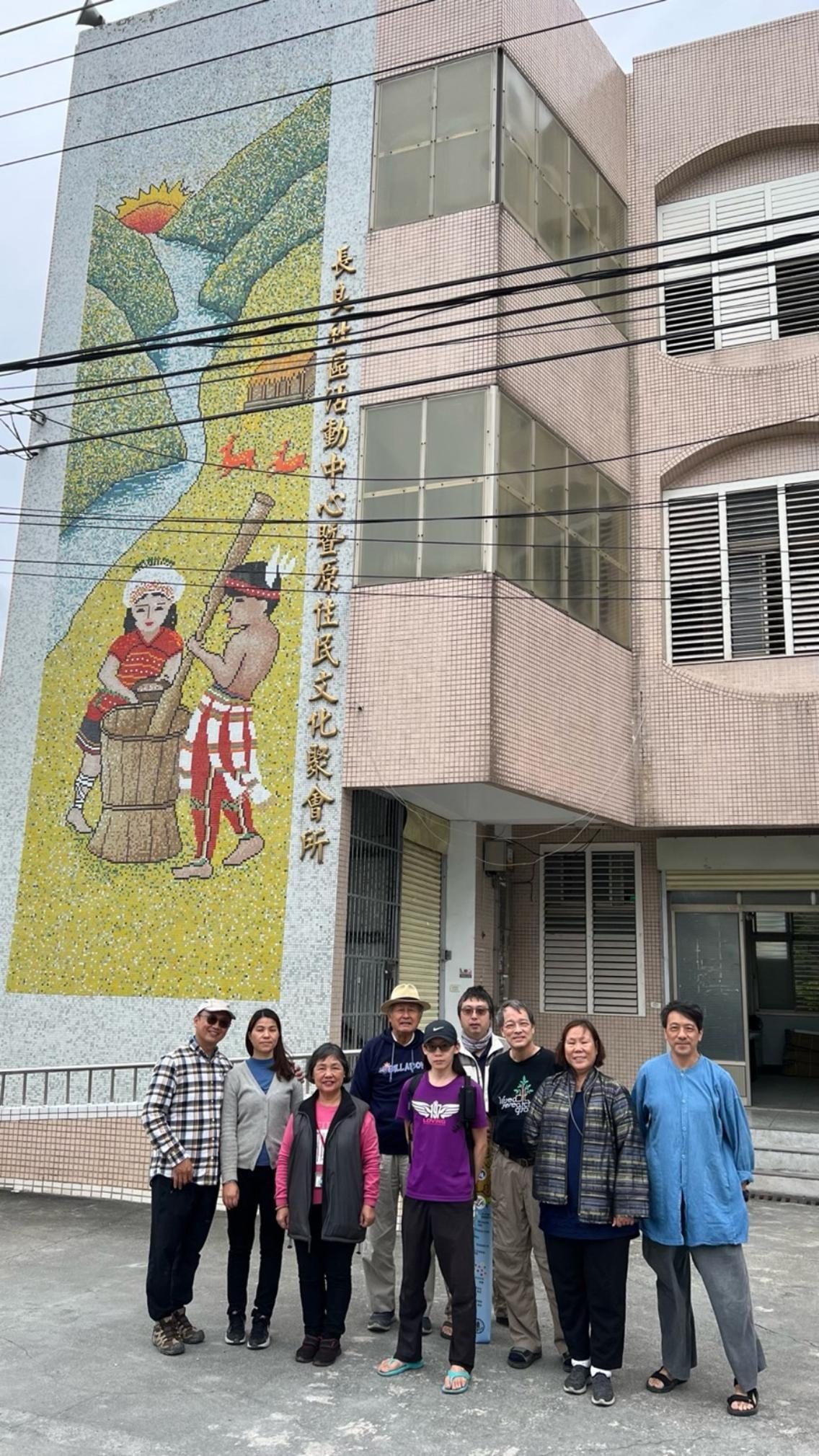
On 23 February 2024 the Taiwan Smallholder Carbon Farming Project completed its on-site inspection and audit, taking the certification process another step forward. From left: Changliang smallholder Chiu Chui-chuan and his wife Chu Hsiao-ying, Chen Man-li, Tsao Chi-hung, Weng Yi-chien and Huang Shao-wei of National Taitung University's Friendly Agriculture and Fisheries Certification Center, project development manager Jay Fang, Huang Li-hsia of the Dawushan Cultural and Educational Foundation, and Tseng Chih-chiang of Multi-Dimension Investment.
Gold Standard for the Global Goals international emission-reduction certification projects differ from ordinary management-system certification in several ways:
1. The Gold Standard is the body that sets the emission-reduction standard. Under it, the certification body SustainCERT conducts the preliminary review of the project design documents, and then a validation and verification body (VVB) carries out validation & verification. This is effectively a three-tier review mechanism, whereas other bodies such as Verra use two tiers.
2. What is certified is not only the processes and risk controls of a management system but also the product — the carbon credits generated by emission reductions, i.e. how many tonnes of CO2 equivalent the project reduced over a period, which in Taiwan is usually described as so many tonnes of "carbon rights".
3. Quantified performance must be certified on at least three of the 17 UN Sustainable Development Goals (SDGs) — SDG 13 Climate Action is mandatory, plus at least two other goals.
4. V&V is divided into validation of the Project Design Document and verification of the performance the project generates. I have to use the English terms here because the Chinese translations are very hard to understand. Validation checks the methodologies, formulas and documents for the various estimates in the project design, to confirm they are well founded. Verification checks whether, over a period of implementation, the project was carried out according to the methodology in the project design, along with the relevant historical evidence, then confirms the issuance of carbon credits; after the Gold Standard confirms the credits, they are listed publicly.
The emission-reduction certification process is comparatively more complex and rigorous
On 23 February the Taiwan Smallholder Carbon Farming Project underwent on-site validation of its project design documents by CEPREI Certification, the VVB designated by the Gold Standard, together with verification of its first-year performance. Because the project design documents had already passed SustainCERT's preliminary review in February 2023, been registered with the Gold Standard and had all related design documents published, the VVB had to audit, according to those documents, whether project implementation and calculation methods conformed to the methodology. In addition, after a year of implementation, the baseline (soil organic carbon percentage in early 2023) is compared with the soil organic carbon percentage after the first year (end of 2023 to early 2024) to calculate the increase or decrease in soil organic carbon. The weight of organic carbon gained or lost in the smallholders' fields over the year is then calculated from soil density and volume and multiplied by 44/12 (molecular weight of CO2 / atomic weight of carbon), giving the CO2 equivalent stored in or lost from the soil.
This is Taiwan's first emission-reduction project following an international methodology, with no benchmark to refer to; we could only use scholars' and experts' conservative estimate of 1 tonne of CO2 equivalent per hectare. The preliminary calculations and audit this time seem considerably larger than the original conservative estimate. Next, the VVB and SustainCERT must determine the project's first-year soil carbon storage based on the credibility of each piece of evidence; once published, these become carbon credits tradable on the open market.
Under contract, the developer, Eco-affinity Inc., transfers the carbon credits from smallholders to the company at US$10 per tonne, then sells them on the open market. This is still a long road, as carbon credit prices fluctuate. Fortunately, the Taiwan Smallholder Carbon Farming Project has the help of the MiHuMiSang app as an information and communication technology (ICT) tool, generating tamper-proof production diaries for smallholders. Anyone can follow the app's map to find and see the smallholders, increasing the credibility, transparency and public participation of smallholder carbon farming — which raises the quality and value of its carbon credits.
This is a project lasting at least ten years and this is only the first year. There is a long road ahead, and we will meet many uncertainties, such as weather, pests and diseases, and changes among the smallholders themselves. In the two years of developing the carbon farming project, the most interesting part has been visiting smallholders all over Taiwan and learning about farmers' joys and hardships and some of the current strengths and difficulties of agriculture. The main bottleneck is smallholders' ability to sell and make a profit. I believe international emission-reduction certification will help with the marketing of related products and their international competitiveness.
Emission-reduction SDG/ESG certification must increase carbon-farming smallholders' living income
In future, besides sales of carbon credits creating unprecedented profits for smallholders, farm produce with quantified SDG certification can be converted into corporate ESG and earn profits through corporate procurement. Because, under the rules of the ISEAL Alliance (the global membership organisation for credible sustainability standards), these quantified SDG certifications also allow the Gold Standard certification label to be put on products, and companies or groups that fund or invest can obtain proof of supporting the related performance, for use in corporate communications or on derived products (such as processed foods).
In the past two years ISEAL has been actively promoting increases in smallholders' living income internationally. This is a concrete and important benefit in the UN's push for a "just transition": as human behaviour and industries must change under climate change, vulnerable groups must not be sacrificed in the transition; we must plan ahead to ensure their real interests are protected. I believe this is also a main outcome of the smallholder carbon farming project — even more important than the carbon credits generated by emission reductions.
Source: CM Media ( https://www.cmmedia.com.tw/home/articles/45481 )


