 努力小農
本文尚無譯文。
The carbon farming project has grown up! Taiwan's smallholders achieve over 10,000 tonnes of carbon farming in a year
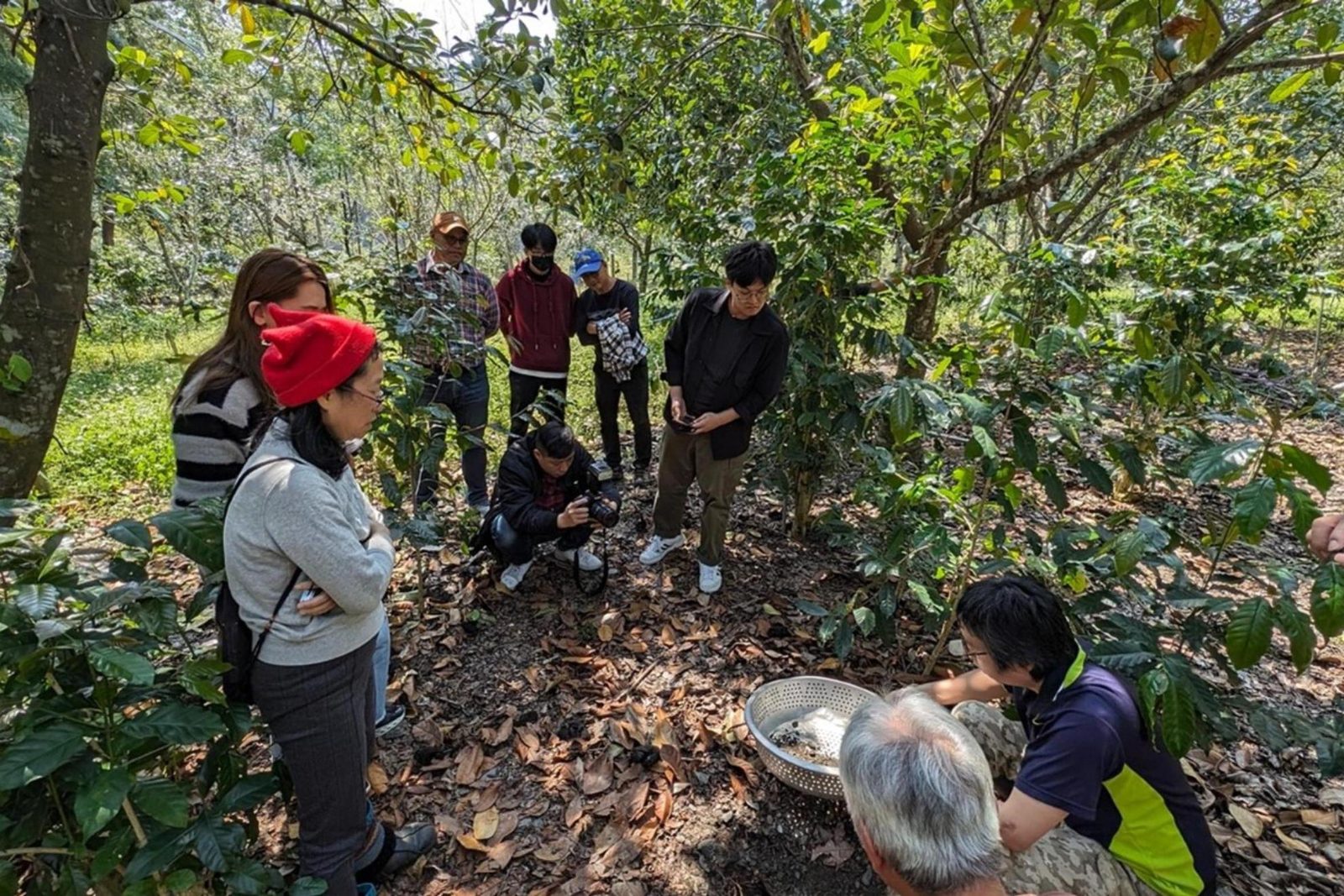
After years of effort protecting its soil, 356 Coffee Estate in Luye, Taitung, has ground covered with organic matter from fallen branches and leaves; dig a handful and you find earthworms. In 2023 it achieved a very good increase in soil organic carbon.
On 23 February this year, CEPREI Certification (a Validation and Verification Body approved by the Gold Standard) carried out a remote on-site audit of the Taiwan Smallholder Carbon Farming Project (A few things to share about the Gold Standard carbon credit certification audit). Although validation of the project design documents was completed very smoothly, at the performance verification stage it was found that emission reductions in the first year, 2023, exceeded 10,000 tonnes of CO2 equivalent — above the 10,000-tonne limit of the micro-scale project originally applied for. This meant the excess reductions would be forfeited, so we urgently negotiated with the Gold Standard (the standard and credit-issuing body) and SustainCERT (the certification body) to make a project design change.
Taiwan's smallholders achieve over 10,000 tonnes of carbon farming in a year
The Taiwan Smallholder Carbon Farming Project is the first project to adopt the Gold Standard's Soil Organic Carbon Framework Methodology, and in Taiwan it is a first-of-its-kind attempt. We originally estimated a most conservative 1 tonne of CO2 equivalent per hectare per year. With the 300 hectares of farmland currently participating, the soil of these 300 hectares would yield at most 300 tonnes of CO2 equivalent a year — far below 10,000 tonnes — and we estimated a 10-year total of only 7,200 tonnes.
Yet after a year of the project, comparing the "baseline" soil organic carbon ratio from late 2022 to early 2023 with the first-year "project scenario" from late 2023 to early 2024, the soil carbon sequestration performance of the valid 156.6 hectares exceeded 10,000 tonnes of CO2 equivalent. (Note: detailed figures must await the end of the verification process and formal approval by the Gold Standard; at this moment only approximate amounts can be stated.)
This result astonished everyone. Last November it was already surprising that a one-hectare organic-fertiliser experimental field achieved over 60 tonnes of sequestration in its first year, since the original project design conservatively estimated only 1 tonne per hectare. And first-year performance verification found that the soil of 100-odd hectares of farmland had sequestered more than 10,000 tonnes.
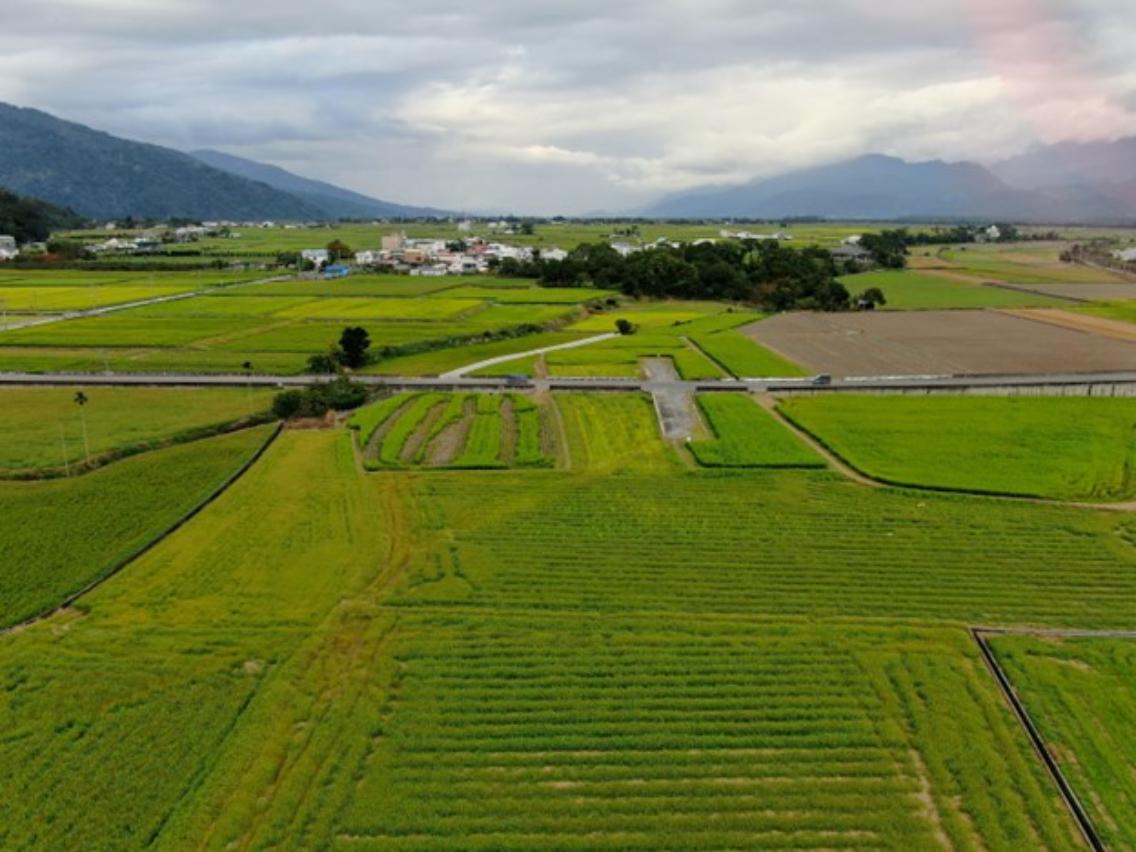
Almost the whole of Changliang Village in Yuli, Hualien, has joined the carbon farming project. Most of its 144 hectares of farmland stayed under green cover during the fallow period, also producing a soil carbon sequestration effect of over 10,000 tonnes.
Besides explaining the reasons for such a huge difference, a design change was needed. The verification body pointed out that forestry generally sequesters only 15 tonnes of CO2 equivalent per hectare per year — so why would agriculture growing rice, coffee, tea and vegetables be higher than forestry? And what was the basis for the original 1 tonne per hectare?
I reviewed the relevant materials and consulted experts. The 1 tonne per hectare figure was the view of many experts, but no one had carried out field experiments on the baseline and project scenario (changes in soil organic carbon after human intervention) according to the Gold Standard's methodology. So it was only expert opinion. The smallholder carbon farming project's actual project design, methods of increasing soil organic carbon, field records, monitoring plan, sampling methods, testing methods and statistical methods fully follow the Gold Standard's certification rules and methodological requirements, so these data are well founded.
As for why agricultural soil sequestration can exceed forestry, it is because the two are compared against different baselines. Carbon sink development methods for forestry and agriculture differ, and so do the concepts and implementation in their methodologies. Forestry is less subject to human change, and its soil carbon sinks are not easily lost; agriculture itself disturbs the soil greatly, so soil carbon sinks are easily lost in large amounts. Hence the difference between soil organic carbon after project implementation and the baseline is relatively larger.
We must also compare the international situation. According to the international 4 per 1000 Initiative for soil carbon sinks, which proposes an increase of four per thousand a year, calculating for sandy loam with a soil density of 1.5 (Taiwan's most common soil) to a depth of 50 cm, an increase of one per thousand in organic carbon per hectare equals 27.5 tonnes of CO2 equivalent; four per thousand is 110 tonnes.
The FAO's database of long-term field surveys for its global map of soil organic carbon sequestration potential (Global Soil Organic Carbon Sequestration Potential Map) shows that sustainable soil management (SSM) can increase carbon by 5–20%.
Seen this way, even at the lowest increment Taiwan still has a good chance. In the first year of the smallholder carbon farming project, most smallholders didn't understand the mechanisms by which soil increases carbon sinks — which in fact involve very complex theory and practice in plant physiology, soil chemistry, soil microbiology and soil ecology. Simply by adjusting their original farming methods according to a few principles for increasing soil organic carbon — reducing disturbance, increasing cover, using biological organic inputs, reducing soil loss, and rotation or intercropping to increase diversity — they achieved quite good results.
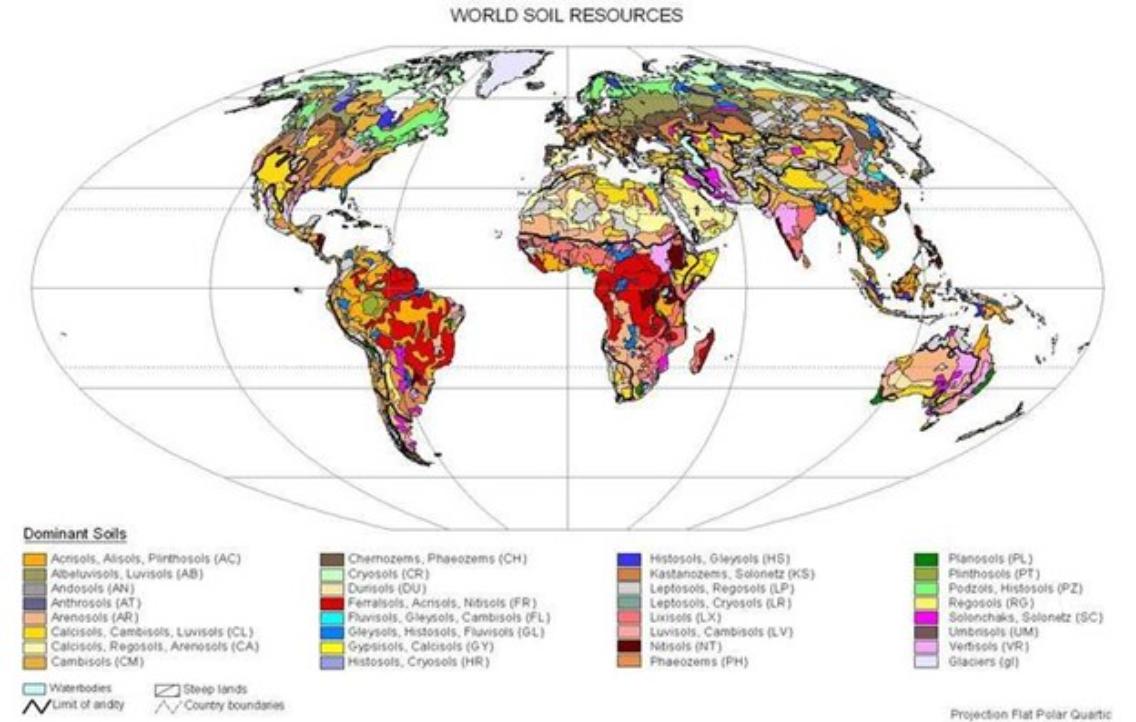
The FAO has long collected soil organic carbon data from countries and regions worldwide, and is full of confidence in soil carbon sequestration as a solution to the climate and food crises.
Although Taiwan's climate ranges from subtropical to tropical and organic matter decomposes easily, microbes also multiply extremely fast. If the soil's microbial ecology is diverse and healthy, life in the soil multiplies geometrically and accumulates long-term, stable organic carbon. This becomes a considerable soil carbon sink; through a project using an international methodology, it can be certified as internationally tradable carbon credits — a worthwhile income for farmers.
A new agricultural carbon sink market is about to form
Our current preliminary estimate is that in the first year of the smallholder carbon farming project, farmers could receive a return of about NT$20,000 per hectare — dozens of times the original estimate of NT$300 (US$10). Once these carbon credits are formally certified, they will be an economic incentive for smallholders. Together with quantified certification of six SDGs, they can serve as a powerful marketing tool and raise the sales and prices of their produce.
Facing such a change, as project developer I must rethink how future carbon credits related to soil organic carbon are developed and the business plan, re-planning according to the Gold Standard's certification principles and requirements and the methodology. I recently consulted people from various sectors, who believe that if each hectare of soil organic carbon can yield tens or even hundreds of carbon credits (1 credit = 1 tonne of CO2 equivalent), it will certainly attract smallholders and interest buyers, forming a new agricultural carbon sink market.
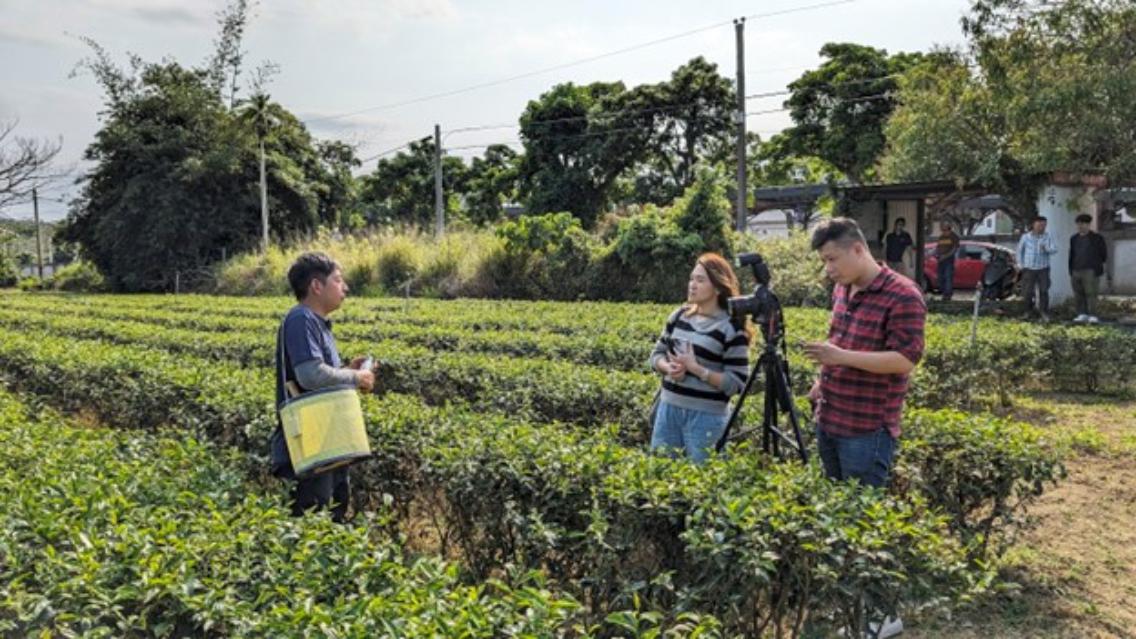
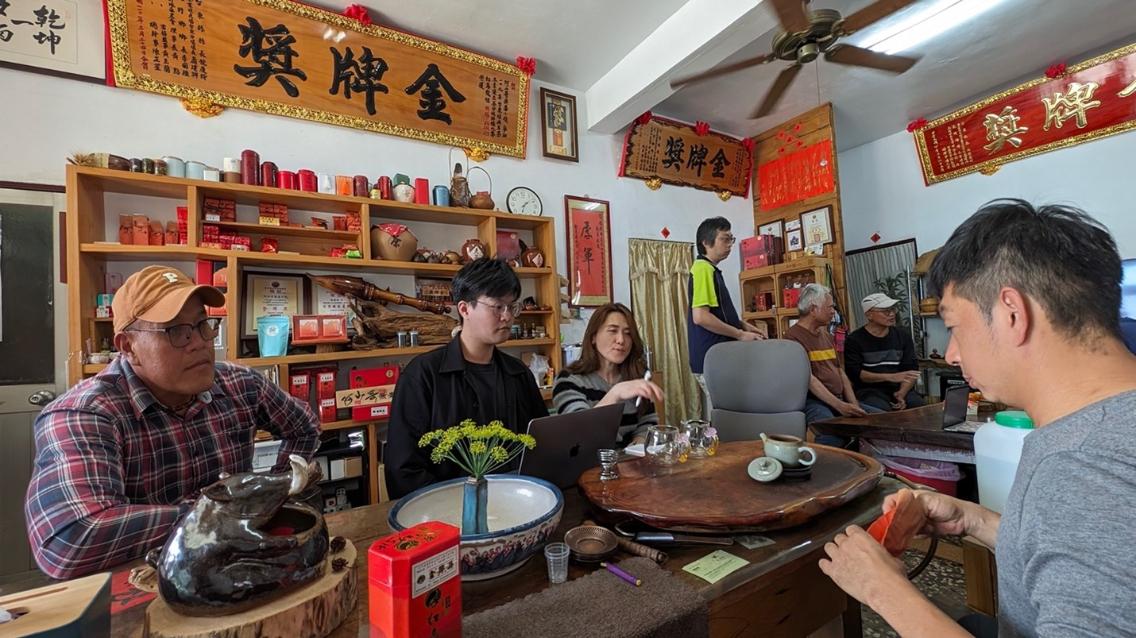
Chang Huan-jui of A-shan-ge Non-toxic Inn has won countless awards in the Luye red oolong tea competition. He also joined the smallholder carbon farming project, reducing soil disturbance and using weeds as cover in his tea garden, and achieved very good results in carbon farming in 2023.
Given Taiwan's size, scale and economic incentives, our rough estimate is that expanding to 2,000 hectares in future at 30 tonnes per hectare would reach over 60,000 tonnes a year. We expect to achieve this within two years (within three years of the project's start), becoming a large-scale emission-reduction programme. As it matures, the area could grow further, with total emission reductions reaching over 100,000 tonnes.
Because Taiwanese agriculture is dominated by smallholders, the owners of these carbon credits will be smallholders. Of course some larger farmers with over 20 hectares (still smallholders compared with farms of thousands of hectares abroad) will take part too. The social impact of this emission-reduction project will be far greater than that of industrial and technological approaches such as green energy, energy, fossil fuels, cement, transport, buildings, and carbon capture and storage.
At the same time, combining low-carbon farm produce with quantified SDG certification and the traceability mechanism of carbon credits will guarantee that every smallholder taking part in the carbon farming project gets a corresponding profit at every level of resale, increasing their income (see:[MiHuMiSang: Farmers' livelihoods under a just climate transition]This differs from traditional sales mechanisms: through layer upon layer of resale, the smallholder's value always remains, and the value of the soil and land can be shown too.
Because of the project change, we expect certification results by June this year, when everyone in Taiwan can share in the fruits of the carbon-farming smallholders.
Statement:
The Taiwan Smallholder Carbon Farming Project is an agricultural emission-reduction project lasting more than ten years, and the world's first emission-reduction certification project centred on smallholders. It has been registered with the Gold Standard and is undergoing first-year performance certification. During certification, sequestration performance was found to far exceed the original design target, so a design change is required. The content of this article is based on the parts confirmed during verification. This is only the first year and does not mean every year will be the same: agricultural soil environments have many variables that are hard to predict and control, and changes in soil organic carbon are dynamic — they may increase or decrease in future. We report only the facts. The final certified quantity of carbon credits and quantified SDG performance are subject to the results published after Gold Standard certification.
Source: CM Media ( https://www.cmmedia.com.tw/home/articles/46041 )


