 努力小農
本文尚無譯文。
Refining diamond-grade carbon credits together
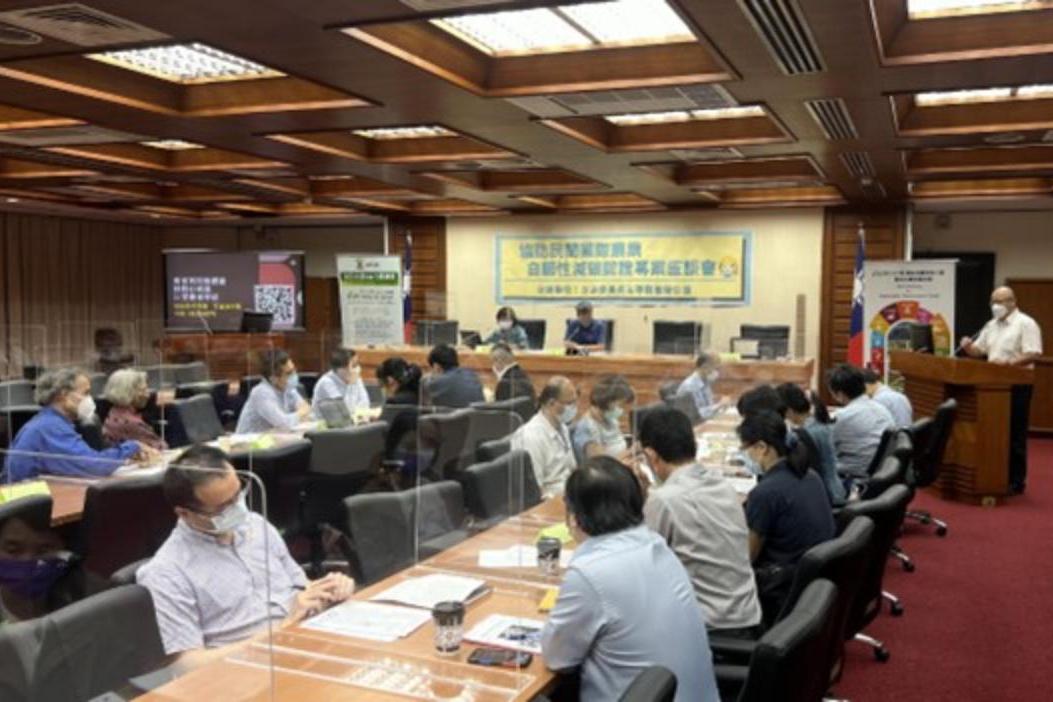
On Environment Day, 6 June 2022, with the support of legislator Wu Yu-chin (convener of the Social Welfare and Environmental Hygiene Committee), a consultation meeting on the Taiwan Smallholder Carbon Farming Project was held, inviting stakeholders including government, civil-society organisations and human-rights advocates.
In "MiHuMiSang: The carbon farming project has grown up! Taiwan's smallholders achieve over 10,000 tonnes of carbon farming in a year", we announced that the Taiwan Smallholder Carbon Farming Project, registered with the international emission-reduction certification body the Gold Standard, had been approved to upgrade from a micro-scale project (under 10,000 tonnes of emission reductions a year) to a large-scale project (over 60,000 tonnes a year). In international emission-reduction certification projects, the Stakeholder Consultation Meeting (hereafter "consultation meeting") is the essential first step before registration. Its contents must be recorded in detail, and written or oral comments from stakeholders must be answered or resolved before the project will be reviewed by the technical committee.
When a project changes, it must also follow the project application procedure, and the consultation meeting must be held in accordance with the Gold Standard's "Stakeholder Consultation and Engagement Requirements" (STAKEHOLDER CONSULTATION AND ENGAGEMENT REQUIREMENTS).
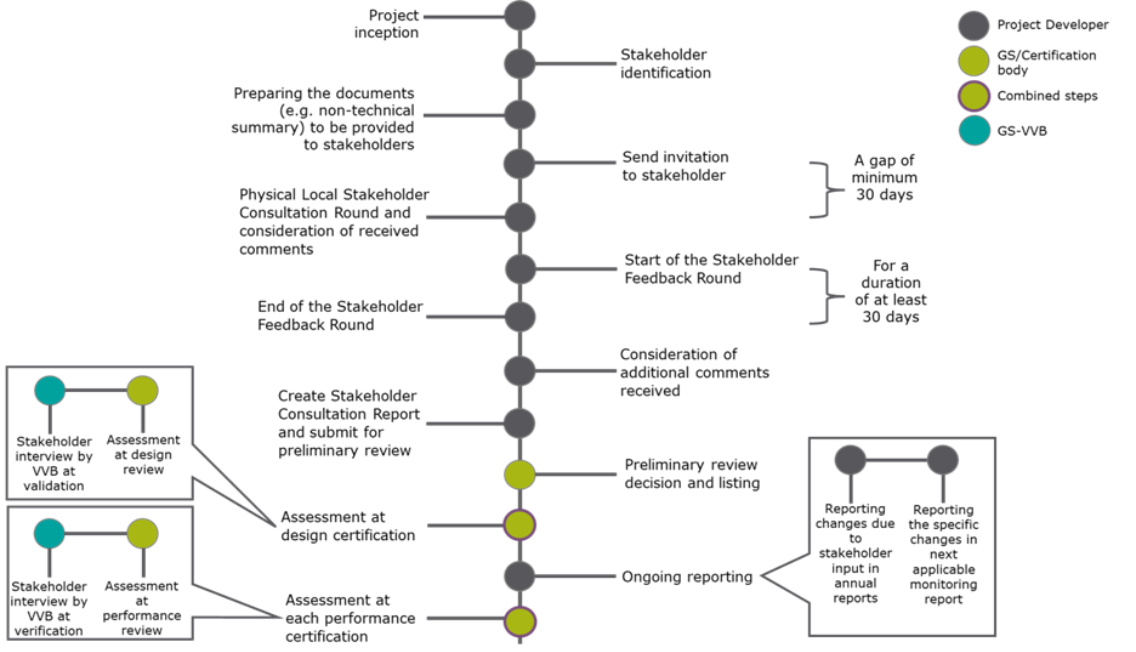
The Gold Standard sets rigorous, detailed rules for stakeholder consultation meetings. Every project must hold consultation meetings first and continuously to remain registered, which also prevents false certification, or harm to the environment and human rights in the name of carbon reduction. (Image: from the Gold Standard website)
The Gold Standard's certification system must uphold openness, transparency and public participation
The requirements specify that, from the project concept onwards, the project's stakeholders must be identified; a public invitation must be issued to them 30 days before the meeting; a "non-technical" report must be prepared explaining the project's potential impacts; an in-person or online meeting must be held for people from all sectors to attend, with 30 days for feedback; a standing mechanism for grievances or complaints must be in place, openly accepting comments from all sides and making continuous improvements; and the consultation meeting report must be submitted to the Gold Standard and made public.
Basic invitees include residents, communities or their representatives in the project area and potential stakeholders; people with land-use rights in the project area or in adjacent areas who may be affected; central and local government or decision-makers; local NGOs such as women's groups; Gold Standard representatives; and international NGO supporters of the Gold Standard (such as Fairtrade).
The Gold Standard's certification system must uphold the two key principles of openness and transparency and public participation to ensure rigorous and correct certification. 2023 was a year of international action against greenwashing. Since the start of the Clean Development Mechanism in 2006, carbon trading has seen an endless stream of fraud and crime, because what is traded is emission-reduction credits — out-and-out "short selling". On top of that, this was a new system originally created to do good, using financial mechanisms so developed countries help developing countries cut carbon, yet this green financial aid became green fraud.
A loss of trust in carbon credits would damage the last chance to avert global-warming catastrophe
In early 2023 the UK's Guardian reported at length that forestry projects certified by the US body Verra had obtained carbon credits, but international environmental groups' field investigations found that after the projects began, the forests were in worse condition than if the projects had never been carried out. Subsequently Verra's CEO stepped down and the board was reorganised; approved projects were re-examined, and to date a large number of registered projects have been suspended or revoked.
Carbon reduction is a good deed affecting the public interest; it should not be done behind closed doors, still less used for arbitrage by fraud or crime. The French documentary "Lords of Scam " records in detail the absurd story of €280 million made through fake carbon trading, told by the people involved themselves.
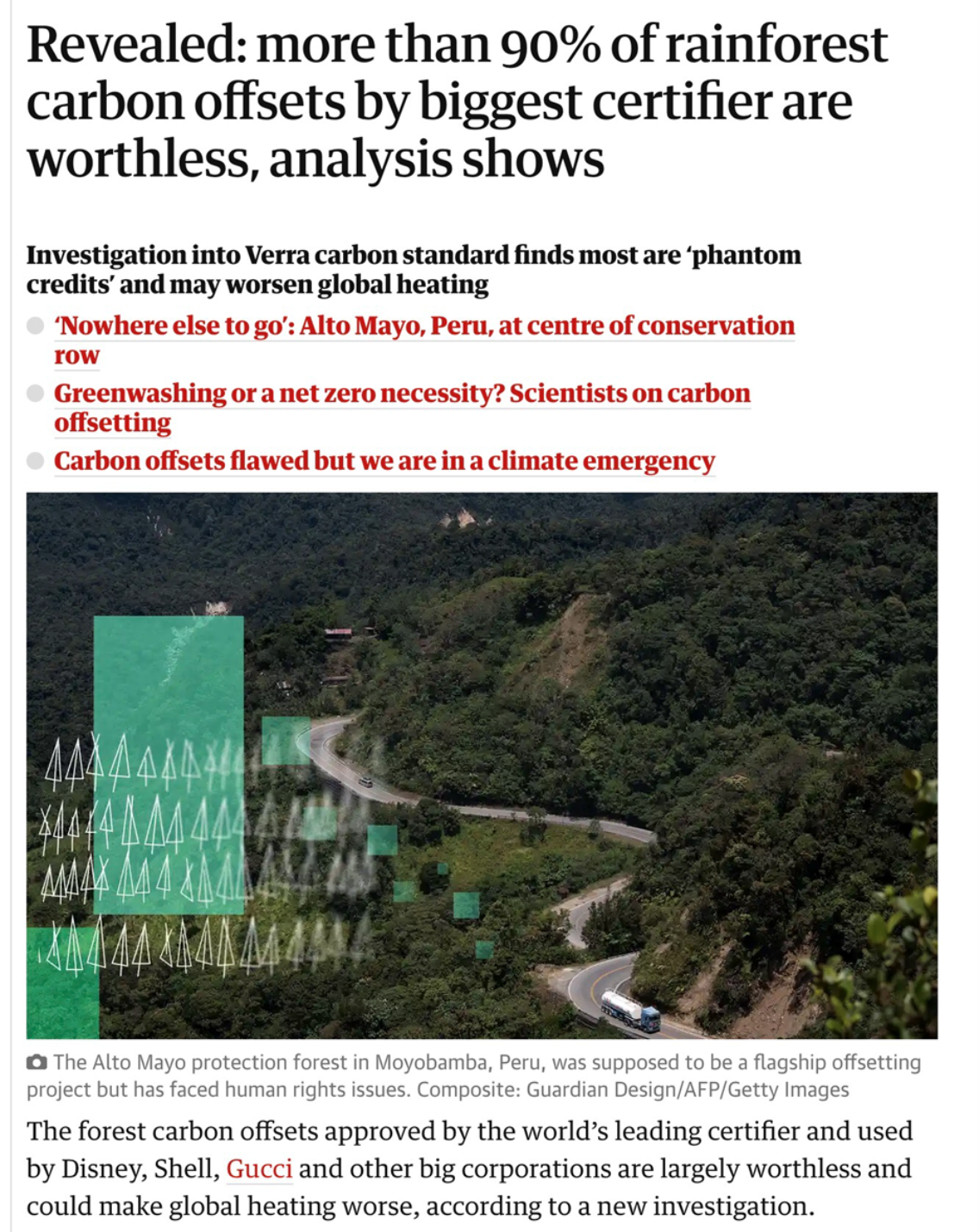
A loss of trust in carbon credits would be an international scandal and would damage the last chance to avert global-warming catastrophe. (Image: from the Guardian website)
Upgrading smallholder carbon farming to a large-scale project expands its influence and its benefits. Inevitably some may take risks for profit, and one bad apple could spoil the whole barrel. We must face the public all the more rigorously and openly, nipping problems in the bud and guarding against them in advance.
"Diamond-grade" carbon credits
After nearly two months of visits, research and investigation, we hope the smallholder carbon farming project will grow to 7,000 hectares. With a conservative estimate of an extra 30 tonnes of CO2 equivalent per hectare a year — about one per thousand of added carbon — the cumulative total over ten years would be over a million tonnes of CO2-equivalent carbon credits.
Not every tonne of carbon credit is of equal value; it depends on its source and the social impact of the process that generated it (such as SDG quantification tools and certification). According to the carbon market information on CarbonCredits.com, on 12 April 2024 the voluntary-market price for nature-based carbon sinks was US$1.33 per tonne (NT$42.88), the highest price was €68.83 (NT$2,379.93) on the EU compliance market, and aviation offsets and technology-based credits (such as solar and wind) fetched only US$0.6.
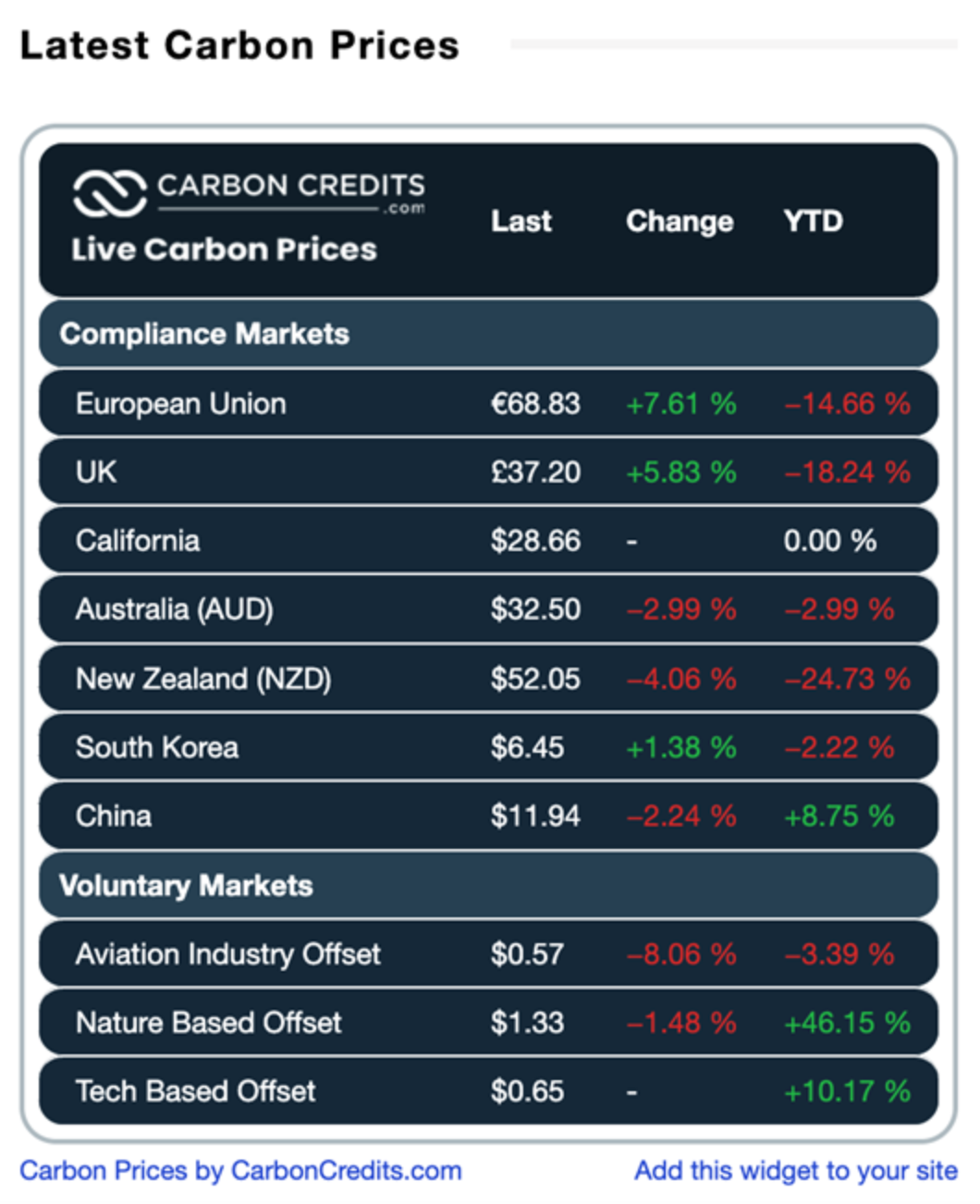
The latest real-time carbon prices can be found at any time on carboncredits.com. (Image: from the carboncredits.com website)
In the carbon market, agricultural carbon credits are few and rare. Smallholder carbon farming is designed and implemented with a complete traceability system: anyone can find the participating smallholders around the country and their field records. Many people take part in agriculture, and the impact on six SDGs is proven by quantified certification — so it is regarded as "diamond-grade carbon". Just as coal (from the poorest lignite to anthracite), graphite and diamond are all carbon-based minerals, diamond and coal differ enormously in price.
The EU's "International rules on the use of carbon credits" accepts all kinds of projects but restricts some. Smallholder carbon farming is voluntary emission reduction from after 2020 that meets the requirements of Article 6 of the Paris Agreement, so it has a chance of entering the EU market. In addition, the Gold Standard currently has a good reputation, so it will be valued by the market.
In future the price of carbon credits will be determined by their quality. We are committed to producing "diamond-grade" carbon credits, with zero tolerance for falsehood, fraud, harm to the environment or the Sustainable Development Goals, or illegal conduct.
Diamonds are graded by the 4Cs — cut, colour, clarity and carat weight — and smallholder carbon farming fully meets the characteristics of a diamond:
•Cut- Quantified certification of six SDGs, with high social impact
•Colour- Yellow carbon: healthy soil, healthy crops, healthy people
•Clarity- The MiHuMiSang app provides real-time, complete on-site carbon farming information accessible to anyone
•Carat weight- Each hectare of land can generate dozens of tonnes of carbon credits, each tonne equivalent to 2,000 kWh of green electricity — high-density carbon credits.
We have a rigorous methodology and implementation, and participating smallholders form a solid, rigorous diamond line-up — only so can we craft diamond-grade carbon credits.
At the consultation meeting we will explain that "carbon credits" include not only the certified tonnes of carbon reduction, but also the additional quantified impact on six SDGs generated by carbon reduction, and how this can be converted into the ESG (environmental, social and governance) companies need, and into farm produce — all of which can create enormous social value and impact.
Join the smallholder carbon farming consultation meeting
The first-year results of the Taiwan Smallholder Carbon Farming Project exceeded our expectations — surpassing the micro-scale project's 10,000-tonne annual limit — so we must apply to the Gold Standard to become a 60,000-tonne-a-year project.
To make this change, we must follow the application procedure under the Gold Standard's Principles & Requirements. The most important step is holding a Stakeholder Consultation Meeting to explain to the public and stakeholders the reasons for the change and the future requirements and changes in project development.
Stakeholder consultation meeting registration form: https://forms.gle/fnTmwhdyg7fpCjSF8
Time: 2 p.m., 22 April 2024 (Earth Day)
Venue: 2F meeting room, Huwei Farmers' Association, Yunlin (197 Guangfu Road, Huwei Township, Yunlin County)
Source: CM Media ( https://www.cmmedia.com.tw/home/articles/46248 )


