 努力小農
本文尚無譯文。
Worries near and far: visiting Noto
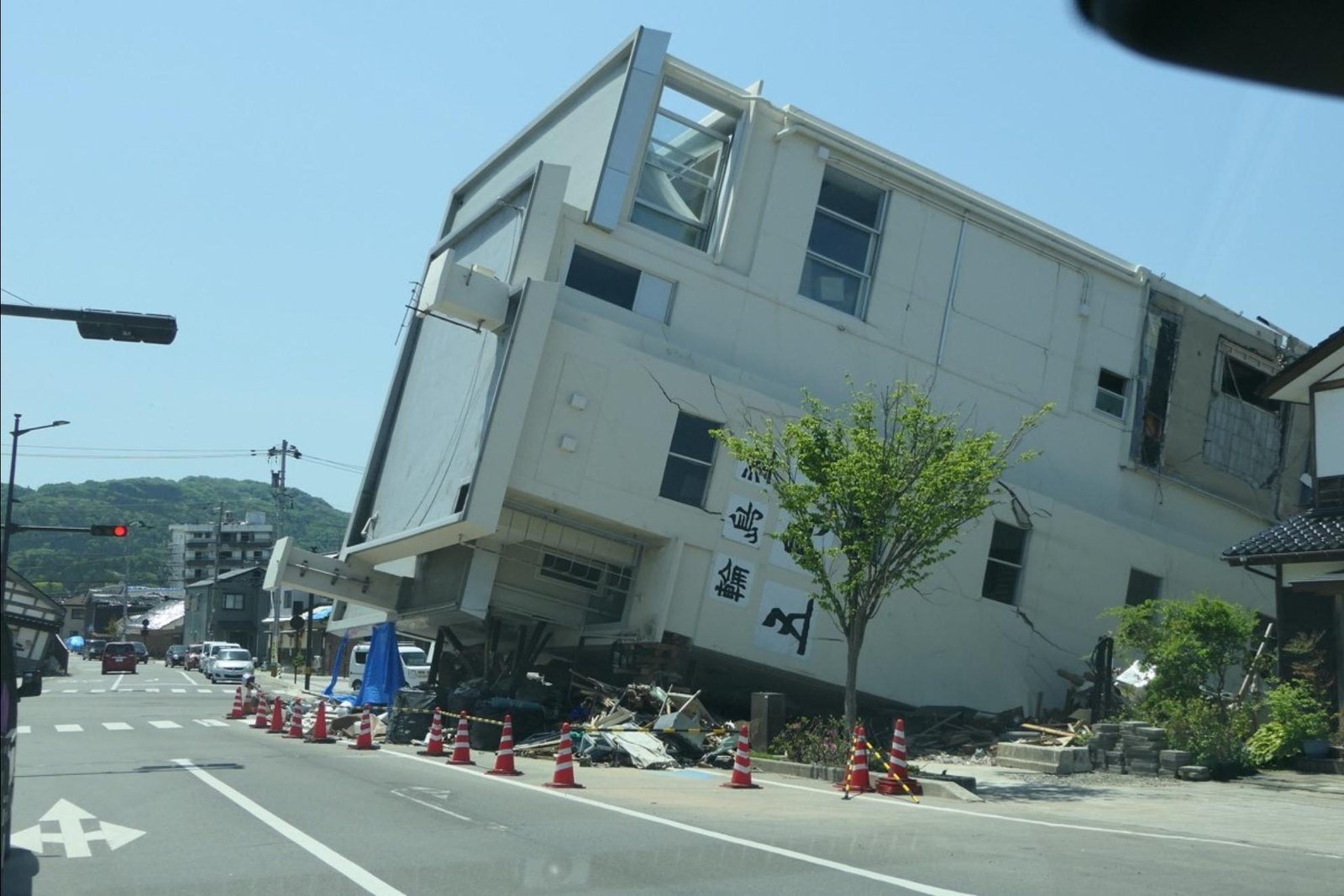
The famous Wajima-nuri lacquerware showroom collapsed entirely. (Photo: Jay Fang)
Deep in my heart I have long feared a great earthquake hitting Taiwan, and I don't think it's without reason. In 2013 I met the Japanese historical seismologistYoshinobu Tsuji, who is known for predicting a once-in-a-thousand-years earthquake in north-eastern Japan — which came with the 2011 earthquake and tsunami of 11 March and the nuclear disaster it caused. He told a Taiwanese delegation visiting Japan that Japan rose from the seabed more than ten million years ago, whereas Taiwan rose only a little over three million years ago. Geologically Taiwan is younger, so even bigger earthquakes and tsunamis should be expected. For years he has studied Taiwanese earthquakes, and he even speaks Chinese.
This year had barely begun on 1 January when I heard that Japan's Noto Peninsula had "again" been hit by a major earthquake, with many houses collapsing. I had long wanted to see the disaster area, and in early May this year, arranged by the Tzu Chi Foundation's disaster-relief staff, I went to the Noto Peninsula to investigate and assess whether international Gold Standard emission-reduction and sustainability certification could help local survivors rebuild, with international standards for designing and evaluating reconstruction projects.
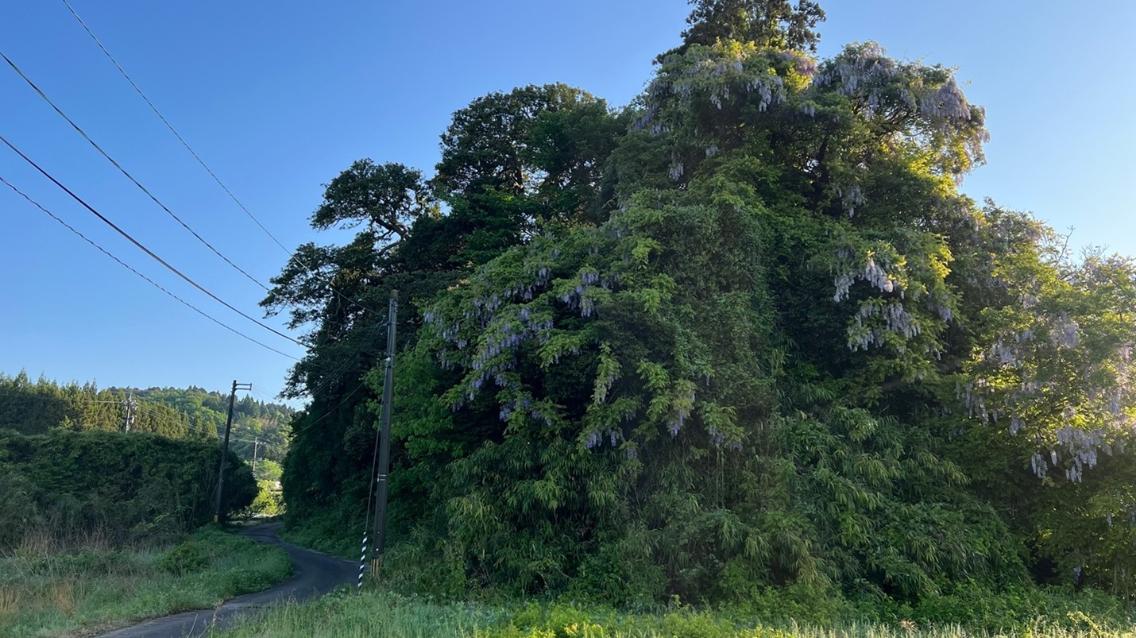
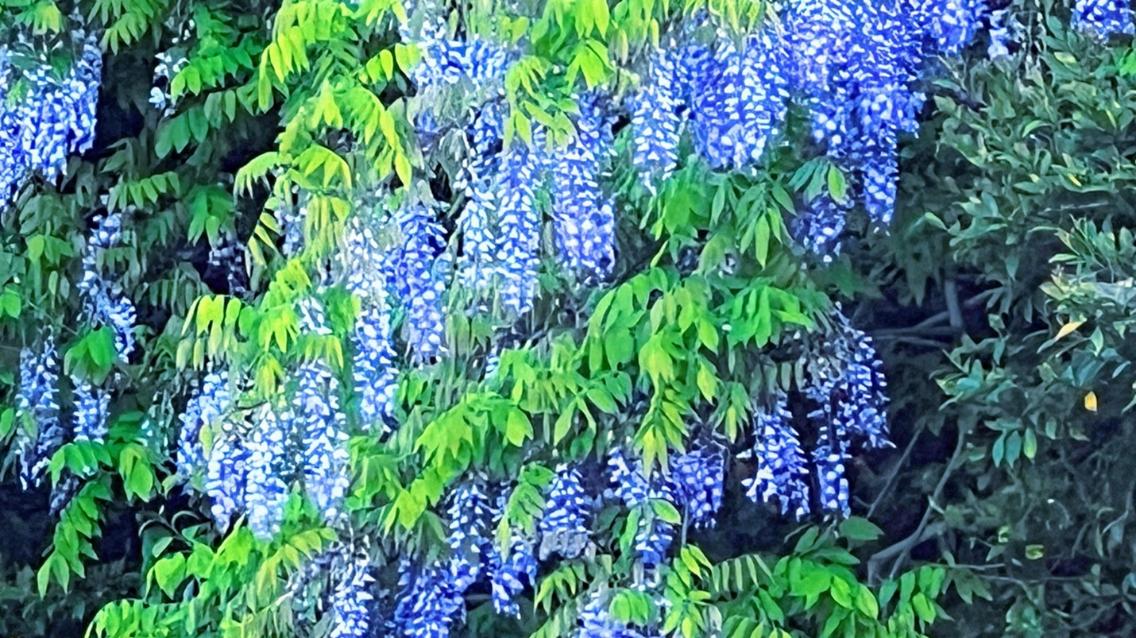
Purple alert! Driving across the Noto Peninsula along the two-lane Satoyama Satoumi Road, what fills the eye is wisteria in full purple bloom, covering the hills. But locals explain that lots of wisteria means farmland has been abandoned: more than half the land is no longer farmed. (Photo: Jay Fang)
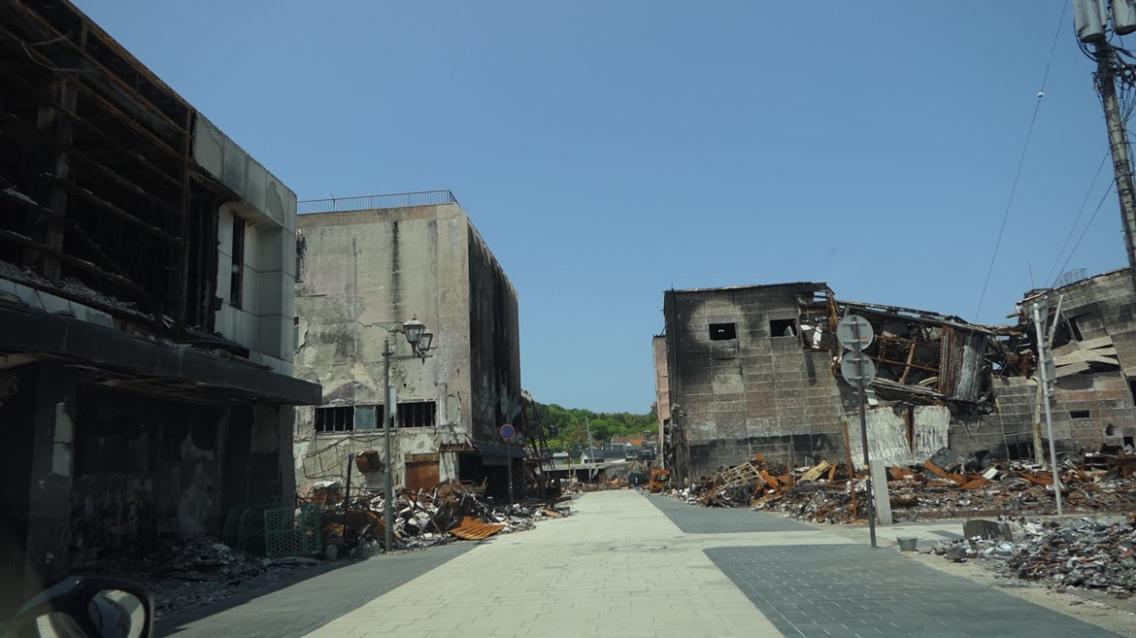
The morning market in Wajima, a must-see for tourists, burned after the earthquake; more than five months later it is still a shocking sight. (Photo: Jay Fang)
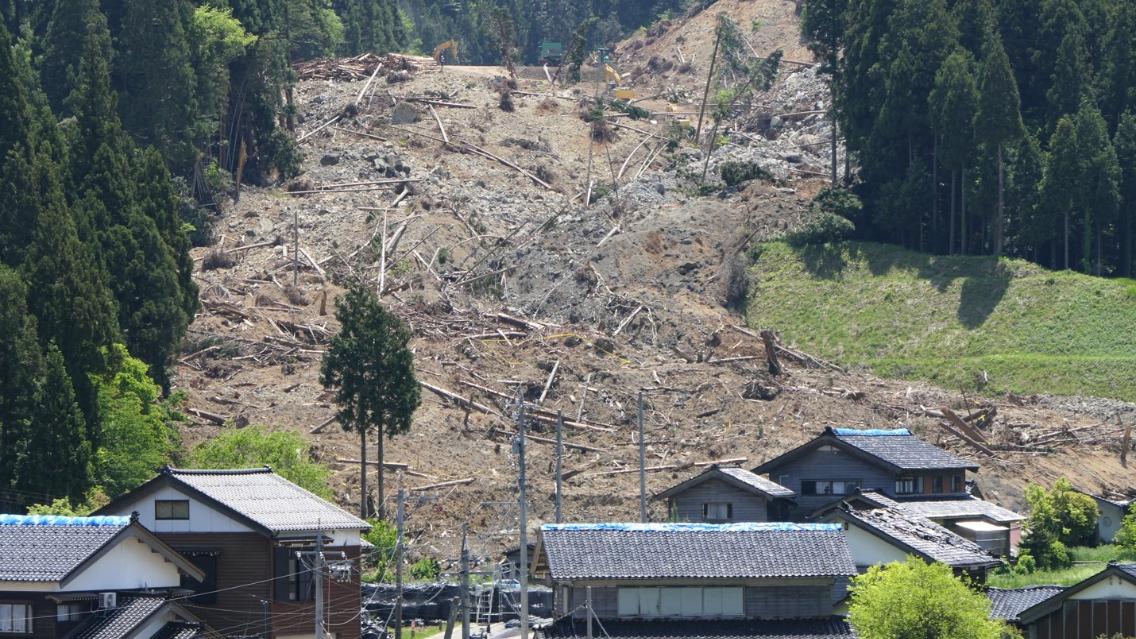
The earthquake caused more than 2,000 landslides and debris flows like this across the Noto Peninsula. (Photo: Jay Fang)
Wisteria in bloom; local farmers determined to restore the 400-year-old Shiroyone Senmaida
On the flight to Komatsu Airport, most passengers were tour groups going to Kurobe and Tateyama to climb mountains and see snow; nobody was going to Noto's Satoyama Satoumi Road. I went where others fear to tread: arranged by Tzu Chi's relief team, we spent two days in the disaster area, especially along the Satoyama Satoumi Road. "Satoyama" refers to hilly terrain unlike the plains, where residents use the forests and small plots of land to build a sustainable, symbiotic form of ecology, living and production. Shiroyone in Wajima, Ishikawa Prefecture, on the Noto Peninsula, has become emblematic of satoyama for itsShiroyone Senmaida.
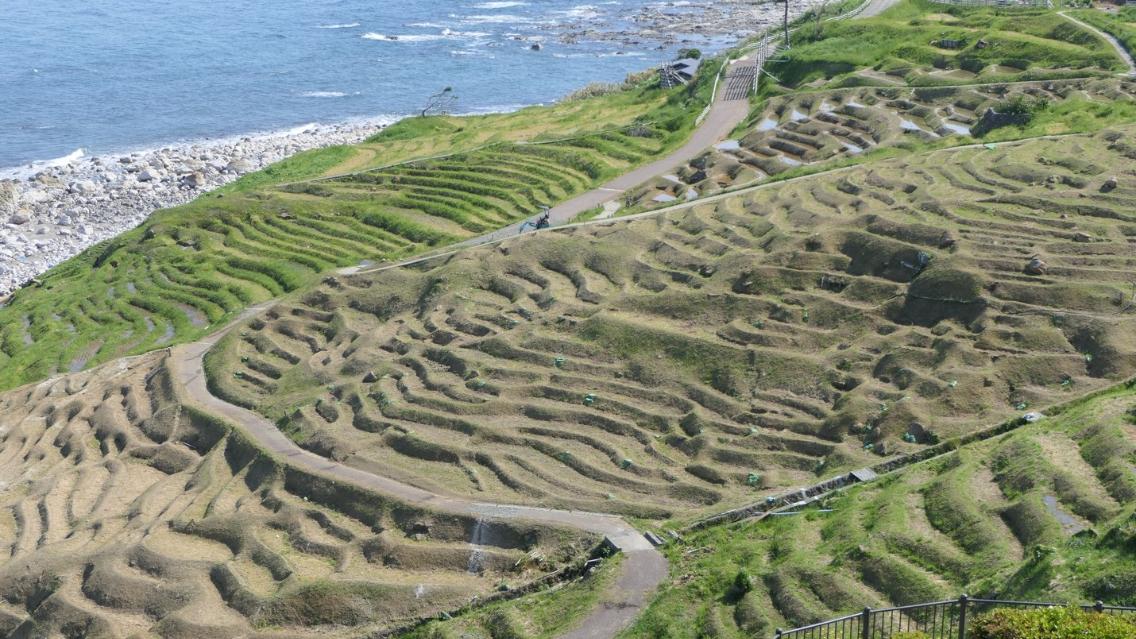
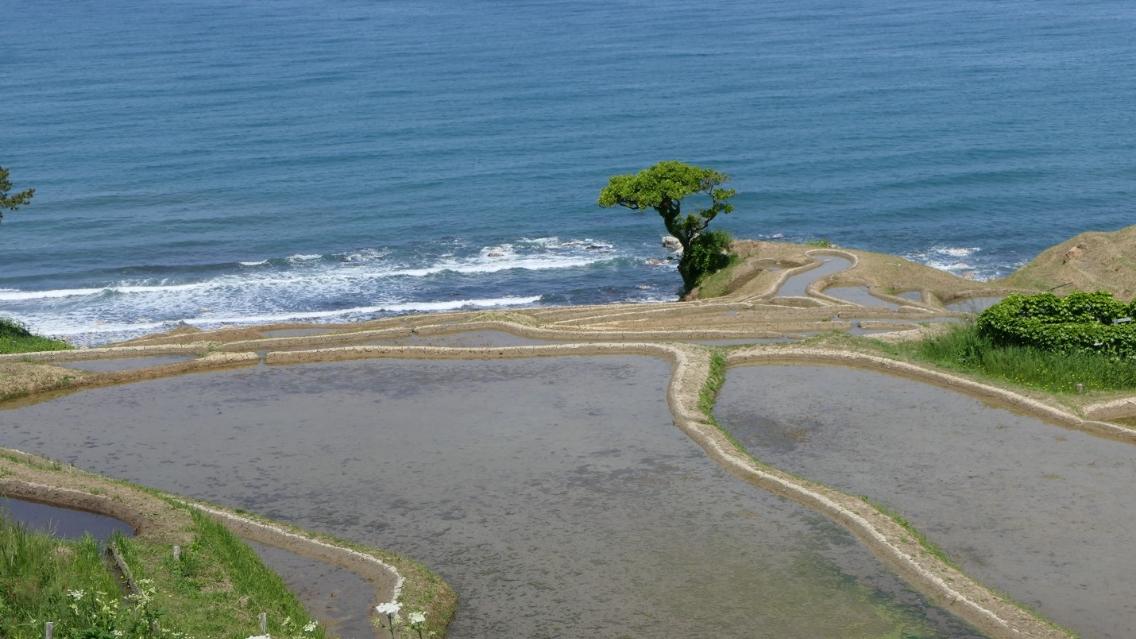
Because of the hilly terrain, the paddies are fragmented — hence the name "thousand fields". On the seaside hills they reflect the beauty of mountains and sea. Sadly the earthquake broke the fields so they can't hold water and can't be farmed; 80% have turned to bare earth. Local farmers are determined to restore the 400-year tradition. (Photo: Jay Fang)
Shiroyone Senmaida is the epitome of Japan's hillside terraced paddies, farmed for 400 years. It was designated a national Place of Scenic Beauty by the Japanese government in 2001 and recognised by the UN as a Globally Important Agricultural Heritage System in 2011 — a distinguished record. It is famous for its tiny fields: 1,004 fields on a 4-hectare site, the smallest about the size of a newspaper. Locals mainly grow Koshihikari or Noto Koshihikari rice, still ploughing, transplanting and harvesting by hand and sun-drying the rice, which sells for ¥1,000 per kilogram.
This earthquake did enormous damage to Shiroyone Senmaida: 80% of the fields were broken and leak water, so spring planting couldn't take place this year. Unfarmed fields revert to sand and soil, and local farmers could only plant the remaining 200 fields. When we reached Shiroyone Senmaida on 8 May, they were marking lines in the paddies in preparation for the transplanting event on the 12th, when sponsors and pre-order customers from around the country would come to plant rice together. (Sadly I had to return to Taiwan early on the 12th.)
Shiroyone Senmaida has historical, ecological and agricultural significance. The farmers we interviewed had never learned about organic matter in the soil; for more than 400 years they've simply farmed by the "old ways", paying no particular attention to soil organic matter, and yields seem much the same. From the black scorch marks in the fields, they clearly burn unwanted straw after the autumn harvest. In Japan, burning straw in the fields is legal.
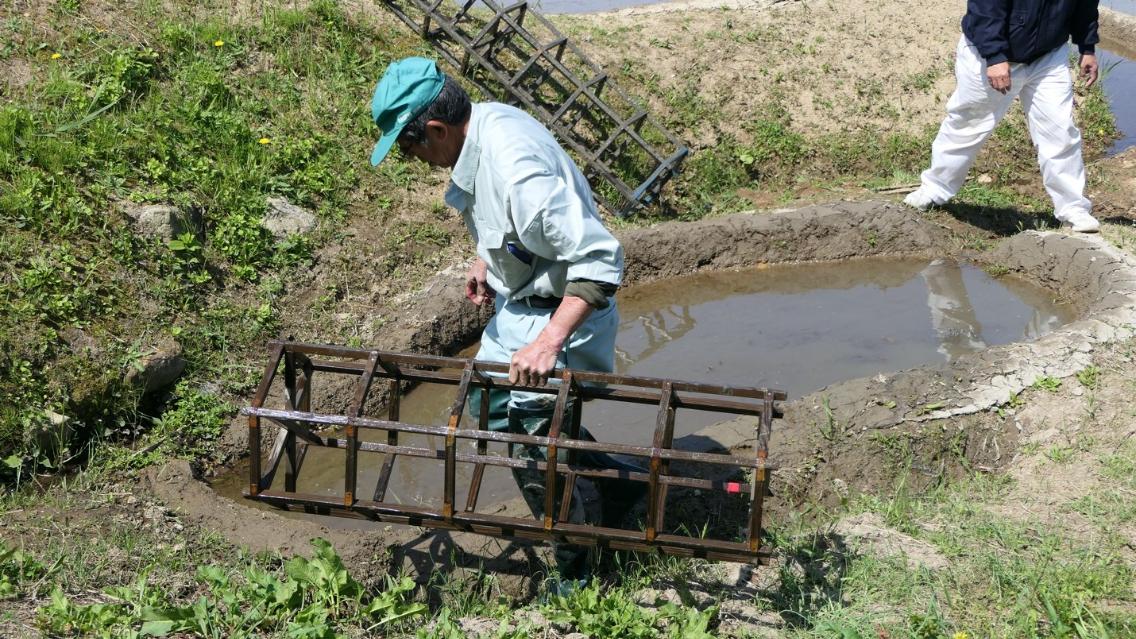
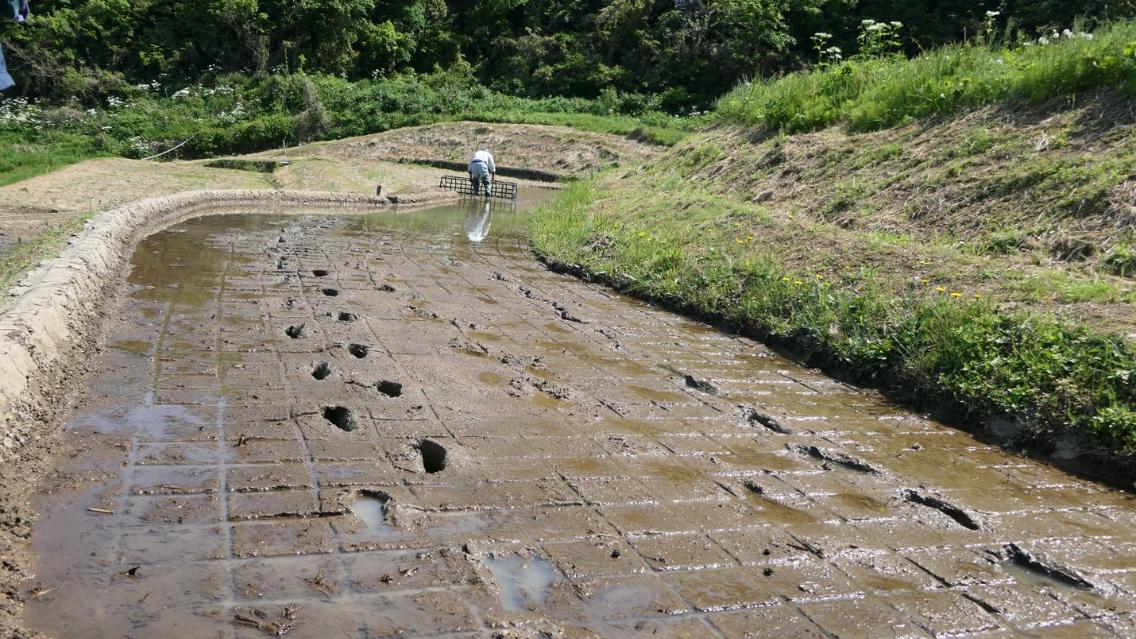
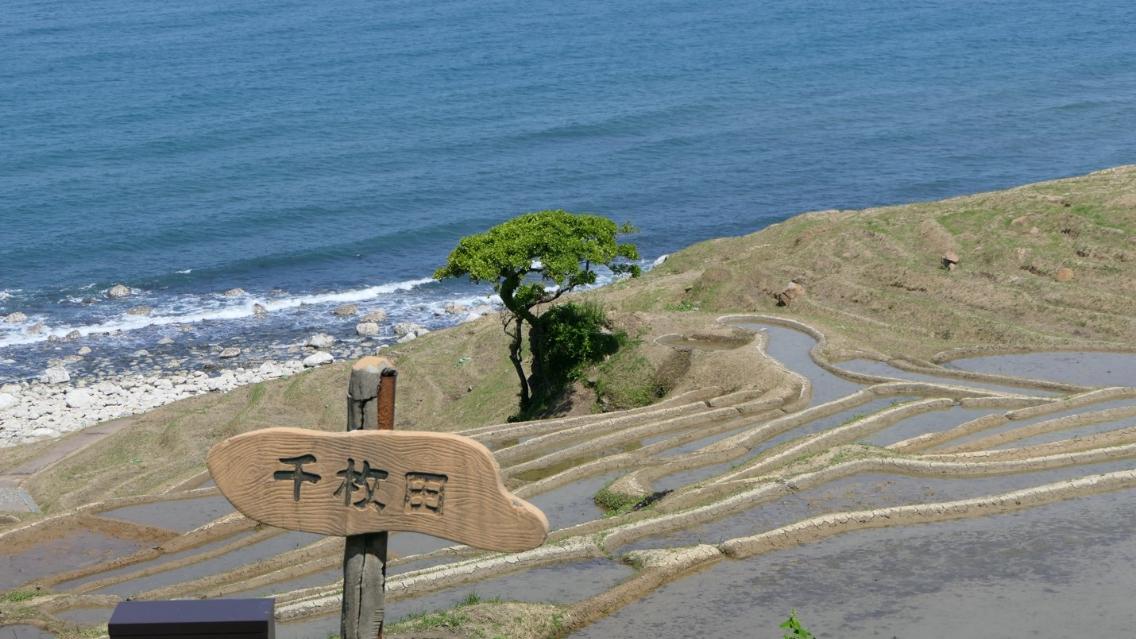
Because of the rugged terrain, large farm machinery can't be used — even water buffalo would struggle — so to this day all the farm work at Senmaida is done by hand. (Photo: Jay Fang)
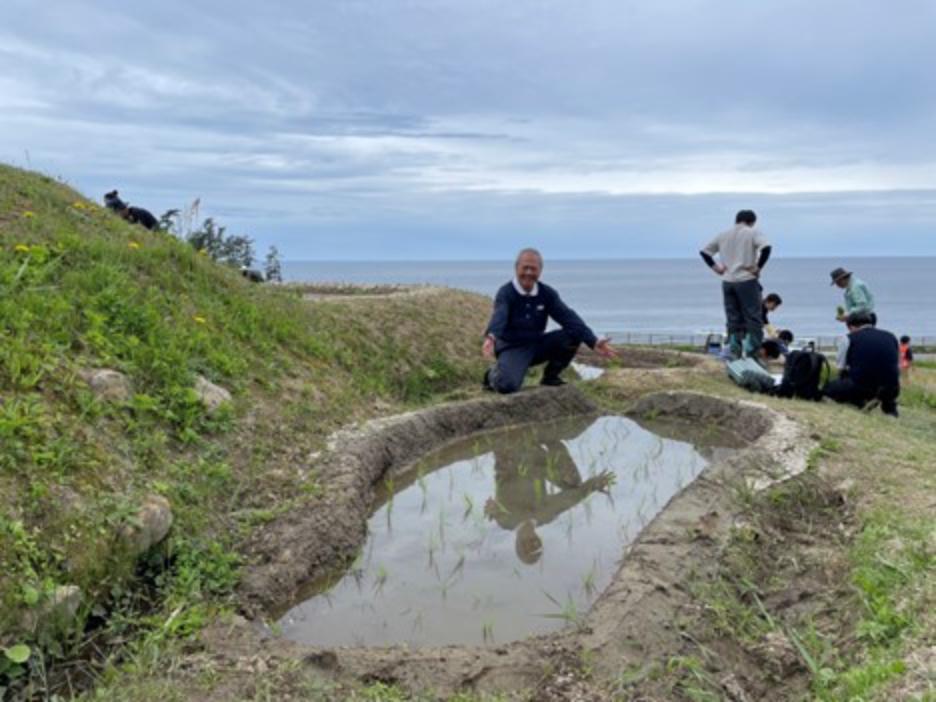
Tzu Chi Foundation adviser Hsieh Ching-kuei has adopted a field at Senmaida about the size of a bathtub. (Image: provided by the Tzu Chi Foundation)
Smallholder carbon farming on Japan's Noto Peninsula: sampling in September
I had assumed Japanese farmers were rather conservative and wouldn't accept outside suggestions to change. But after talking with farmers' representative Hiroyuki Yamashita, he readily agreed and was happy to cooperate. I believe this has a lot to do with the Tzu Chi relief team's exchanges with them over the past few months; otherwise Japanese farmers would hardly agree so quickly to make even small changes.
Farmers and government officials in Wajima are quite familiar with the Sustainable Development Goals (SDGs), but found the idea of internationally certifying quantified SDG performance quite novel and interesting. After all, Japan is a developed country, an Annex I country under the Kyoto Protocol, and a buyer rather than a seller of international emission reductions. Japan only started its J-Credit carbon credit trading mechanism last year, and like most countries it focuses on green energy, industry, transport, buildings and so on. Agriculture has only five methodologies: changing pig and chicken feed formulas to reduce nitrous oxide emissions; changing livestock manure management; applying nitrification inhibitors with nitrogen fertiliser in tea-garden soils to reduce nitrous oxide; adding biochar to mineral soils of crops and grassland; and extending mid-season drainage in rice cultivation. There is not yet a soil organic carbon sink methodology.
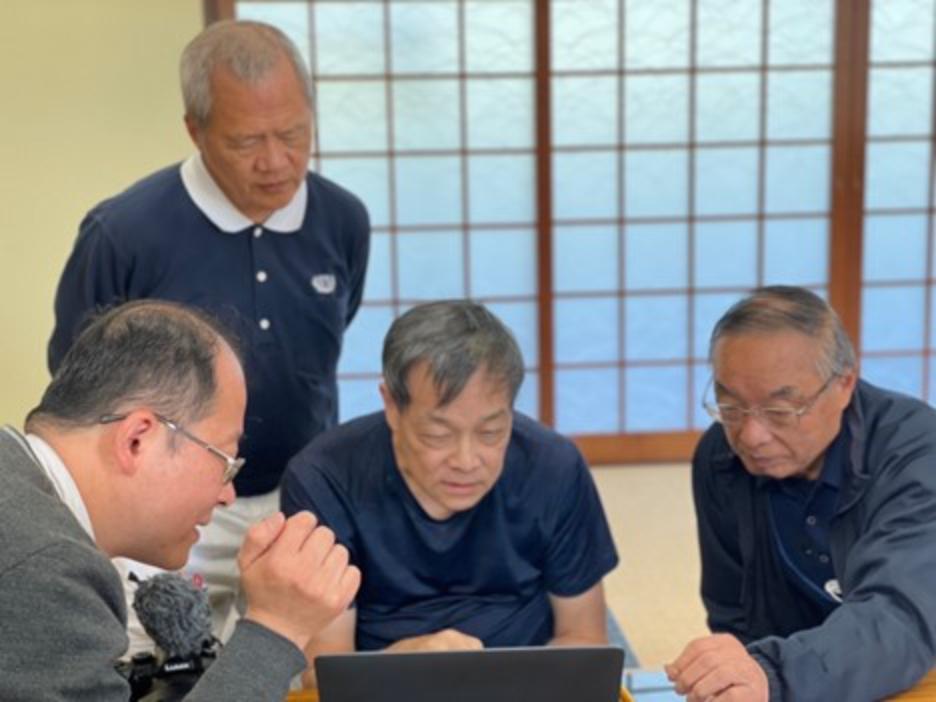
Discussing the feasibility of smallholder carbon farming on the Noto Peninsula with Japanese smallholders. (Image: provided by the Tzu Chi Foundation)
Still, Japan's smallholders could understand that increasing soil organic carbon helps soil health and rice yields, and were happy to try smallholder carbon farming. So we agreed that at the end of September this year, after their harvest, we will go to take samples, and in the meantime apply to register a Gold Standard project.
Source: CM Media ( https://www.cmmedia.com.tw/home/articles/46941 )


