 努力小農
本文尚無譯文。
How long will the blood ginger go on?
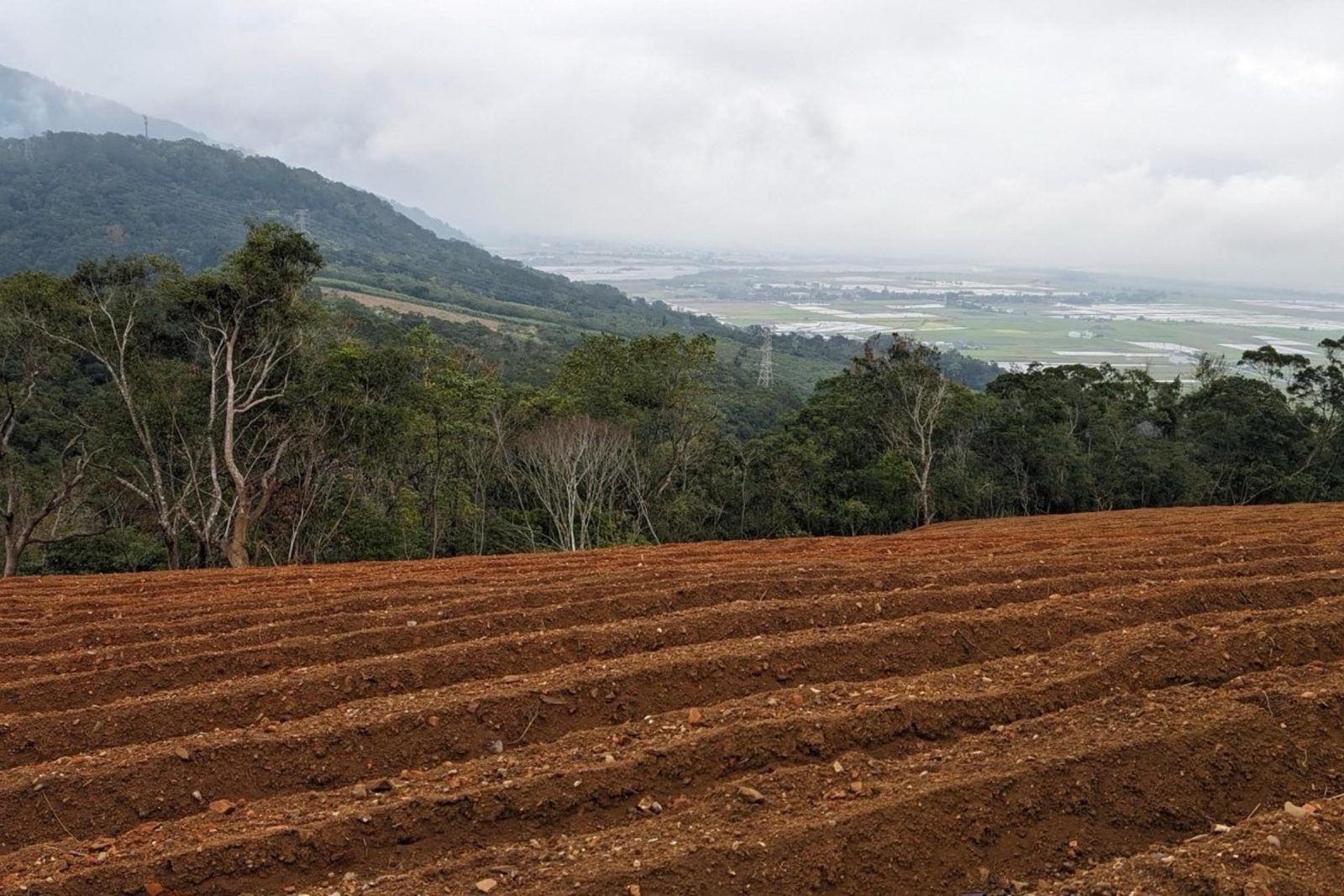
Illegal clearing for ginger along the Changliang Forest Road has directly caused debris flows that threaten Changliang Village downstream.
Below the mountain they quietly work at carbon farming; up the mountain the forest is being openly destroyed
If we can't promptly stop large-scale illegal forest destruction, all energy saving and carbon reduction is fake
"We work so hard at carbon farming, and the government doesn't encourage us — yet it lets outsiders come up the mountain and wreck the slopes at will, growing ginger for dirty money. Whenever an earthquake or typhoon comes, we live in fear."
The government lets outsiders destroy the forest but ignores the lives of residents of a hundred years
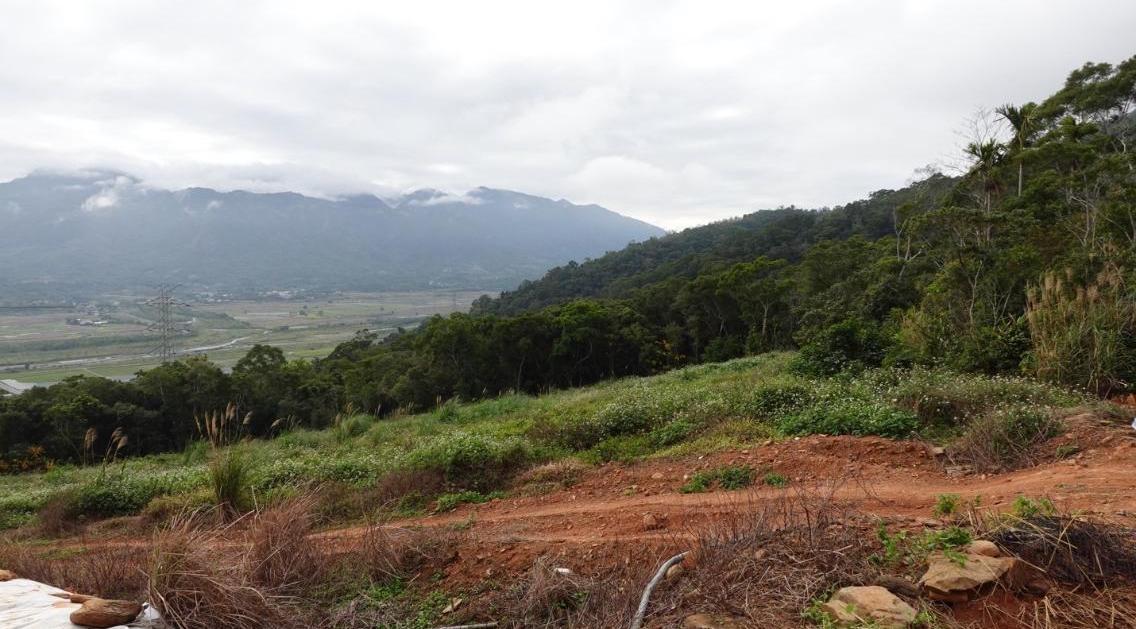
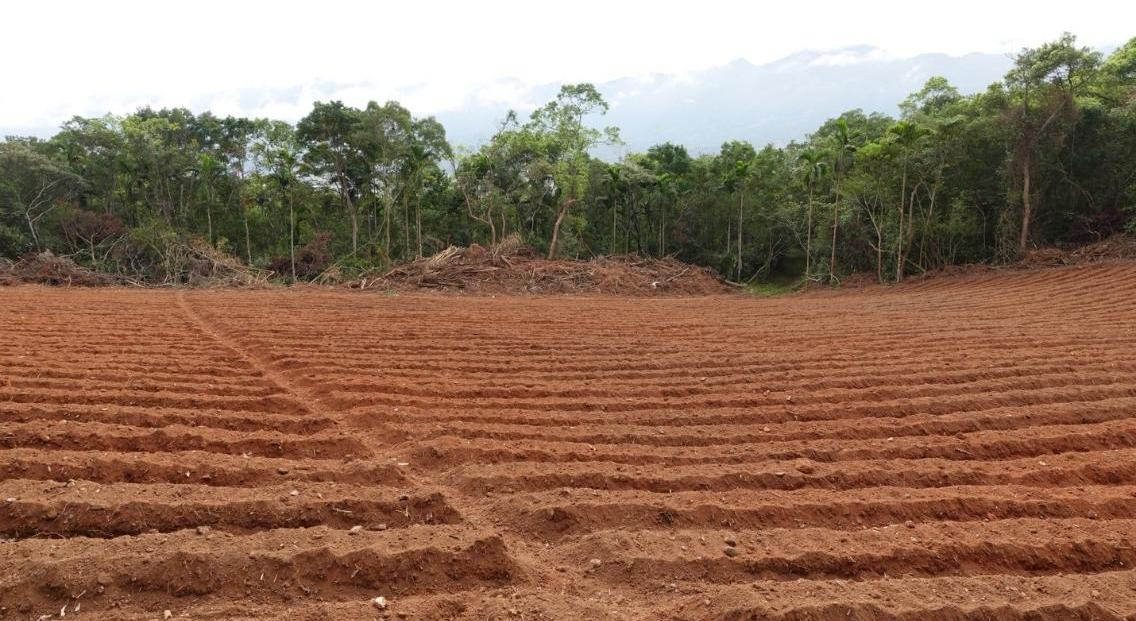
A few years ago outsiders came to the Changliang Forest Road in Zhuoxi Township, Hualien County, and cleared the mountain forest on a massive scale to grow ginger. Once-lush forest became bald and mangy overnight — not only ugly, but liable to landslides and debris flows at any time — infuriating residents of Changliang Village in Yuli Township downstream.
Three or four years ago, Changliang village chief Chen Wen-hua led villagers in blocking the entrance to the Changliang Forest Road to stop large construction vehicles and machinery going up to clear and log illegally. But after county officials "mediated", asking the villagers to leave others a way to make a living, this outrageous case of collusion between officials and business destroying the forest was "harmonised" away.
"Why does the government let outsiders go up the mountain to grow ginger and destroy the forest, and care about their livelihoods, but not about the lives of us who've lived here for a hundred years?" In early January 2023, when I signed Taiwan Smallholder Carbon Farming Project contracts with Changliang villagers, I asked them what environmental risks there were here, and the residents angrily told me about the dark experiences of the past two years.
Indeed, the smallholders of Changliang below the mountain happily joined the international carbon-reduction programme. For residents of this, one of Taiwan's most remote mountain villages (two hours' drive from both Hualien City and Taitung City) — the "frontier of the frontier" — there has been a bit of attention in recent years since the Veterans Affairs Council's former Changliang Farm became Taiwan's largest organic agriculture zone. But residents here still farm conventionally, while hoping to try a carbon-reduction scheme like carbon farming to see if it offers a chance to turn things around.
"We can't get much worse anyway!" said Changliang resident Huang Cheng-hsien in utter despair — a picture of many residents. At the very end of the line, at the exit of the Yushan Batongguan Historic Trail, the village once enjoyed brief prosperity from forestry logging, but it aged and lost its children earlier than anywhere else in Taiwan and has long been barely alive. Changliang Elementary School once had one or two hundred pupils; now the primary school and kindergarten together have only 40.
A first try at smallholder carbon farming
Hualien–Taitung rice is famous, and Changliang's rice isn't bad either, but at the edge of the edge it can only watch helplessly as rice from Yuli, Fuli, Chishang and Guanshan fetches good prices, while Changliang rice comes last. Taiwan may be small, but separated from Provincial Highway 9 by the Xiuguluan River, the village gets no tourists and can only quietly farm, resigned to being an underdog.
When I first came to Changliang in May 2022, it was a quiet, sleepy village with no distinctive features and no hope. I came once or twice without any particular impression, until at the end of 2022 villager Chiu Chui-chuan asked me about the feasibility of the whole village's farmland joining smallholder carbon farming. So I visited village chief Chen Wen-hua, who farms more than ten jia himself. He half understood carbon farming, but since certification cost nothing and didn't need much effort or money, he decided to give it a try and introduced me to members of two local production and marketing groups so I could explain carbon reduction and carbon farming to them.
At the time I didn't have much experience either. I talked about atmospheric CO2, warming and so on; the villagers listened intently but with blank expressions. One stretched, yawned and said, "Just tell us what to do. If we can do it, we'll go along; if not, forget it." So I asked whether they could plough less. "Sure — ploughing costs money; ploughing less saves money. And between the second and third rice crops we're going to grow buckwheat, so we can skip the ploughing."
"Ploughing" means preparing the land, turning the soil over with a tiller. Farmers believe the more often you plough, the more the soil is disinfected and free of pathogens. But in fact it may be the opposite: ploughing greatly reduces organic carbon and microbes in the soil, which is instead sterilised by UV and becomes poorer. But big machinery rules — ploughing one jia costs NT$5,000, a decent income — and then more fertiliser must be added, so everyone makes money.
"Let's try ploughing less!" Reduced tillage counts as carbon reduction. The other thing was to use as little herbicide as possible, because herbicides enter the soil systemically and are effective biocides, while most of the organic carbon in soil is actually the biomass of living bacteria. I didn't dare say this too loudly, as I'm not a farmer and had no experience; I'd just read lots of foreign literature and reports and it's roughly like that. Also, some people in Taiwan who tried no-till farming saw yields fall, which is indeed a problem.
Plant ginger once and the land must lie fallow for 10 years
"Do you have debris flows here?" When doing smallholder interviews for the project I need to understand all kinds of risks. The big Yuli earthquake of 18 September 2022 shocked the nation; the ground in Changliang cracked open and two of the three bridges linking it to the outside world collapsed. Only now has the Changfu Bridge to Fuli just been repaired; the Yuchang Bridge to Yuli still isn't. But the quake's effect on the fields wasn't great — they were repaired within a month, so the risk was small. But debris flows?
Someone said, a little hesitantly, "They're growing ginger up the mountain. Look at the mountain and you'll see. We're worried there'll be debris flows."
"OK, please take me to see." I rode up the mountain with villagers in a four-wheel-drive jeep, and soon saw swathes of levelled forest; the original mixed woodland had been pushed aside, and in some places ginger had been planted — about 10 hectares by my reckoning. This is at the gateway to the Central Mountain Range's Batongguan, on the Changliang Forest Road. Any development requires soil and water conservation, but doing it costs millions, even tens of millions, per hectare. Ginger is a windfall crop in farming terms, but one jia earns at most a million — so doing soil and water conservation would mean a huge loss.
Ginger is a very strange crop: after planting it once, you can't plant it again for about ten years and must move to new land. Most of western Taiwan has already been exploited by ginger growers, so they've come in force to develop the east. But the east has towering mountains, high peaks and fast rivers, frequent earthquakes and direct typhoon hits. Growing ginger in Hualien and Taitung, whether in the Coastal Range or the Central Range, inevitably means a massive invasion of forests that took so long to stabilise, destroying 30 years of forest protection work in one stroke.
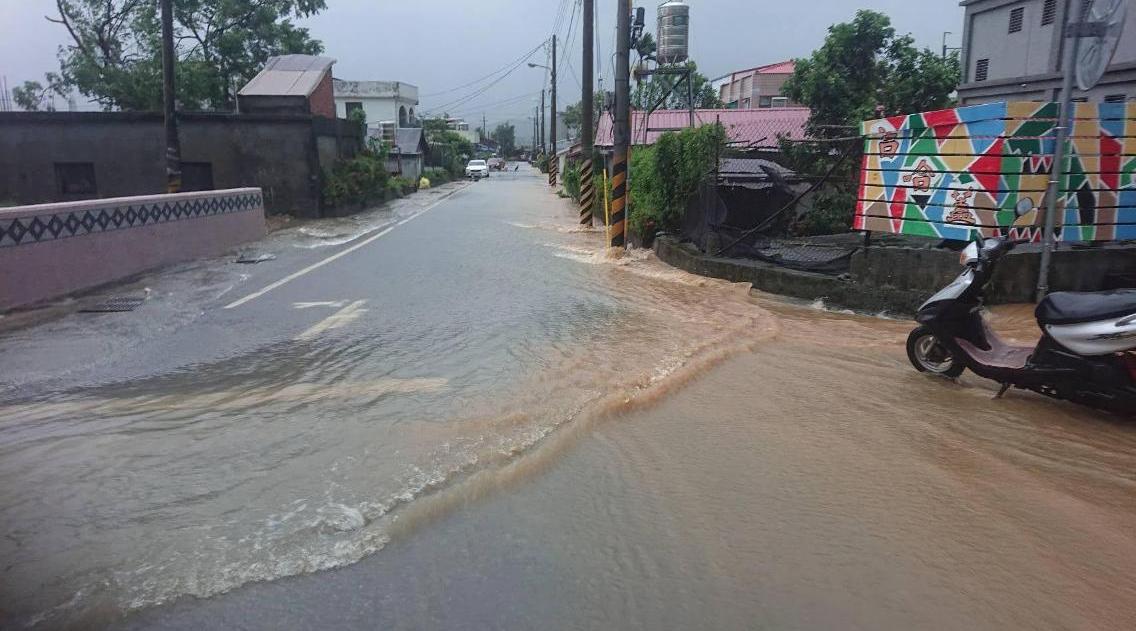
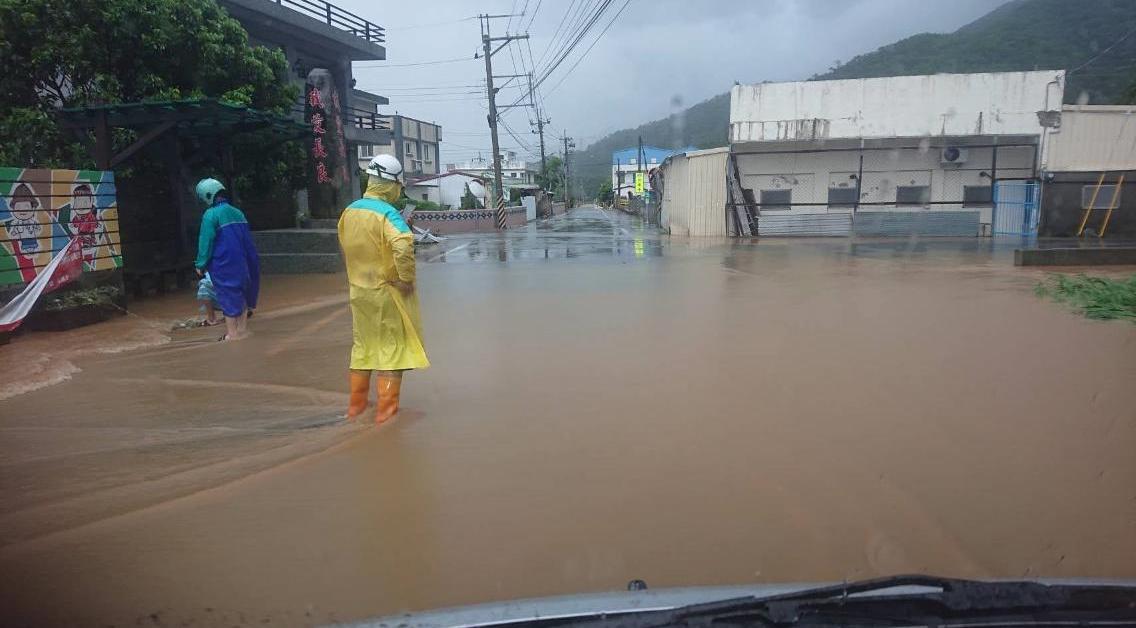
Typhoon Haikui in September 2023 caused debris flows and flooding in Changliang and washed away soil from farmland. (Image: provided by Changliang village chief Chen Wen-hua)
Smallholders work hard to save carbon, while the three Hualien–Taitung acts would invade fragile forests on a large scale
This is clearly the result of collusion between officials and business, so in February 2023 I wrote "The blood ginger of the Changliang Forest Road", which drew attention from many quarters. Control Yuan members Chi Hui-jung and Chao Yung-ching, who care about the environment, launched an investigation of their own accord, and the Hualien County Government said it would make the developers correct their conduct and stop destroying soil and water conservation.
At the end of January 2024 I went up the Changliang Forest Road again and found these brazen ginger traders still expanding development without restraint. So I filed a report under my real name — otherwise I couldn't answer to the Changliang villagers, still less to the public. We are working carefully to change deep-rooted ideas in agriculture to save a little carbon, while the mountain is being developed wholesale; if I just sat by, my conscience wouldn't rest.
Recently I've seen the "three Hualien–Taitung acts", which would invade already fragile mountain forests on a large scale — and we don't even understand the geology, geography, hydrology and hydraulics. Using a political steamroller to flatten the forests, forgetting the basic commitment to protect home and land, will only provoke the land's backlash in future.
At this moment, the Control Yuan members' inspection of the ginger site on the Changliang Forest Road can serve as a wake-up call to those in power. Blood ginger is only a small case; behind it are thousands upon thousands of bloody acts of devouring the precious forests we depend on to survive.
Source: CM Media ( https://www.cmmedia.com.tw/home/articles/47188 )


