 努力小農

本文尚無譯文。
AI and the Mountain Road Monkeys
Food is the first necessity of the people. When farmland is destroyed, how much can AI help us?
Over the past year or so artificial intelligence (AI) has been a hot topic, and I've kept my reservations. I think that if AI could really replace people in growing and raising our food — from selecting seeds and raising seedlings to removing pests and weeds, scaring off birds and treating pests and diseases, or helping graze and feed livestock — that should be the most important function of AI robots, and the market should be good too. But it seems very far off.
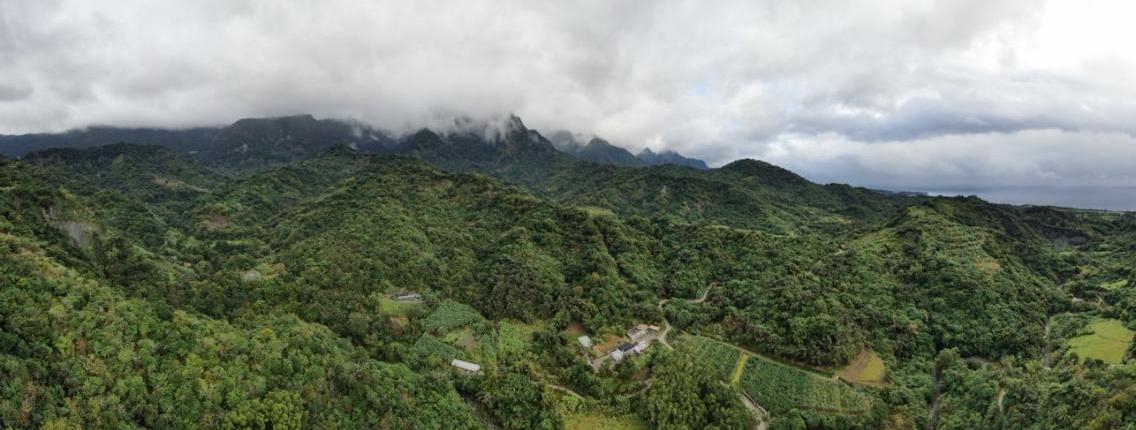
Zhuhu Mountain Retreat was originally a pleasant holiday homestay in the Coastal Mountain Range with over ten hectares of organic orchards. Taken in January 2019. (Photo: Jay Fang)
Helplessly putting up with the sudden abundance of wildlife
"Five years ago I could harvest over 20 tonnes of bananas and plantains a year and sell over a million. Last year I had to go out and buy bananas for my homestay guests."
Simple, honest Lai Chin-tien smiled wryly as he described what's happened to him over these five years. Five years ago, when I'd just started MiHuMiSang's smallholder production and sales records, I visited Lai's Zhuhu Mountain Retreat to learn about his production and sales. At the time all kinds of fruit flourished across his ten-plus hectares, with good yields; he had been strictly organic for many years, and a fruit trader from Hong Kong was even preparing to import his fruit to Hong Kong.
Zhuhu Mountain Retreat is in the mountains of Zhuhu Village, Changbin Township, Taitung County, in the Coastal Mountain Range — a 15-minute drive in from Provincial Highway 11, a very secluded, little-visited homestay. Whenever I passed in recent years I wanted to stay a couple of days and rest, but never had time — until at the end of last year Lai's wife Hsu Mei-chu called to say they wanted to join smallholder carbon farming. In December I went to Zhuhu Mountain Retreat again and learned they'd been badly damaged by wildlife, especially monkeys, leaving them with almost no fruit harvest.
"This really is a bit difficult, because smallholder carbon farming requires actual farm produce; without produce it's hard to have parameters for the baseline and project scenario." I thought this to myself but didn't explain it to them, as it might be hard for them to understand. Still, I was keen to get to the bottom of what had happened and see if there was any solution.
"In the past few years there have been far, far more monkeys, wild boar, muntjacs and crab-eating mongooses — especially monkeys. Last year I counted carefully: about 350 monkeys per jia. So the citrus we grow — pomelos, tangerines, kumquats — plus bananas, plantains, loquats, guavas, persimmons... are pretty much finished. Now all that's left is guava-leaf tea bags. We're thinking of switching to chestnuts, because they're spiny and monkeys don't really eat them — that might work, but we're still afraid wild boar will ruin them." The couple can only helplessly put up with the sudden abundance of wildlife.
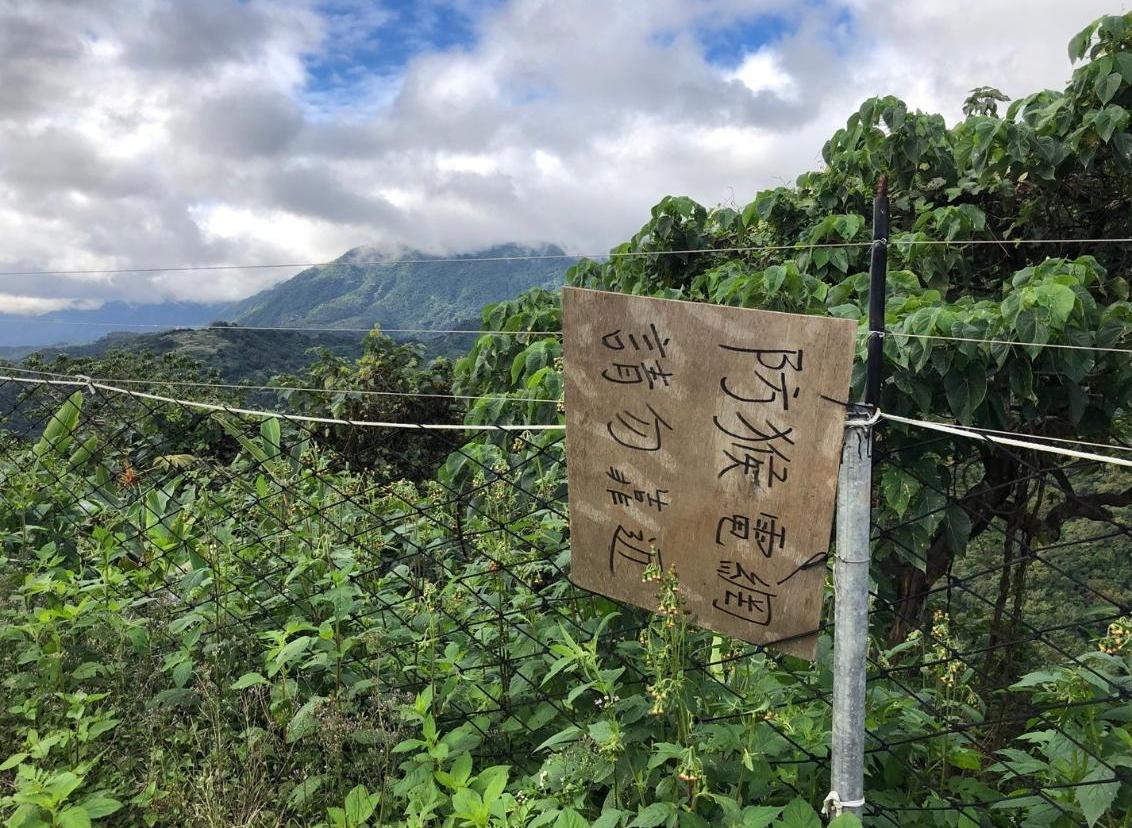
A low-current electric fence is no match at all for invading monkeys.
Monkeys eat and spit, wasting food
Lai grew up here, and in the past only saw a few wild boar and muntjacs, no monkeys. The monkeys came only five years ago. At first he used a low-current electric fence to keep them out, which worked a little in the first year or two, but then the monkeys learned to climb the poles and it became completely useless.
The worst thing is that the monkeys don't actually eat that much fruit — they waste it. With bananas, as soon as they're thumb-sized the monkeys come to eat them. Persimmons ripen in October, but the monkeys come in June and July — not really to eat, just to take a bite or two and spit it out. For farmers this is heartbreaking.
After Zhuhu Mountain Retreat, we visited Tsai Mei-hsiang, also in the Coastal Range, on the south branch of the Shuimuding River near Baxian Cave. Four years ago she started learning to roast and brew coffee, because her family also grows over a thousand coffee trees. They used to have a harvest and roasted it themselves, doing very well. In the past two years her family's coffee has become little more than a monkey snack; she harvested only a few catties of fresh cherries, and once made into coffee beans, less than one catty was left.
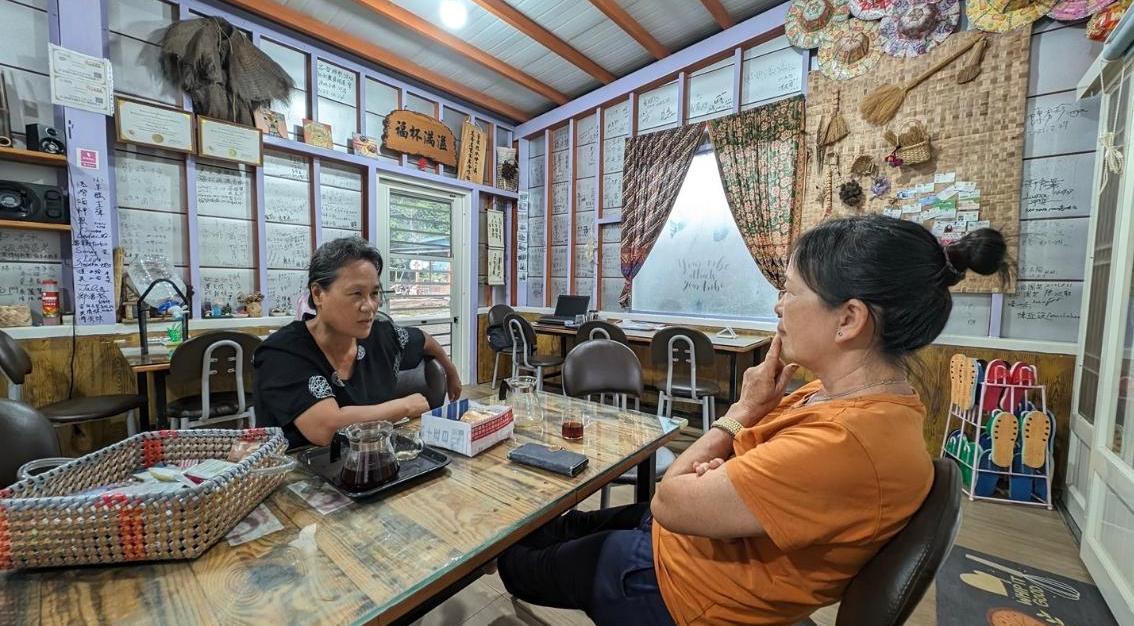
Amis farmer Tsai Mei-hsiang (left) feels like crying whenever monkeys come up.
"When I think of the monkeys I just break down. There's nothing we can do about them." Tsai can only helplessly face this cruel reality. She used to go happily to harvest; then it turned into chasing monkeys; now she's simply given up and left the coffee garden to go to waste, buying imported beans to roast.
Kao Ko-chung, a Bunun farmer on the north branch of the Shuimuding River, has for years devoted himself to growing and restoring youmang, a traditional Bunun crop — and he too has been defeated by monkeys. The Bunun are famous as hunters, but now most farm rather than hunt. He understands the monkeys' habits better, so every day, morning and evening, he and his dogs chase them away. At 4 a.m., before dawn, he has to set out to chase monkeys — and even so, much of his youmang, pumpkins and passion fruit is still ruined by them.
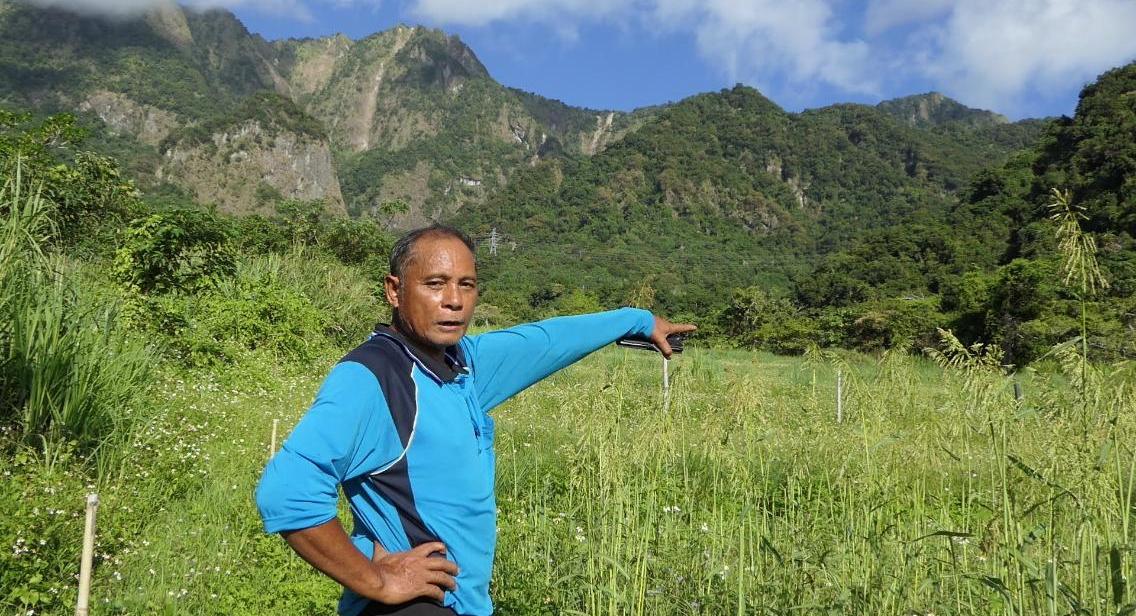
Every morning Kao Ko-chung takes his dogs to the fields in the dark to chase off monkeys.
This reminds me that in Hongye Village, Yanping Township, in the Central Range on the Huadong Rift Valley side, someone whose coffee cherries had been eaten by monkeys collected the leftover pits and made coffee beans from them, calling it "Utung coffee" — monkey coffee — since the local Bunun word for monkey is utung, and in Chinese it echoes Sun Wukong, the Monkey King. It's a make-do solution, styled after "civet coffee", but production is tiny and can't build a market. And last year Typhoon Haikui badly damaged Hongye Farm; it's now fast becoming a wildlife paradise.
Further north, at the southern tip of Hualien in the small village of Jingpu near Changhong Bridge, there's a little café, Huahua Caocao, run by young local Amis woman Huang Yu-shao. When we talked about monkeys, she mentioned that a few years ago people still grew rice by the sea at Jingpu; when the rice ripened, troops of monkeys would come to "harvest" the ears — again eating and spitting as they went, wasting food.
To farmers, monkeys are a kind of "alien species" too
In recent years the idea of conservation has spread through every level of society. Game restaurants have nearly vanished and indigenous hunting culture has declined, giving wildlife a chance to recover and multiply — even to invade human territory. The monkeys of Chaishan and National Sun Yat-sen University in Kaohsiung have long bullied humans, but under the banner of conservation many people are angry but dare not speak out.
Recently, the alien sacred ibis (a kind of wading bird), after escaping from a zoo 40 years ago, multiplied from six birds to over ten thousand. The Ministry of Agriculture launched a shooting programme; several hundred remain, and I believe eradicating them completely is impossible. Invasive alien species have had a considerable impact on Taiwan's agriculture and fisheries — golden apple snails, American crayfish, white leadtree and mile-a-minute weed are all vivid examples.
Looking back, as humanity moved from gathering, fishing and hunting into herding and farming, land development for agriculture wiped out many species; the great majority of extinctions came from farmland development, especially on the plains. And over the past 50 years urban development and property speculation have turned huge areas of lowland farmland into concrete jungle. Land prices have become astronomical; hundreds of years of farm income can't match the instant quick money from selling land, so lowland farmland would rather lie waste than produce anything.
Apart from some indigenous people and a few Han Chinese who have long lived in the mountains, because lowland land is expensive, some agriculture has moved up the mountains — betel nut, highland vegetables, high-mountain tea and temperate fruit — requiring roads and tunnels, with large machinery doing great damage to hillsides, and of course destroying wildlife habitat.
The monkey explosion in the Coastal Range of Hualien and Taitung is a different picture again. Most of those hit are farmers whose families have long lived here; to them, these monkeys are a kind of "alien species" too. Perhaps because the Coastal Range is so much smaller than the Central Range, once a species' population increases it can explode in a very short time.
Maybe one day robots can help?
None of the smallholders I've met want to use violence against the monkeys — and of course the monkeys won't be civilised and won't give up. As a result many smallholders are planning to abandon their crops and find another way to make a living. But for middle-aged and older smallholders, how easy is it to start over?
As it happens, at June's COMPUTEX TAIPEI the tech giants gathered to talk big (and feast) on AI, discussing all kinds of possibilities for AI development, but with little about AI for agriculture. The AI applications I can think of: could someone develop robots for farmers that drive away monkeys and wild boar? Or robots that help harvest and cut grass? Just talking — ChatGPT, which can write articles, draw pictures, sing and compose, simulate human conversation and even make lifelike videos — will lose its appeal in another two years, like the swarm of VR, AR, NFTs, Meta... or the dot-com bubble of 2000.

Asked to draw "a robot that chases away monkeys", ChatGPT-4's DALL-E 3 produced a robot watching monkeys play happily. (Image: Jay Fang)
Food is the first necessity of the people. However powerful computer bits become, they can't fill our stomachs. In the end people still have to eat — and eat well and safely — needing food nurtured by nature and the land. That is the supply chain with "eternal value". Technology must ultimately serve humanity and create value to be sustainable.
[MiHuMiSang: AI and the Mountain Road Monkeys]
Source: CM Media ( https://www.cmmedia.com.tw/home/articles/47352 )


