 努力小農
本文尚無譯文。
Let children learn to solve the problem of food waste
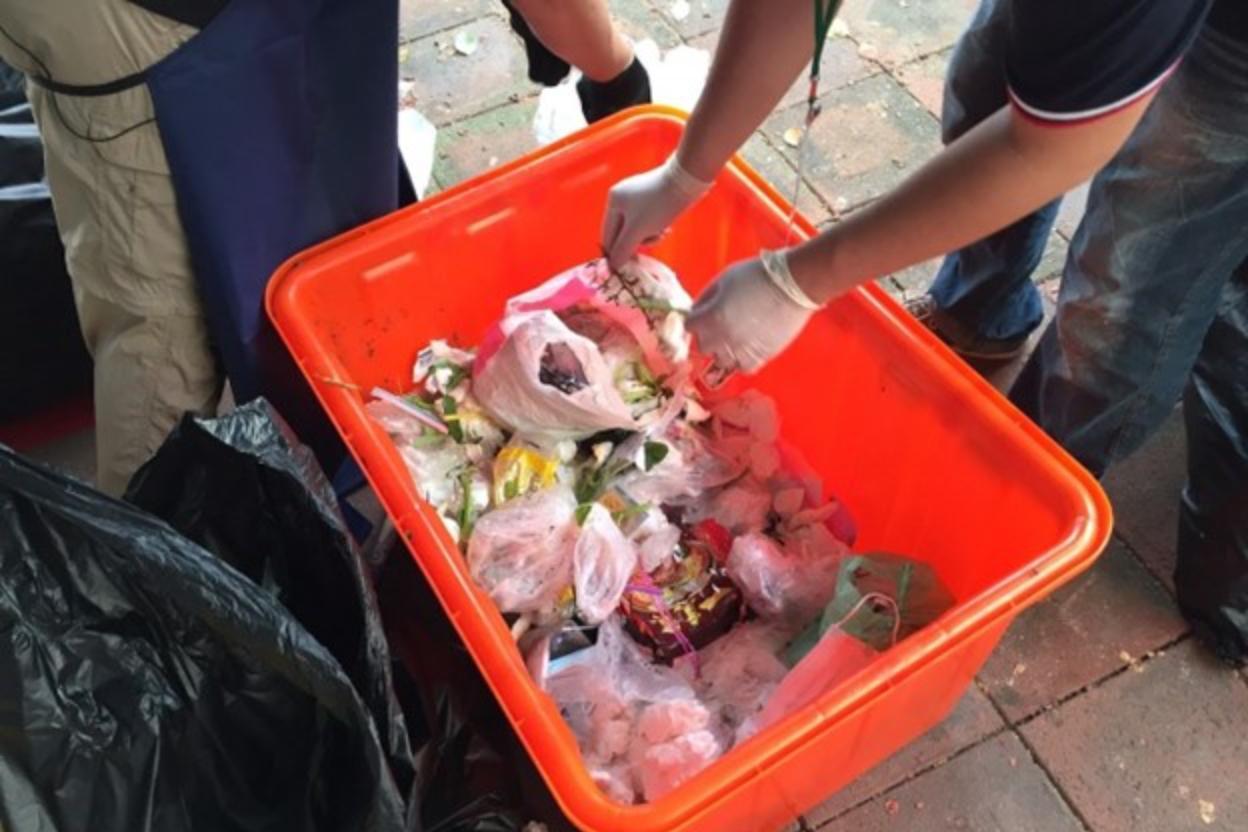
Many people have never faced the problem of collective food waste. If we can't face a problem, we can never solve it. (Photo: Jay Fang)
Every so often, food safety and leftover food in school lunches make the news, then vanish without a trace, as if they will never be solved. Food is the first necessity of the people; however advanced AI becomes, people still have to eat. If the problem of food can't be solved, that is a sign of educational failure. Of course schools and education authorities don't want to admit these unpleasant facts, and so won't face the problem or solve it. Civil-society groups and experts even propose a "special act on school lunches". Didn't they just pass the Food and Agricultural Education Act a while ago? Apart from tying up some government budget resources, what performance (KPIs) has come of it?
A year ago, a sixth-grader in Hangzhou, China — "Little Brother" — posted a video on Bilibili launching a "canteen uprising", protesting that his school lunches were "fit for livestock". Unsurprisingly, he received "attention" from all sides; even his father's workplace told his father to "straighten out his son", and the uprising failed. The story has recently gone viral again on the simplified-Chinese internet, causing a stir, but the problem still hasn't been solved.
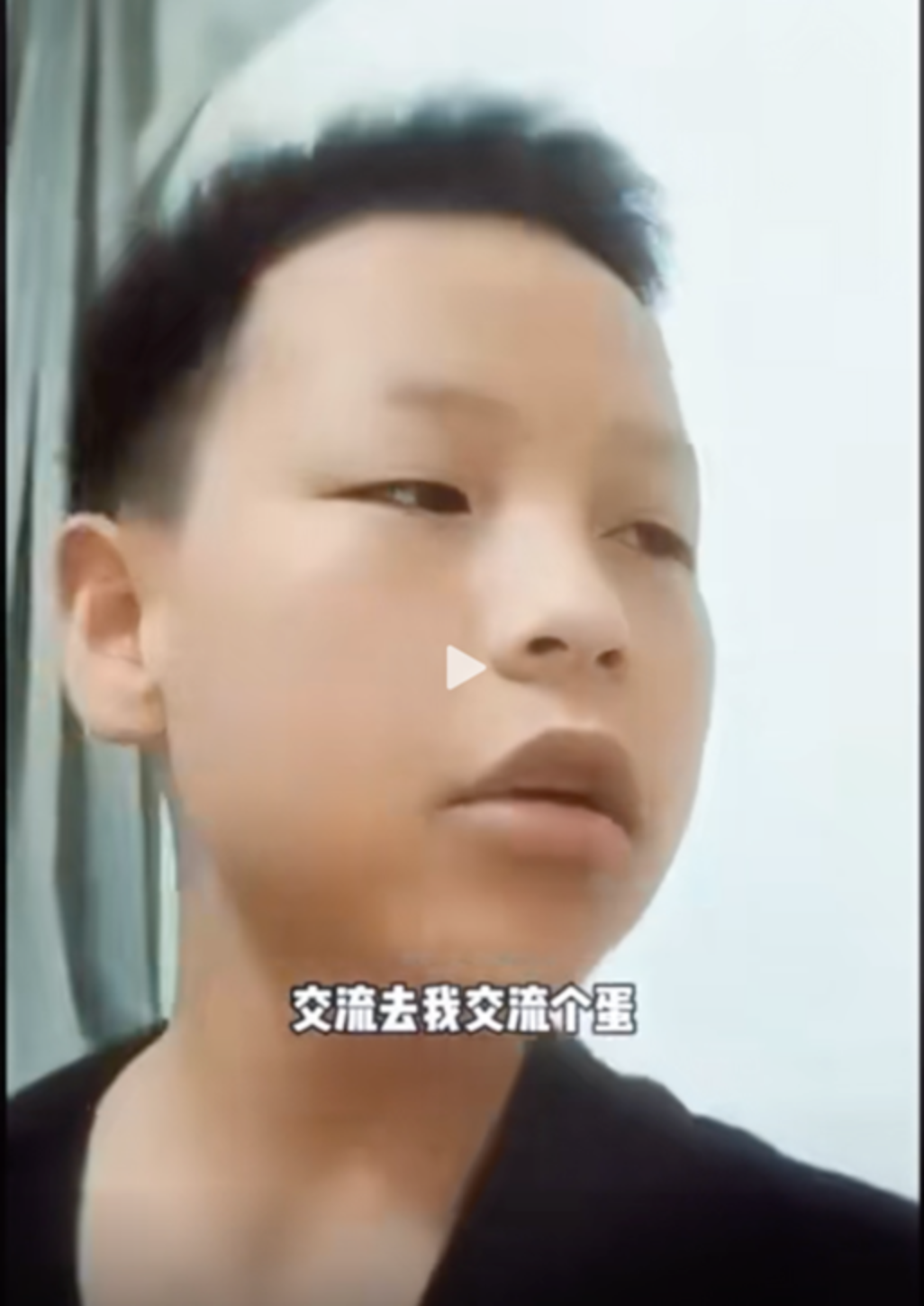
The problem faced by Chinese schoolboy "Little Brother" is exactly that in a patriarchal society, children's views can't get an objective, on-the-merits discussion with adults — hence his remark that "communication is a load of rubbish". The media now hyping the story are reporting on a video he posted a year ago, and he has also criticised reporters for not improving.
What primary and secondary pupils eat, and how they should eat, is surely a perennial problem everywhere. I believe that to find a solution, we should ask the pupils themselves and let them face the problem, understand its root causes, compromise with one another, discuss ways to solve it and implement them concretely. Only then will there be results that satisfy most people.
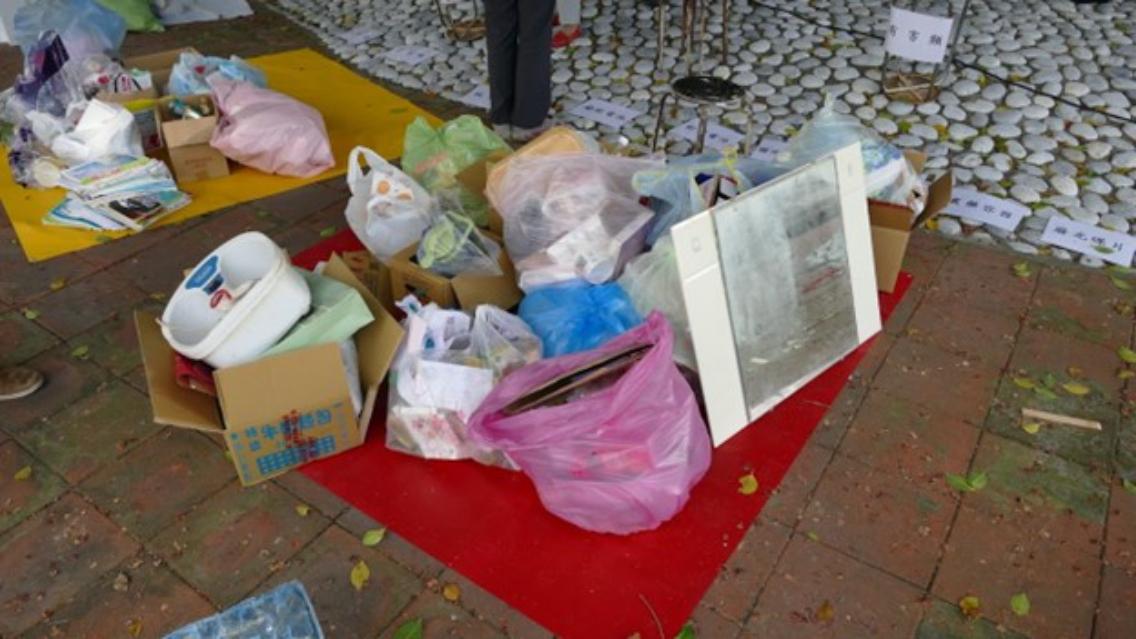
Waste has long been a nightmare Taiwan can't shake off. Food waste is only one part of it, but it bears on food safety, pupils' nutrition and where it ends up afterwards — disease prevention in pig farming, and whether it turns into gutter oil. (Image: Jay Fang)
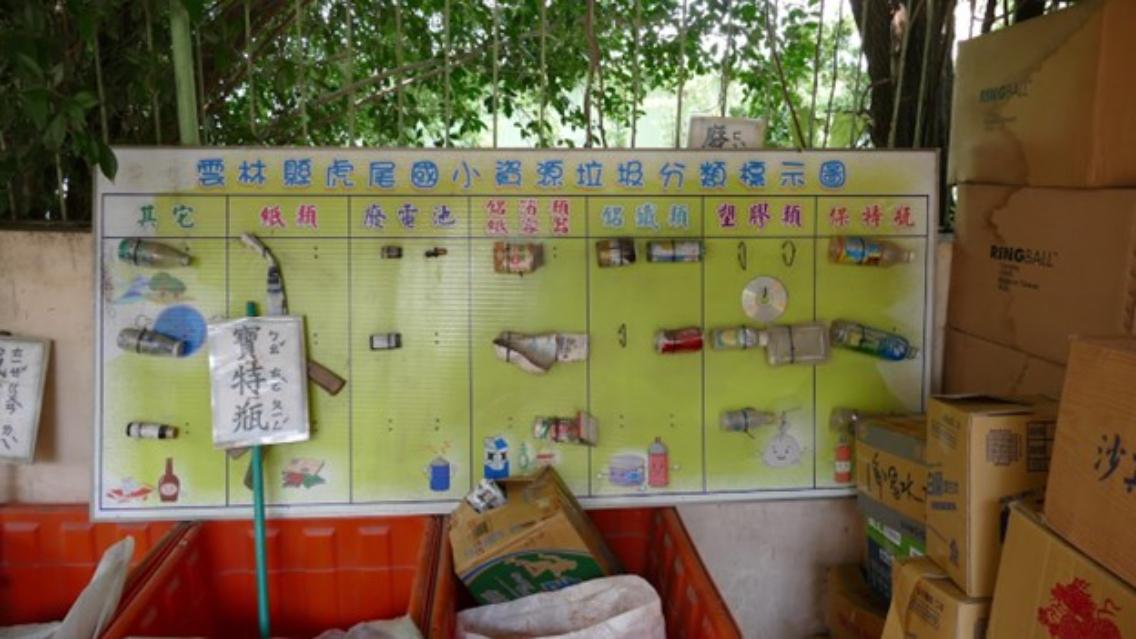
Our environmental and food-and-agriculture education for sustainability begins in primary and junior high schools, but it remains a top-down, patriarchal value system of laws and regulations, not starting from pupils' perspective to help them learn how to solve problems. (Image: Jay Fang)
The American Society for Quality began promoting quality education for children in 1987. In 2001 a primary school in Alaska won the US national quality award for solving problems pupils faced in the cafeteria. (Image: ASQ, Quality Digest)
School lunch is an important meal of the day for disadvantaged children
This reminds me of my time working at the American Society for Quality more than 20 years ago. The primary school that won the US Baldrige National Quality Award in 2002 was in Alaska's Chugach School District (now with just 370 pupils and 30 staff). It took the cafeteria as the target of its quality improvement, a project led and launched by pupils, who reached their goal after a year of training, discussion, implementation and revision.
In the US, school lunch is a very important meal. Don't think all of America is wealthy: there are many children in remote, poor areas for whom school lunch is the only decent meal of the day, supplying the nutrition growing children need for physical and mental development. So many schools insist on serving lunch whatever the weather, to ensure the children in their district are fed.
But school meals everywhere in the world have similar yet different problems. From 1987, ASQ's Koalaty Kid programme ran a series of quality-improvement campaigns in primary and secondary schools, trying to use quality tools to solve problems pupils encountered at school. Unexpectedly, it worked even better than quality education for adults, because relations among pupils are relatively simple, with no hierarchy and fewer conflicts of interest; they can tell the truth, and so face and solve problems.
The "Quality Tool Box" is actually a very simple method: observe, collect data, organise and analyse it, find the causes, and then seek to prevent and predict poor-quality events or products — saving costs and increasing satisfaction.
The process is roughly as follows (it varies with the situation):
1. Discuss a shared flow chart. Pupils learn simple flow charts and together draw the process, stages and steps from entering to leaving the cafeteria, then identify the stages or steps where problems arise.
2. Build an affinity diagram to categorise and rank problems. Using an "affinity diagram", pupils list all the problems and then classify them.
3. A fishbone diagram to find root causes. Then a "fishbone diagram" is used to sort out the causes of problems, branching into people, equipment, materials, methods, environment and so on, to find the root causes of failure — whether systemic or individual — and solve them in different ways.
4. A force-field diagram to analyse driving and restraining forces. A "force field" analysis looks at the causes of failure and the forces that would eliminate them, and discusses how to strengthen the forces for success and remove or reduce the forces of failure.
5. A Gantt chart for team implementation. A "Gantt chart" is used to discuss how to solve the problem: the steps (priorities and dependencies), who is responsible, and the resources and preparation needed, scheduled into a work plan.
Through open discussion, pupils solve all kinds of problems in the school cafeteria
As I vaguely recall, the pupils tackled order, noise and food taste (including leftovers) in the cafeteria. All grades used to go into the cafeteria together; though in different grades, they ate the same food and queued to be served, which was chaotic, with pushing, fights and even slips. Everyone was tense at mealtimes; the pupils were crowded and very noisy and couldn't eat properly. Different tastes meant some food was snapped up while other food was ignored and wasted. These problems happened every day — clearly systemic problems.
The pupils held meetings, drew flow charts of the meal process from class to individual, and found problems in them. On leftovers, they identified which dishes were left over most (like cauliflower) and which ran short (like fried chicken drumsticks). The teacher in charge of nutrition and menus explained the nutrients in each food and their prices, and together they found menus pupils could accept that met nutritional requirements, rotated regularly. The dishes might not change, but the cooking methods, seasoning and frequency of serving did. After a period of trial and rolling revisions, pupils' nutrition was balanced and food wasn't left over.
The once noisy cafeteria improved too. Older pupils ate first: they move fast, eat quickly and run off to play. Younger pupils, who move and eat more slowly, ate afterwards — and were served different dishes from the older ones, since tastes differ with age.
This example illustrates several things:
1. All public matters should go through open discussion and reach consensus before problems can be solved.
2. Open discussion must involve all stakeholders together and proceed step by step from the most basic procedures.
3. Open discussion must be based on facts, identify the problem and address it, rather than everyone talking past each other without aim.
4. There must be constraints — such as the nutritional requirements of lunch, the school's budget, and mealtime and space — and discussion must take place within them.
5. Simple quality tools should be used as the basis for discussion; without a method for discussing, good results are hard to achieve.
6. Through discussion you learn the process and causes of the problem or failure, so you can find ways to remove the causes — a strategy of solving problems at the source.
7. Conclusions must be actionable, with time targets set, and who is responsible for doing what.
8. Improvement doesn't happen overnight; it takes time to improve step by step. Even when it works, you must regularly review whether there are problems and adjust and solve them — ideally nipping them in the bud.
Perhaps today's Legislative Yuan also needs some quality-improvement campaigns. Even the "parliamentary reform bill" amending the Act Governing the Legislators' Exercise of Powers turned into everyone talking past each other, each side mobilising crowds to compete in strength and volume, becoming a source of social division. Systematic reform is needed — but that's as hard as asking a dentist to do his own root canal or pull his own teeth.
A special act on school lunches may not only fail to solve problems but create more
Civil-society groups expect a Legislative Yuan that can't even look after itself to pass a "special act on school lunches" to solve the problem — a ridiculous idea. Once a law is passed it's one-size-fits-all. Such "policies and bills" not only fail to solve problems but just shift responsibility onto schools and local governments, overburdening teachers and pupils already bearing countless legal requirements.
Rather than looking to legislation, it's better to go back to the schools and let pupils speak up about the problems they face, with teachers and parents helping from the side and offering suggestions, requirements or constraints, so improvement plans are feasible. Perhaps this is how the next generation learns the procedures and methods of democratic deliberation to solve their own problems — rather than silently putting up with them, or ending up like Little Brother's "canteen uprising", a youthful ambition unfulfilled that became a bad experience of failure in life.
Source: CM Media ( https://www.cmmedia.com.tw/home/articles/47609 )


