 努力小農
本文尚無譯文。
Towards 1,000 hectares of smallholder carbon farming & FAQ (Part 2)
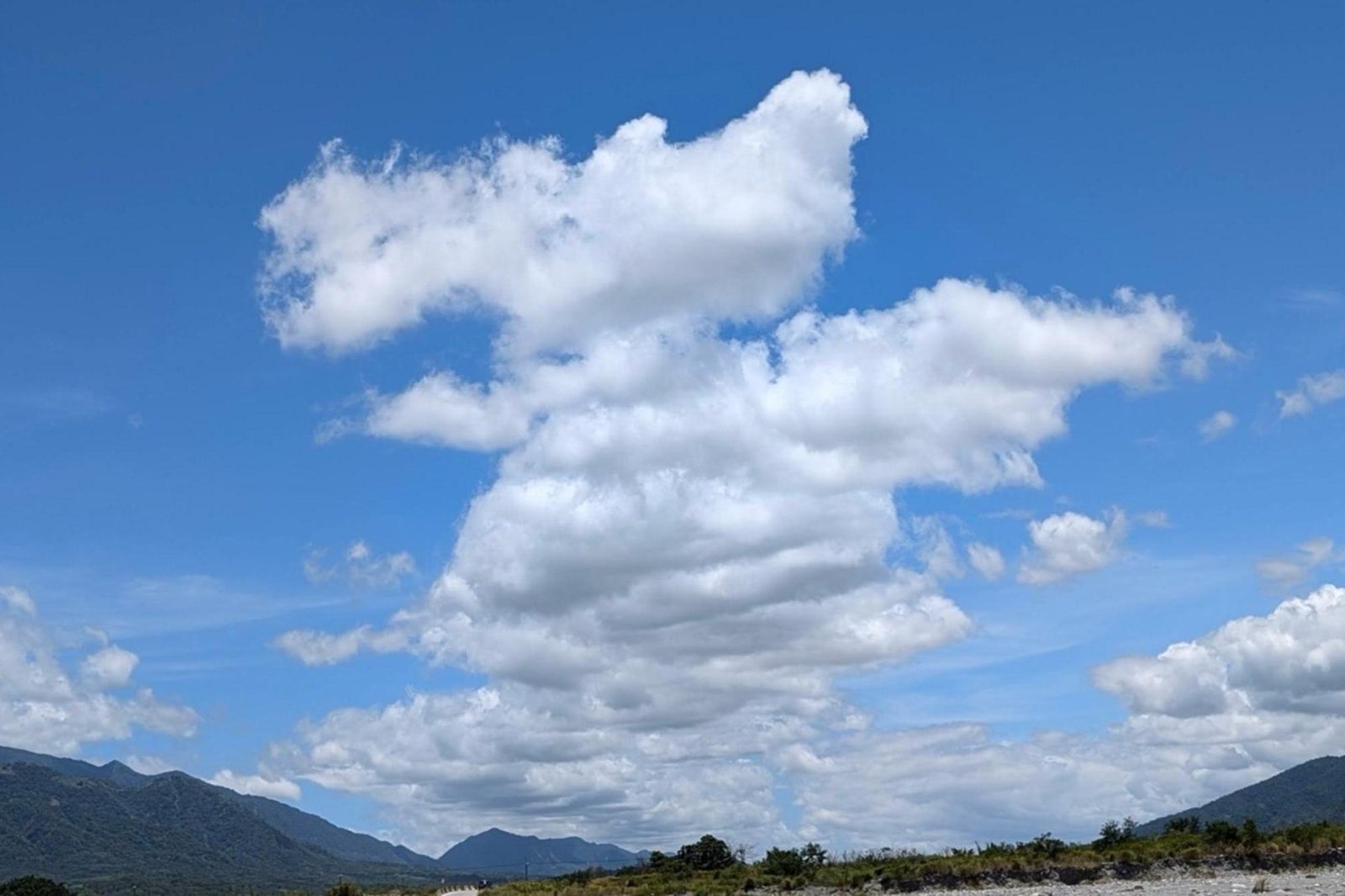
Scorching weather and climate change are causing extreme weather that threatens human survival. Soil carbon sequestration can raise farm output and farmers' incomes while reducing CO2 in the atmosphere — killing several birds with one stone, and perhaps the best solution. (Photo: Jay Fang)
Continuing from the previous MiHuMiSang column, Through the hard times... towards 1,000 hectares of smallholder carbon farming & FAQ (Part 1): the review of the Taiwan Smallholder Carbon Farming Project earlier this year found that soil organic carbon storage exceeded the original expectation of 1 tonne of CO2 equivalent per hectare. So, through a project design change with the international emission-reduction certification body the Gold Standard, it is being upgraded to a large-scale project, aiming for better performance on carbon reduction and the Sustainable Development Goals (SDGs). This has also raised questions from various quarters about how the project works, which we answer one by one for this stage. If you have questions, you can email[email protected]and we'll do our best to answer.
Q13. I heard that if smallholder carbon farming credits are sold abroad, they no longer belong to Taiwan?
A13. Unless Taiwan has a special agreement with another Party, carbon credits generated by the Taiwan Smallholder Carbon Farming Project count towards Taiwan's own nationally determined contribution. The project follows the Gold Standard's international emission-reduction certification rules, and the Gold Standard follows the provisions on "voluntary emission reduction" in international conventions such as the UN Framework Convention on Climate Change (UNFCCC) and the Paris Agreement. Article 6.4 of the Paris Agreement provides:
4. A mechanism to contribute to the mitigation of greenhouse gas emissions and support sustainable development is hereby established under the authority and guidance of the Conference of the Parties serving as the meeting of the Parties to this Agreement for use by Parties on a voluntary basis. It shall be supervised by a body designated by the Conference of the Parties serving as the meeting of the Parties to this Agreement, and shall aim:
1) To promote the mitigation of greenhouse gas emissions while fostering sustainable development;
2) To incentivize and facilitate participation in the mitigation of greenhouse gas emissions by public and private entities authorized by a Party;
3) To contribute to the reduction of emission levels in the host Party, which will benefit from mitigation activities resulting in emission reductions that can also be used by another Party to fulfil its nationally determined contribution; and
4) To deliver an overall mitigation in global emissions.
The main purpose of these provisions is to require Parties to establish voluntary emission-reduction mechanisms whose reductions count towards the Party's Nationally Determined Contribution (NDC). Unless there is a special agreement between Parties to transfer reductions, it is not like the old Clean Development Mechanism (CDM), where the country that bought carbon credits owned them.In short, the emission reductions generated by Taiwan's smallholder carbon farming count towards Taiwan's own contribution; only if Taiwan has a special agreement with certain Parties would they transfer to those Parties' contributions.
Q14. In its first year smallholder carbon farming reduced an average of over 80 tonnes per hectare — far above the original expectation of 1 tonne, and even above forestry's 10–15 tonnes per hectare. How can this be?
A14. First, carbon reduction is compared against your own baseline. If baseline emissions are high, implementing a reduction scenario offers a big chance to increase carbon sinks. Agricultural and forestry methodologies differ because their baseline scenarios differ. Forestry basically involves no tillage or disturbance and is stable over the long term, so its emission baseline starts much lower than agriculture's. Farming causes greater disturbance and annual soil carbon losses, so the emission baseline is high; with appropriate measures, better reductions result.
Moreover, smallholder carbon farming follows the Gold Standard's Soil Organic Carbon Framework Methodology, which has its own basis and verification experience. Under the international 4 per 1000 Initiative's principle of increasing soil organic carbon by four per thousand a year, our first-year increase was also within four per thousand. From our limited one year of preliminary data, reducing tillage is the main reason for increased soil carbon sinks, which is similar to the findings of the FAO's long-term research.
But this is only one year's data and cannot predict how things will develop. After all, this is Taiwan's first such experiment under the Gold Standard's Soil Organic Carbon Framework Methodology. On many things, "to know what you know and know what you don't know" — what we know is very limited. And agriculture is heavily affected by climate, pests and diseases, how smallholders operate and changes in farm inputs. We can only face agriculture's situation under climate change humbly and honestly.
We understand people's doubts. On the principle of openness and transparency, we welcome everyone to visit the sites to see smallholders' actual work. We will also explain how implementation is going, and welcome anyone interested to take part, monitor in parallel, or set up new projects serving more smallholders.
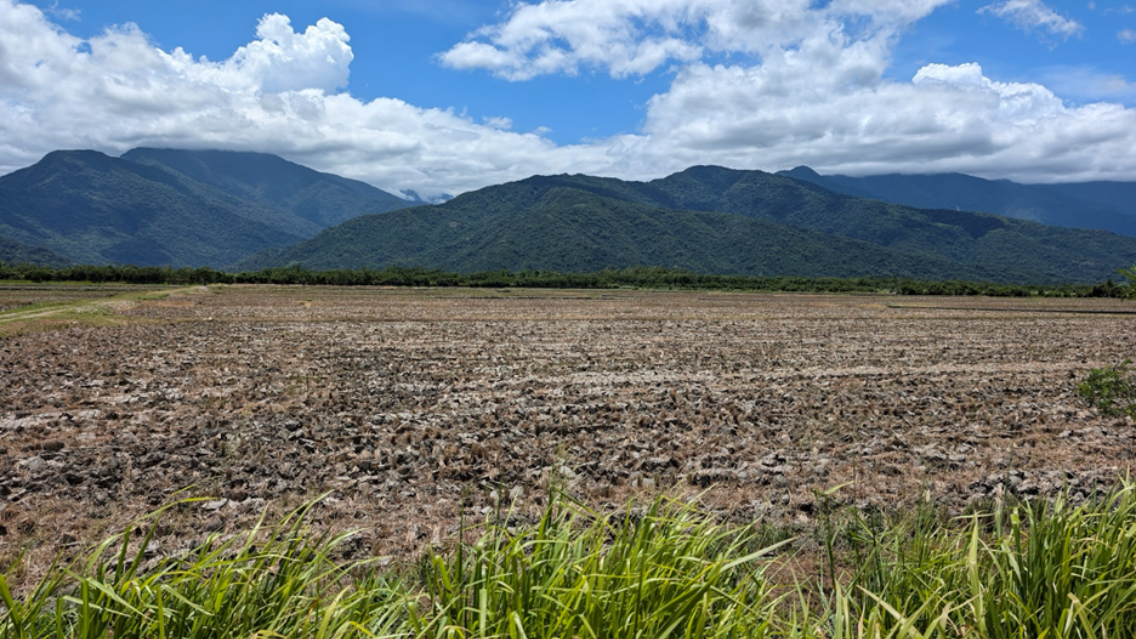
Simply reducing bare ground in the fields reduces losses of soil organic carbon and increases soil carbon sinks.
Q15. What if future carbon reductions fall short of expectations?
A15. In the risk assessment of the updated large-scale project design documents, and at the stakeholder consultation meeting, people raised this question. As noted above, agricultural carbon reduction is highly uncertain and we must assess it conservatively and carefully.In the worst case, soil organic carbon decreases rather than increases, and we must face that scenario. If it happens, our response will be to revert to the original micro- or small-scale project — a risk we must face.
We also have a proactive strategy, because Gold Standard certification isn't only about carbon reduction but also quantified certification of six Sustainable Development Goals (SDGs). The most important is SDG 12 Responsible Consumption and Production, which matters greatly: through performance on the other SDGs we can still get companies to buy carbon-farming smallholders' products and support them, which also adds value to listed companies' sustainability reports.
We believe agriculture is the core business and farm produce the main "carbon rights" product; carbon reduction is just an additional benefit, used to record and present how smallholders farm and their efforts to reduce carbon.
Smallholders who join carbon farming certainly don't come for the income from selling carbon credits. Facing global climate change, everyone is a victim; we must make efforts and take action to change right away rather than wait for doom. All the smallholders we've interviewed have realised that, whatever carbon credits there may be, the most important thing is to act quickly to save themselves and others; even without carbon credit income, what needs doing must still be done.
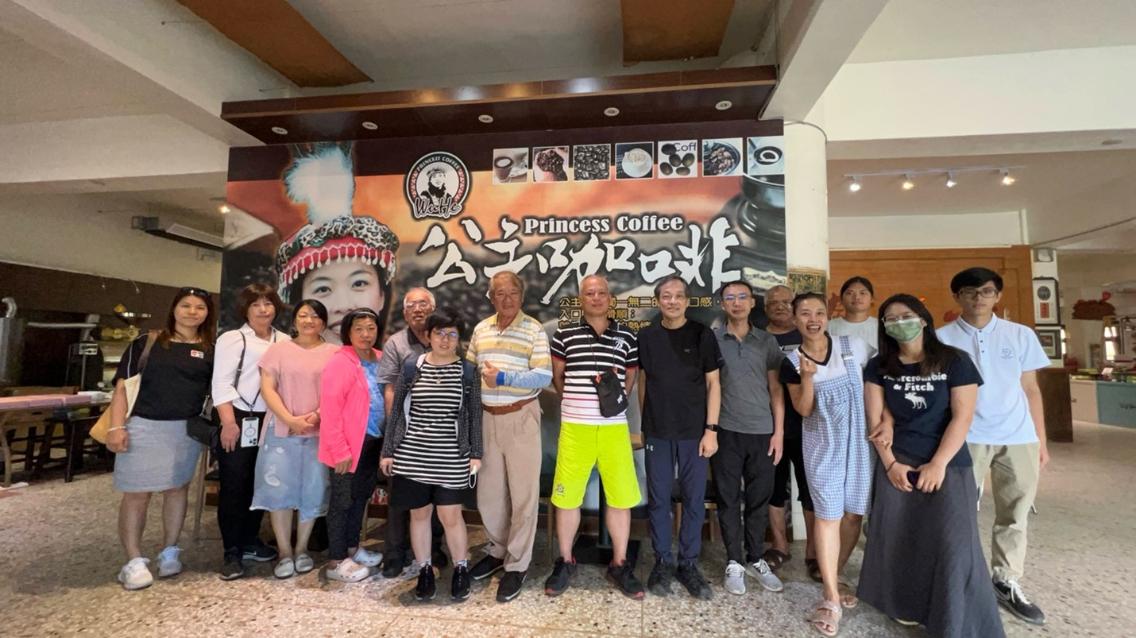
From July the smallholder project is holding briefings around Taiwan to bring in more smallholders. On 9 July at Wuhe Princess Coffee in Hualien, local smallholders were told how to join smallholder carbon farming.
Q16. What is the outlook for smallholder carbon farming?
A16. In the global crisis of climate change, no one is an outsider. Smallholder carbon farming has each smallholder face this global challenge with their own strength — of course like a mantis trying to stop a chariot. But we hope to set a good example for a paradigm shift, so people stop just talking and act immediately. Smallholders plant seeds of carbon reduction one by one with their own hands, hoping they'll take root and sprout everywhere.
Don't underestimate the influence of a single seed. Starting from the primary farm produce necessary to sustain life, through food supply chains and value chains, we spread the sustainable value of smallholder carbon farming in every direction so more people understand that change must begin at the systemic roots. Don't fail to do good because it's small, nor do evil because it's small. If even resource-poor smallholders who can barely look after themselves can change the production methods they depend on, reduce emissions and increase soil carbon sinks, big companies — and even nations — should all the more take the necessary action.
Whatever the results of carbon reduction, we will keep following the universal values of the Sustainable Development Goals (SDGs). We need more people to take part and invest in order to turn the tide of climate change.
Source: CM Media ( https://www.cmmedia.com.tw/home/articles/47988 )


