努力小農
本文尚無譯文。
Crisis and opportunity for the future of food and agriculture under climate change
McKinsey surveyed companies and investors worldwide to forecast the direction and difficulties of agri-food businesses on the path to net zero. (From the cover of the McKinsey report)
According to McKinsey's survey report this September on building a green future for food and agriculture businesses, many industry leaders expect major impacts on the agricultural value chain in the next two years, creating new types of agriculture and scaling up into industries of green growth and resilience.
Humanity has more than 10,000 years of agricultural development, creating social, economic, cultural and political systems with agriculture as their backbone. Over the past 200 years, the Industrial Revolution together with imperial colonialism absorbed huge amounts of agricultural population and land, creating new urban landscapes of cities and factories, and much good farmland was lost. When I was a child, the area around Gongguan, National Taiwan University and Da'an District in Taipei was high-grade farmland that couldn't be used for non-agricultural purposes; today, apart from NTU's experimental fields and greenhouses, there's no trace of farming.
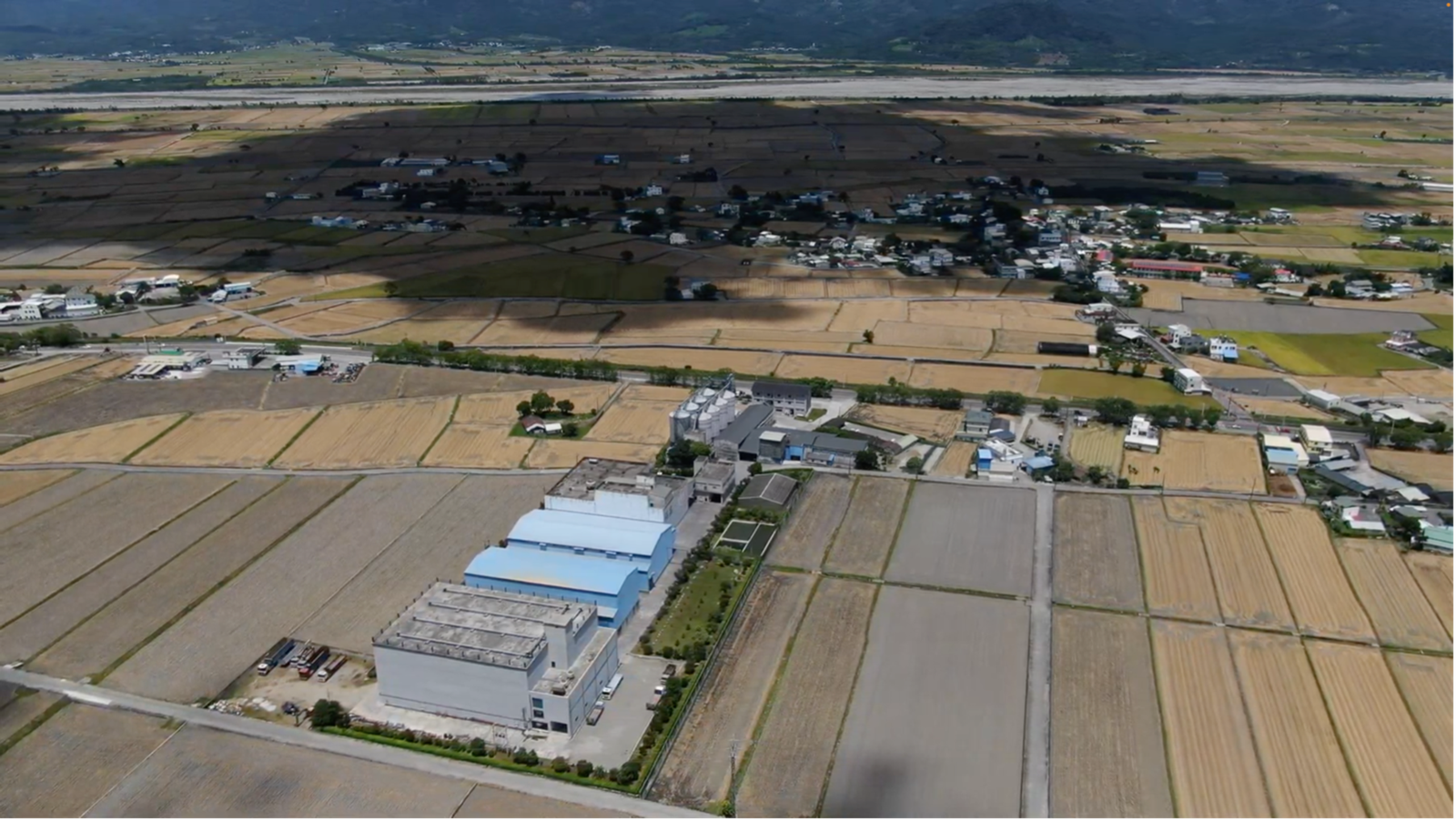
How to make the food-production value of farmland exceed that of building land is the biggest challenge for agricultural carbon reduction worldwide in future. (Photo: Jay Fang)
Yet in the face of global warming, agriculture also makes an irreplaceable "contribution": about a quarter of greenhouse gases come from agriculture, and adding processing, transport, storage and sales along the food supply chain, a third come from the agri-food sector, according to FAO statistics for 2022. And agriculture's largest sources of greenhouse gases happen to be the result of industry feeding back into agriculture: 1) large amounts of heavy machinery destroying forests and ploughing on a large scale, releasing large soil carbon sinks into the atmosphere; 2) heavy use of chemical fertilisers and pesticides, wiping out soil microbes and leaving soil acidified, hardened and lifeless.
In the second half of 2022 McKinsey surveyed 162 industry professionals — 87 in food, agriculture and agtech, and 75 from investment, incubation and financial institutions. In the 21st century, eleven shifts in business thinking across five areas will seriously challenge agriculture:
The five categories of challenges and eleven shifts for the future of food and agriculture, in order of difficulty:
| 1. Value of land for construction exceeds that for crop growing |
| 1. Land protection and conservation |
| 2. Regenerative agriculture economic services |
| 3. Smallholder support services |
| 2. Driving the biological revolution |
| 4. Converting manure into fuel and fertiliser |
| 5. Bio-refined fuels |
| 3. Sustainable diets |
| 6. Plant protein |
| 7. Lab-grown meat |
| 4. Reducing waste and loss |
| 8. Optimising crop storage |
| 9. Reducing downstream food waste |
| 5. ESG transparency and accountability |
| 10. Tracing outcomes across the whole value chain |
| 11. Farm-level insights |
For these five categories of challenges, here is a discussion based on Taiwan's current situation, from easiest to hardest:
1. ESG transparency and accountability:
Under current regulations, the Financial Supervisory Commission requires listed and OTC companies to file annual ESG (environmental, social and governance) reports. Most reports still focus on charitable donations or public-interest activities such as beach clean-ups and street sweeping. In fact, the most important part of ESG is whether a company's internal governance is sound. For agribusinesses, carbon reduction, increasing soil organic carbon and regenerative agriculture are excellent ESG topics, but they need transparent disclosure that outsiders can grasp at a glance to help agribusinesses develop. Some farms are carrying out carbon footprint inventories, which is a start, but further carbon-reduction plans are needed, integrated with future operating strategies.
The Taiwan Smallholder Carbon Farming Project, registered on the internationally known emission-reduction certification platform the Gold Standard, centres on using the MiHuMiSang app as a digital tool for production records. It can disclose carbon-reduction work transparently in real time and accept oversight and feedback from all sides. This is a way of using information and communication technology (ICT) from smallholders' perspective, and a means of helping smallholders overcome certification hurdles and the urban–rural divide, selling smallholder products directly to companies or consumers, realising the 2030 Sustainable Development Goals (SDGs) and helping to raise the value chain.
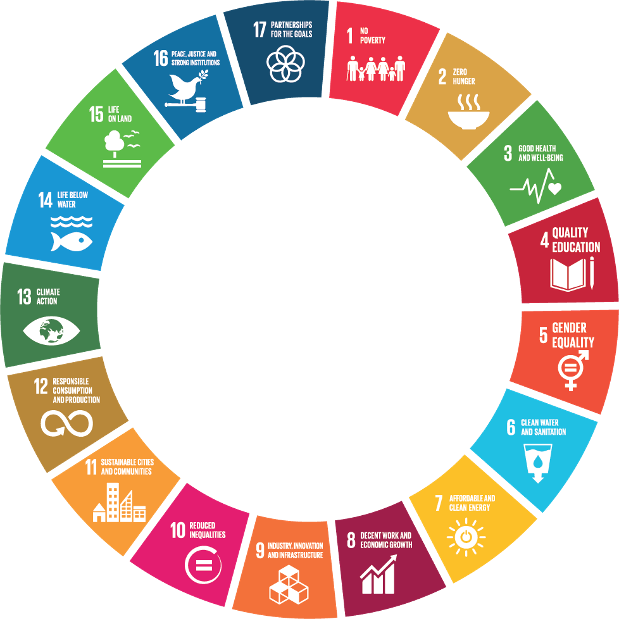
The UN's 17 Sustainable Development Goals for 2030, with 169 targets and 247 indicators, are humanity's "universal values" for this stage.
2. Reducing waste and loss:
When I was young and things were scarce, elders said you'd be struck by lightning if you left food uneaten. Now every day we see garbage trucks take away bucket after bucket of food waste; lots of perfectly good food is thrown away, and expired food in shops is scrapped — even giving it away is illegal. According to World Data statistics, downstream food waste accounts for 6% of human greenhouse gas emissions, more than petrochemicals (3.6%), cement (3%), waste (3.2%) and aviation (1.9%). Reducing unnecessary food waste, or over-consumption that leads to obesity, would be a great good.
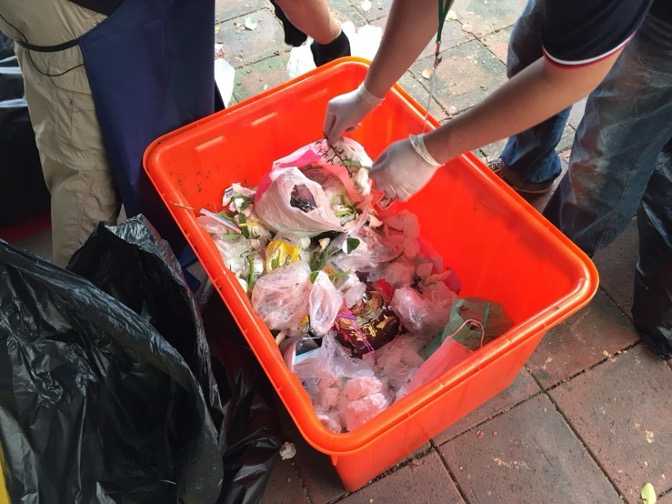
Never underestimate the carbon emissions of bag after bag of food waste. This discarded food produced emissions in growing, harvesting, distribution, storage and cooking; uneaten, it becomes rubbish. In an incinerator it becomes CO2, and energy is consumed to "boil off" the water in it; in a landfill it becomes methane, 25 times as potent as the CO2 from incineration. Best not to leave food over at all — that alone could cut greenhouse gases by 6%. (Photo: Jay Fang)
Taiwan is tropical and subtropical, and food spoils and deteriorates easily. This year, for example, Ruisui in Hualien had a bumper pomelo harvest and hundreds of tonnes of pomelos were dumped in the fields — a great pity. Cold-chain storage and logistics are very important for food, especially since much of Taiwan's fruit is "tree-ripened": delicious, but a challenge to store and ship. Building cold chains for farm produce in future can cut the greenhouse gases generated by large amounts of food waste, and give farmers longer sales periods and more chances for processing.
3. Sustainable diets:
"Go vegetarian to save the Earth." In terms of greenhouse gas emissions, livestock seems to be agriculture's largest source. A few years ago lab-grown meat and plant-based meat were very hot topics, and many tycoons, such as Li Ka-shing of Hong Kong, invested in these new "meat" sources. Eating "vegetarian meat" and "artificial meat" seemed a solution to global warming. But in recent years, close scrutiny of how artificial and plant-based meat are produced shows they don't cut carbon emissions that much. "Meat" grown from tissue culture in the lab costs hundreds of dollars a pound; besides being a luxury, its life-cycle emissions are higher than a good steak. The same goes for vegetarian meat: deep processing recombines plant proteins so they look and taste like meat, but plenty of additives, colourings and preservatives go in — doing health more harm than good — and the carbon emissions and market prices of processing are considerable.
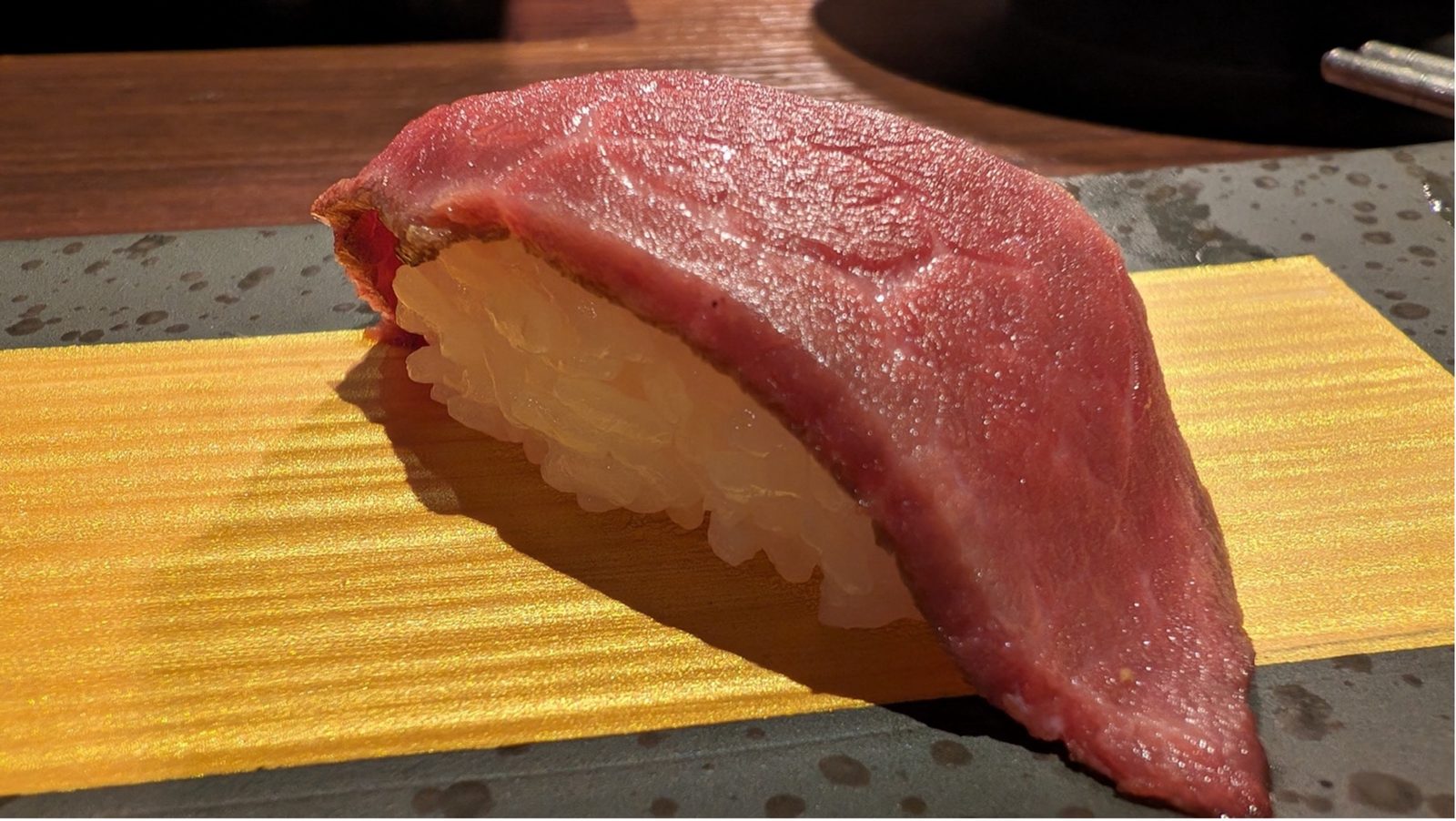
Lab-grown artificial wagyu is more expensive than real wagyu, and of course its emissions are higher than real ranch-raised wagyu. Does it mean anything for carbon reduction? (Photo: Jay Fang)
Rather than following fashion and investing in superfluous products like artificial and plant-based meat, adding unnecessary energy consumption and emissions, it's better to return to "body and land are one" — eat local, eat in season, nutritious and healthy, while supporting local smallholders. No need for needless worry: that is the best way to save energy and cut carbon.
4. Driving the biological revolution:
Taiwan is small and densely populated with expensive land, so there's probably no opportunity to grow biofuel crops on a large scale. Taiwan is also very conservative about GM crops. Pursuing a "biological revolution" by refining fuel oil from crops has low economic feasibility; GM would also need to overcome current legal restrictions and win public support, and its necessity is debatable.
Turning poultry and livestock manure into fertiliser is a very feasible path. Given the greenhouse gas problem of biogas (methane's global warming potential is 25 times that of CO2), more and more countries are abandoning anaerobic fermentation of livestock manure to produce methane in favour of aerobic composting. This both reduces methane emissions and produces organic compost that helps store soil organic carbon, achieving carbon reduction. Taiwan's livestock farms are also mostly small; each recovering methane for energy has little effect, and methane easily leaks, causing more greenhouse gas than burning it directly. In future Taiwan should also collect manure from many farms (chicken, pig, cattle, goat, etc.) to make well-matured compost, reducing chemical fertiliser and increasing agricultural carbon sinks.
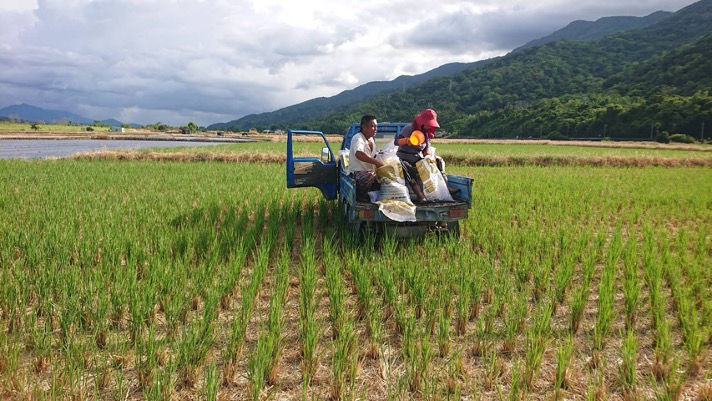
Using manure was once seen as a symbol of backwardness. Thirty years on, the wheel has turned: compost produced by high-tech aerobic fermentation is now a must-have for the hottest low-carbon agriculture internationally. (Photo: Chen Wen-hua, chief of Changliang Village, Yuli, Hualien)
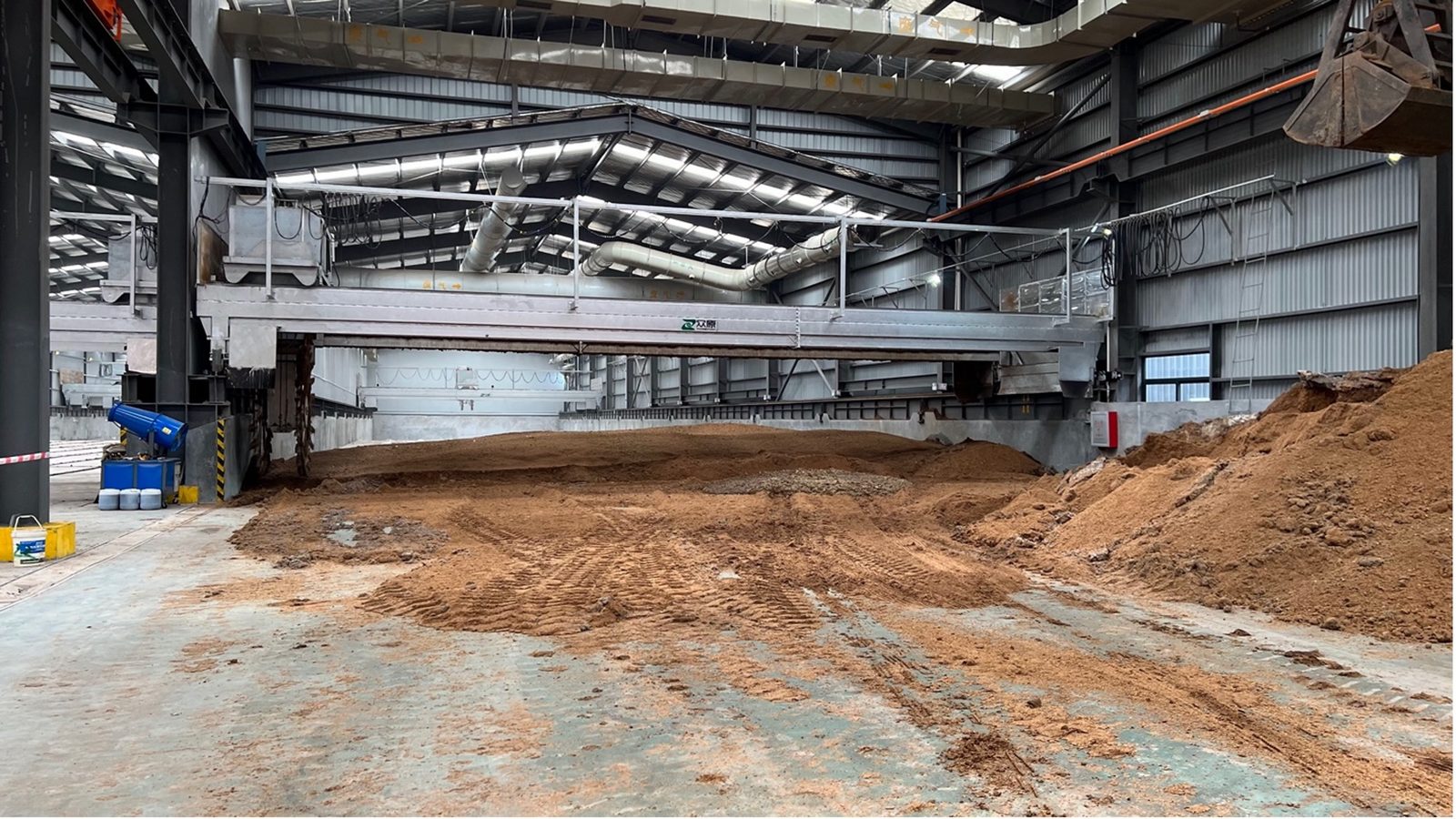
A large composting plant can cut methane emissions by tens of thousands of tonnes a year — a considerable carbon-reduction benefit. (Photo: Jay Fang)
5. Making farmland's agricultural value exceed that of building land:
This is the hardest challenge internationally, and even harder in Taiwan — especially under Taiwan's "zone expropriation" policy, through which farmland is seized by trickery and force and nibbled away bit by bit, plus the recent "solar on farmland" green-energy policy, with everyone coveting farmland. How to keep farmland for farming, and make the value and income from farming exceed building land, is not only a matter of land justice and intergenerational justice but a challenge for sustainable development. Consolidating social justice, food security and climate security will seriously challenge many vested interests.
We need to use "regenerative agriculture" to rebuild on farmland agriculture's place in the Earth's carbon, nitrogen and water cycles, as well as the cycles of potassium, phosphorus and trace elements. This is currently the best international solution for agricultural carbon reduction: it reduces agriculture's external costs and its impact on ecosystems, creating sustainable agriculture with the least farmland and fewest resources.
Taiwan is mostly smallholders. We must start by educating the demand side — consumers and companies — so they value smallholders' carbon reduction and regenerative agriculture and are willing to pay what seem higher prices to maintain sustainable value. This needs more companies providing smallholders with hardware and software services. The "carbon farming project" I designed for smallholders tries to bring smallholders together for international emission-reduction certification, producing internationally recognised carbon credits along with quantified certification of the Sustainable Development Goals. International certification raises the value of carbon-farming smallholders' products and their incomes, sustaining their low-carbon, shared-benefit business model — only then can more young farmers be drawn in, and only then can sustainability be achieved.
Agricultural carbon credits can currently reach US$100 per tonne internationally (about NT$3,000), which seems expensive. But compare with green energy in Taiwan: a kWh of green electricity costs NT$4–10, and each kWh cuts 0.5 kg of emissions, so it takes 2,000 kWh to reduce one tonne — equivalent to NT$8,000–20,000 per tonne of CO2, with many residents' protests and other uncertainties and risks besides. So agricultural carbon credits actually offer better value for money than green energy.
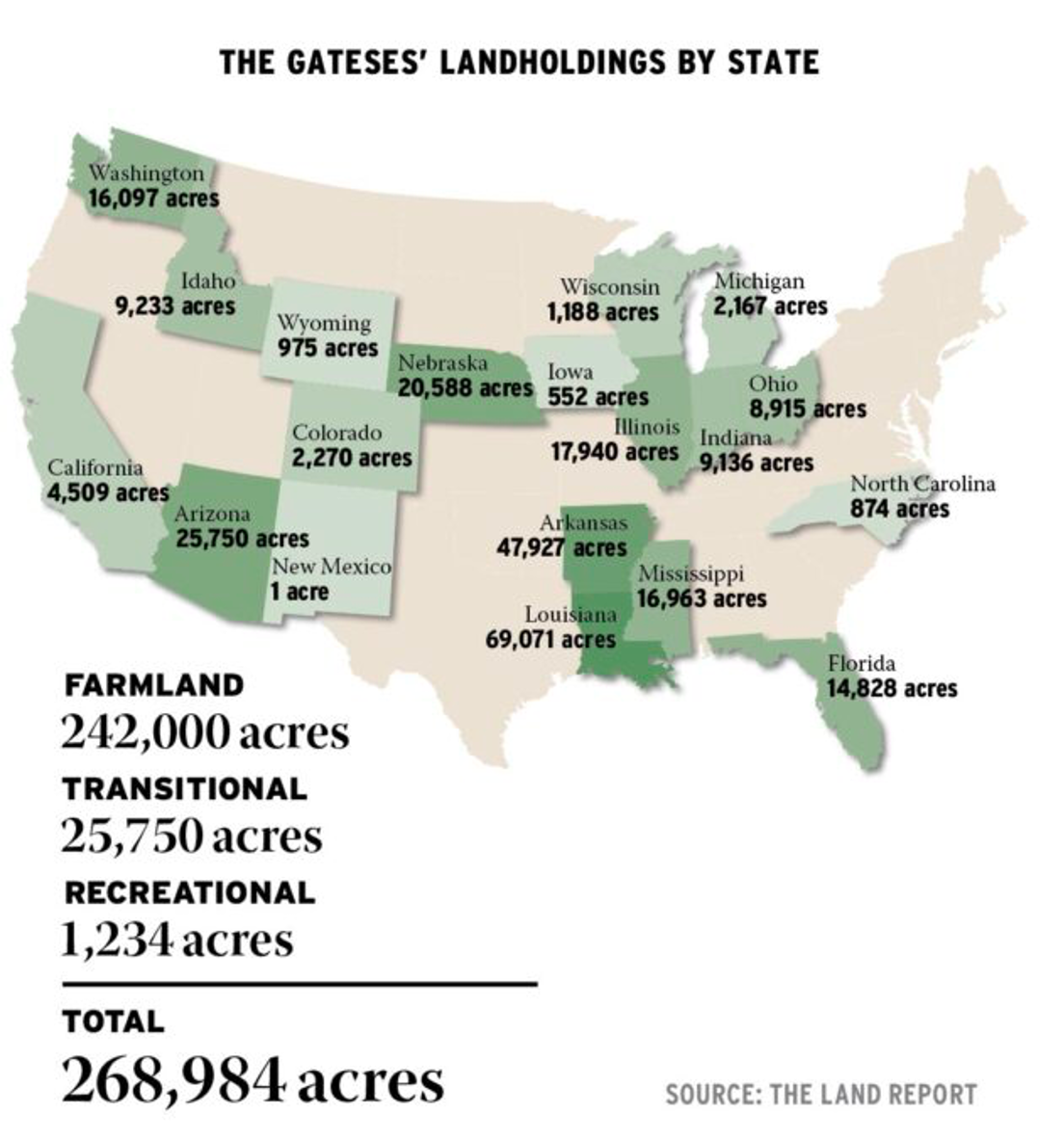
Taiwan currently has almost no agricultural carbon credits. By 2030, carbon reduction will be a hard requirement for companies, and agricultural carbon credits will be in short supply. In the next few years agricultural carbon reduction will become a hot field — which is why many far-sighted international companies are investing in agricultural carbon credits. Bill Gates, for example, though he champions nuclear power, has bought vast farmland and is the largest farmland owner in the US, with 268,984 acres (108,854 hectares) in 18 states. I'm sure he didn't buy it for fun, but as an investment in future carbon credits.