努力小農
本文尚無譯文。
COP28: the UN pledges to tackle hunger and climate together by 2050
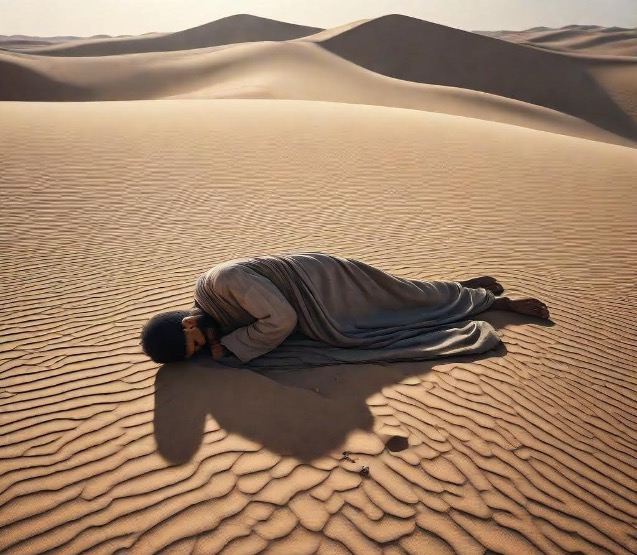
Humanity faces the twin problems of climate and food. Agriculture must offer solutions in time, bringing the agri-food sector — a third of human greenhouse gas emissions — to net zero by 2050, making agriculture carbon-neutral. (Image generated by AI)
Food is the people's heaven — and today both food and heaven are in crisis. Natural and man-made disasters cut food production; hundreds of millions worldwide are still hungry or malnourished, and by 2050 the population may grow from over 8 billion to 10 billion. Those in power now probably won't be around to deal with what happens in 27 years. Global warming of more than 2 degrees would mean irreversible climate disaster — and food and agriculture systems "contribute" a third of greenhouse gases.
Food and climate are a real dilemma. What we eat, how we grow, raise, transport, store and cook it, and how we dispose of (and sometimes waste) food all emit huge amounts of greenhouse gases. Yet for most of three decades, the final agreements of the UN's annual climate summits ignored the impact of food systems on our climate.
This year in Dubai, United Arab Emirates, that changed. The conference opened with a declaration on sustainable agriculture signed by more than 130 countries. For the first time ever, it devoted a whole day to food and agriculture, and saw a food systems roadmap drawn up by the UN Food and Agriculture Organization (FAO). Perhaps most strikingly, the final agreement published at the close of the conference recognised sustainable agriculture as part of an appropriate response to climate change.
The growing attention to food attracted not only experts but also lobbyists for big agricultural and food multinationals eager to shape the outcome, and the final wording didn't go as far as many sustainability advocates had hoped. But there's no denying that food had a more prominent place at the summit than in previous years.
With the COP28 presidency announcing the host country's declaration on sustainable agriculture, resilient food systems and climate action, the food systems conversation at the climate summit began with a bang. Although the declaration isn't legally binding, the more than 150 countries that had signed it by the end of the conference essentially declared their intention to include food and agriculture in their climate plans.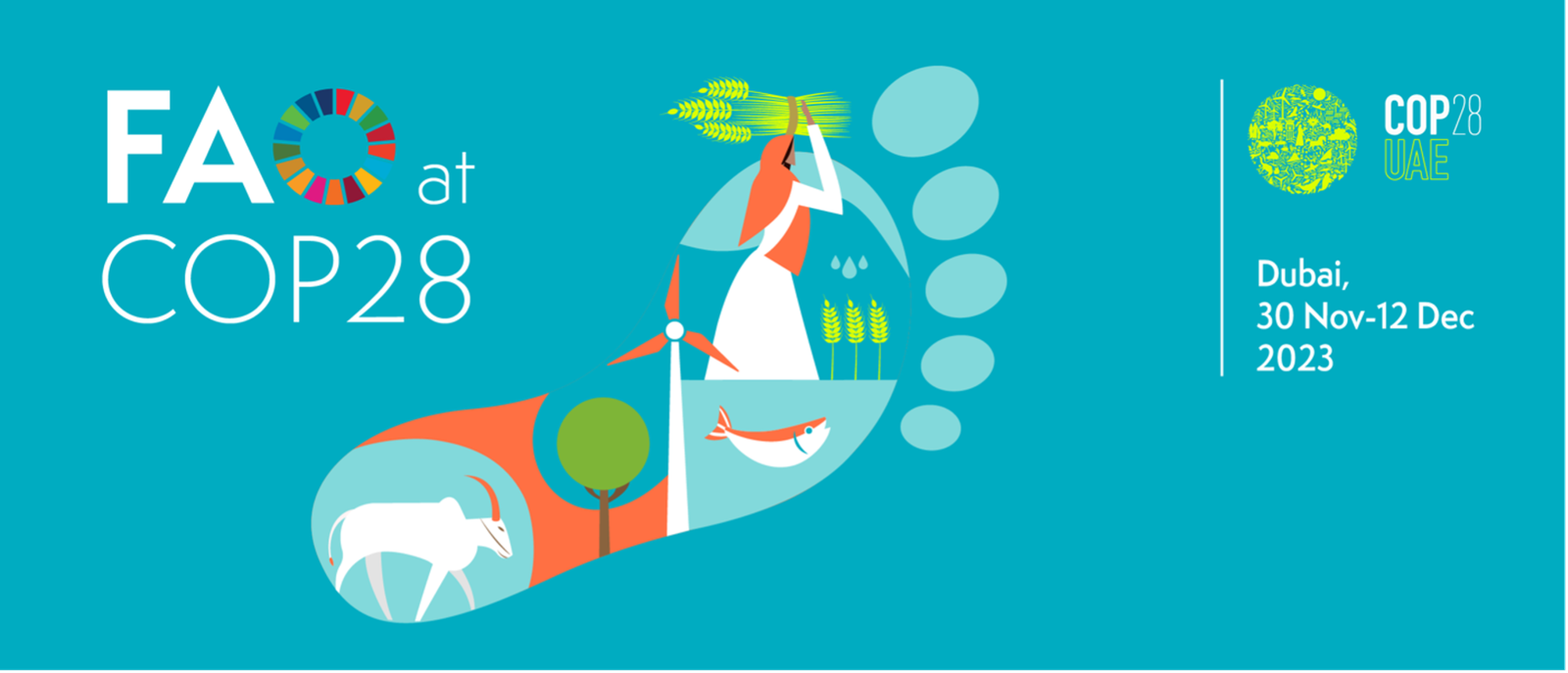
This year's UN Climate Change Conference left a more urgent consensus and declaration of action: certain results must be achieved before 2025 to reach the goal of global net-zero agriculture by 2050. (Image: FAO website)
The declaration has three parts, briefly introduced below:
1. The leaders of all signatory countries recognise:
- That unprecedented adverse climate impacts increasingly threaten the resilience of agriculture and food systems, as well as the ability of many, especially the most vulnerable, to produce and access food amid rising hunger, malnutrition and economic stress;
- The enormous potential of agriculture and food systems to drive a powerful and innovative response to climate change and to achieve shared prosperity for all;
- Stressing the need to progressively realise the right to adequate food in the context of national food security, and to ensure access for all to safe, sufficient, affordable and nutritious food;
- Noting that agriculture and food systems are vital to the lives and livelihoods of billions of people, including smallholders, family farmers, fishers and other producers and food workers;
- Noting the important role of international and multi-stakeholder cooperation — including South-South and triangular cooperation, financial and funding institutions, trade and non-state actors — in responding to climate change;
Recalling past conferences, the signatories stress that any path to fully achieving the long-term goals of the Paris Agreement must include agriculture and food systems, and that agriculture and food systems must urgently adapt and transform to respond to the imperatives of climate change.
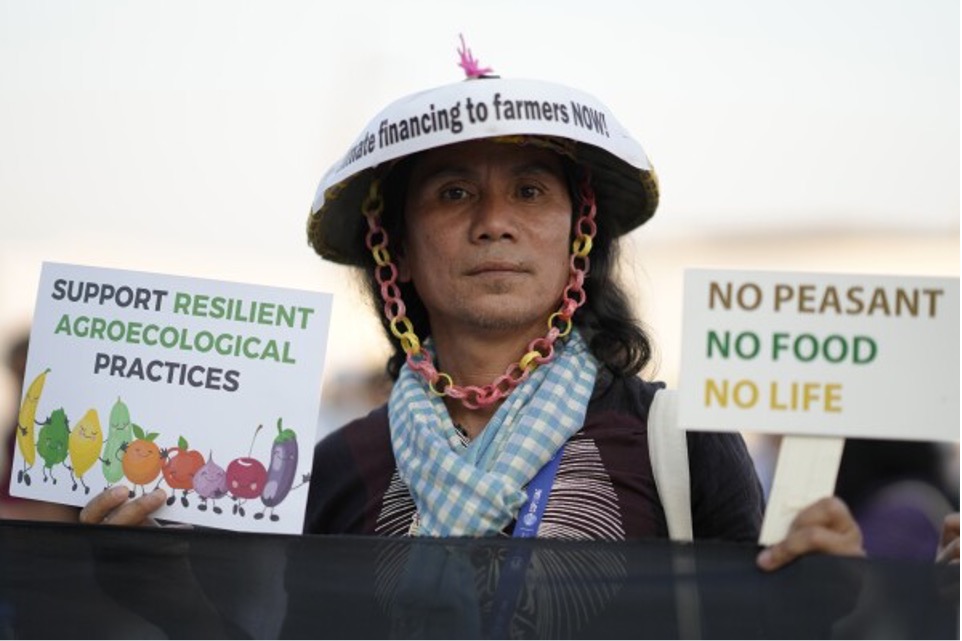
Smallholders play an important role in the future roadmap to net-zero agriculture, because a just transition is a key issue: smallholders' livelihoods and production are inseparable from global net zero. (Image: UN website)
2. Common objectives set by countries:
- Scaling up adaptation and resilience activities and responses to reduce the vulnerability of all farmers, fishers and other food producers to climate impacts, including by providing financial and technical support for solutions, capacity-building, infrastructure and innovation, including early warning systems, to promote sustainable food security, production and nutrition while conserving, protecting and restoring nature.
- Promoting food security and nutrition by stepping up support for vulnerable people through approaches such as social protection systems and safety nets, school feeding and public procurement programmes, and targeted research and innovation, focusing on the specific needs of women, children and youth, Indigenous Peoples, smallholders, family farmers, local communities and persons with disabilities;
- Supporting workers in agriculture and food systems, including women and youth, whose livelihoods are threatened by climate change, to maintain inclusive, decent work through context-appropriate approaches, including increasing, adapting and diversifying incomes;
- Strengthening integrated water management in agriculture and food systems at all levels to ensure sustainability and reduce adverse impacts on communities that depend on these interlinked areas;
- Maximising climate and environmental benefits — conserving, protecting and restoring land and natural ecosystems through agriculture- and food-related systems, enhancing soil health and biodiversity, and shifting from higher-emission practices to more sustainable production and consumption, while curbing and reducing harmful impacts, including reducing food loss and waste and promoting sustainable aquatic blue foods;
To achieve these objectives, in line with our national circumstances, we commit to accelerating the integration of agriculture and food systems into our climate action, while mainstreaming climate action across our policy agendas and actions related to agriculture and food systems.
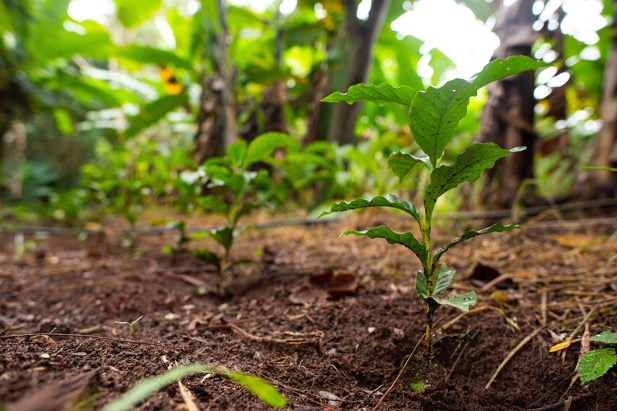
Growing coffee in banana groves is already a new agroforestry model — a change towards low-carbon agriculture that increases carbon sinks.
3. Working together to fulfil commitments by 2025:
- In line with our national circumstances and seeking broad, transparent and inclusive participation, integrating agriculture and food systems into National Adaptation Plans, Nationally Determined Contributions, Long-term Strategies, National Biodiversity Strategies and Action Plans and other related strategies before COP30.
- Revisiting or orienting policies and public support related to agriculture and food systems to promote activities that increase incomes, reduce greenhouse gas emissions, and enhance resilience, productivity, livelihoods, nutrition, water-use efficiency, and human, animal, plant and ecosystem health, while reducing food loss and waste and ecosystem loss and degradation.
- Continuing to scale up and increase access to all forms of finance from public, philanthropic and private sources — including through blended approaches, public-private partnerships and other aligned efforts — to adapt and transform agriculture and food systems in response to climate change.
- Accelerating and scaling science- and evidence-based innovation — including local and Indigenous knowledge — that increases sustainable productivity and production in agriculture and related emerging fields, promotes ecosystem resilience and improves livelihoods, including those of rural communities, smallholders, family farmers and other producers.
- Strengthening the rules-based, non-discriminatory, open, fair, inclusive, equitable and transparent multilateral trading system with the World Trade Organization at its core.
With only seven years to achieve our common goals, we intend to strengthen cooperation among our respective ministries (including agriculture, climate, energy, environment, finance and health) and with diverse stakeholders to realise the objectives and efforts set out in this declaration, as appropriate within our national circumstances.
To maintain momentum, we intend to benefit from relevant regional and global meetings to share experience and accelerate national and collaborative action. We will review our collective progress at COP29 next year to consider next steps for 2025 and beyond.
Although Taiwan is not a UN member, under its net-zero roadmap it too aims to reach net zero by 2050, and the Ministry of Agriculture has declared a goal of net zero by 2040. Stones from other hills can polish jade: this year's COP28 placed even greater emphasis on a "just transition". As agriculture shifts to cut carbon and increase sinks, high-emission farming activities will inevitably be curbed. Those who work in them — especially smallholders and Indigenous people — deserve attention to their lives and livelihoods, with more jobs created for them in low-carbon, sink-enhancing agriculture or other industries, and higher incomes.
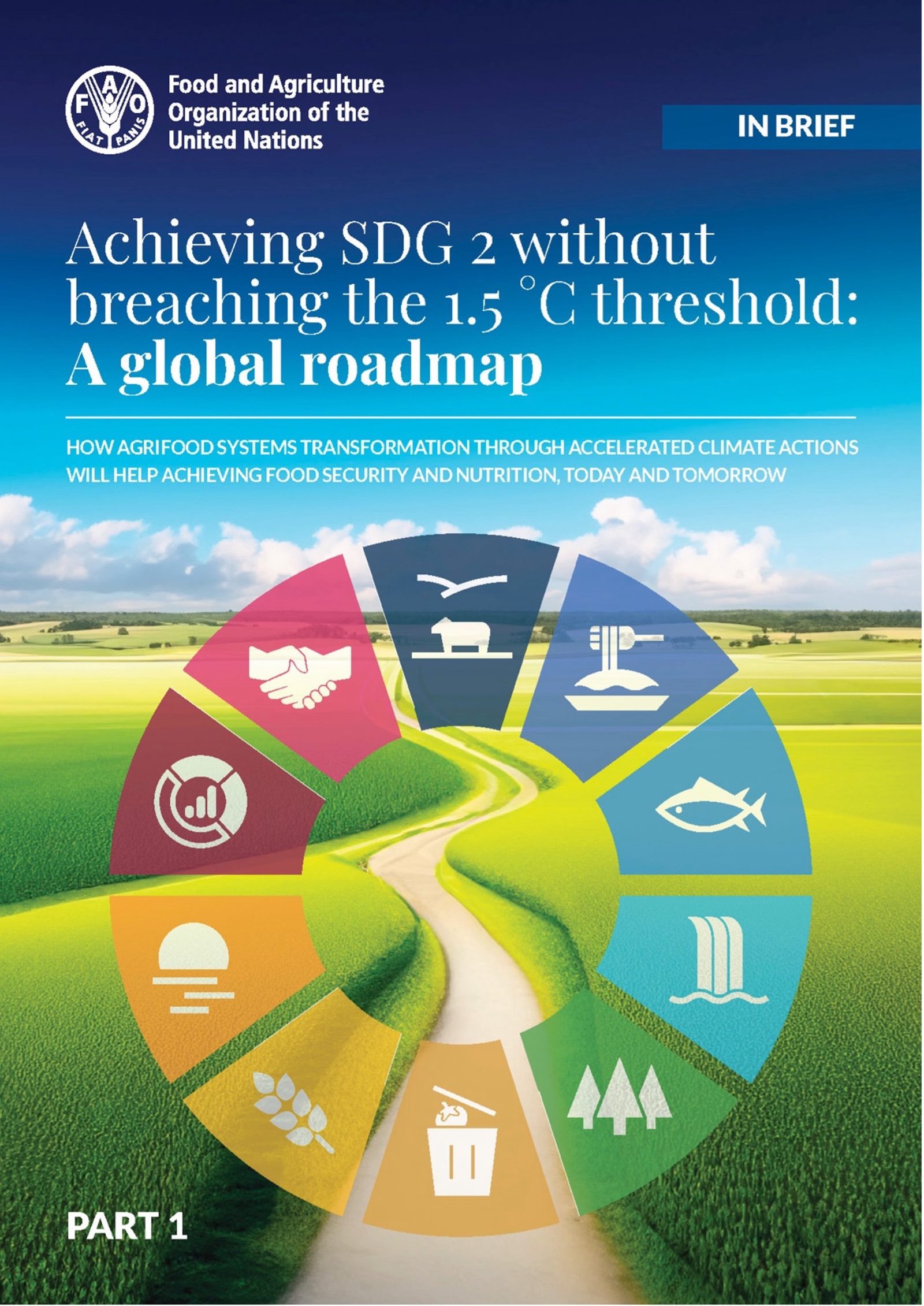
The FAO's global roadmap to net-zero agriculture.
Emissions and removals of agriculture and food systems to 2050 (million tonnes CO2 equivalent)
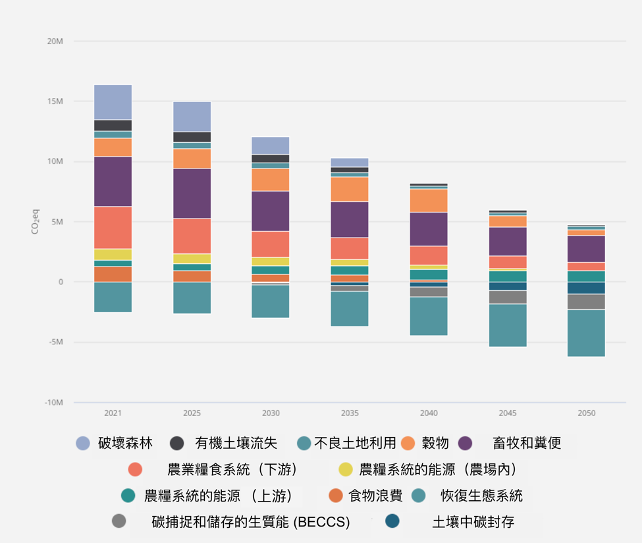
The FAO plans for agriculture to cut emissions and increase sinks to reach net zero. Emission reductions include: reducing deforestation, organic soil and water loss, poor land use, grain cultivation, livestock and manure, downstream food processing systems, on-farm agri-food energy use, upstream energy in agri-food systems, and food waste. Sink increases include: ecosystem restoration, bioenergy with carbon capture and storage, and soil carbon storage.
Food security and nutrition targets |
Contributing to the 1.5°C agenda | |
| 2025 | 150 million people freed from hunger compared with 2020. | Emissions from soil and water carbon losses reduced by 5% compared with 2020. |
| 2030 | Chronic hunger eliminated. | Total greenhouse gas emissions from agri-food systems reduced by 25%. |
| 2035 | Number of people unable to afford a healthy diet halved compared with 2020. | Agri-food systems are CO2-neutral, with only other greenhouse gases as net emission sources. |
| 2040 | Number of people eating unhealthy diets halved compared with 2020. | N2O emissions from agri-food systems halved compared with 2020. |
| 2045 | Number of people unable to afford a healthy diet reduced by 85% compared with 2020. | CH4 emissions from agri-food systems halved compared with 2020. |
| 2050 | Everyone eats a healthy diet. | Agri-food systems are a net carbon sink (removing 1.5 billion tonnes CO2e a year). |