 努力小農
本文尚無譯文。
Scorched earth for a thousand li… waiting for the next disaster?
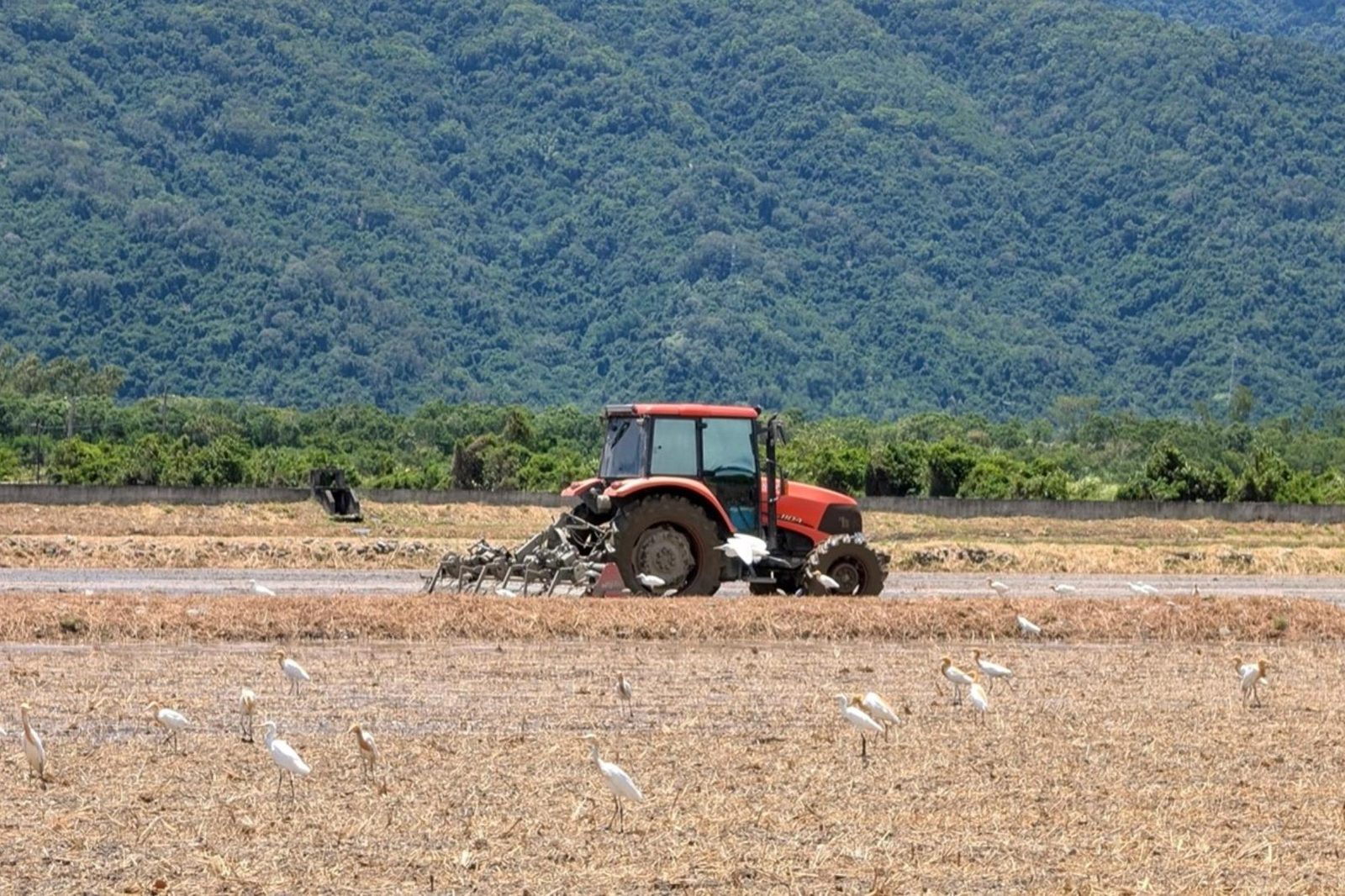
Tillage with heavy machinery, plus unrestrained pesticide use — the green hills remain, but how many more harvests? (Photo: Jay Fang)
Scorched fields in the dog days
I spent ten days driving around Taiwan, and it was hot, hot and hot again. This was the period between the solar terms Minor Heat and Major Heat, the middle part of the so-called "three fu" dog days. The character fu (伏, "lie prostrate") is apt: everything is laid flat by the heat. When I worked in global procurement in China, factories gave a week to ten days of "high-temperature leave" in summer, partly to service the machines and partly so staff could take their children out during the summer holidays — and it also cut peak summer electricity demand and costs. This is human adaptation to warming: however advanced industry becomes, it must still follow nature.
What surprised me was that in this mid-July heat, as far as the eye could see, many fields presented a scene of "scorched earth for a thousand li". After the first rice harvest at the end of June and start of July, farmers were ploughing and drying their fields while spraying large amounts of herbicide, turning what had been green grass into a sheet of withered yellow.
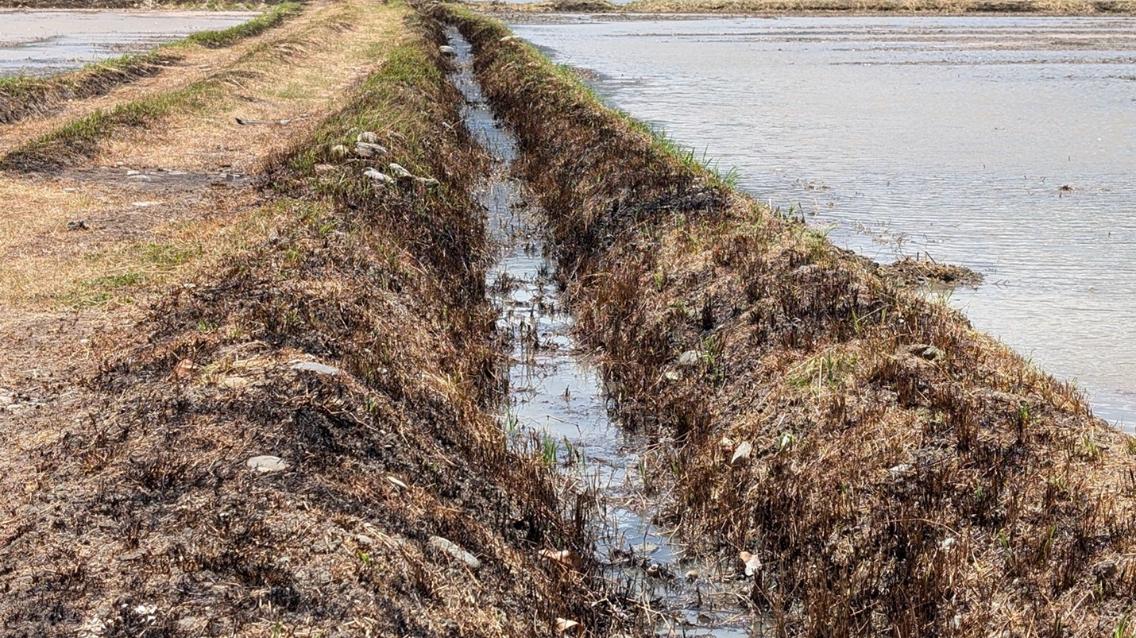
Large amounts of herbicide spread through water and air — no one in Taiwan can escape it. (Photo: Jay Fang)
A gust of wind raises clouds of dust. The scene reminded me of the desolate farm at the start of the science-fiction film Interstellar: "Mankind was born on Earth. It was never meant to die here."
This isn't just this year; it has happened every year for a long time — we've simply grown used to it. But since taking part in the Taiwan Smallholder Carbon Farming Project and reading a great deal of research, I've learned that tillage and herbicides are the two great killers of soil carbon sinks, eroding farmland soils around the world. In the US some even argue that if this continues, the soil has only 60 years of food supply left.
Less tillage means lower CO2 emissions
Despite such warnings, no one in Taiwan seems to care: the soil is still ploughed, the chemicals still sprayed, and all seems well.
Farmers have long believed that at the end of each growing cycle the soil must be turned over completely and left exposed to the sun for as long as possible, to kill the "germs" in it.
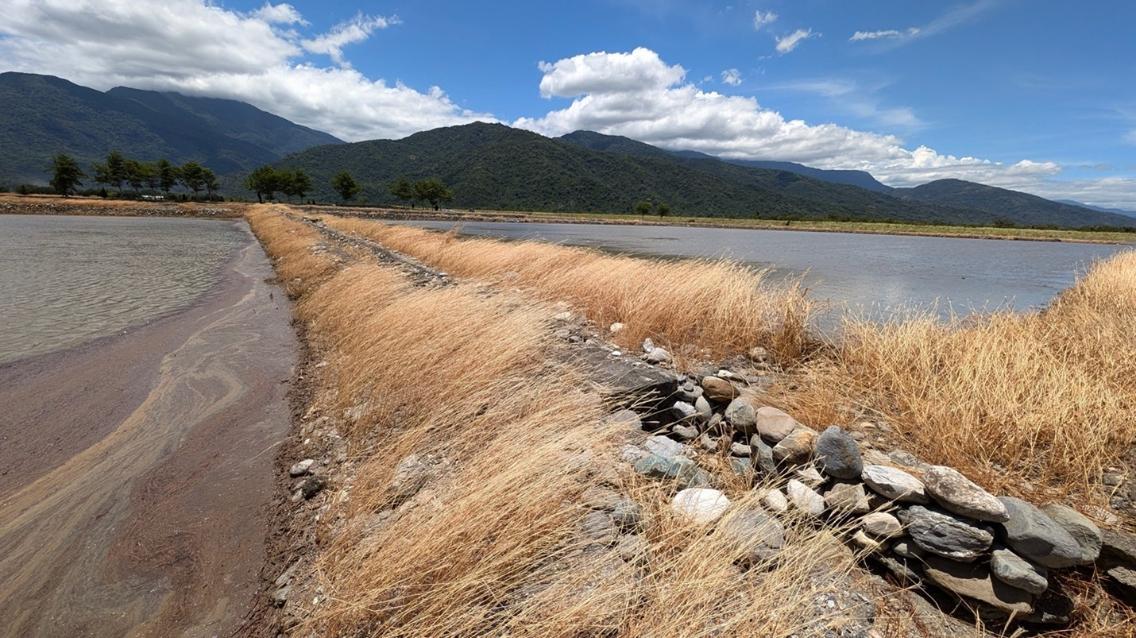
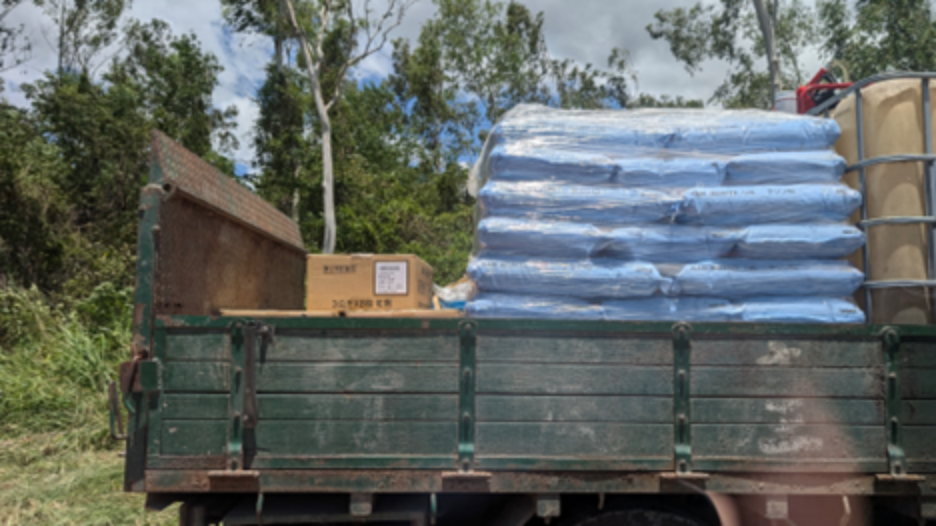
Such a "dry landscape garden" of farmland is rare in the world, but with unlimited herbicide, how could the world keep up with Taiwan? Truckload after truckload of pesticides arrive, and no one can stop them. (Photo: Jay Fang)
Yet according to more than 20 years of NASA reports, the Earth's CO2 concentration surges every spring, rising by nearly 10%, mainly because of tillage of agricultural soils in the Northern Hemisphere. So international agricultural, climate, atmospheric and space agencies are calling for reducing unnecessary tillage and protecting soil, so that soil carbon sinks can become a long-term store for the Earth's greenhouse gases.
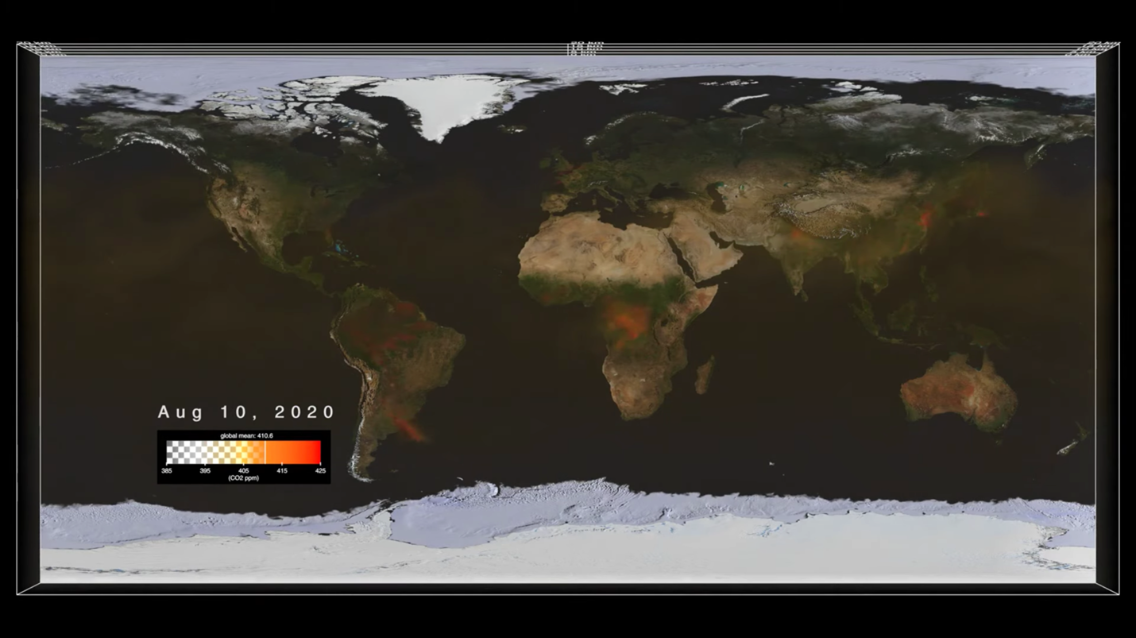
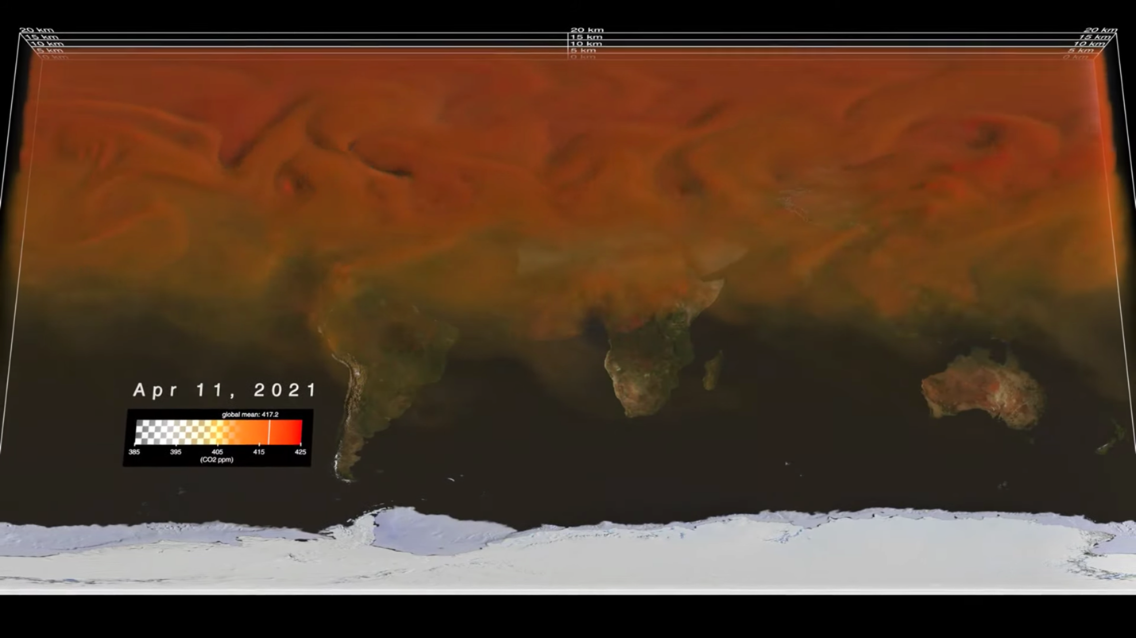
NASA's more than 20 years of data on the distribution of atmospheric CO2 are the best proof that spring tillage causes a surge in CO2, peaking every April, before massive plant photosynthesis in August absorbs it back. (Image: NASA website)
Note: smallholder carbon farming still holds to the principle of not reducing yields. It doesn't insist on no tillage at all, but on reducing tillage appropriately — ploughing once instead of three times, and exposing the soil for two days instead of ten.
The Earth can nourish all things because, 1.5 billion years ago, prokaryotes capable of photosynthesis — blue-green algae — appeared. Chlorophyll in their cells began absorbing CO2 from the air and, with water, producing glucose and oxygen. This simple, repeated process steadily absorbed CO2 from the ancient atmosphere and released oxygen, allowing more species to evolve. Plants on land turned CO2 into solid organic matter, forming soil — a very slow process: forming one centimetre of soil from volcanic basalt takes more than 60,000 years, and in a forest it takes a thousand years.
Soil is nature's most precious gift of 1.5 billion years
Humanity entered the age of farming only 10,000 years ago, yet farmland has already used up the soil organic matter built up over a billion years, turning it into atmospheric CO2. Add the burning of fossil fuels over the past century, turning coal, oil and gas deposited in the crust tens of millions of years ago into CO2, and the greenhouse fire has had fuel poured on it.
Yet humanity looks far afield for what is close at hand. For the past 20 years there have been loud calls for carbon capture and storage (CCS), but scientifically it can't store carbon for the long term (at least 100 years), and the energy used for capture and storage produces even more CO2 emissions. This is a textbook case of making trouble out of nothing.
If we go back to photosynthesis by the green plants all around us, it costs nothing, produces food, beautifies the landscape, reduces the urban heat-island effect and stores CO2 in the soil.
Most experts and farmers in Taiwan focus on putting organic matter into fertilisers in the hope of increasing soil organic carbon, not realising that plants themselves are factories turning CO2 into organic matter. When a plant absorbs 100 kg of CO2, it can store 40 kg of carbon in the soil — normal plant physiology. All we need do is find ways to keep as much of that carbon as possible in the soil as organic matter; it will naturally combine with the microbes living in symbiosis in the soil (millions of species of bacteria, fungi and so on) to form long-lasting humus, humic acids and the like, providing nutrients plants need.
Just as the sun, wind and geothermal heat charge nothing — developing renewable energy offers no profit to today's vested interests in fossil fuels and nuclear power — plants simply do their duty of photosynthesis, and bacteria and fungi quietly fix carbon. This has been their mission for hundreds of millions of years, and they don't charge humans a penny. Human markets are very unwelcoming to these free forces of nature, because no one can make money from them; without money there is nothing to divide up, no market economy of scale can form, and so no one cares.
We see the "economic benefits" of large-scale tillage. It needs big machines costing NT$2–3 million, someone to drive them, diesel, and maintenance staff — a complete industrial chain, and the government subsidises half the purchase cost, encouraging the tillage industry. Ploughing for farmers isn't free: it costs NT$5,000–6,000 per jia (about a hectare, 10,000 m²), and ploughing and puddling once isn't enough — it's done three times, nearly NT$20,000. With at least two crops a year, that's NT$40,000 — more than many farmers earn from farming a jia.
Agriculture must come back to farmers truly making money
Because farmers, experts and the government all believe that heavy, prolonged (over ten days) ploughing, puddling and sun-drying improve the soil, since the germs are killed by the sun. Yes — probably all life in the soil is killed by the sun. As the saying goes, "when people die they become ghosts, and when ghosts die they become farts": when these microbes die they become CO2, carrying on "warming" humanity.
Farmers know that farming like this year after year doesn't reduce pests and diseases; the soil hardens and loses fertility, and yields fall. The response is more tillage, more fertiliser and more pesticides — resulting in smaller or poorer harvests and less money. So old farmers fade away or leave farming, and young people are even less likely to enter it.
Many farmers have a long-standing habit: as soon as their crops look worse than the neighbour's, they rush to add fertiliser — they can't be seen to lose face, and using more shows how diligent they are. When they see weeds in this heat, weeding is hard work, so they throw down handfuls of herbicide.
According to 2018 news reports, Taiwan used 17 kg of pesticide per hectare, the most in the world. The vice-president at the time pledged to halve pesticide use within ten years. I suspect this is even harder to achieve than a "nuclear-free homeland", because the entangled interests of the fertiliser, pesticide and farm-machinery industries run far deeper in society than those of nuclear power.
Seeing the scorched fields of high summer, I feel both hope and worry: hope because there is great opportunity for carbon farming on Taiwan's farmland; worry because, faced with huge, systemic vested interests, the power of a few hundred smallholders to change things is so small.
Source: CM Media ( https://www.cmmedia.com.tw/home/articles/48150 )


