努力小農
本文尚無譯文。
Soil doctors
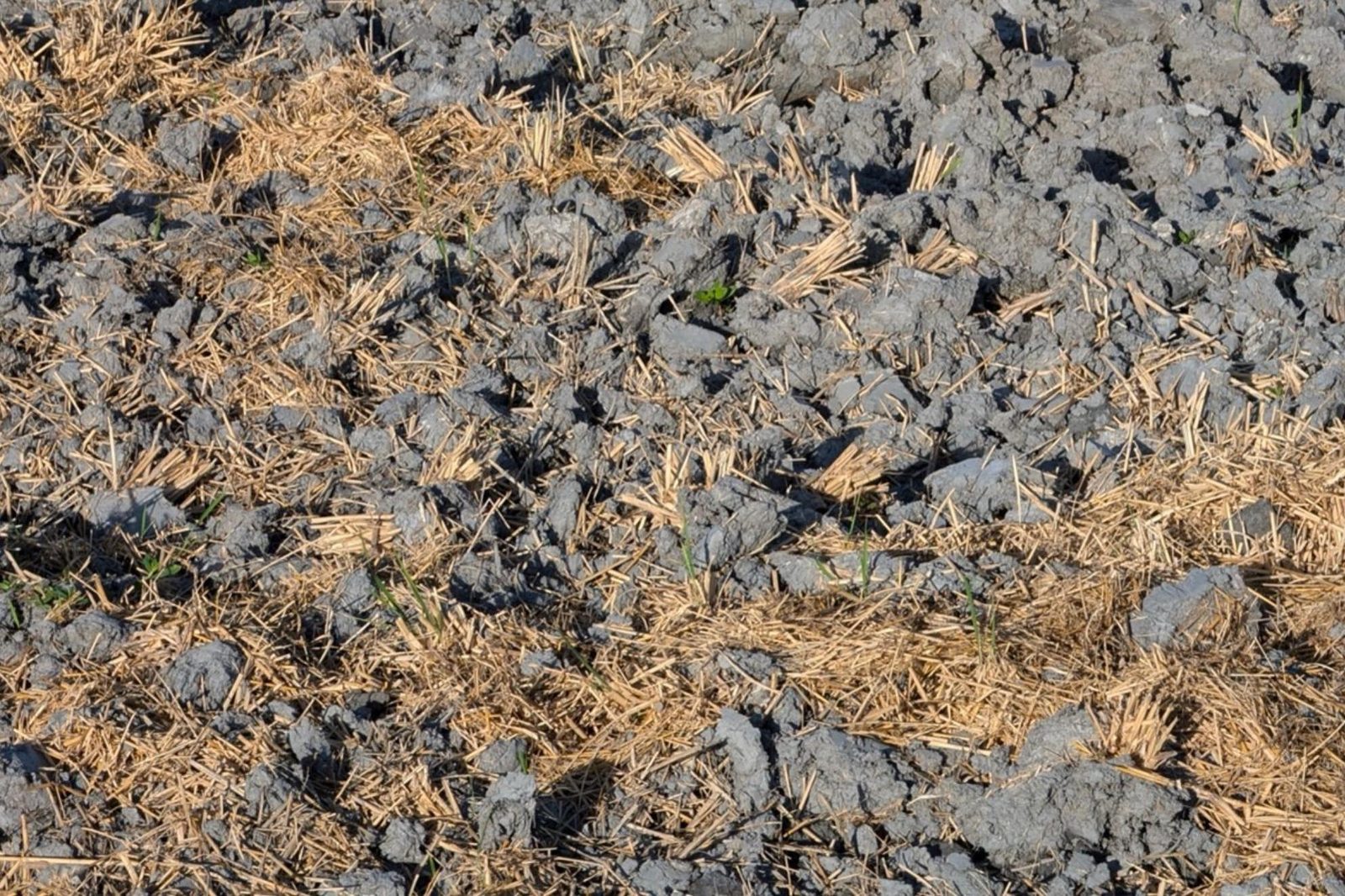
Nourish the soil first, then it can nourish people. Only healthy soil gives healthy crops, and only healthy crops give healthy people. (Photo: Jay Fang)
醫 (medicine) is the craft of curing illness. 殹 means an unpleasant posture — such is the nature of medicine. It is made effective by wine, hence the 酉 component. (So said Wang Yu.) Another view is that 殹 is the sound of illness. Wine is what cures illness. The Rites of Zhou mentions medicinal wine. In ancient times the shaman Peng first created medicine.
— Shuowen Jiezi
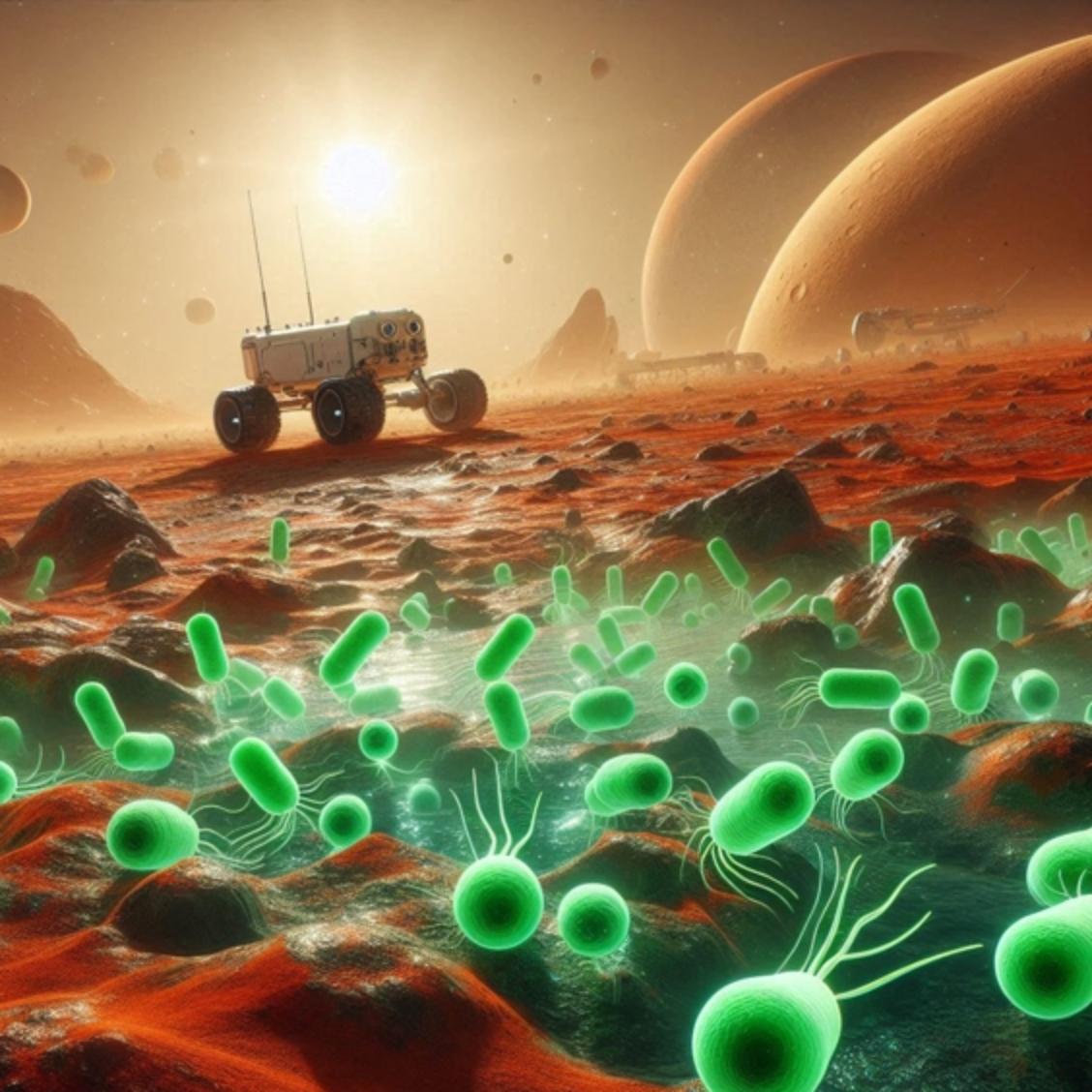
If one day humans land on Mars and set up a settlement, they will still need the Earth's soil microbes as pioneers to sustain human survival there. (Image generated with DALL-E 3)
How does the law define high-risk pesticides?
When the Legislative Yuan recently cleared its backlog of bills, it passed the Plant Doctor Act. Article 1 states: "This Act is enacted to raise the standard of plant protection, strengthen plant quarantine and the management of high-risk pesticide use, and establish a professional service system of plant doctors." Literally, it is meant to strengthen control of "high-risk pesticides". Article 3 provides that "nationals of the Republic of China who pass the plant doctor examination and hold a plant doctor certificate may serve as plant doctors". This means only those who pass the exam and hold a plant doctor certificate may use "high-risk pesticides" — on the same principle that only physicians may diagnose, prescribe and operate.
Yet the law contains no definition of "high-risk pesticides" at all, nor any subsidiary regulation setting out a positive or negative list. In future, pesticide shops will have no way of controlling "high-risk pesticides".
In addition, Article 7 provides that anyone without plant doctor qualifications "may not certify plant pest identification reports, diagnoses of plant diseases and pests, control recommendations, or related plant health certificates".
Overall, the Plant Doctor Act merely creates a state-recognised, state-authorised qualification for "plant doctors". According to a 15 July report by the Ministry of Agriculture's official outlet AgriHarvest, "Legislative Yuan passes Plant Doctor Act on third reading; Ministry of Agriculture: existing rights of farmers, pesticide businesses and technicians unaffected", in which the ministry stressed: "Plant doctors can provide and sign legally valid documents based on diagnosis and identification results, as proof of product quality or a basis for control. Certification is the exclusive business of plant doctors and does not affect farmers' need for crop diagnosis and consulting services, protecting farmers' rights; it does not compete with the work of people in related professions, and these will be included in the qualifications to sit the exam, protecting the rights of forestry, horticulture and agronomy technicians."
But in farmers' real lives there are no plant doctors now. For a long time they have followed the recommendations of pesticide shops or word of mouth — whichever product works, they buy it and only find out by using it. Many products are unregistered or smuggled; the list goes on. Whether future plant doctors will have hands-on experience and address farmers' real needs is an open question. Moreover, pest and disease control is about prevention beforehand, not treatment afterwards: by the time pests and diseases are visible to the naked eye and have damaged the look of the produce, it's already too late.
The Plant Doctor Act was originally called the Plant Physician Act, which passed its first reading in the Legislative Yuan in 2020, but because the medical profession objected to the use of "physician", it was changed to "doctor" (診療師, "diagnostician"). In "On the title 'plant physician'" by Hsiao Hsu-feng, director of National Taiwan University's master's programme in plant medicine, he notes that "in Japan, plant physicians obtain the 'plant physician' qualification after passing the second stage of the national 'professional engineer' examination and being certified by theJapan Plant Medical Science Association"。
Taiwan, China and Japan all had imperial examination systems lasting more than a thousand years, so systems of things "imperially decreed", "officially compiled" or "graciously approved" meant occupational or professional qualifications required the emperor's approval; now they are recognised by the "government". In Europe and America, by contrast, professional associations or societies build professional qualifications. Professions such as medicine, law and accountancy have examination and screening systems set up by their associations, which also establish occupational and professional ethics for members to follow. Without joining the association and passing its exams or screening, or recertification, one cannot practise. This guarantees professional standards and also builds democratic institutions.
Physicians are craftsmen
"Physicians" have a special status in Taiwan. Medical schools have long been the first choice, the club of Taiwan's brightest and most socially respected people, and they are widely respected by ordinary people, because physicians save lives — "saving one life is better than building a seven-storey pagoda".
Yet in Chinese tradition, physicians (醫) were not among the scholar-officials but among the artisans in the order of "scholars, farmers, artisans and merchants". The Shuowen Jiezi says: "醫 (medicine) is the craft of curing illness."
In "On Teachers" by the Tang dynasty writer Han Yu (768–824): "Shamans, physicians, musicians and craftsmen of all kinds are not ashamed to learn from one another. But among the scholar-officials, when someone is called teacher and another disciple, the rest gather round and laugh. Ask them why, and they say: 'He and he are of similar age, and their learning is similar. To learn from someone of low rank is shameful; to learn from a high official is close to flattery.' Alas! It is clear the way of the teacher will not be restored. Shamans, physicians, musicians and craftsmen are scorned by gentlemen, yet now the gentlemen's wisdom cannot match theirs. How strange!" These craftsmen progressed because they could learn from one another without shame in asking those below them, while the scholar-officials — the so-called gentlemen — did not learn from one another but looked down on or flattered each other by rank, and so failed to progress.
Today, using officialdom to certify the professional qualifications of "craftsmen" combines the Chinese scholar-officials' imperial examinations with professional exams. Is this progress or regression compared with the concept of "teacher" held by Han Yu, who died 1,200 years ago?
Plant health originates in soil. Just as traditional Chinese medicine holds that "food and medicine share the same source", soil is the source of plants' food and determines how healthy they are. Almost everyone has their own school, because everyone "has their own constitution", shaped differently by nature and nurture, and it cannot be summed up in a word. You have to "listen to" and "look inward at" your own body, understand its particularities and commonalities, to solve problems — including tolerance and coexistence. Even for the same person, immunity differs from yesterday to today to tomorrow; from childhood, adolescence and prime to old age, physical labour and the ability to withstand and endure illness differ, because our bodies metabolise every day and even genes have time switches. Every person, at every stage, is different.
The UN's "Soil Doctors" — a platform for dialogue among farmers
We are introducing the FAO Global Soil Partnership's Global Soil Doctors Programme, which states at the outset that it is "a farmer-to-farmer training platform" — just like "not ashamed to learn from one another" in "On Teachers": everyone brings their own experience to discuss and learn from one another, reducing the time spent figuring things out alone.
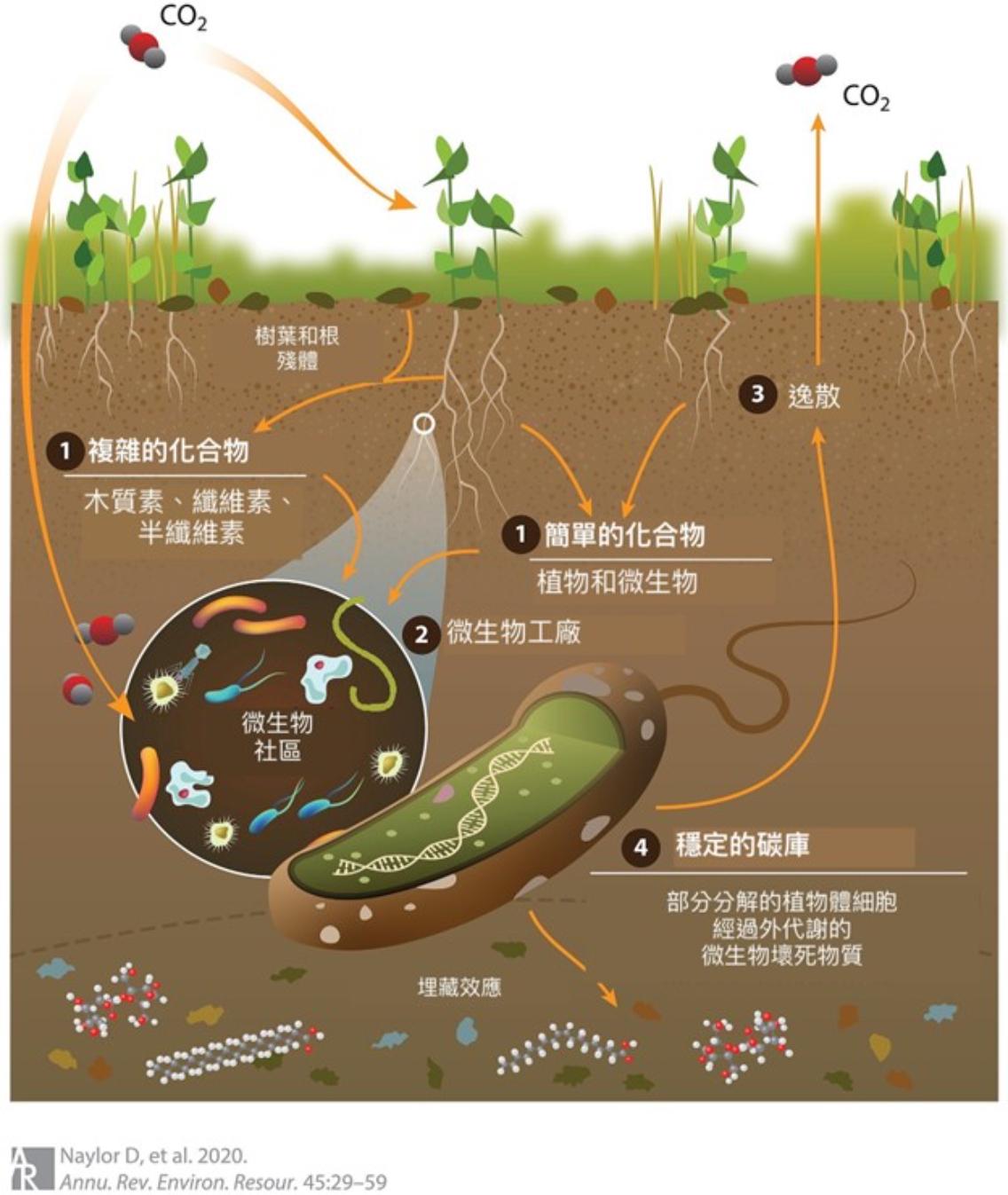
How soil microbes fix carbon, producing soil organic matter (large carbon molecules). (Image: English Wikipedia, "Soil organic matter")
Since education reform, Taiwan has been flooded with universities, and every year we hear news of departments and schools closing. Yet universities in Hualien and Taitung don't have a single dedicated agriculture department, even though Hualien and Taitung are Taiwan's important granary. Passing on agricultural theory and experience matters not only for local farmers' employment but is also the foundation of Taiwan's food safety. The smallholders I've met in Hualien and Taitung attend short professional courses intermittently, listening to scholars and experts on stage speak eloquently; since most of them lack local, on-the-ground experience, farmers must still rely on their own understanding to put things into practice at home, and whether it works is a matter of luck.
Some physicians may be unhappy to see "doctor" in "soil doctor". This isn't meant to offend or usurp the qualifications of "physicians"; it follows the international usage "Global Soil Doctor". The "doctor" we want to define — 醫生 — takes 醫 as a verb, "to heal", and 生 as life, ecology and production. Healing here means maintaining health, not treating disease. We will not treat plant diseases, still less human ones. Instead, starting from the soil we stand on, we build a virtuous, circular agricultural ecosystem so the microbes in the soil can "settle down and get on with life", fulfilling their carbon-fixing mission, binding the organic matter from plant photosynthesis and metabolism into the soil as the best nutrients for plants. Healthy plants mean less use of pesticides and fertilisers. This is "engineering by subtraction": reducing physical and chemical disturbance of the soil so its micro- and small organisms can form a lasting symbiotic circle with crops — long-term carbon fixation.
The answer to human migration into space lies beneath our feet
The character 醫 contains 酉, meaning wine. Alcohol, a by-product of microbes fermenting sugars, disinfects, curbing the unrestrained growth of other microbes (including the yeast itself) and creating balance in a small ecological environment.
Soil likewise has a "healing" effect. The microbes living in symbiosis with plants in the soil also use sugars and other organic matter from plant metabolism as nutrients. Through billions of species of microbes — bacteria, fungi, moulds — they metabolise their own "酉", which can control microbial numbers in the soil, prevent the growth of incoming pathogens, and supply nutrients to plants.
This is a magical, wonderful world of soil. We hope AI technology can use big data to model soil microbial ecology and help farmers grow crops and food. If one day humans want to move to other planets, they will have to take the Earth's 1.5 billion years of wisdom of life — photosynthesis, plants and soil — with them to build human civilisation on the next planet. Whatever happens, humans will still depend on crops grown in soil for the most basic energy of life.
The answers lie hidden in our soil.
Source: CM Media ( https://www.cmmedia.com.tw/home/articles/48600 )