 努力小農
本文尚無譯文。
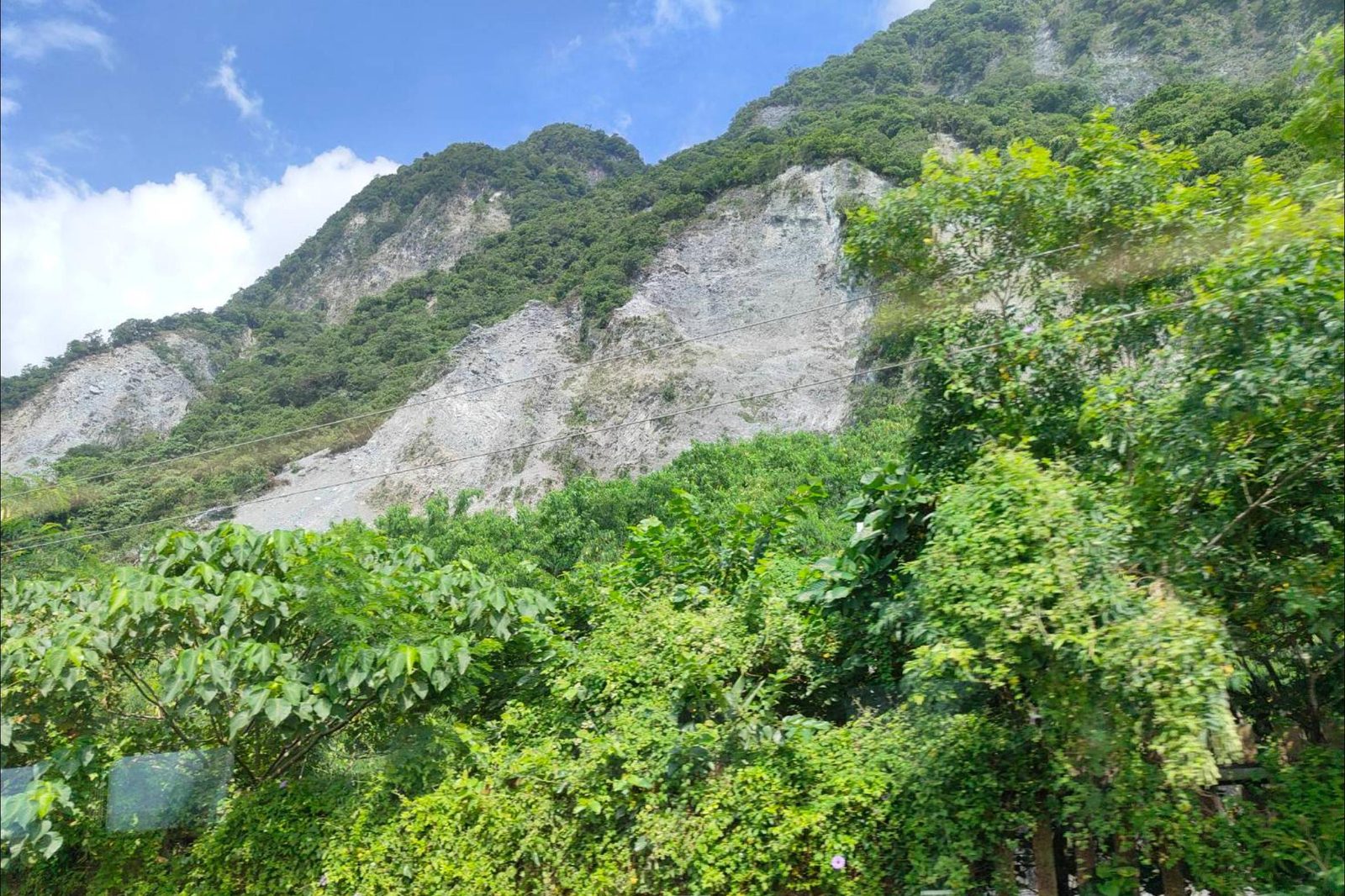
After 0403… as the train enters Hualien city, a broken landscape comes into view
After the 3 April earthquake in Hualien, the Suhua Highway was devastated along its length. (Photo: Jay Fang)
Just as the Legislative Yuan was hotly debating the "three Hualien–Taitung bills" earlier this year — extending National Freeway 6 to Hualien, a round-island high-speed rail, a Hualien–Taitung expressway and so on — the great earthquake of 3 April came as a wake-up call telling us "don't act rashly". In fact, good transport for Hualien and Taitung would cost almost nothing and could cut more than an hour off the journey from Taipei to Taitung — and precisely because it costs nothing, it can't be done.
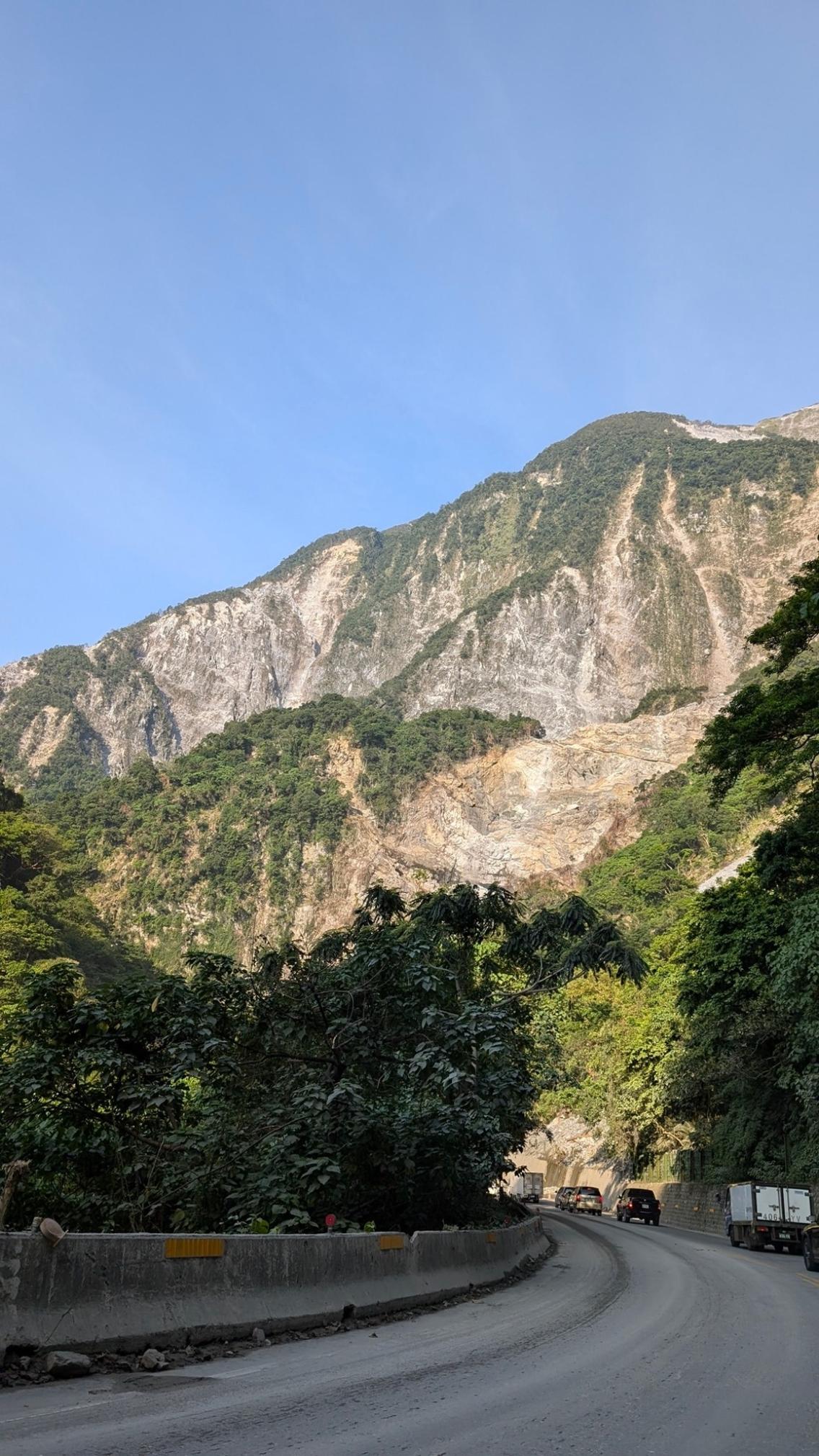
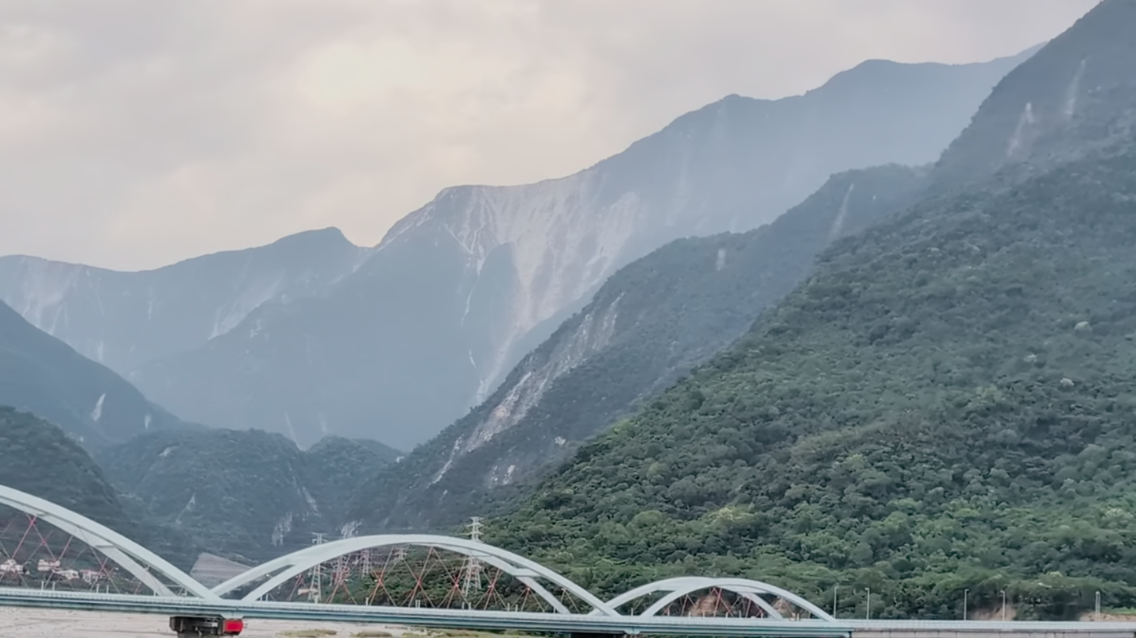
After 0403, as the train enters Hualien city, a broken landscape comes into view. (Photo: Jay Fang)
0403 Wake Up Call
When the great Hualien earthquake struck on 3 April this year, I happened to be on the 4th floor of the Tzu Chi Foundation in Hualien, on the first day of "Tzu Chi carbon asset project management team training". It started at 8 a.m.; by 7:45 the trainees had all arrived and we were sorting out seats and the venue. At 7:58 the earthquake began — strong from the start, then shaking even harder. I was standing by the whiteboard and had to hold on to it, and then grab the person next to me, to keep my balance.
During the quake I watched the ceiling lights. Fortunately they stayed on until the shaking stopped, though a large lampshade fell and hit a trainee on the head, causing a slight injury. Why was I watching the lights? If they go out instantly, it's a controlled trip — not a big problem, since Taiwan has a single grid. If the grid partly or wholly collapses, the lights fade out slowly, possibly over ten seconds or more, which means a serious grid problem. Especially since Hualien lies "behind the mountains" with no major industry, if power had to be cut, Hualien would be cut first. That Hualien didn't lose power was a good sign.
This was a blessing in disguise. Taiwan's electricity use rises after 8 a.m., as does solar supply. Had the quake struck after 10 a.m., at peak solar generation, a single large generating unit tripping would have caused all of Taiwan's more than 10,000 solar farms to shut down under their "relay protection systems", causing even larger blackouts — regional outages or even an island-wide blackout. This wouldn't be due to a shortage of power plants, but to too much solar supply.
Just as I was counting my blessings, news of the earthquake damage kept coming in. Most shocking were the massive landslides visible around Taroko and Heping — and then, in late July, Typhoon Gaemi made landfall in Hualien, causing historic damage to the mountains of Hualien and Taroko.
Indeed, for Hualien the 0403 quake was larger than the 921 earthquake of 1999. In CM Media's article ""A fault that hadn't moved for a century shook violently this time!" Geologist Chen Wen-shan analyses the truth of the 0403 Hualien earthquake", he explains that we still can't immediately determine where the epicentre of this quake was, because there are no stations or control points off the east coast — showing how limited our knowledge of our own land is.
Taiwan spends over NT$400 billion a year on defence, yet is extremely stingy with the budget for understanding its own land. If we don't understand our land, when an earthquake with the power of dozens or hundreds of atomic bombs strikes, we can only stand by helplessly.
Why are Taitung's prehistoric sites all 40 metres above sea level?
Since the pandemic began in 2020, I've travelled back and forth to Hualien and Taitung every month and felt the power of heaven and earth even more. Many prehistoric sites in Taitung — from the Baxian Caves at Changbin in the far north to the stone coffins at Dulan and the Beinan prehistoric site — are at about 40 metres above sea level, with shells nearby, showing that these sites were once on the coast (at 0 metres): they have risen by 40 metres.
Taiwan lies on the Pacific Ring of Fire, formed by the collision of the Pacific, Eurasian and Philippine Sea plates, so its geology is young and fragmented. On Google Earth you can see how deep the ocean is off eastern Taiwan, while the Taiwan Strait to the west, joined to the continental shelf, is much shallower — the result of millions of years of crustal movement, intricate and hard to understand. Put simply, the Philippine Sea plate to the east is sliding beneath the Eurasian plate, so the eastern crust is prised up by the Philippine Sea plate and keeps rising, generally by 4 cm a year. The uplifted land is itself highly fragmented, with many faults on land and under the sea, so landslides happen easily. Add typhoons and torrential rain washing earth and rock from east to west, and you get today's landscape of high mountains, fast rivers and countless peaks.
Understanding this, you realise Taiwan is a very turbulent place. We have land that seems safe today because the past 10,000 years have been relatively stable. If we don't understand our land and manage it well, this good luck will run out sooner or later.
Since 0403, every trip to Hualien has been a struggle. Sometimes I can only take the train; sometimes even the train isn't running, and I have to go from Taipei to Pingtung, take the South Link Highway and head north again — circling 90% of Taiwan to reach Hualien city. Of course I understand why Hualien people want a safe, fast road home; I feel the same when returning to Taipei from Hualien.
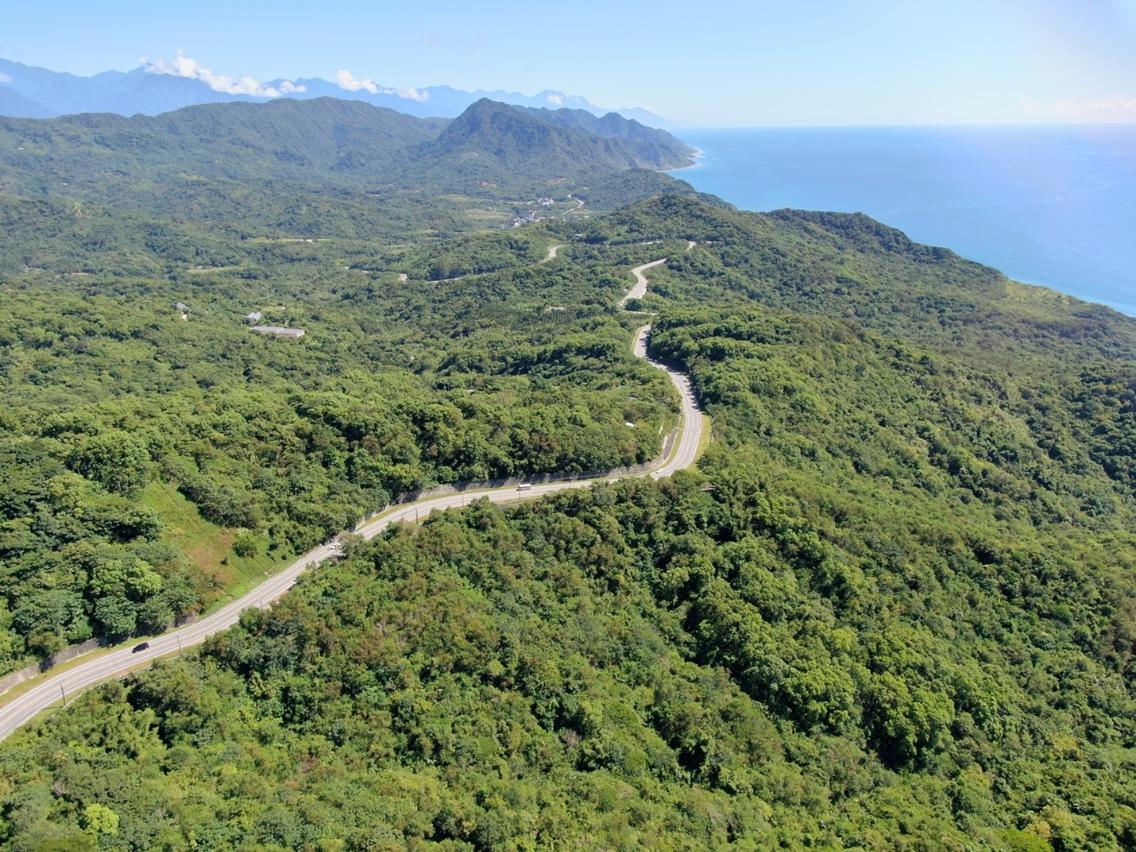
Hualien and Taitung: beautiful mountains, beautiful water, and plenty of traffic lights — driving is never boring. (Photo: Jay Fang)
Many of Taiwan's problems come not from outside but from how people manage things. In recent years I've travelled between Taipei and Hualien–Taitung nearly a hundred times, mostly by car (to avoid infection, and because you can't get around Hualien–Taitung without one), so I know a bit about transport there. First, traffic enforcement technology in Hualien and Taitung is very advanced and it's easy to get a speeding ticket — it seems Hualien–Taitung people are in no hurry to get home. Second, the roads are actually simple: Provincial Highway 9 running through the Huadong Rift Valley, and Highway 11 along the stunning Hualien–Taitung coast, both scenic roads. But there are a great many traffic lights; in communities that's fine, but in the countryside and by the sea many of them serve no purpose except to obstruct traffic.
Get home an hour faster without spending a penny — and save money and carbon too
Several times I've driven between Hualien–Taitung and Taipei late at night or early in the morning, and it took over an hour less than usual. My little hybrid can do 29 km per litre; without speeding, at 60 km/h, 300 km takes about five hours, but normally it takes over six — not because of traffic jams, but entirely because of pointless traffic lights.
In the daytime, whether on Highway 9 or 11, there are countless traffic lights, not linked to traffic flow, so on the main road you stop for red every few steps, while the side roads are often farm tracks or T-junctions with no need to stop. But the traffic authorities must prove their existence with traffic lights, so at a crossroads with not a soul or car in sight, you wait 30–60 seconds for nothing.
Waiting at traffic lights has a social cost. Making every road user waste an hour stopping and restarting at red lights — what does that do for road safety? Besides wasting time, it wastes fuel and increases emissions: stopping, idling and restarting raises energy use by 7%, so besides 7% more fuel cost there's 7% more carbon. Cars also wear their brakes, releasing asbestos (yes, brake linings in Taiwan still use asbestos, banned in the US decades ago), and wear their tyres, releasing PM2.5, PM10 and carcinogens such as tyre rubber and coke and heavy metals from the asphalt — truly a feast for the eyes.
On every business trip to China I saw that traffic signals in big cities are networked, and navigation apps announce, "Traffic light 100 metres ahead about to turn red, please slow down," or "Red light ahead turning green in 5 seconds" — while we're still using old signal systems. "How can the world keep up with Taiwan!"
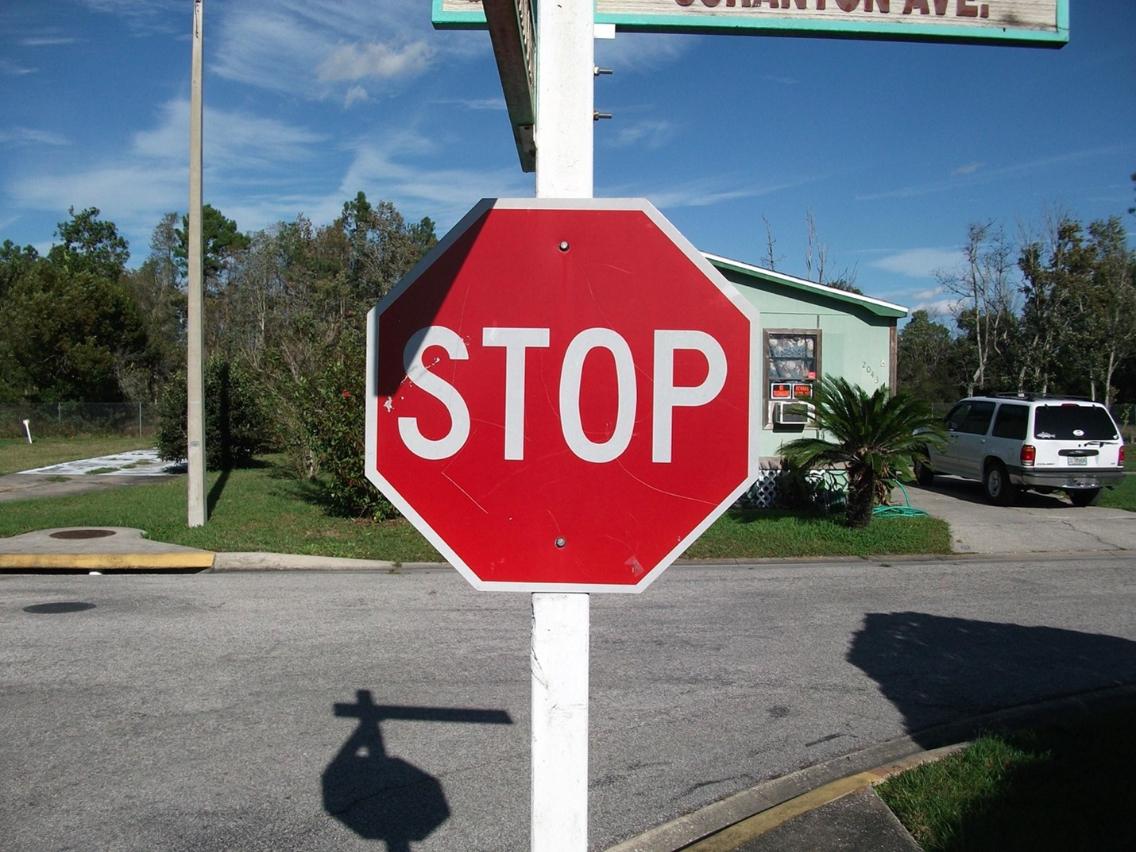
The "STOP sign" so widely used in the US probably isn't high-tech enough and costs too little, so in Taiwan the "stop then go" sign is used sparingly and no one pays attention. Yet it saves money (no need to spend a fortune on traffic lights) and time (vehicles on the main road have priority and don't need to stop; vehicles on the quieter side road stop and then go). (Image: from the internet)
If we don't want to use "high-tech" that may infringe human rights, we could use the octagonal "STOP sign" common in the US: road users on the minor road must come to a complete stop, and go only when they see the main road is clear, because the main road has right of way. Taiwan's traffic rules also have a "stop" sign meaning stop then proceed, but in practice on Taiwan's roads everyone is equal and no one has priority, so unlinked traffic lights are installed everywhere to make everyone stop first.
Clever Taiwanese — the problem is management
Then there are road signs. Wrong and confusing signs are a shared affliction across Taiwan, which is why navigation devices and speed- and red-light-camera alert devices and apps have unlimited business. I often take wrong turns because the signs are unclear — or I don't understand them — wasting a lot of time and fuel.
Since 0403 the Suhua Highway has been under heavy traffic control, but I can't find any authoritative official announcements online; I can only rely on information from Facebook groups. The trouble is that everyone seems to be familiar with the place names along the Suhua Highway. Once I passed Chongde only to find that Xiaqingshui was closed again, and I had to turn back. (Do any readers know where Chongde and Xiaqingshui are?)
Disrupted transport and repeated earthquakes have dealt a heavy blow to tourism in Hualien and Taitung. With the pandemic over, many people prefer travelling abroad and have given up on Hualien and Taitung. Government subsidies only reach those with connections; many people have no way in. Seeing Hualien–Taitung's hotels, homestays and restaurants struggling one after another — high costs, low income, so prices can't come down — they've entered an endless downward spiral.
To sum up in one sentence: Taiwan's problem is that it doesn't understand itself and doesn't manage things well. Facing enormous risks, sooner or later even greater disasters will await us.
Source: CM Media ( https://www.cmmedia.com.tw/home/articles/48923 )


