 努力小農
本文尚無譯文。
Does organic farming always increase soil organic matter?
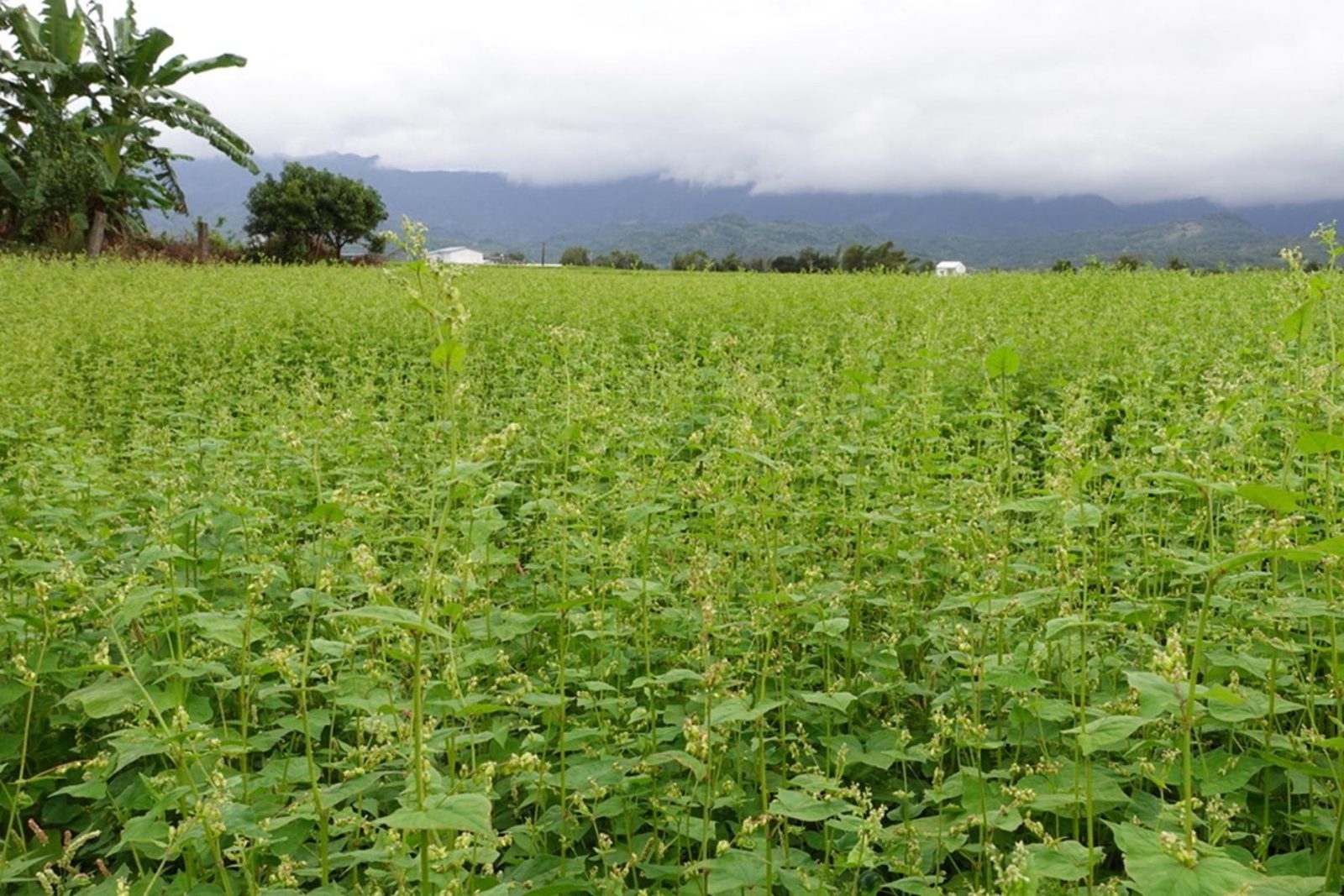
Changliang Village's experience: growing buckwheat during the fallow period meets four principles for increasing soil carbon sinks at once — reducing tillage, increasing cover, rotation and intercropping.
Since we began the smallholder carbon farming project two and a half years ago, many people have asked whether you must farm organically to increase soil organic matter. Frankly, at first I wasn't entirely clear. My current understanding is that I can't answer this as a true-or-false question, because different situations give different results.
Organic farming in the narrow sense doesn't necessarily increase soil organic carbon
Judging from two years of soil organic carbon certification in practice, organic farming in the narrow sense — no chemical fertilisers or pesticides — doesn't necessarily increase soil organic carbon. Even fields using chemical fertilisers and pesticides can gain considerable organic carbon, which is why we accept eco-friendly, organic and conventional (pesticide- and fertiliser-using) farmers alike. From our current data and test results, what affects soil organic carbon is physical and chemical disturbance, with physical tillage having the biggest negative impact. Many fields using organic fertiliser have, through improper or excessive use, acidified their soil and actually lost soil organic matter, ending up with less soil organic carbon than conventional farms.
Organic farming in the broad sense does deliver ecosystem services by reducing greenhouse gas emissions and increasing biodiversity. Just reducing nitrogen fertiliser (urea, ammonium nitrate, etc.) reduces the extraction and emission of natural gas (methane), the large amount of energy used to make nitrogen fertiliser, and the large nitrous oxide (N2O) emissions after application (its greenhouse warming factor is a staggering 285 times that of CO2) — so emissions fall. However, heavy use of organic fertiliser also causes N2O emissions that plants can't absorb, minus only the methane and energy of making nitrogen fertiliser.
A disclaimer: Taiwan has no long-term research on soil organic carbon sequestration following international emission-reduction certification methodologies. Our Taiwan Smallholder Carbon Farming Project is a first attempt in Taiwan, and it is not scientific research. It follows the Soil Organic Carbon Framework Methodology developed by the international emission-reduction certification body the Gold Standard, with reference to the principles recommended by the FAO's Global Soil Partnership, trying various farming methods that may increase soil organic carbon. The focus is on how much opportunity for increased soil organic carbon arises from changing the original farming practices.
Reducing tillage and increasing cover are the keys to soil organic carbon
All agricultural emission-reduction methods have one iron rule: yields must not fall. (If yields fall by more than 5% because of changes made to reduce carbon or increase organic carbon, no emission reductions are counted; if yields fall because of natural disasters, comparison must be made with surrounding farmland not in the project.) For organic farming in Taiwan, if farmers who used chemical fertilisers and pesticides to protect yields had to achieve zero chemical fertiliser and zero detected pesticide residues within a two- or three-year conversion period, it would probably be impossible. So we would never recommend that farmers switch to organic farming for the sake of carbon reduction; the resulting loss of yield would be an "unbearable weight".
Most farmers are fighting for yield; if yields fall, participation drops. So gradually changing ploughing methods to reduce physical disturbance of the soil is the first step. Take the first year of the 144-hectare carbon farming area in Changliang Village, Yuli Township, Hualien: for the past three years, buckwheat has been grown for three consecutive months each year from November to January. The original three-month fallow period is now covered with tangled buckwheat, meeting the basic carbon farming principle of "increasing cover" and also reducing weed growth. And because it compresses the time for puddling and ploughing before the following year's first rice crop, local tillage intensity is reduced, meeting the carbon farming requirement of "reducing tillage".
So the first year's results were surprisingly good: after testing and statistical analysis, there was an average sequestration of over 90 tonnes of CO2 equivalent. (Note: again, this is a single data point comparing end-2023 with the 2022 baseline and cannot be generalised; long-term implementation and observational research are needed before drawing conclusions.) This shows that the four basic principles promoted by the FAO and the Gold Standard — reducing tillage, conservation tillage, reducing bare soil and increasing cover — work in Taiwan.
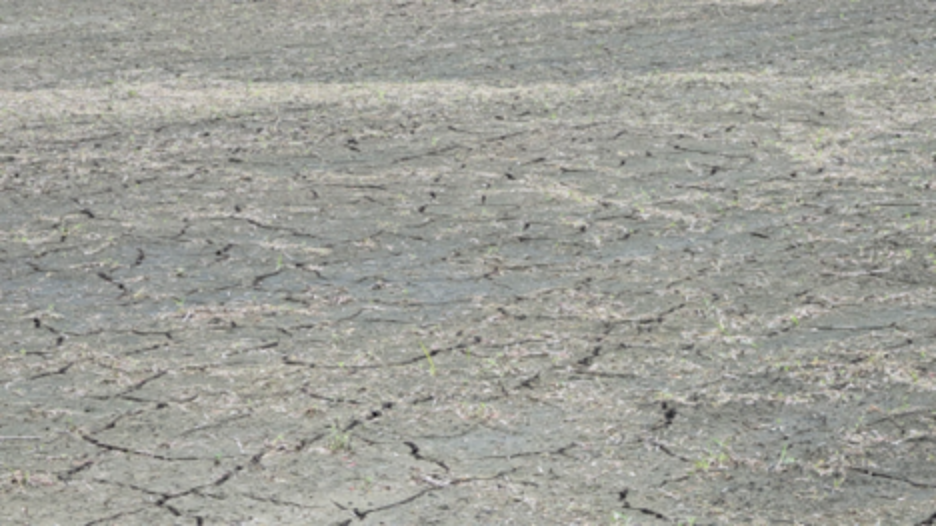
Soil that is turned over and left to dry out with no plant cover will hardly gain organic matter, however organically it is farmed.
Only appropriate organic, eco-friendly farming increases soil organic carbon
In addition, in the cases of A-shan-ge Non-toxic Inn (red oolong tea) and 356 Coffee Estate, long mentored by National Taitung University's Eco-friendly Agriculture and Fisheries Extension Center, emission reductions of over 150 tonnes of CO2 equivalent per hectare were created (an organic carbon increase of about 5.5 per thousand), confirming the opportunity for soil organic carbon to increase after three to five years of effective eco-friendly farming.
Take young farmer Chang Huan-jui of A-shan-ge Non-toxic Inn: making red oolong tea requires the leaves to be bitten by tea green leafhoppers, which gives the floral, fruity, honeyed flavour. So he can't use pesticides or herbicides, to keep up leafhopper numbers, while natural enemies such as ladybirds and red spiders keep the leafhoppers from becoming too numerous.
In recent years he has started using a flail mower to weed his tea garden. Grass that once grew taller than the tea bushes is smashed by the spinning flails and left lying directly on the ground. On one hand the soil isn't disturbed; on the other, the weeds' photosynthesis has absorbed CO2 for the soil, and the chopped weed residue becomes free fertiliser, decomposing to supply nutrients and providing a source of soil organic matter. Over these years his soil has become loose and springy, and his tea bushes much healthier. This is a model of eco-friendly farming — but you have to endure a few years before seeing good results.
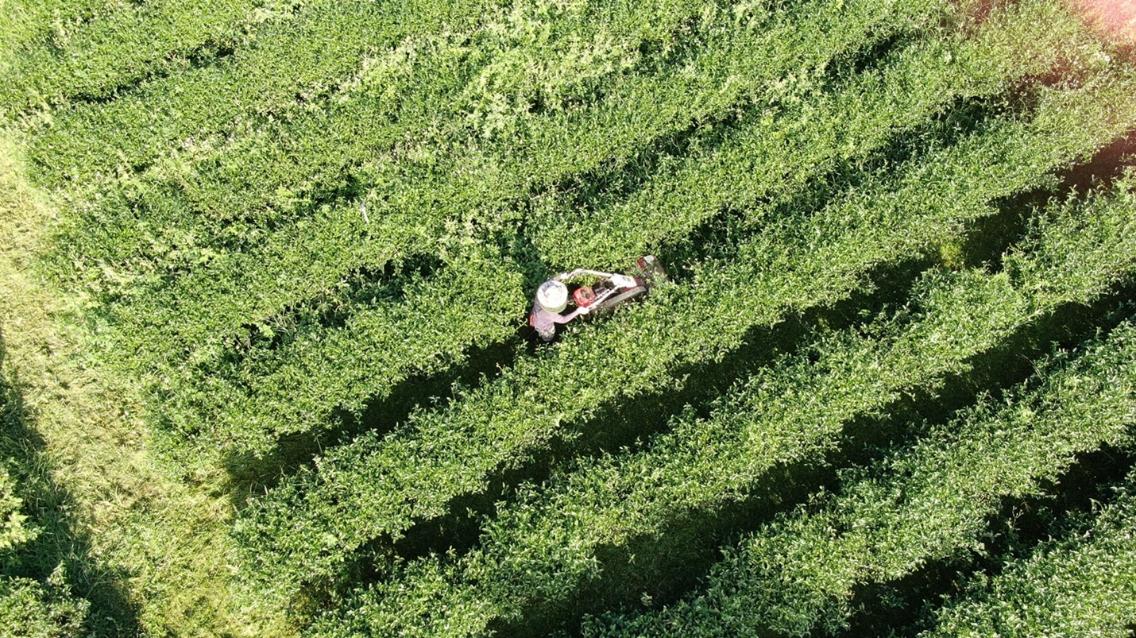
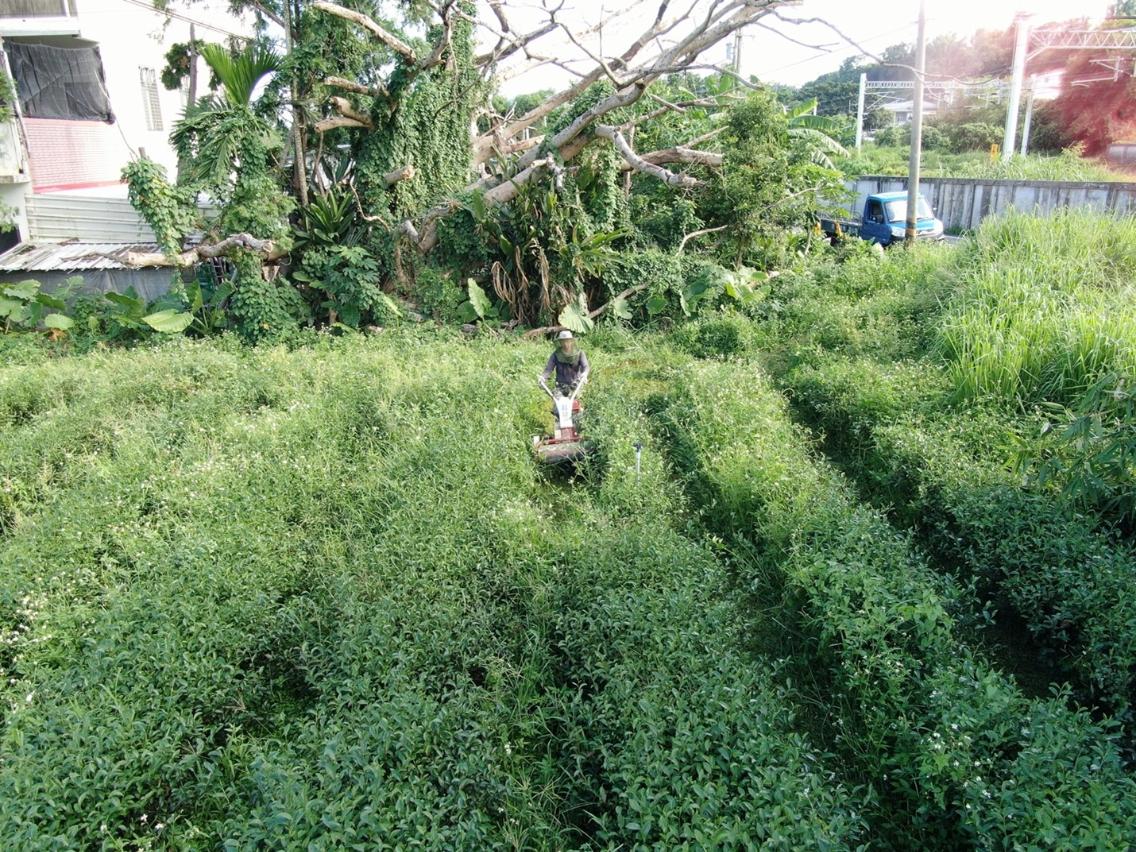
Chang Huan-jui's flail mower chops up the weeds and leaves them as mulch on the surface, keeping the soil moist and shaded — also a very good way to fix carbon and increase soil sinks.
356 Coffee Estate has had a similar experience, but its environment is harsher: it is on the floodplain of the Luye River, with more stones than soil. Yet after more than five years of eco-friendly farming, its soil has much more organic matter than surrounding fields. Basically, in owner Chen Wen-chou's words, it is the "do nothing" approach of governing by non-action. Soil organic matter is relatively high, but because sand and gravel — about 80% — must be deducted, its soil organic matter is only 20% of the original proportion. This example shows that even on floodplain sand and gravel, with no tillage and more cover, poor soil has a chance to increase its carbon sink.
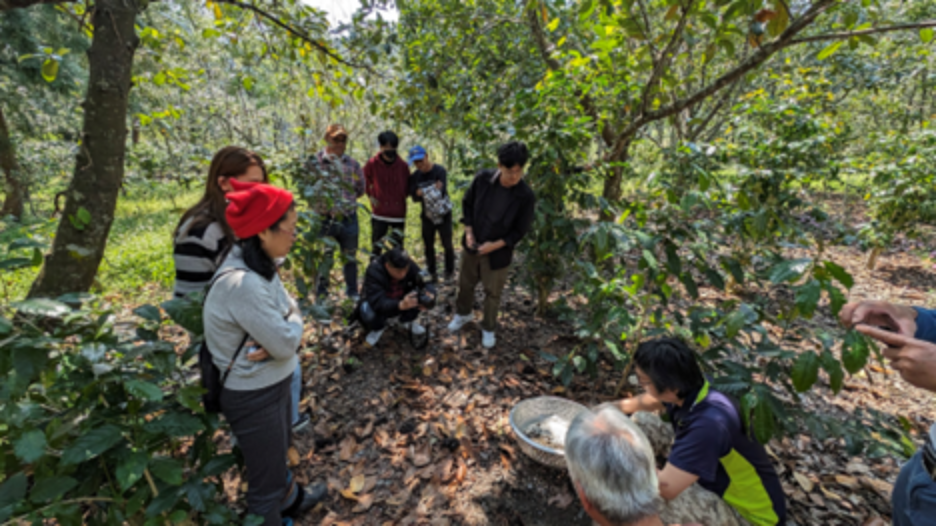
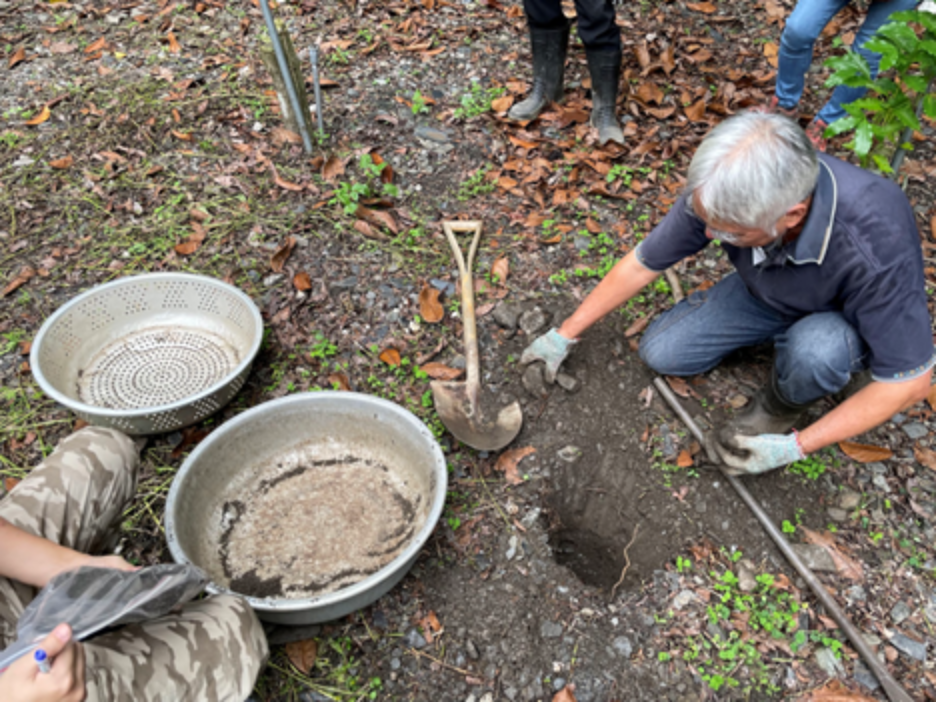
356 Coffee Estate in Luye, Taitung, has grown coffee, cacao and other crops on gravelly floodplain land for nearly ten years, governing by non-action — letting fallen branches and leaves rot where they fall and not ploughing — and it too has considerable sequestration performance.
Our practice with soil carbon sinks is still limited, but the early experiments are consistent with international soil carbon sink principles. Only by continuing over the long term will we know how much localised soil carbon sinks can contribute to emission reduction.
Source: CM Media ( https://www.cmmedia.com.tw/home/articles/49064 )


