 努力小農
本文尚無譯文。
Kinmen: a sustainable net-zero island
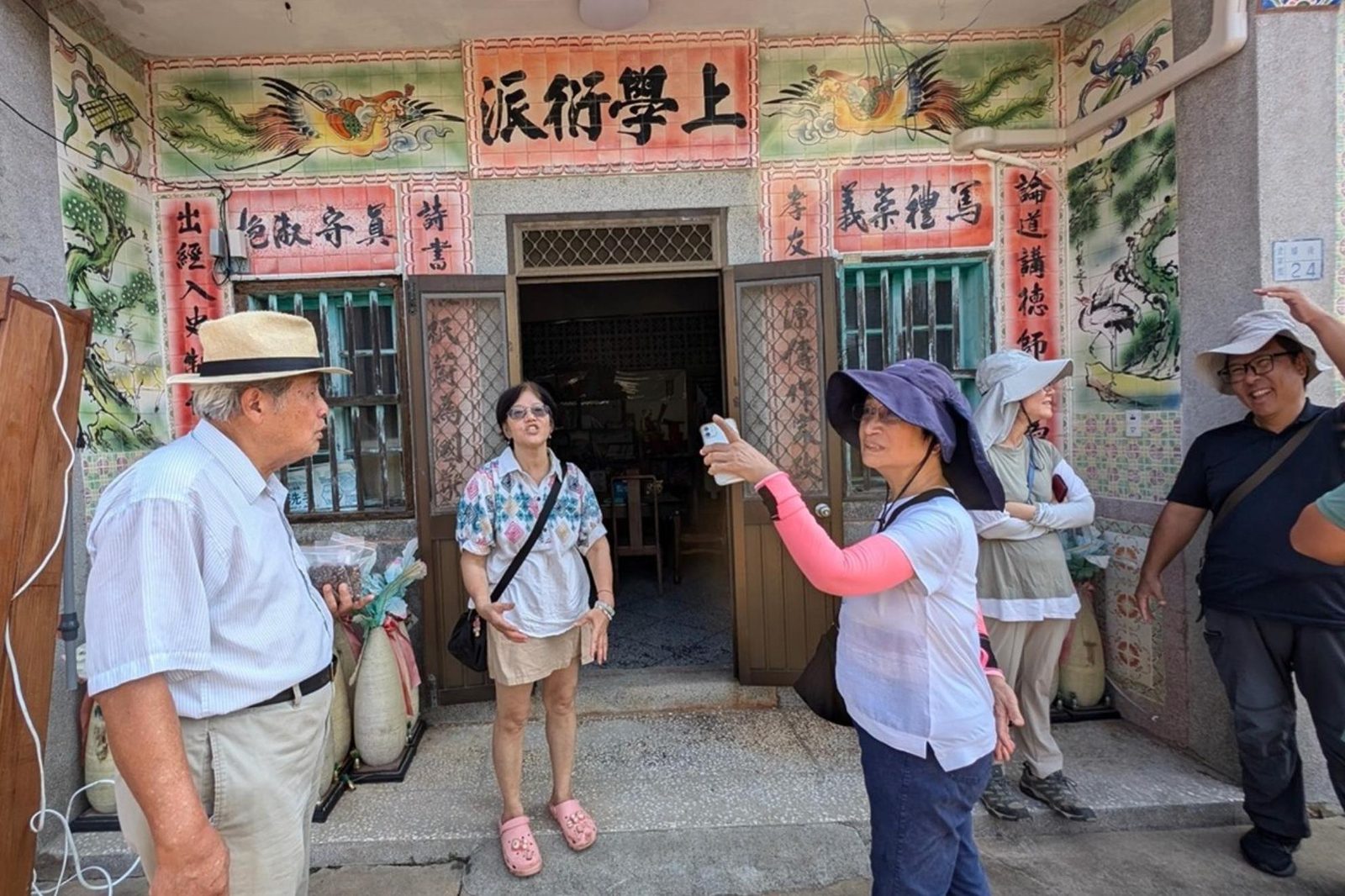
Tsao Chi-hung (left), chair of the Dawushan Cultural and Educational Foundation and former chair of the Council of Agriculture, and Dr Liao Li-ling of the Food Industry Research and Development Institute (third from right) have worked tirelessly in recent years to promote the use of photosynthetic bacteria in farming, fisheries and livestock across Taiwan and its outlying islands.
If Taiwan is to achieve net zero, it should think big and start small. With the right timing, place and people, Kinmen could become Taiwan's demonstration island on the road to net zero: only if Kinmen is sustainable and net zero can Taiwan be too.
Kinmen revisited: a different picture
I recently made a trip to Kinmen. The last time I went was 50 years ago, during military administration, when the island was shelled on odd-numbered days but not even ones. Everything was different from Taiwan; even the money was "for outlying islands only". It left a deep impression. Twenty-five years ago I almost went to Kinmen Distillery for Y2K (millennium bug) project management and auditing, but because I had to go to Indonesia, a colleague went instead.
Last time I flew on a C-119 military transport plane with canvas-strap seats. The air was turbulent, and with the plane bucking violently up and down the whole way, most people on board were sick — both ways. The memory is still vivid. This time the Mandarin Airlines flight landed in Kinmen without incident.
I rented a car at the airport and went straight to visit smallholders using photosynthetic bacteria with the Dawushan Cultural and Educational Foundation. In the five or six years since leaving office, former Council of Agriculture chair Tsao Chi-hung has stayed focused on agricultural improvement, promoting the wide use of microbes to help farmers and fishers at low cost. Photosynthetic bacteria help animals and plants digest nitrogen and phosphorus, benefiting farming, fisheries and livestock alike. Dr Liao Li-ling of the Food Industry Research and Development Institute has promoted them for years, benefiting many farmers and fishers, and teaches farmers to culture their own photosynthetic bacteria, reducing pesticide and fertiliser use. Microbes also help crops' soil fix carbon — a powerful tool for smallholders' carbon farming to increase soil organic carbon.
The first time I heard of the international 4 per 1000 Initiative in Taiwan was from Tsao Chi-hung in 2021; it became the starting point of smallholder carbon farming. Over three years, riding the momentum of Tsao's promotion of photosynthetic bacteria, the smallholder carbon farming project has got off to a good start. Is there a chance of promoting photosynthetic bacteria and carbon farming in Kinmen?
At first sight Kinmen has one good sign: far less herbicide is used than in Taiwan. You often see grass-cutting workers along the roadsides like "minesweepers", rather than the herbicide spraying common in Taiwan. In Taiwan, herbicide abuse spreads through air and irrigation channels and can pollute farmland within a 3 km radius — how could anyone emerge unstained from the mud and do organic farming well?
Kinmen's golden goose — also Kinmen's chance for net zero and negative carbon
Kinmen's biggest industry — Kinmen's TSMC, its "sacred mountain" — is Kinmen Distillery. Its 2022 sustainability report shows Kinmen Kaoliang Liquor had annual revenue of NT$10–12 billion from 2020 to 2022, with annual carbon emissions falling from 45,867 to 33,102 tonnes. Each year it buys sorghum and wheat under contract from 1,500 hectares of farmland in Kinmen (including Lesser Kinmen) as raw materials — only a small part of its raw materials; the rest is sorghum and wheat contract-grown in Taiwan or imported.
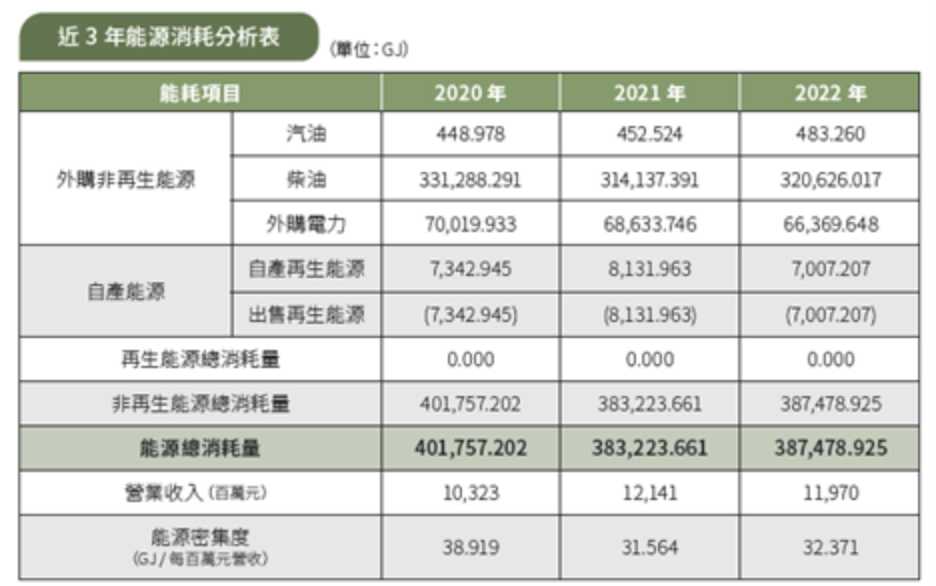
Kinmen Distillery's energy consumption and operating revenue. (Source: Kinmen Kaoliang Liquor 2022 sustainability report)
On emission reduction and net zero, the biggest difference between Kinmen Kaoliang and TSMC is that TSMC can't reduce carbon through its raw materials, but Kinmen Kaoliang's raw materials are crops. It can develop "natural carbon sinks" through the crops it buys — especially by increasing soil carbon sinks (carbon farming). Agricultural carbon reduction may be able to cut far more carbon than is emitted.
If Kinmen Kaoliang supported its contract farmers in adopting soil carbon farming methods — reducing tillage, increasing cover or mulch, using biological inputs — soil carbon sinks would increase. At an annual increase of one per thousand, each hectare could gain about 30 tonnes of CO2 equivalent; across Kinmen's 1,500 hectares of cultivated land, that would be 45,000 tonnes — equivalent to Kinmen Kaoliang's annual emissions.
Under international emission-reduction rules, however, this doesn't mean Kinmen Kaoliang could thereby become "carbon neutral". It must still substantially cut its CO2 emissions from direct sources, such as fossil fuel use, and indirect emissions from suppliers, such as electricity, to reach its reduction or net-zero goals. Farmers' reductions can only offset the company's downstream indirect emissions, such as staff commuting and business travel — only 5–10% of total emissions — and cannot offset everything. (This is rarely mentioned in Taiwan and will cause misunderstanding, so it must be made clear.)
Kinmen Kaoliang's profits subsidise Kinmen residents' education and living costs. On the Sustainable Development Goals, it has created benevolent policies that every Kinmen resident can feel, with very good ESG effects. Adding emission reductions through its supply chain would be the icing on the cake.
Kinmen's organic agriculture lies in more organic soil
Liu Chin-hung, head of the Grassroots Consciousness Studio, which has long worked on community revitalisation and rural regeneration in Kinmen, points out that Kinmen's farmers have also been hit by climate change in recent years: insufficient rain has badly affected agriculture and harvests are smaller than before. Perhaps this is also an opportunity: farmers could switch to forage grass, or use the moment to convert to organic farming. Kinmen could become an "organic island" while also promoting carbon farming, giving farmers a chance to increase their income and achieving a just climate transition.
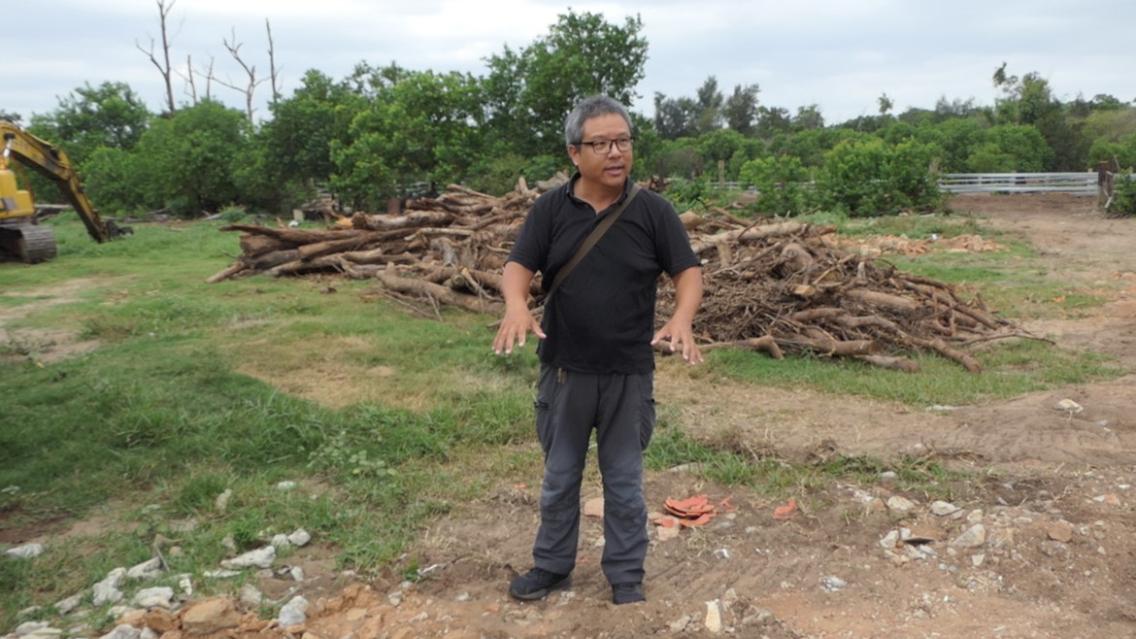
Turning Kinmen into an organic island is the dream of Liu Chin-hung, head of the Grassroots Consciousness Studio, who has done community development in Kinmen for many years.
Lesser Kinmen (also called Lieyu) has a larger share of farmland and could serve as a trial area. Google Earth imagery from 27 July 2021 shows that most of the island's farmland was bare after the summer harvest — meaning much of the soil was releasing large amounts of organic carbon under the blazing summer sun. It also means that improving this sun-baked exposure offers a chance to add organic carbon to the soil, achieving carbon farming's aim of increasing soil carbon sinks.
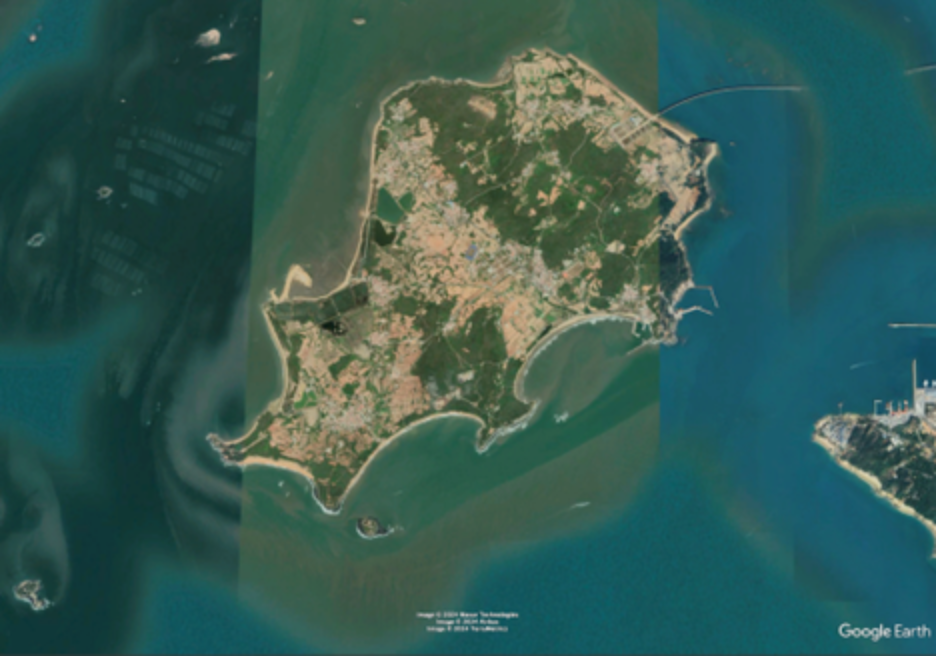
Google Earth satellite imagery from 27 July 2021 shows most of Lesser Kinmen's farmland bare after the summer harvest. Reducing bare soil would reduce the loss of soil organic carbon. (Image: Google Earth)
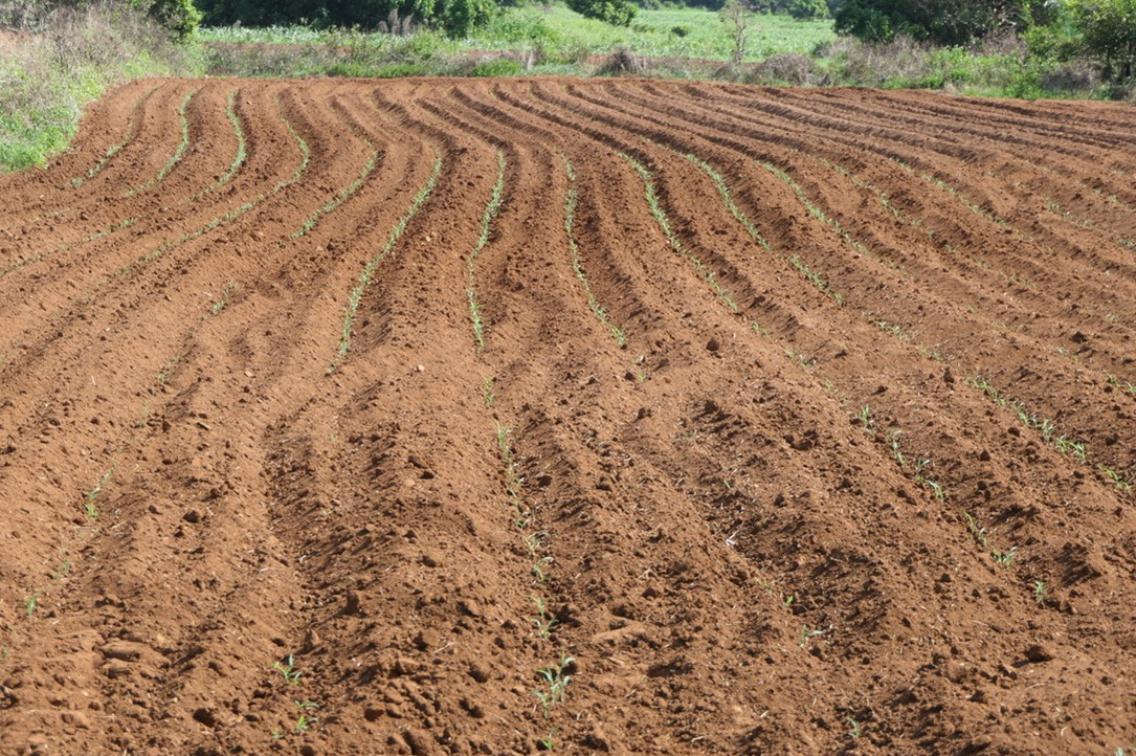
Sorghum is sown in September. On dry Lesser Kinmen under a blazing sun, bare soil makes survival very hard for the seedlings.
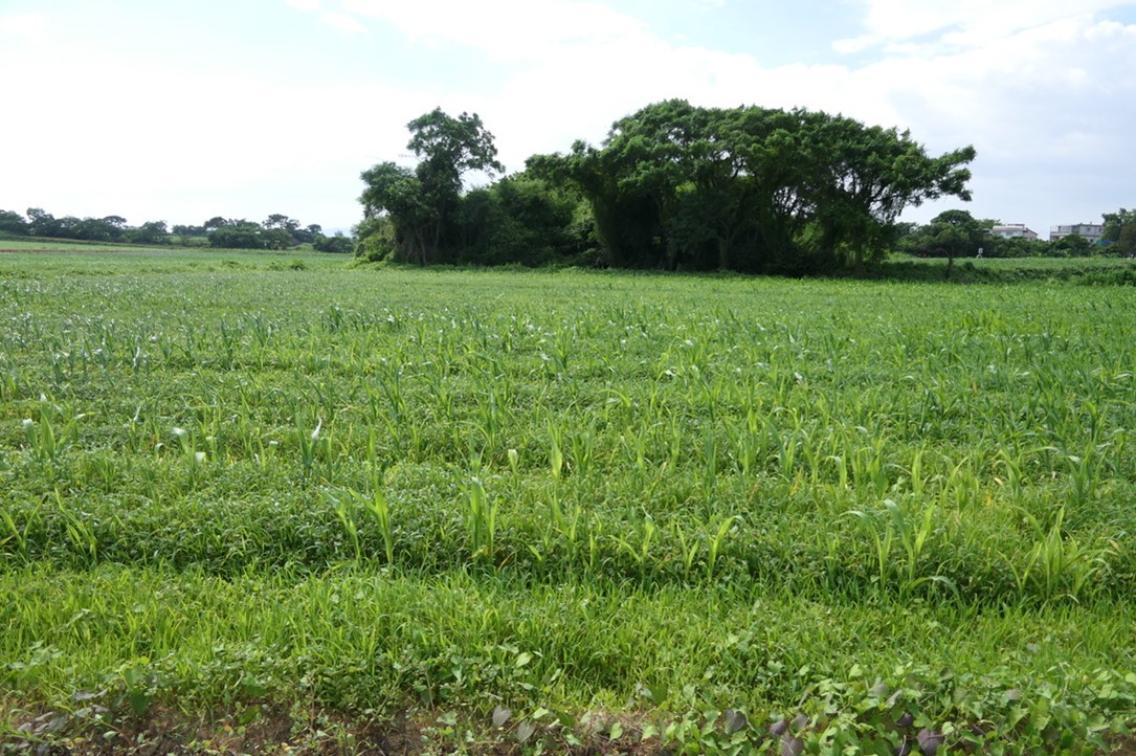
A few sorghum fields have green grass cover, which keeps the soil moist and shaded and holds on to more soil organic carbon.
Of course this can't be achieved overnight. It requires community communication and consultation with farmers on how to reduce tillage when growing sorghum and wheat, increase green-manure cover during fallow periods, or mulch with crop residues and straw after harvest, to raise soil organic matter. Nor will the first year bring immediate results; it takes two or three years of change for good effects to appear.
Kinmen has 140,000 registered residents, Lesser Kinmen only 12,000. Reaching net zero through agricultural carbon reduction is very achievable — it could even become carbon negative (reductions greater than emissions). But Kinmen has a large tourist population, bringing considerable net emissions, which will need separate strategies, such as more ferries, electric vehicles, and solar or wind power.
Kinmen used to be the "lighthouse of freedom, the bastion for counterattack"; in future it could become Taiwan's demonstration county for net zero. Nothing is impossible to a willing heart.
Source: CM Media ( https://www.cmmedia.com.tw/home/articles/49222 )


