 努力小農
本文尚無譯文。
Trouble in Noto is trouble for Taiwan: smallholder carbon farming heads to Japan's Noto Peninsula
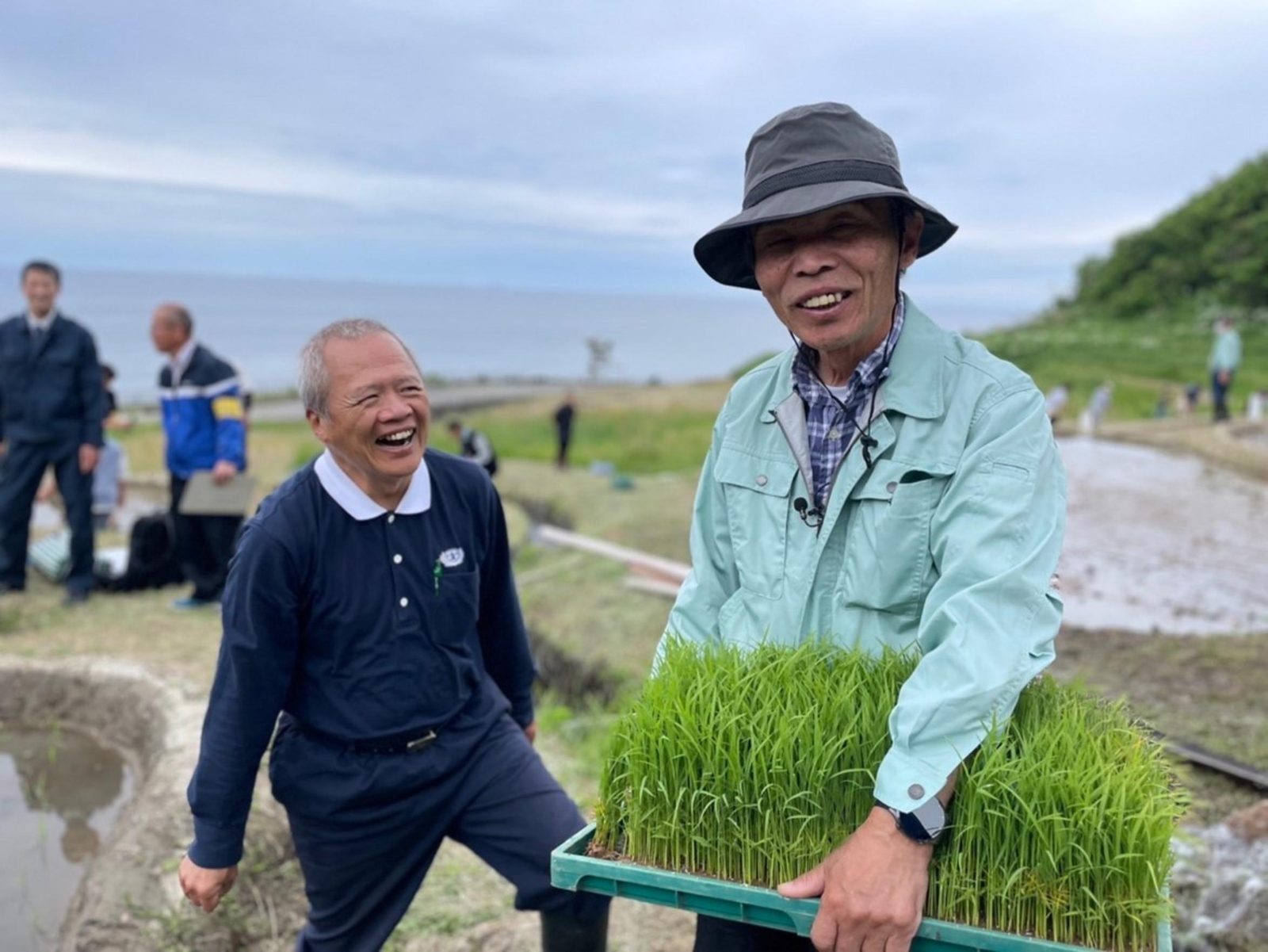
Tzu Chi Foundation adviser Hsieh Ching-kuei has long been involved in international disaster relief. Seeing the food crisis brought by climate change during relief work, he vowed to devote himself to natural farming to sustain food and agriculture. Thanks to his shuttle diplomacy, conservative Japanese farmers agreed to join the smallholder carbon farming project.
On New Year's Day this year, a magnitude 7.6 earthquake struck Japan's Noto Peninsula — Japan's largest since the 2011 Tohoku earthquake. The Tzu Chi Foundation went to Japan immediately for disaster relief and the subsequent aid work, building good community relations with local survivors.
Hsieh Ching-kuei, who leads Tzu Chi's relief work there, asked me whether it might be possible to help local smallholders on the Noto Peninsula set up a smallholder carbon farming project registered with the Gold Standard. In early May this year I went to the Noto Peninsula to meet some local smallholders and explore its feasibility.
The Noto Peninsula's farmland and sea are emblematic of the satoyama–satoumi (village mountains, village seas) initiative. Japan is an island nation surrounded by sea, so simply put, people live off the mountains and the sea. In the era of net-zero carbon, how to use mountain-forest and coastal resources for sustainable farming, forestry and fisheries has made traditional farming, fishing and herding a blueprint for a "modern utopia". Taiwan too has many people of vision, and the government and civil society have held many satoyama and satoumi activities — and Noto is a famous place (not a holy place) of satoyama and satoumi.
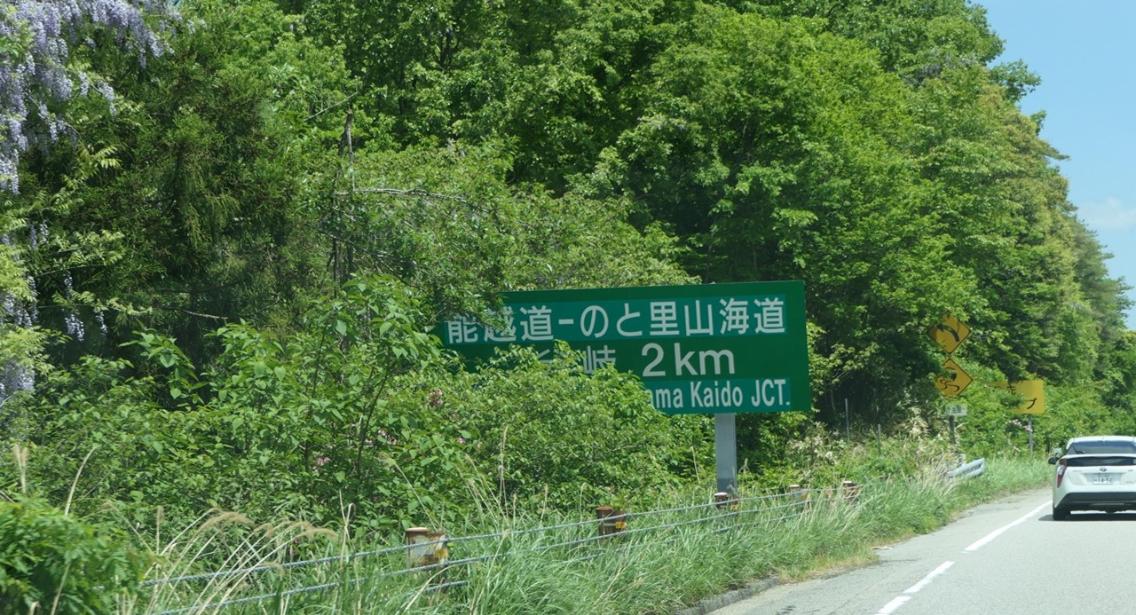
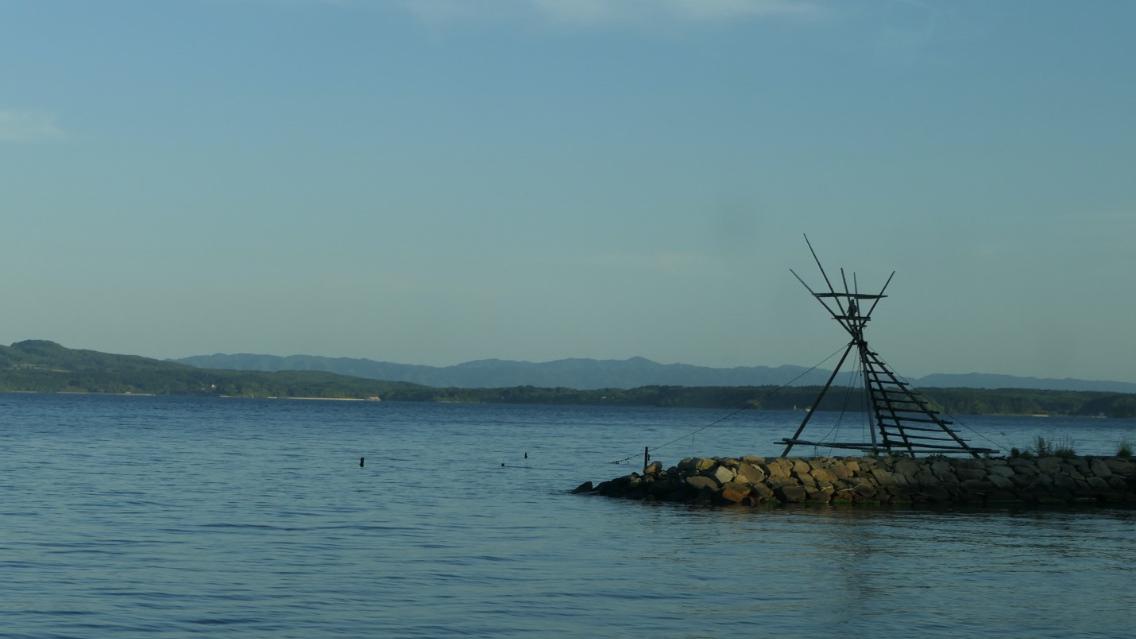
The Noto Peninsula is world-famous for satoyama and satoumi, but faces high industrialisation, an ageing population and declining farming and fishing. After the great earthquake it may become a "relic" unless it is infused with the strength of sustainability.
Trouble in Noto is trouble for Taiwan
Geologically and geographically, Noto and Taiwan both lie on the Pacific Ring of Fire, with very similar landforms, climate and customs. What happens in Noto may happen in Taiwan. We share a common humanity, feel others' suffering as our own, and should be prepared in times of peace. As it happens, on 3 April this year Hualien also suffered a major earthquake, and the Suhua Highway is still intermittently closed — fellow sufferers. Noto's hills are gentler, though, not as precipitous as the Suhua Highway or Taroko, and apart from mountain areas, ordinary transport has been restored.
From the experience of the 2011 Tohoku earthquake and tsunami, without a nuclear plant involved, modern engineering can generally recover from an earthquake and tsunami in at least ten years. Old and dangerous buildings can be removed and there is budget for rebuilding; as long as water, electricity and communications are restored in urban areas and there are no more earthquakes and tsunamis, decades or even centuries of prosperity can follow — as the Taiwanese saying goes, "a broken arm heals stronger".
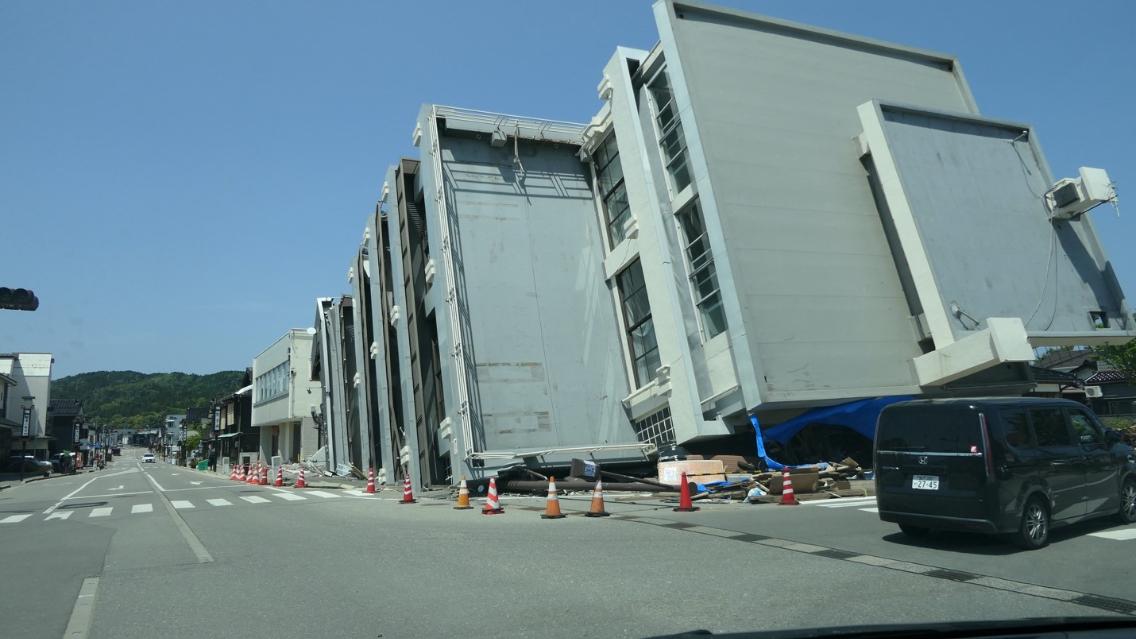
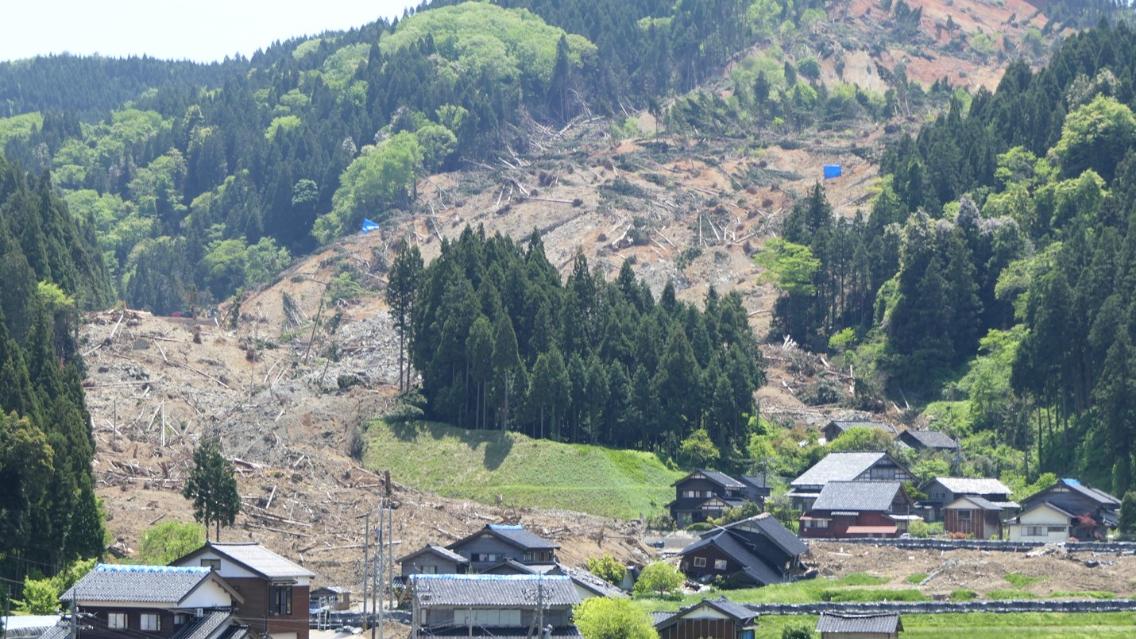
A collapsed house can be rebuilt in a year or two, but ruined fields take decades to restore, and young people are no longer willing to come back to farm them.
Knowing it can't be done, and doing it anyway
Farmland damaged by earthquakes, tsunamis and debris flows is not so easy to restore. Levelled fields, cultivated soil, and irrigation and drainage systems depend on the original terrain and hydrology, plus generations of effort over decades or a century, forming farming villages. If an earthquake destroys the water veins, or landslides and fissures damage the fields, restoring them takes great effort.
Farming villages everywhere face ageing populations. The Shiroyone Senmaida in Wajima — 4 hectares of rice paddies between mountain and sea, made up of 1,004 tiny terraces on the hillside — is tended by the 30-member Aikoukai, aged 62 to 82, who now face the problem of succession. Income from growing rice alone can hardly sustain it. These paddies, which have kept up 400 years of tradition of entirely manual levelling, puddling, transplanting, harvesting, sun-drying and threshing, seem economically unsustainable apart from their value for cultural tourism. In 2001 Shiroyone Senmaida was designated a place of scenic beauty, and in 2011 the FAO recognised it as a Globally Important Agricultural Heritage System.
If even the internationally famous Shiroyone Senmaida is in this state, Noto's other satoyama farmland faces "total submersion" after the disaster: there are neither people nor money. Besides the huge cost of rebuilding houses, restoring farmland is almost impossible.
From a market-economy perspective, running smallholder carbon farming on the Noto Peninsula to make money from soil carbon sink emission reductions is impossible. After months of consultation between the Tzu Chi Foundation and local farmers, what they valued was not how much soil organic carbon credits could sell for, but the impact value of the Sustainable Development Goals (SDGs) under the Gold Standard's international emission-reduction certification. Gold Standard certification emphasises the value of sustainability impact: its SDG Impact Registry requires, besides however many tonnes of CO2 equivalent are reduced, contributions to the other 16 SDGs.
This is like a standard ruler for measuring and recording: following the Gold Standard's sustainability-impact standards, it evaluates the Noto Peninsula smallholders' future path towards reconstruction and revitalisation. This may be the first time in Japan that sustainability is used as the quantitative basis for reconstruction and revitalisation.
We went through the 17 sustainability goals one by one and discussed with local residents, farmers and other stakeholders the possible sustainability impacts across 169 targets and 247 indicators. Many relate to local circumstances, especially the first three basic-needs goals for post-disaster farmers: livelihoods, food security, and health and well-being. In addition there is communication, education and training for local farmers on future carbon farming and carbon reduction, so they consider more sustainable value as they rebuild their fields.
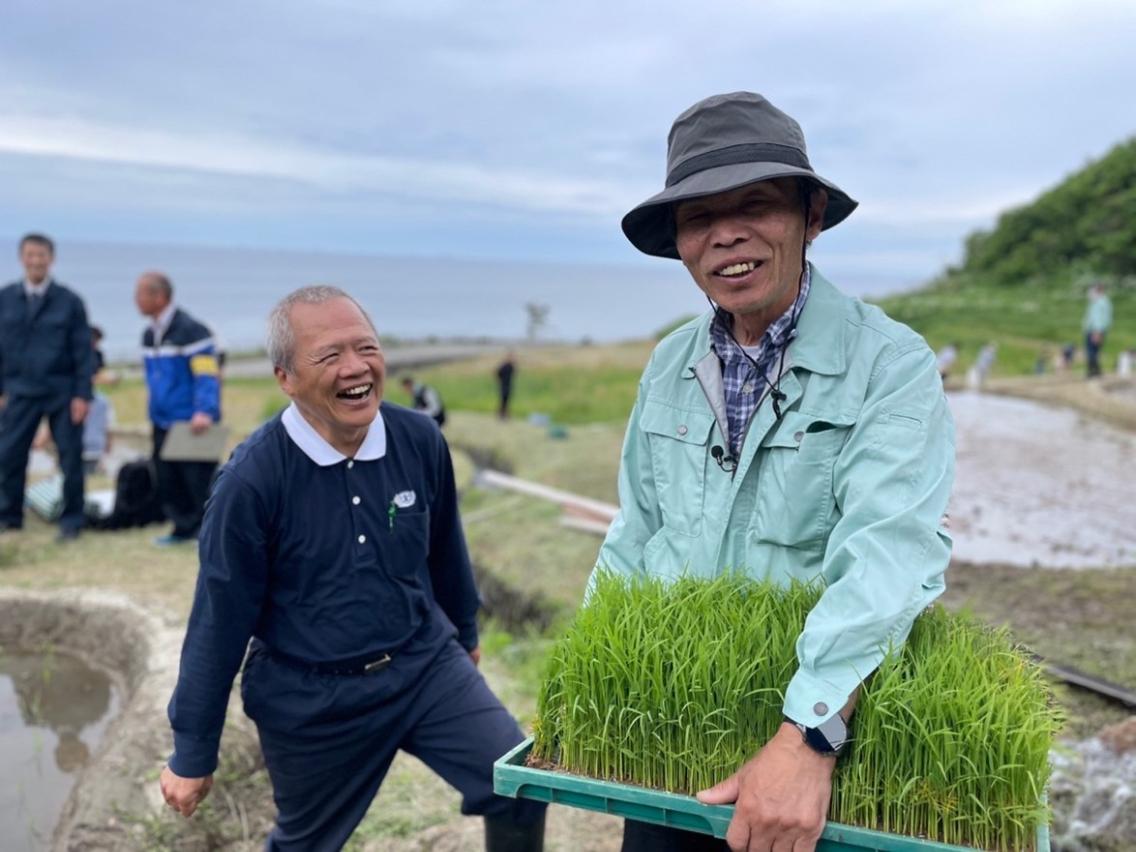
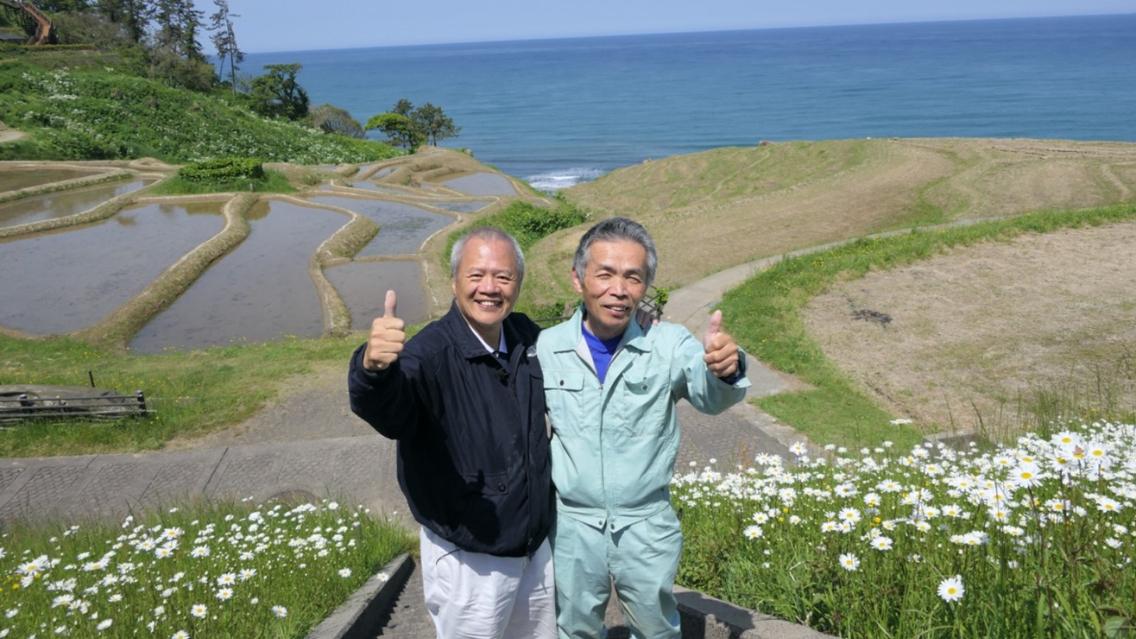
Tzu Chi Foundation adviser Hsieh Ching-kuei has long been involved in international disaster relief. Seeing the food crisis brought by climate change during relief work, he vowed to devote himself to natural farming to sustain food and agriculture. Thanks to his shuttle diplomacy, conservative Japanese farmers agreed to join the smallholder carbon farming project, measuring the sustainability performance of reconstruction and revitalisation by international standards — the first project in Japan to join the Gold Standard's voluntary emission reduction. (Image: provided by Jay Fang)
The power of combining charity with sustainability
On 16 September the first stakeholder consultation meeting will be held in Noto to explain the rules and requirements of the Noto Peninsula smallholder carbon farming project and its future sustainability benefits. (The next column will cover the meeting and related process.)
Under the UN Framework Convention on Climate Change, Japan has always played the role of a major emitter and buyer of carbon credits (an Annex I country under the Kyoto Protocol), so it has only developed emission-reduction projects jointly with developing countries (non-Annex I countries). Japan's central government only last year began its domestic voluntary emission-reduction scheme, J-Credit, created by broadly integrating the domestic credit scheme and the offset scheme (J-VER, Japan-issued emission reductions). It currently has six agricultural methods, including reducing N2O emissions from pig and chicken excrement with low-protein feed, changing livestock manure management systems, adding nitrification inhibitors to chemical fertilisers to reduce N2O, applying biochar to grassland or mineral cropland soils, and extending mid-season drainage in paddies. It contains no method for soil organic carbon sequestration, so the Gold Standard's certification system had to be used. If the Japanese government in future considers adopting soil organic carbon methods, the Noto Peninsula smallholder carbon farming project might return to Japan's J-Credit scheme.
Agricultural land use — especially ploughing, which physically disturbs the soil — causes large losses of the soil's original organic carbon, making it acidic and poor, weakening crops and reducing yields, and threatening climate and food security. Yet smallholders (under 2 hectares or fewer than five workers) make up 80% of the world's farmers and are hard to manage collectively, while large farmers have more concerns and lack the capacity to deal with their greenhouse gas emissions.
Only when smallholder carbon farming produces real results and lets the evidence speak will more people believe that reducing physical, chemical and biological disturbance of the soil can cut losses of soil organic matter and even fix carbon. Through internationally regulated certification, besides earning carbon credits, they can gain sustainability performance as a medal for the land, the crops and the farmers, and win consumers' recognition — the only chance to survive against the odds and move towards sustainability.
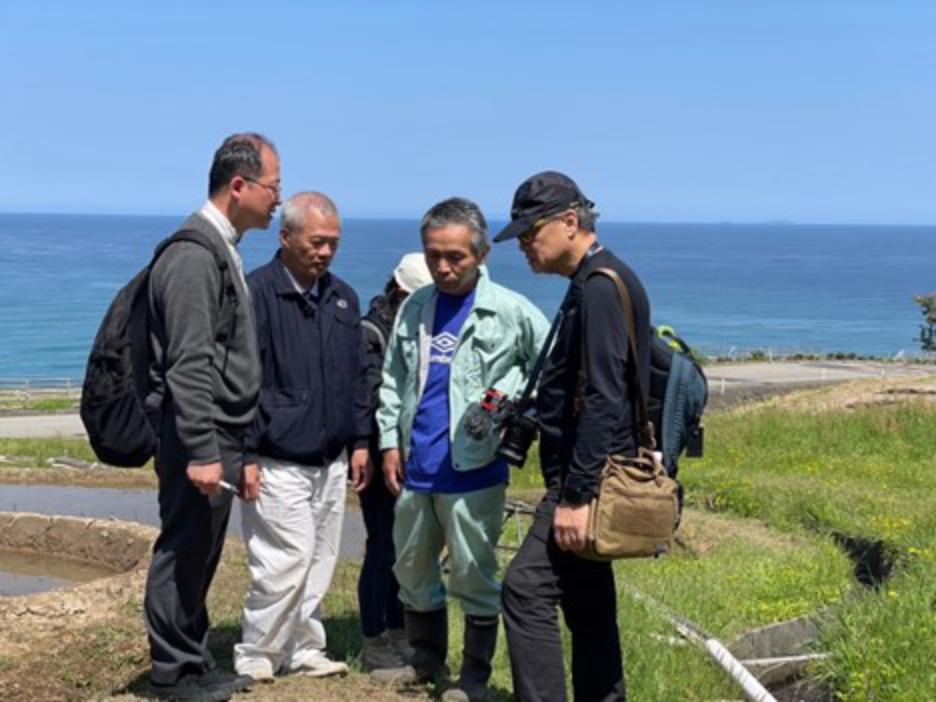
In early May, discussing the feasibility, pros and cons of carbon farming locally with the Tzu Chi relief team and local farmers.
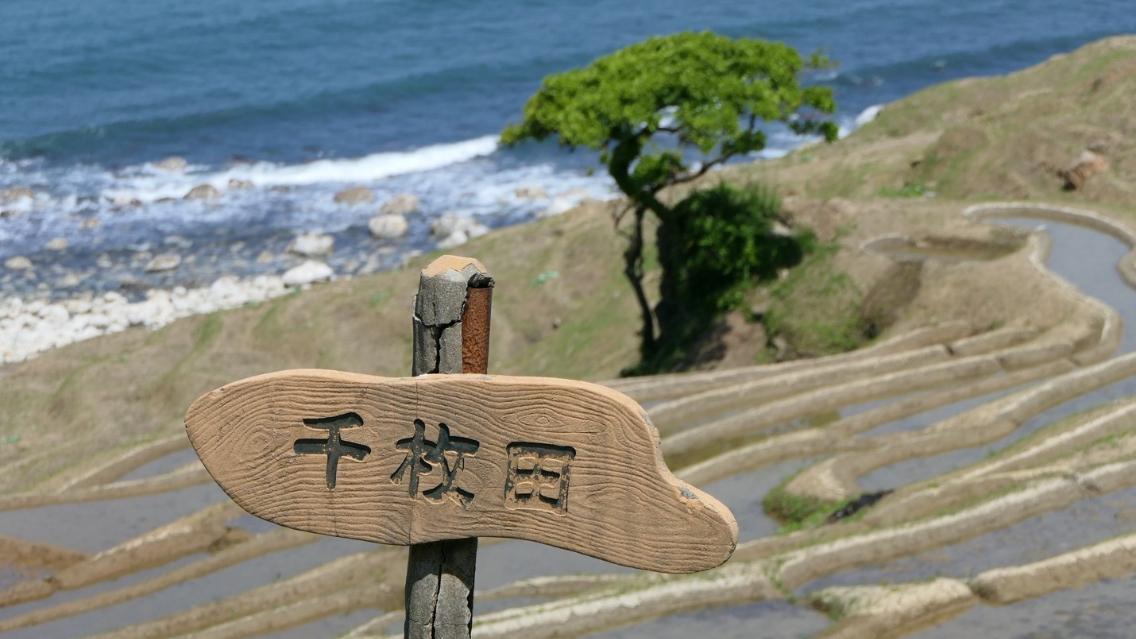
Shiroyone Senmaida is a famous place of satoyama–satoumi sustainable agriculture in Japan. We hope that through this Taiwan–Japan charitable sustainability partnership, its reconstruction and revitalisation will not only maintain 400 years of traditional farming but genuinely draw more people to see its sustainable value beyond history, culture and farming.
The Noto Peninsula smallholder carbon farming project could only start with the Tzu Chi Foundation's support covering the costly certification and testing fees. Under Gold Standard rules, the Tzu Chi Foundation is the sponsor/investor and can in future share in the smallholders' sustainability performance as quantifiable results in the foundation's ESG report.
For decades the Tzu Chi Foundation has answered cries for help, its volunteers appearing at countless natural and man-made disasters, bringing Buddhism's charitable power to deliver all beings. In this project it combines the SDGs with post-disaster reconstruction and revitalisation for the first time. Beyond qualitative charitable relief, it uses an international certification system to bring stakeholders into the project, with more community participation and transparent, open mechanisms, widening participation so that charity and sustainability reinforce each other.
Source: CM Media ( https://www.cmmedia.com.tw/home/articles/49371 )


