 努力小農
本文尚無譯文。
Heading to Noto: smallholder carbon farming stakeholder meeting
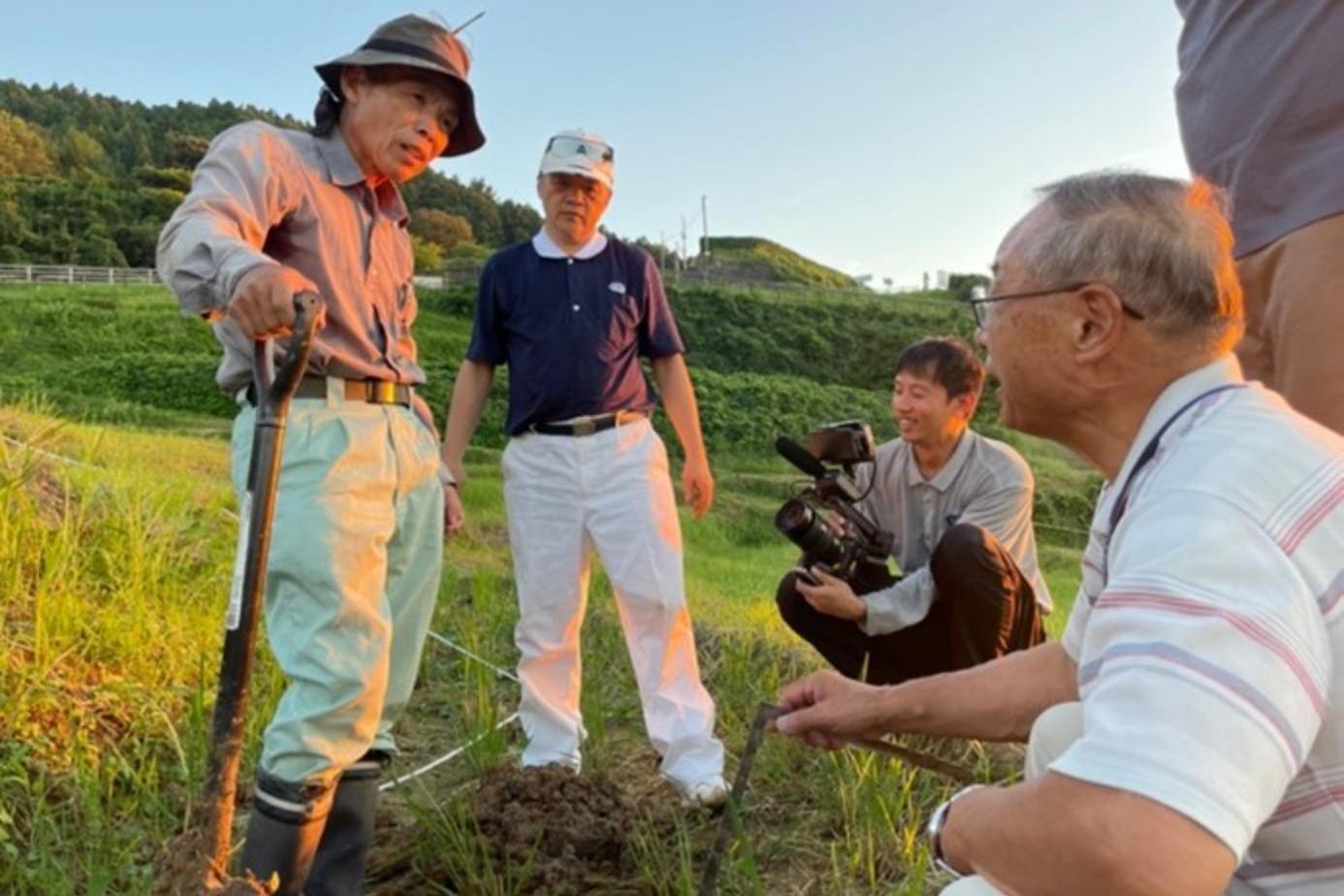
Collecting soil samples at sunset at Shiroyone Senmaida in Wajima, farmed without interruption for 400 years — combining the essence of past and present, heaven, earth and people, it is sure to be blessed. (Photo: Yang Ching-hui)
Off the plane and straight to Senmaida to sample
EVA Air flight 158 left Taoyuan Airport at 6:35 a.m. on 14 September and arrived safely at Komatsu Airport in Ishikawa Prefecture, but the rest of the itinerary did not go so smoothly. The plan was to head north on the morning of 15 September to Shiroyone Senmaida in Wajima for a demonstration and training in field soil sampling, and to film farmers threshing by hand. At 3 p.m. we were to meet the tourism section at Wajima City Hall to explain whether carrying out smallholder carbon farming at Senmaida would affect the landscape, farmers' work or visitors. After our explanation, the tourism section understood that not only would there be no impact, but certification under the Sustainable Development Goals (SDGs) could raise the area's tourism value, and they were reassured. But Senmaida farmer Hiroyuki Yamashita told us it would rain the next day and threshing probably wouldn't be possible — would that affect soil sampling?
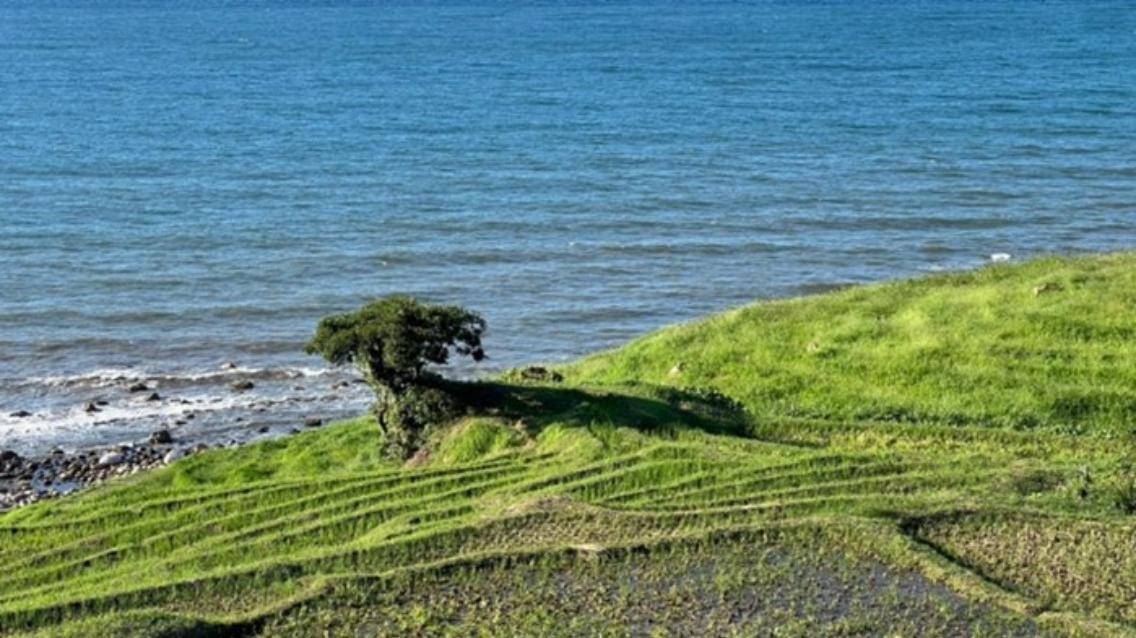
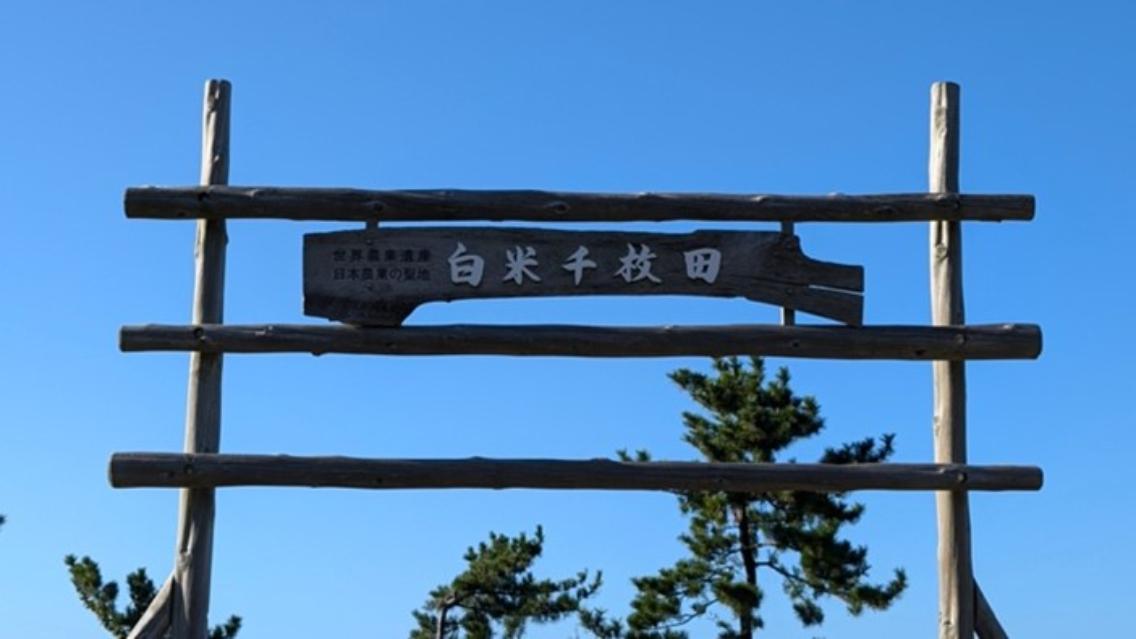
Having the chance to travel from Taiwan to Shiroyone Senmaida in Wajima, struck by the great Noto earthquake at the start of the year, and to plant smallholder carbon farming here is the honour of my life.
Soil sampling must be done when the soil is relatively dry. Windy's forecast showed heavy rain certain within 12 hours, so we decided on the spot to go to Senmaida immediately to sample. We had arranged to meet Katsuyoshi Shuta, a farmer in Tome, and decided to have him come with us to Senmaida to collect soil samples.)
Autumn in Wajima should be crisp and clear — it was only two days to the Mid-Autumn Festival and should have been dry — yet temperatures had been above 30°C for days on end, very hot. You can't help but believe in "climate warming". Farmers must struggle with heaven, earth and the market; what they can't change, they can only adapt to and go with.
We rushed to Senmaida at 5 p.m. When I was last here in early May, the rice hadn't been transplanted; four months later it had been harvested. They grow an early Noto Koshihikari; because this year was hot and the coast has plenty of sun, it was harvested in 90 days — very fast. The Tome area, in a mountain hollow with short daylight, mostly hasn't been harvested yet and probably won't be until the end of September.
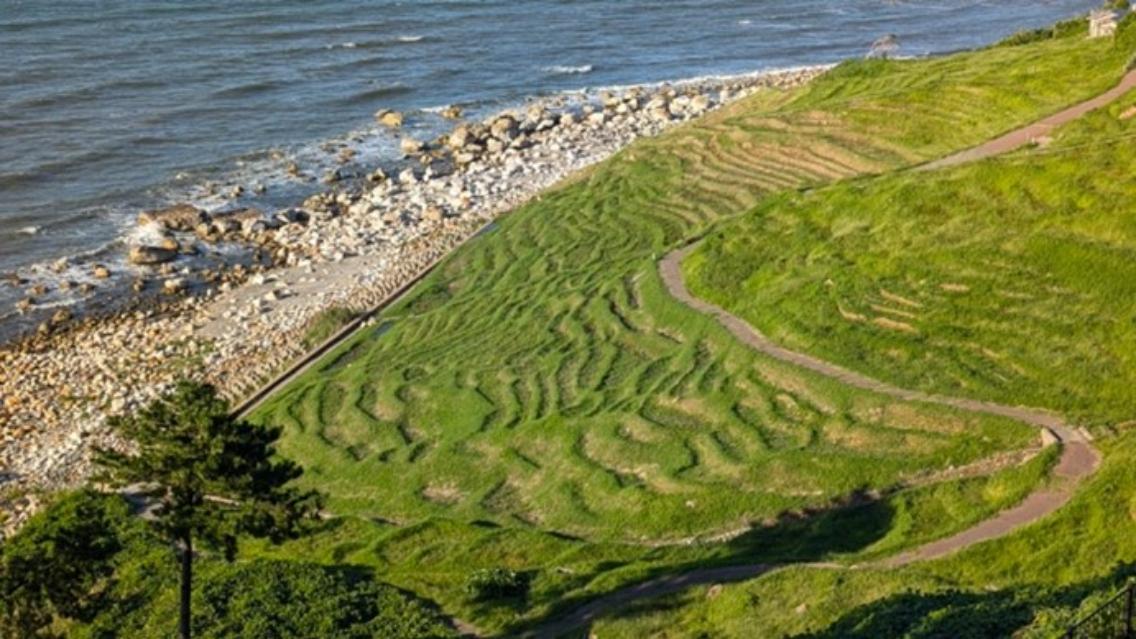
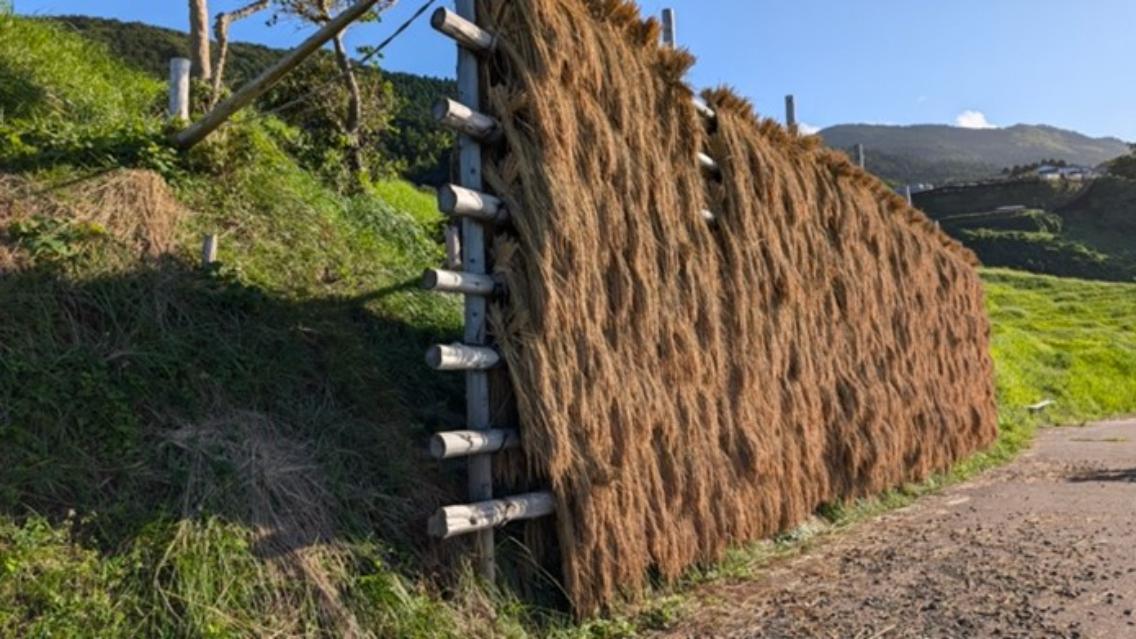
For 400 years Senmaida has kept up traditional manual farming and sun-drying of rice, a representative site of Japan's satoyama–satoumi culture of sustainable farming, fishing and herding. Facing a critical moment of survival after a once-in-a-millennium earthquake, it needs international cooperation to preserve this world cultural heritage.
Savouring centuries of rice fragrance at sunset
Sampling at the world-famous agricultural site of Senmaida should have been a delight, but because it was urgent, our preparations weren't ready, and the sun would set within the hour, so we had to be quick. Just 4 hectares (40,000 m²) of tiny terraces make up as many as 1,004 small plots, averaging about 40 m² each. We marked two representative sampling sites on Google Earth, then set the centre point and the sampling points at 12 o'clock (due north), 4 o'clock and 8 o'clock — four points in all, over a circle of 1,000 m². At each point we took two samples, from the surface down to 20 cm (0–20 cm) and from a further 30 cm below (20–50 cm). The samples were sent to a local agricultural laboratory for testing at ¥3,000 per sample. For detailed sampling methods seesampling method page。
In the harvested paddies you could still smell the rice. To think that local farmers have farmed by hand for 400 years — a truly magical experience. When we finished one sampling site and had collected eight samples, it was just getting dark, so we returned to the guesthouse and replanned the trip. It would rain all day on the 15th, so we would go to Tome to explain the details of the smallholder carbon farming project to Mr Shuta and how potential farmers could take part, mark possible sampling sites, and then observe each site to decide on suitable sampling locations.
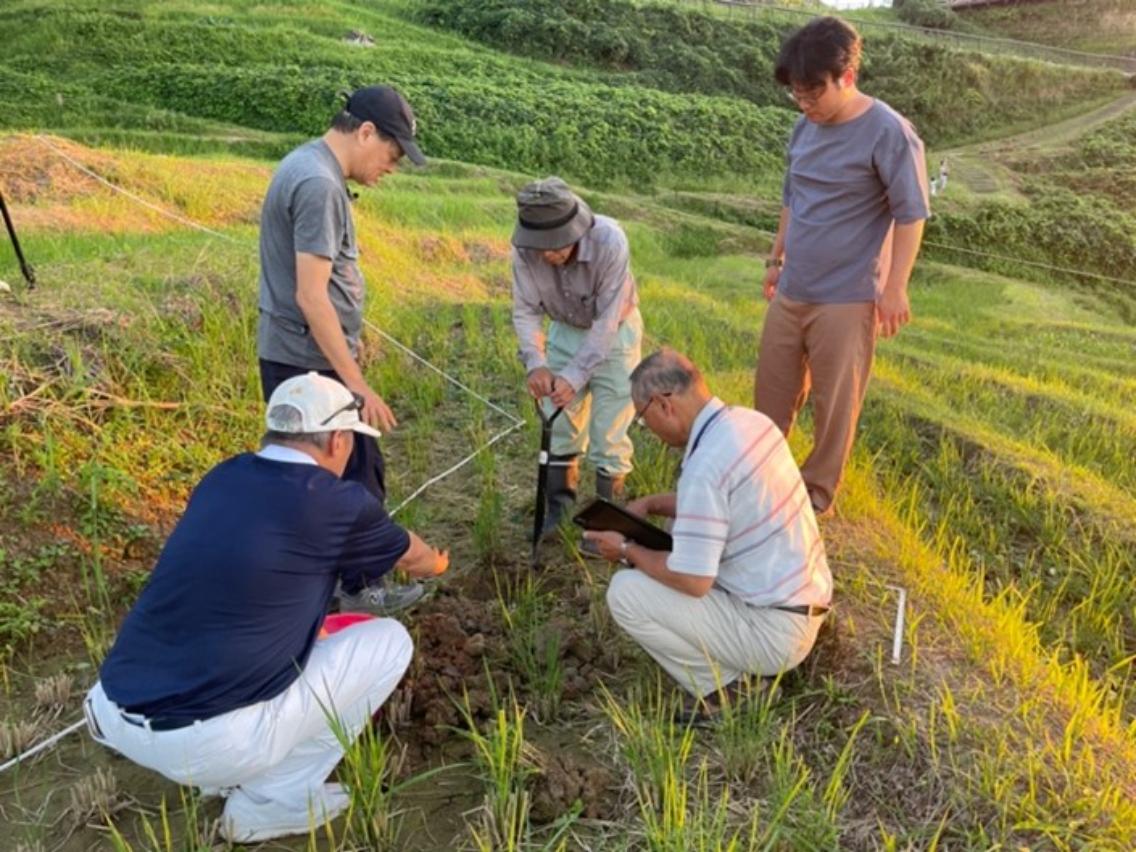
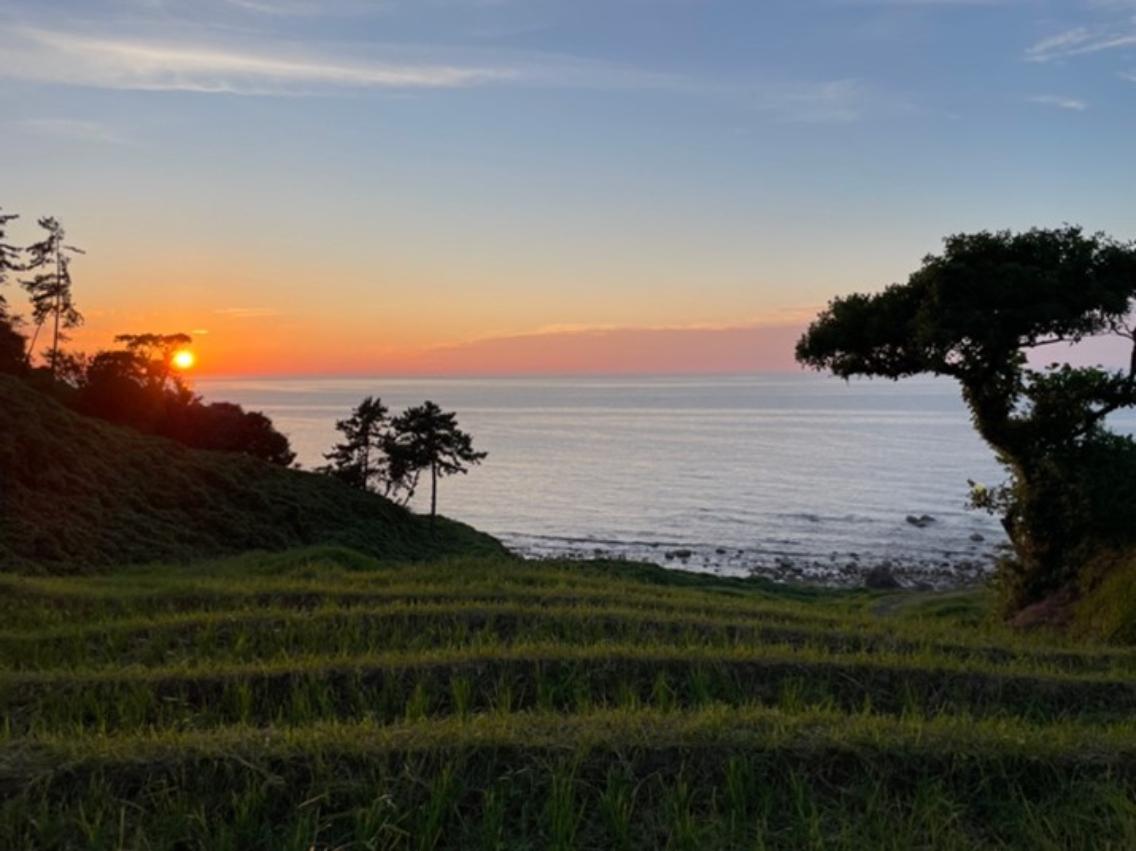
Collecting soil samples at sunset at Shiroyone Senmaida in Wajima, farmed without interruption for 400 years — combining the essence of past and present, heaven, earth and people, it is sure to be blessed. (Photo: Yang Ching-hui)
Farming villages amid ageing and falling birth rates
Japan's paddies are much like Taiwan's: small plots with many shareholders. Landowners often don't farm themselves, so farmers must rent land from those who own it. In recent years, with Noto's decline and population loss, many wealthy landowning families have moved away, and the five biggest "mansions" may be sold to developers. Most farmers are over 50, some in their eighties or nineties; anyone young and strong can join in the farm work.
After explaining the Japanese translation of the smallholder carbon farming contract and the certification rules, Mr Shuta's biggest question was how to do carbon farming well. I explained the eight methods recommended by the FAO and the content of the Global Soil Doctors materials. Because this is a new methodology (the Gold Standard only published it in 2020), and agriculture has so many variables, I believe no one in the world can yet accurately estimate the likely emission reductions in any area. I could only use our first-year carbon farming performance in Taiwan to estimate that it "might" be 30 tonnes of CO2 per hectare per year (a one-per-thousand increase in soil organic carbon) — or it might be over a hundred tonnes. As long as you grasp the principles, there "may" be a good chance.
Seeing that more than 50% of the ripe rice in Tome had lodged, the farmers also knew it was from too much fertiliser. "Reducing fertiliser to the right amount also reduces carbon," I kept telling the local farmers.
Japanese farmers are as diligent as Taiwanese ones: as soon as the harvest is in, they level the land. Noto winters are cold with lying snow; when it melts the next year, the ground is still bare. "That's fine — be a bit lazy, don't be so diligent about levelling, just reduce soil disturbance."
Tzu Chi Foundation adviser Hsieh Ching-kuei, who has practised natural farming in Taiwan for years, has been deeply involved in smallholder carbon farming over the past two years. This year he has been to Noto four times for relief work and is well known to the local survivors. He firmly believes in The One-Straw Revolution by the late Japanese natural-farming pioneer Masanobu Fukuoka, and encouraged Mr Shuta and his partners to read it: if winter wheat seed is scattered between two rice crops and left to sprout naturally, forming a protective cover, then even if there's no time to harvest the wheat the next year, or the harvest is small, carbon fixation can still be achieved.
In Changliang Village, Yuli, Taiwan, growing buckwheat over the past two years between the second crop of one year and the first crop of the next has produced very good sequestration results, proving that the methods of the FAO and the 4 per 1000 Initiative work. Growing a dryland crop (wheat, buckwheat, etc.) in the fallow period meets three characteristics of soil carbon sequestration at once — rotation, reduced tillage and increased soil cover — and it is something farmers can actually do.
We can only know if we try
Mr Shuta was still full of doubts but agreed that "how will we know if we don't try?" and gladly joined. He also went door to door telling people about smallholder carbon farming, and we spent four hours together mapping the fields in Tome volunteered for smallholder carbon farming (all rice paddies).
Tome's terrain is high in the southwest and low in the northeast, the upper reaches of the Machino River basin, with several tributaries flowing into the Machino. Topographically it is a hilly mountain village, with rice grown on the flat land of the valleys; some fields are linked along the watercourses, forming long, narrow networks. Basically, the Tome NPO that Mr Shuta belongs to coordinates farming methods, and rice varieties and inputs are also handled collectively, so human intervention is quite consistent. So, by watershed and distribution of paddies, we divided this web of paddies, about 60 hectares in total, into five representative sampling sites.
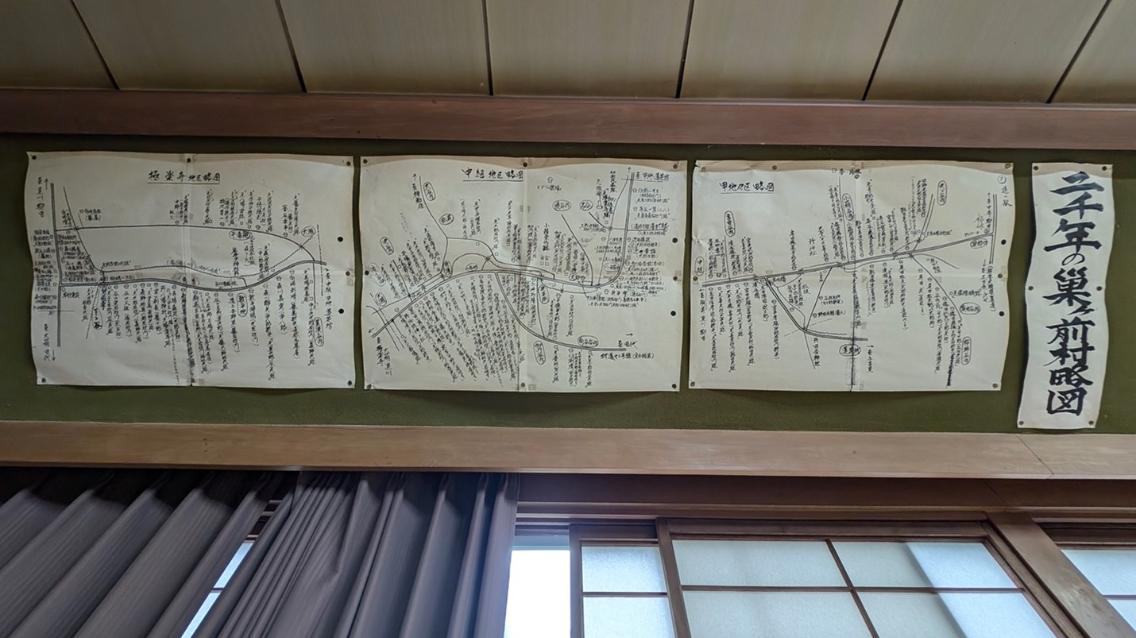
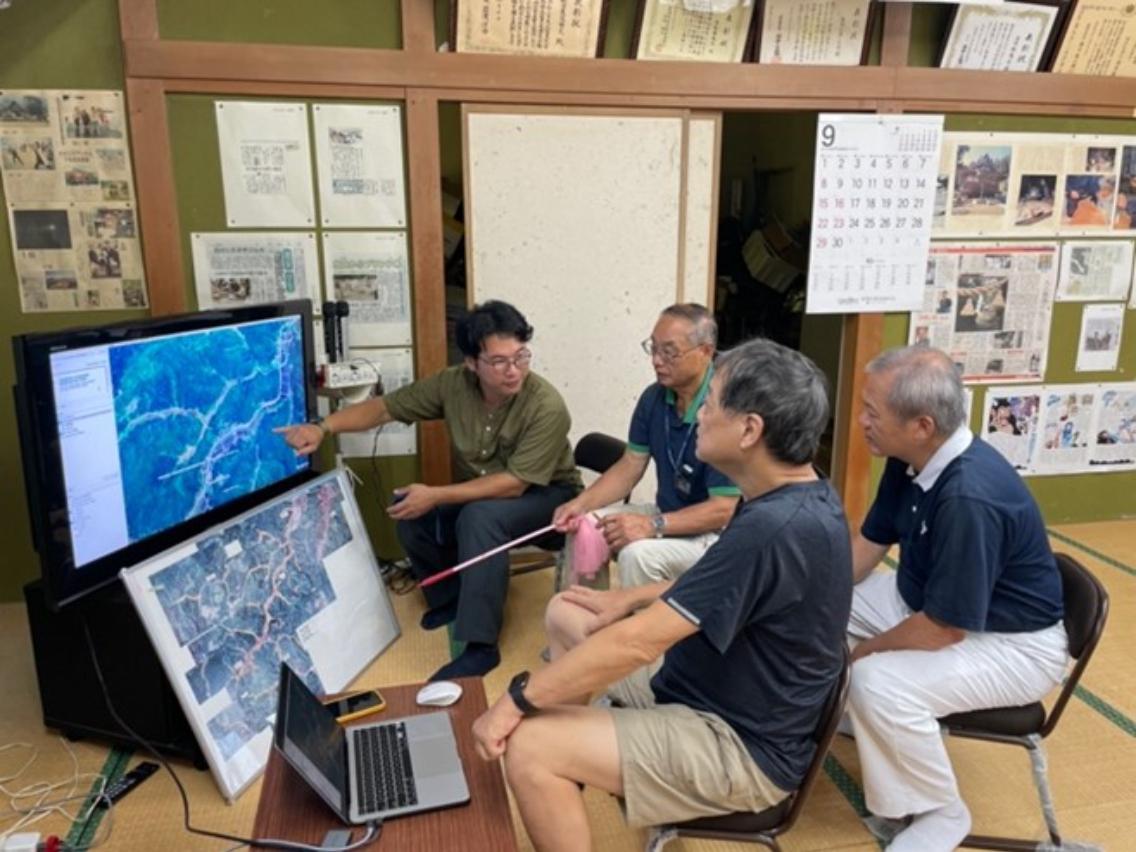
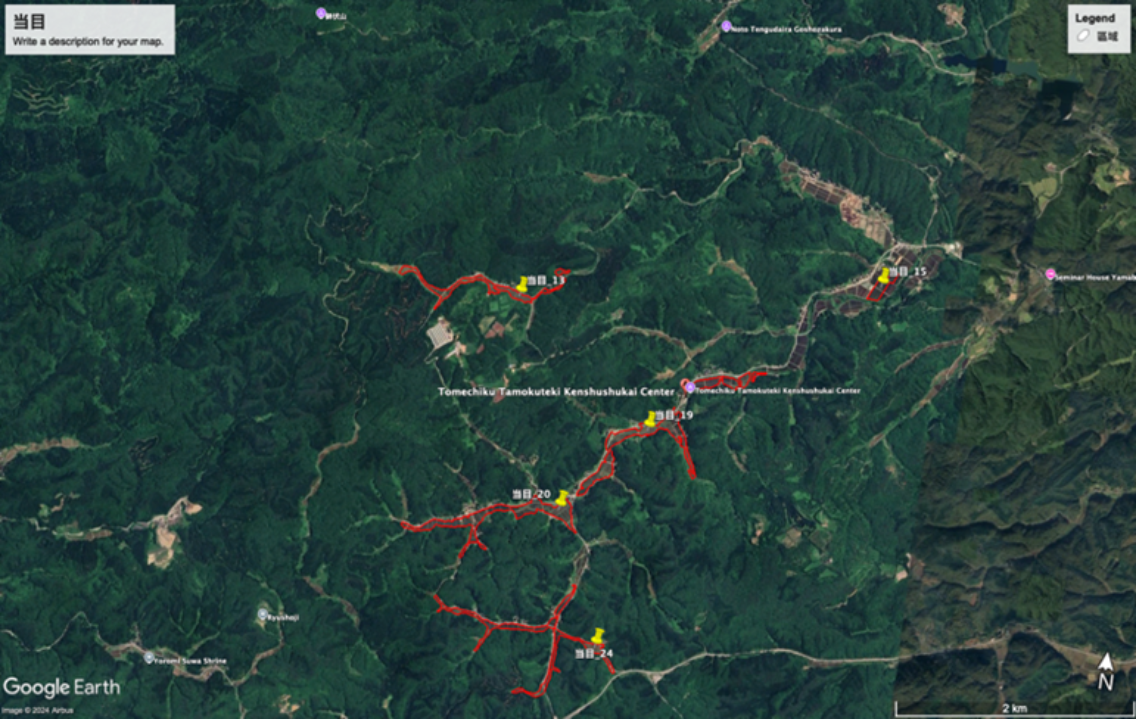
After four hours of explanation and discussion, with Mr Shuta's help we drew the first version of the locations of farmers' fields in Tome taking part in the Noto smallholder carbon farming project. Along the Machino River basin, farmers have cultivated the long, narrow valleys for centuries; now, faced with global warming and a great earthquake, they can take part in smallholder carbon farming. (Photo: Yang Ching-hui)
Choosing sampling sites takes long training and fieldwork. In future the eight samples from each 1,000 m² sampling site will be tested and analysed for organic carbon content, with standard deviation and uncertainty analysis to verify their reliability before they count as valid samples. Based on last year's (2023) testing and data analysis, the data from the sampling sites we set all met the Gold Standard's statistical criteria and were within the confidence range, with conservative estimates applied.
A base of over 60 hectares for Noto smallholder carbon farming
Only when this year's baseline sample test data on organic carbon content come out and are confirmed to be within the statistical confidence range can we tell whether the sampling plan has succeeded. Soil varies enormously, so this is the hardest step in certification under the Soil Organic Carbon Framework Methodology. If it fails, the sampling sites must be set again.
At 10 a.m. Tokyo time on 16 September the main event began. For the first time we faced representatives of Noto's farmers, government and civil society at a stakeholder consultation meeting. The area was among the worst hit by the Noto Peninsula earthquake, with some roads one-way only. We held the first consultation meeting at the Nabuto Community Hall in Wajima, attended by people from Kanazawa Institute of Technology and even a professor who rushed from Tohoku University in Sendai, hoping to obtain information and offer opinions.
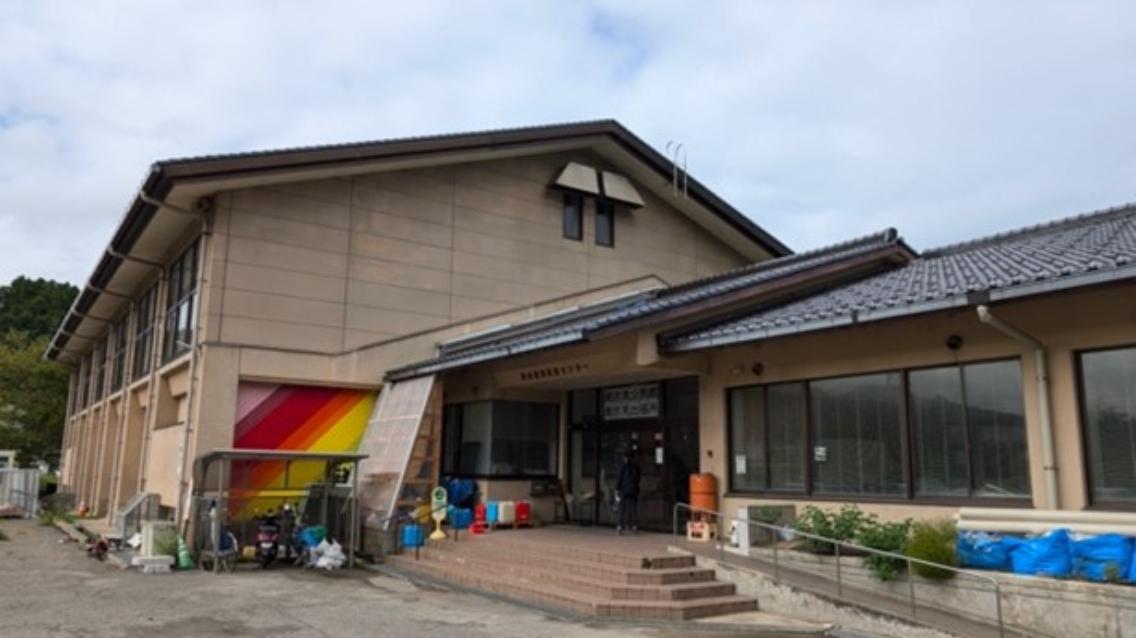
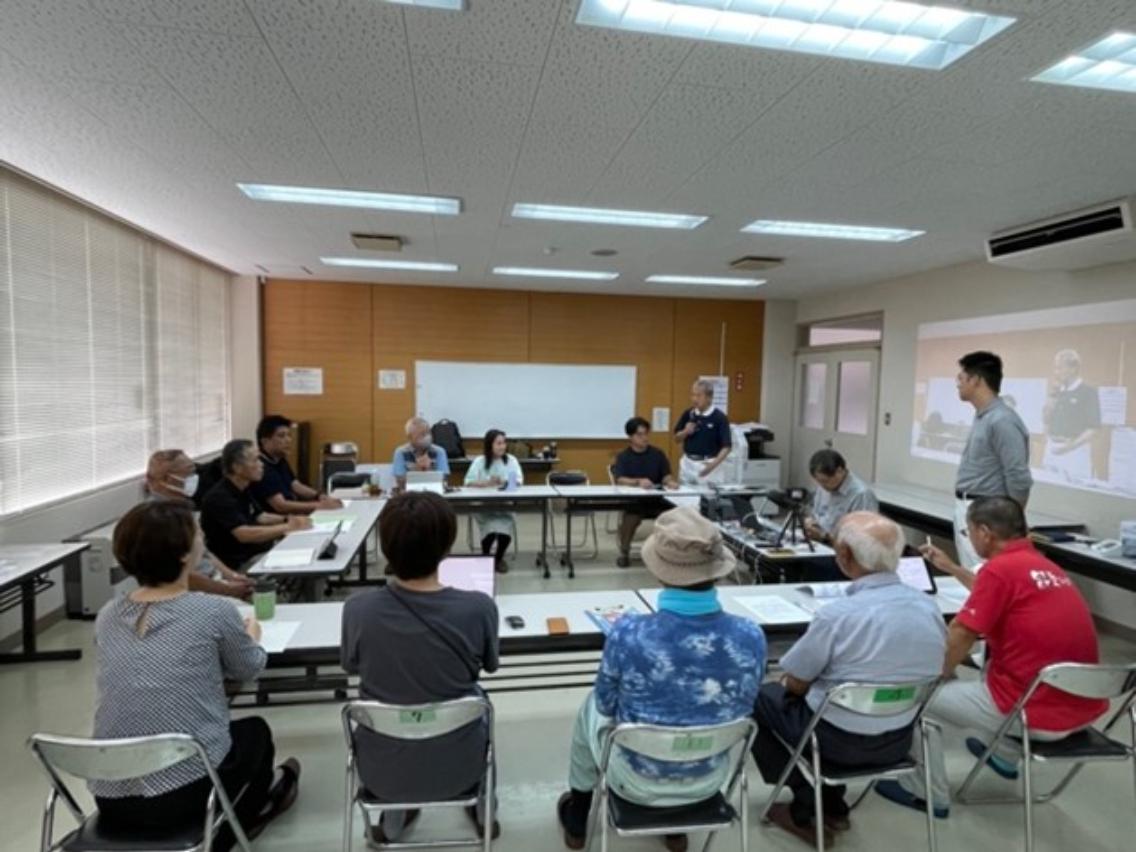
Holding the Noto smallholder carbon farming project stakeholder consultation meeting at the Nabuto Community Hall was a new experience for local residents, farmers and officials. Japanese people value consensus; we explained everything openly, in the light of day, keeping detailed, transparent records, meeting the expectations of local government and civil society. (Photo: Yang Ching-hui)
Beforehand we had already met and communicated with Ishikawa Prefecture, Wajima City and local farmers. In particular, the Tzu Chi Foundation's relief team had entered the disaster area at the very start of the earthquake to provide hot meals, and later distributed mimaikin (sympathy money) to affected households, building a foundation of trust. Now the Tzu Chi Foundation is moving into medium- and long-term planning, caring for local farmers and hoping to restore the glory of the local satoyama and satoumi, trying to see whether Taiwan's smallholder carbon farming project could be carried out there. Following the Gold Standard, it will help smallholders establish SDG sustainable development impact indicators: beyond an emission-reduction project increasing soil organic carbon, the other 16 SDGs will be built into project development, with ongoing monitoring and evaluation.
We streamed the whole meeting live onthe Facebook page, and afterwards edited it and postedYouTubethe full proceedings of the day — completely open and transparent.
Farmers were concerned about what they would have to do. In fact, following the eight principles, they just choose what is suitable and feasible for them. Unlike organic certification, there is no list of what can and can't be used; we focus more on reducing tillage and increasing cover. Mr Shuta said he was willing to try winter wheat to increase soil organic carbon, though some farmers thought it seemed unwise. I told them not to approach certification as an exam: each field is compared only with itself. Even if soil organic carbon doesn't increase, there's no need to worry — there are no penalties, and we will encourage them to keep trying. Even if the first year goes well, there's no guarantee the second will, because farmland faces too many uncertainties for anyone to predict.
A commitment to at least ten years of joint revitalisation
Farmers were also concerned about profit: how much money would there be each year? I replied that for agricultural carbon reduction, the biggest return is still from crops. Senmaida also has income from tourism, education and culture. Carbon credits generated by carbon farming are extra; produce is the main income. SDG sustainable development impact certification can also bring a better reputation, and only last comes income from carbon credit trading — about a tenth of the total. If people focus mainly on carbon credit income, they put the cart before the horse, which is not the purpose of our project design.
After the meeting, a representative of Ishikawa Prefecture's Agriculture, Forestry and Fisheries Department also raised some questions and comments; I answered each one, and all will be included in the future stakeholder consultation meeting report.
Participants were very grateful to the Tzu Chi Foundation not only for its relief work but for bringing in a Gold Standard voluntary emission-reduction project. As farmers rebuild their homes and restore production, international standard methods can give an objective evaluation of their contribution to sustainability impact and increase their visibility and reputation. They will invite more farmers to take part in future.
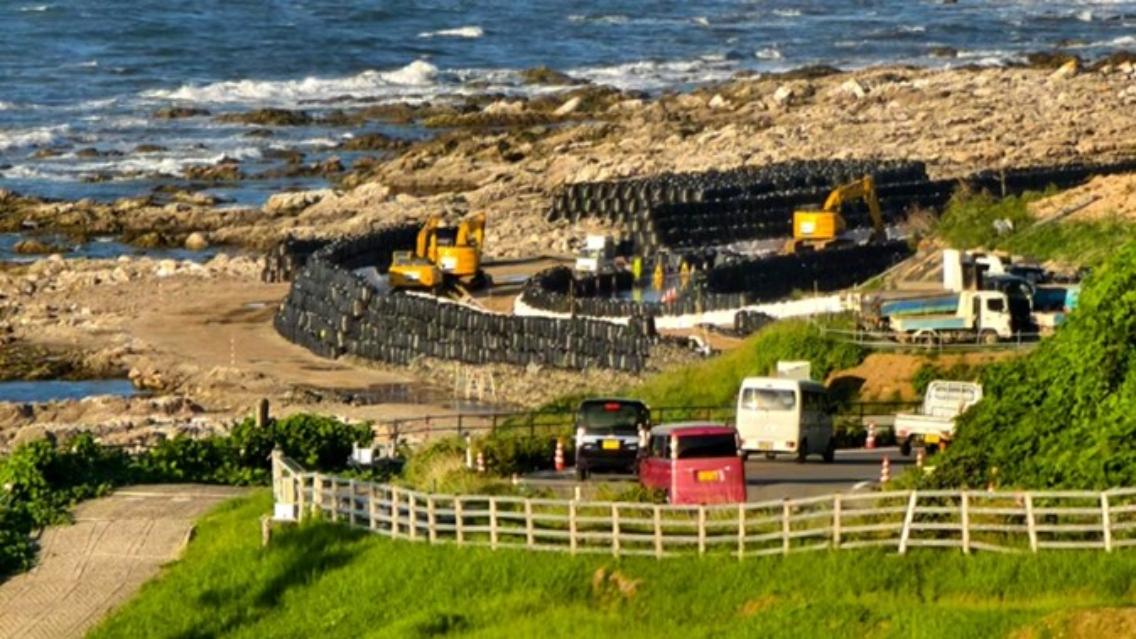
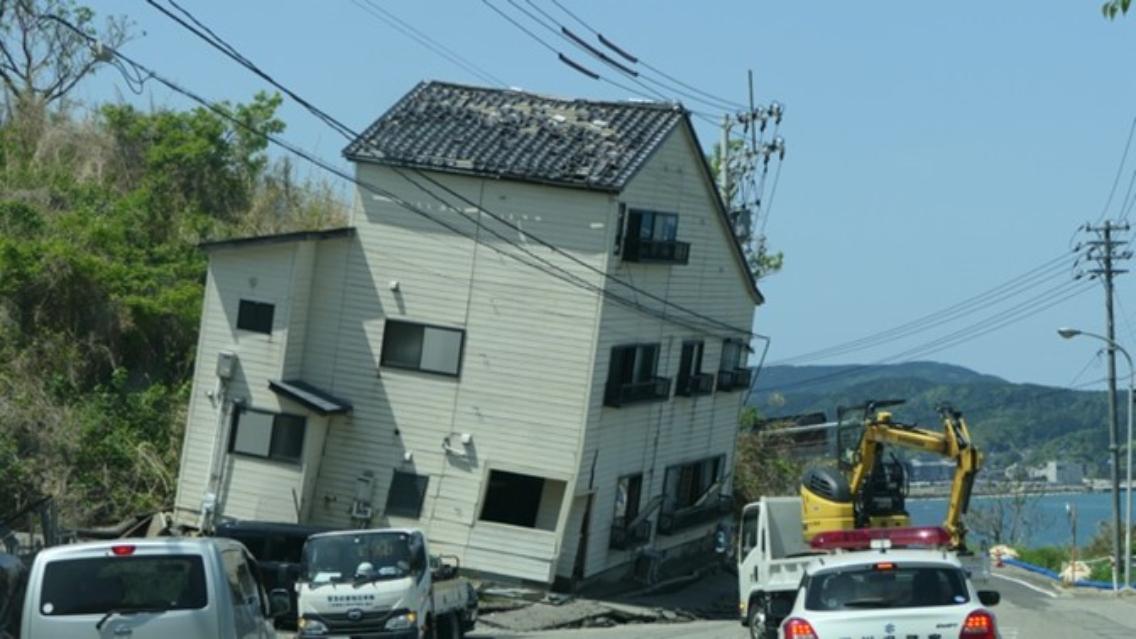
The great Noto earthquake badly damaged local homes and public facilities; recovery will take at least three to five years. If the Noto smallholder carbon farming project is established, it can accompany local farmers through their difficulties over the next ten years, showing the glory of the vitality of satoyama and satoumi.
A project lasts at least ten years, and if it goes well it can be extended for another ten — a big commitment for everyone. Yet in Noto, with its centuries of farming history, it is fleeting. That we have met by fate in the torrent of history and work together is very precious, and we hope this page too will be left in history.
Source: CM Media ( https://www.cmmedia.com.tw/home/articles/49491 )


